

Every business faces unique operational challenges that generic software simply cannot address. While off-the-shelf solutions offer convenience, they often force companies to adapt their processes to fit rigid constraints. A custom software solution, by contrast, molds itself to your specific requirements, workflows, and strategic goals. In 2026, the landscape of custom development has evolved dramatically with the emergence of no-code platforms and AI-powered tools that make bespoke software more accessible and affordable than ever before. Understanding when and how to invest in custom development can mean the difference between incremental improvements and transformative business growth.
Understanding What Makes Software Truly Custom
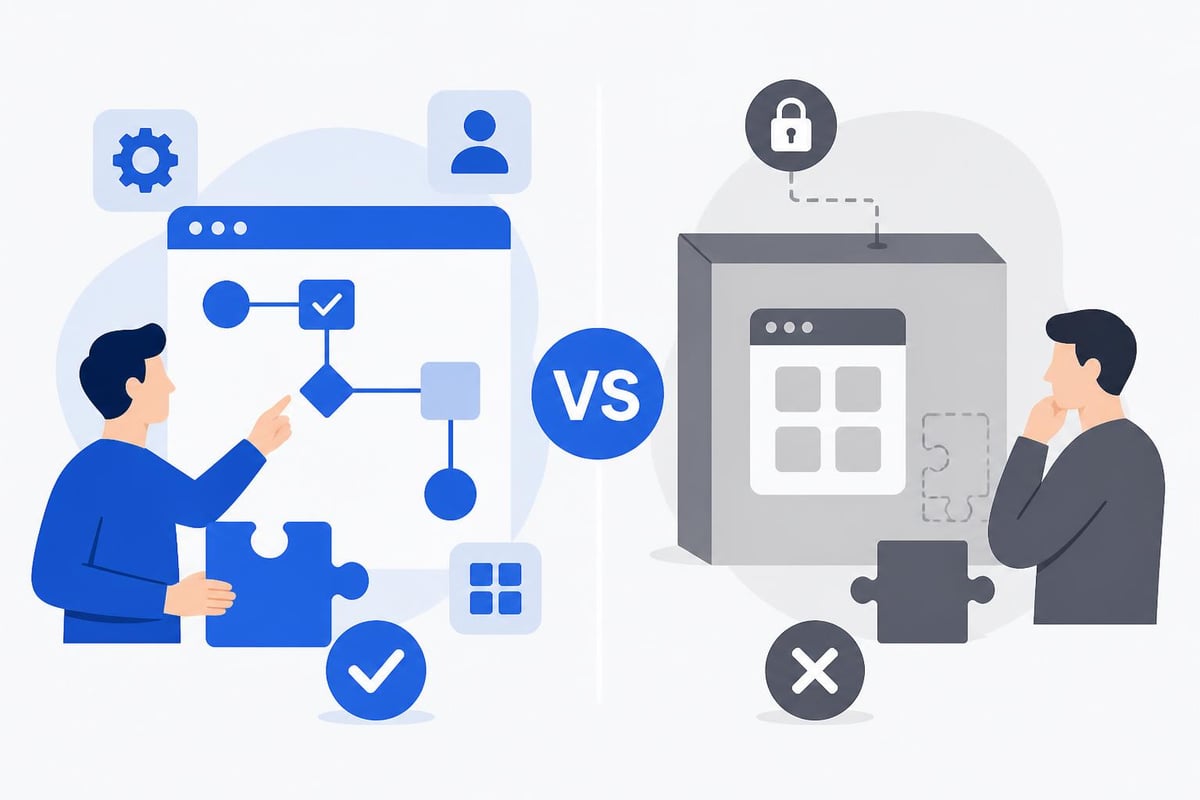
A custom software solution represents a purpose-built application designed exclusively for your organization's needs. Unlike commercial products serving broad markets, custom software addresses your specific pain points, integrates seamlessly with existing systems, and scales according to your unique growth trajectory.
The fundamental advantage lies in complete control over features, functionality, and future development. When you invest in custom software development, you're not paying for thousands of features you'll never use or waiting for vendors to prioritize the capabilities you desperately need.
Core Characteristics of Custom Solutions
True custom software exhibits several defining traits:
- Complete alignment with business processes rather than forcing process changes
- Direct ownership of intellectual property and source code
- Unrestricted scalability as your organization grows
- Seamless integration with legacy systems and third-party tools
- Ongoing customization without vendor permission or limitations
These characteristics create immediate operational benefits. Your team works within software designed for their actual workflows, reducing training time and minimizing resistance to adoption. Data flows naturally between systems without manual intervention or costly middleware solutions.
The Business Case for Custom Development in 2026
Organizations across industries are reassessing their software strategies as technology costs shift dramatically. Traditional custom development required substantial upfront investment and lengthy timelines, often placing it beyond reach for startups and mid-market companies. The no-code versus custom code cost comparison reveals how modern approaches have democratized access to tailored solutions.
Financial Considerations and ROI
| Cost Factor | Traditional Custom | No-Code Custom | Off-the-Shelf |
|---|---|---|---|
| Initial Development | $100,000-$500,000+ | $15,000-$75,000 | $0-$5,000 |
| Time to Market | 6-18 months | 4-12 weeks | Immediate |
| Annual Licensing | $0 | $0-$10,000 | $5,000-$50,000 |
| Modification Costs | High | Low-Medium | Very High/Impossible |
The numbers tell a compelling story. Modern platforms enable rapid development of custom software solutions at a fraction of historical costs. This democratization means businesses no longer face the binary choice between expensive custom builds and limiting off-the-shelf products.
Return on investment manifests across multiple dimensions:
- Productivity gains from eliminating manual workarounds
- Revenue protection through better customer experiences
- Competitive differentiation via unique capabilities
- Operational efficiency from optimized workflows
- Data quality improvements through purpose-built validation
Small and medium enterprises particularly benefit from customized software solutions that previously remained financially out of reach. A well-executed custom software solution can deliver measurable ROI within 6-12 months through efficiency improvements alone.
Modern Development Approaches Transform Custom Software
The definition of "custom" has expanded significantly in recent years. Traditional hand-coding remains viable for highly complex scenarios, but no-code and AI-assisted platforms now deliver genuinely custom results with dramatically improved speed and cost profiles.
No-Code Platforms as Custom Software Engines
No-code development platforms like Bubble have matured into enterprise-grade solutions capable of supporting mission-critical applications. These tools enable rapid construction of a custom software solution without traditional programming, yet maintain the flexibility and control that define truly bespoke software.
The advantages extend beyond mere speed:
- Visual development makes requirements tangible during the build process
- Rapid iteration enables real-time feedback and adjustments
- Lower maintenance burden through platform-managed infrastructure
- Easier talent acquisition compared to specialized programming languages
- Reduced technical debt from standardized, tested components
Organizations looking at low-cost MVP development tools discover that no-code doesn't mean limited or simplistic. Modern platforms support complex business logic, sophisticated data relationships, and seamless third-party integrations.
AI-Powered Development Acceleration
Artificial intelligence has entered the custom software arena through platforms that convert designs directly into functional applications. AI-based design to code tools enable unprecedented speed from concept to working prototype.
This technology particularly benefits the discovery phase. Teams can rapidly test multiple approaches, gather user feedback on working prototypes, and refine requirements before committing to full development. The result is a custom software solution that more accurately reflects actual needs rather than initial assumptions.

When Your Business Needs Custom Software
Not every software challenge requires a custom solution. The decision hinges on several critical factors that determine whether customization delivers sufficient value to justify the investment.
Clear Indicators for Custom Development
Your organization likely needs custom software when:
- Existing solutions require extensive workarounds that reduce efficiency
- Competitive differentiation depends on unique software capabilities
- Regulatory compliance demands specific features unavailable in commercial products
- Integration requirements exceed what off-the-shelf tools support
- Growth plans will quickly outpace the scalability of standard solutions
Manufacturing operations, for instance, often require custom software solutions that address industry-specific challenges like supply chain complexity, quality control protocols, and equipment integration that generic manufacturing software handles inadequately.
Evaluating Build Versus Buy Decisions
The decision framework should assess both immediate and long-term factors:
| Evaluation Criteria | Favor Custom | Favor Off-the-Shelf |
|---|---|---|
| Process Uniqueness | High differentiation | Standard industry practices |
| Budget Availability | Medium to high | Limited initial budget |
| Timeline Pressure | Moderate (no-code) | Immediate need |
| Internal Expertise | Available or outsourced | Limited technical resources |
| Scalability Needs | Rapid or unpredictable | Stable, predictable |
| Integration Complexity | Many systems | Few integrations |
Enterprises increasingly recognize that internal tool development represents an ideal use case for custom solutions. These applications address organization-specific workflows where commercial products inevitably fall short, yet they don't require the polish and scalability of customer-facing systems.
Building Your Custom Software Solution
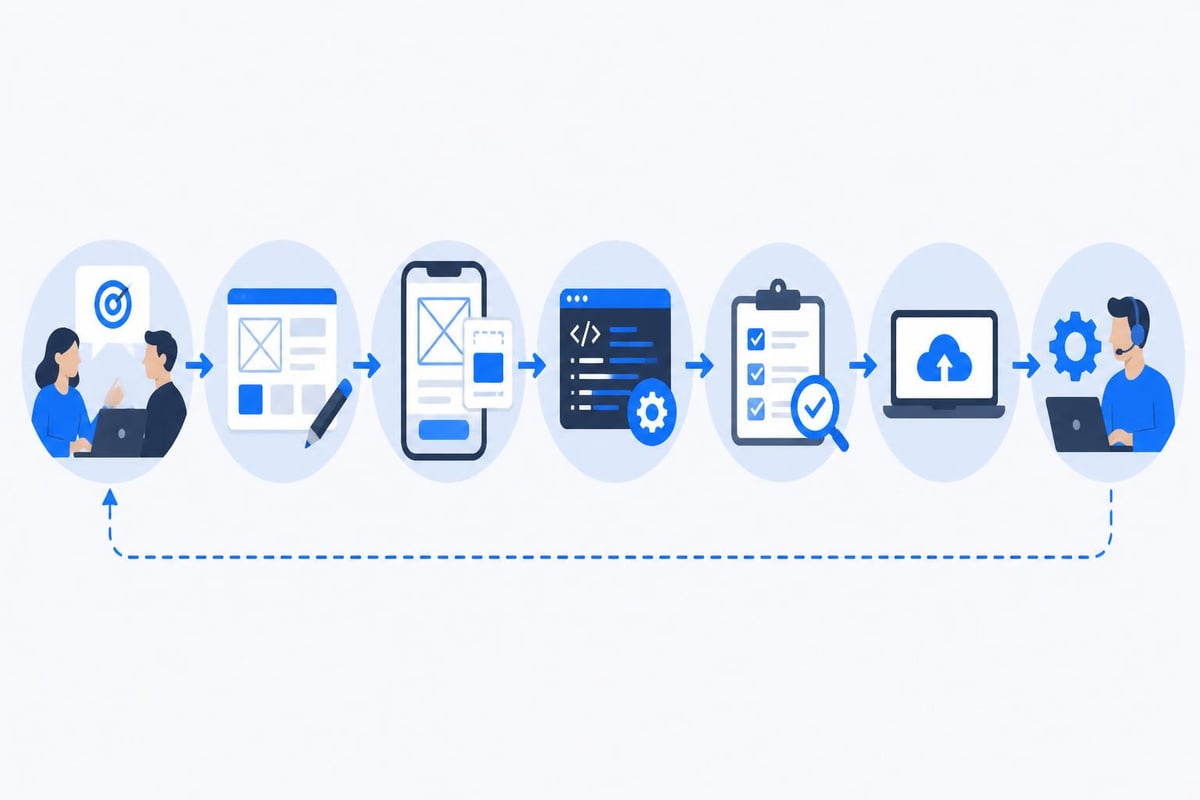
Successful custom development follows a structured approach that balances thorough planning with rapid iteration. The methodology varies based on chosen technology stack, but certain principles remain universal.
Discovery and Requirements Definition
Every effective custom software solution begins with deep understanding of actual needs versus perceived wants. This phase involves:
- Stakeholder interviews across all user groups
- Process mapping of current and desired workflows
- Pain point identification with quantified impacts
- Success criteria definition with measurable outcomes
- Technical constraints documentation including integrations
Skipping or rushing discovery leads to expensive rework later. Investing 15-20% of total project budget in this phase typically reduces overall costs by preventing misaligned development.
Design and Prototyping
Modern custom software development emphasizes rapid prototyping over lengthy specification documents. Teams create working prototypes that stakeholders can actually use, providing concrete feedback on functionality, usability, and workflow integration.
The prototyping phase delivers multiple benefits:
- Early validation of core assumptions
- User interface refinement through actual interaction
- Technical feasibility confirmation
- Stakeholder alignment on final vision
- Risk identification before major development investment
No-code platforms particularly excel here, enabling functional prototypes in days rather than weeks. This speed fundamentally changes the conversation from abstract discussions of requirements to concrete evaluation of working software.
Development and Testing Cycles
Modern custom software solution development follows iterative cycles rather than waterfall approaches. Teams build features incrementally, gathering feedback and adjusting course continuously.
Quality assurance runs parallel to development rather than following it. Automated testing catches regression issues early, while user acceptance testing validates that features actually solve intended problems. This integrated approach delivers higher quality outcomes faster than traditional sequential methods.
The testing strategy should encompass:
- Unit testing for individual components
- Integration testing across system boundaries
- Performance testing under realistic load
- Security testing for vulnerabilities
- User acceptance testing with actual end users
Maximizing Value From Custom Software Investment
Deploying your custom software solution represents a beginning rather than an ending. Ongoing optimization, user adoption initiatives, and strategic enhancements determine whether the investment delivers its full potential value.
Driving User Adoption
The most sophisticated custom software delivers zero value if users avoid it. Adoption requires:
Change management initiatives including:
- Executive sponsorship communicating strategic importance
- Comprehensive training tailored to different user groups
- Support resources for troubleshooting and questions
- Champions within departments promoting benefits
- Feedback mechanisms for continuous improvement
Organizations that treat deployment as a technical event rather than an organizational change initiative consistently underrealize ROI. Budget 10-15% of total project costs for change management activities.
Continuous Enhancement Strategy
A custom software solution should evolve with your business. The benefits of bespoke software development include the ability to continuously refine and extend functionality based on changing needs and new opportunities.
Establish regular review cycles quarterly or biannually to evaluate:
- Usage analytics revealing actual adoption patterns
- User feedback identifying friction points
- Business metric impacts measuring ROI
- New integration opportunities expanding value
- Emerging requirements from business evolution
This ongoing relationship with your software prevents the stagnation that plagues commercial products stuck on vendor roadmaps.
Real-World Success Stories
Examining actual implementations provides concrete insight into how custom software solutions deliver business value across industries. Real-world case studies demonstrate the practical application of custom development principles.
Enterprise Internal Operations
A Fortune 500 manufacturer faced coordination challenges across 47 facilities using disconnected spreadsheets and email. Their custom software solution unified production scheduling, inventory management, and quality reporting into a single platform. Results included 23% reduction in inventory carrying costs and 31% improvement in on-time delivery within six months.
The solution succeeded specifically because it accommodated unique workflows that evolved over decades. Off-the-shelf manufacturing software required process changes the organization couldn't practically implement across distributed operations.
Startup Competitive Differentiation
An insurance technology startup built its entire business model around a custom software solution that automated underwriting processes competitors handled manually. This differentiation enabled 70% faster quote turnaround and 40% lower operational costs, creating sustainable competitive advantage.
The startup initially evaluated existing insurance platforms but found none supported their innovative underwriting approach. Custom development, executed through no-code platforms to manage costs, provided the flexibility to implement proprietary algorithms that defined their market position.
SME Operational Transformation
A regional distribution company with 200 employees replaced five separate systems with an integrated custom software solution. The unified platform connected customer orders, warehouse operations, delivery logistics, and accounting. Employee productivity increased 35% through elimination of duplicate data entry and system-switching overhead.
This scenario exemplifies how custom software drives business success for mid-market companies competing against larger rivals with greater resources. The efficiency gains directly improved profit margins and customer satisfaction simultaneously.
Selecting the Right Development Partner
Most organizations lack internal resources to build custom software independently. Choosing the right development partner significantly impacts project success, timeline, and ultimate ROI.
Evaluation Criteria for Development Agencies
Assess potential partners across these dimensions:
- Relevant industry experience with similar challenges
- Technical expertise in appropriate platforms
- Project methodology matching your preferences
- Communication practices ensuring transparency
- Reference clients willing to discuss experiences
- Ongoing support capabilities post-launch
Development agencies specializing in application development platforms bring expertise in modern tools that accelerate delivery while reducing costs. Their experience across multiple projects helps avoid common pitfalls and implement best practices.
No-Code Agency Advantages
Agencies focused on no-code and AI platforms offer distinct benefits for custom software solution development. Their developers combine technical skills with business analysis capabilities, bridging the communication gap that often derails traditional software projects.
The speed advantage proves particularly valuable for businesses with time-sensitive opportunities. What might require six months through traditional development can often launch in six weeks through no-code approaches, fundamentally changing project economics and risk profiles.
Additionally, no-code agencies typically offer more flexible engagement models. Organizations can start with focused MVPs, validate business value, then expand functionality incrementally rather than committing to massive upfront investments.
Future Trends in Custom Software Development
The custom software landscape continues evolving rapidly as new technologies mature and business expectations shift. Understanding emerging trends helps organizations make forward-looking investment decisions.
AI Integration as Standard Expectation
Artificial intelligence capabilities increasingly represent baseline expectations rather than advanced features. Custom software solutions built in 2026 routinely incorporate:
- Natural language interfaces for intuitive interaction
- Predictive analytics anticipating needs and outcomes
- Automated decision support augmenting human judgment
- Intelligent workflow automation adapting to patterns
- Personalization engines tailoring experiences
These AI features once required specialized data science teams. Modern platforms democratize access through pre-built components and intuitive configuration, making sophisticated capabilities available to any custom software solution.
Component-Based Architecture Acceleration
Rather than building everything from scratch, modern custom development increasingly assembles pre-built, tested components customized to specific requirements. This approach combines the best aspects of custom and off-the-shelf software.
The component strategy delivers:
- Faster initial development through proven building blocks
- Lower maintenance burden from platform-managed updates
- Reduced technical risk from battle-tested components
- Greater focus on differentiating functionality
- Easier future enhancements through modular architecture
Organizations examining bespoke software solutions should understand that "custom" increasingly means "uniquely configured and extended" rather than "entirely hand-built."
Edge Computing and Distributed Systems
Custom software increasingly operates across distributed environments rather than centralized data centers. Edge computing enables processing closer to data sources, improving performance and enabling offline functionality.
This architectural shift particularly benefits custom software solutions for field operations, retail locations, manufacturing facilities, and other distributed environments where connectivity proves unreliable or latency critical.
Custom software solutions represent strategic investments that align technology directly with business objectives rather than forcing adaptation to generic products. Modern development approaches through no-code and AI platforms have dramatically reduced both costs and timelines while maintaining the flexibility and control that define truly custom solutions. Whether you're ready to explore how tailored software can transform your operations or need expert guidance navigating the build-versus-buy decision, Big House Technologies specializes in delivering scalable custom solutions through efficient no-code and AI development platforms. Our comprehensive approach ensures your vision becomes functional reality on time and within budget.

About Big House
Big House is committed to 1) developing robust internal tools for enterprises, and 2) crafting minimum viable products (MVPs) that help startups and entrepreneurs bring their visions to life.
If you'd like to explore how we can build technology for you, get in touch. We'd be excited to discuss what you have in mind.
Other Articles
Discover the 10 best software designing tools for developers in 2025. Compare features, collaboration, pricing, and trends to choose the perfect tool for your needs.
Learn how to research and validate your tech product idea using market analysis, no-code MVPs, AI tools, and startup tactics to build solutions that customers truly need and want.
Discover the 7 best AI tool for code solutions in 2025. Compare features, pricing, and pros to boost productivity and code quality. Find your ideal AI tool now.