
Did you know that by 2026, over 90% of enterprises will rely on custom solutions to stay ahead in a digital-first world? As technology rapidly evolves, organizations face mounting pressure to innovate faster, personalize experiences, and protect sensitive data.
This guide will walk you through custom enterprise software development, showing how tailored solutions can transform your business. We will explore the latest trends, strategic planning, step-by-step development, technology choices, and proven best practices to help you gain a lasting competitive edge. Ready to future-proof your enterprise? Let’s dive in.
The Evolving Landscape of Custom Enterprise Software in 2026
As we look toward 2026, custom enterprise software development is experiencing rapid change, fueled by a convergence of technology and business needs. Enterprises are rethinking how they build, deploy, and leverage software to remain competitive in a digital-first world.
Key Industry Trends and Drivers
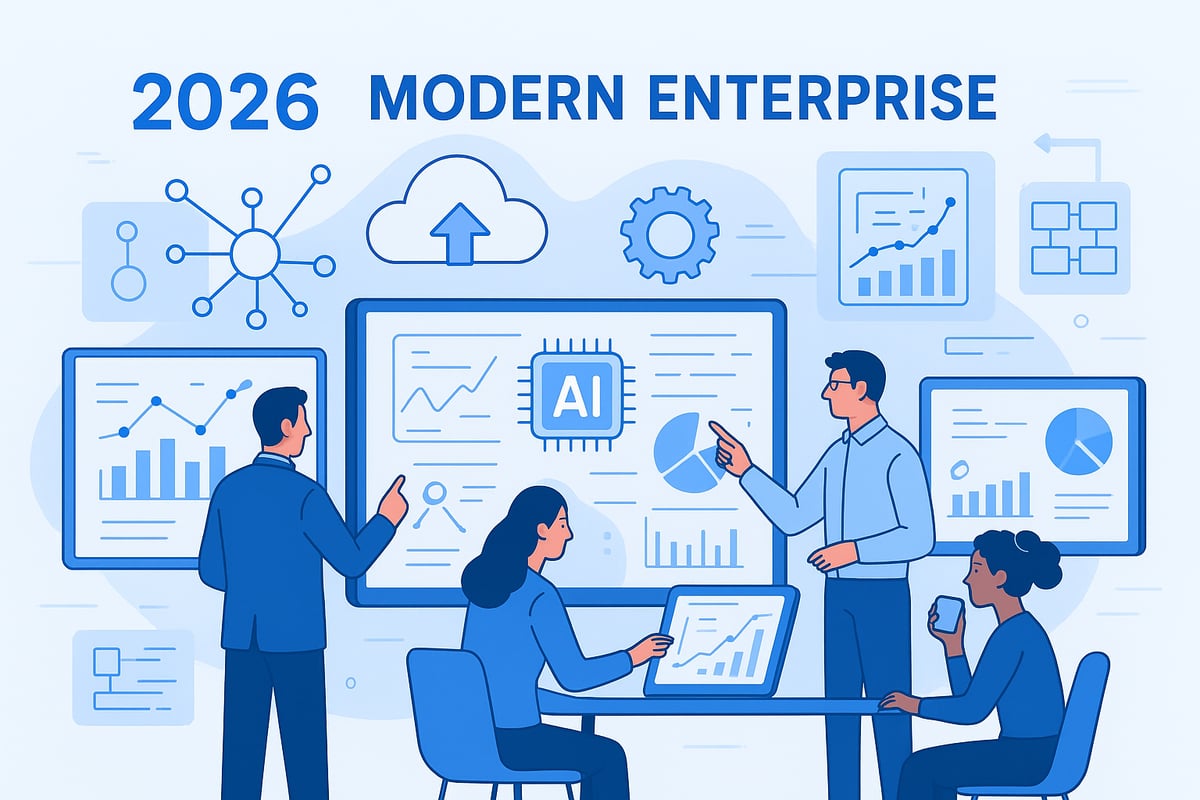
The landscape of custom enterprise software development is shaped by several significant trends. The rise of AI, no-code, and low-code platforms is transforming how quickly organizations can build and iterate on solutions. These technologies are making software development more accessible to non-technical users, while also enabling IT teams to focus on complex challenges.
Hyper-personalization is now a core expectation, with modular architectures allowing businesses to rapidly tailor solutions for unique needs. Cloud-native and multi-cloud adoption rates are soaring, with more than 90 percent of enterprises utilizing hybrid cloud models. Security, privacy, and compliance remain top priorities as regulations like GDPR and HIPAA evolve.
Data-driven decision-making is becoming standard, with advanced analytics and business intelligence tools integrated into most enterprise applications. The expansion of IoT and edge computing is particularly notable in manufacturing, logistics, and healthcare. Organizations are moving away from monolithic systems, embracing microservices and API-first designs for greater scalability and agility.
For a deeper dive into how AI and machine learning are revolutionizing these trends, check out AI and Machine Learning in Software Development.
Industry Use Cases and Examples
Custom enterprise software development is making a tangible impact across industries. In healthcare, AI-driven patient management and automated compliance tools are streamlining operations and improving outcomes. Retailers are leveraging custom CRM platforms to deliver omnichannel inventory management and personalized shopping experiences.
Manufacturing companies are using IoT-connected devices for predictive maintenance and integrating them into custom ERP systems. A compelling example is Rolls Royce, which developed a real-time monitoring app for nuclear plant safety, demonstrating the power of custom solutions in mission-critical environments.
Statistics highlight the momentum: over 60 percent of enterprises plan to modernize legacy systems by 2026. This shift is driven by the need to stay competitive, reduce costs, and unlock new efficiencies. Custom enterprise software development enables organizations to address industry-specific challenges and seize new opportunities.
Challenges and Opportunities
Despite these advancements, custom enterprise software development comes with its own set of challenges. Enterprises must balance the need for rapid delivery, cost control, and high quality, especially as technology evolves at a breakneck pace. Modernization efforts can introduce technical debt if not managed strategically, particularly during the integration of new and legacy systems.
However, these challenges also present opportunities for differentiation. By investing in tailored solutions, organizations can create unique workflows, improve user experiences, and respond faster to market changes. The ability to innovate and adapt is becoming a key competitive advantage, making custom enterprise software development a vital part of enterprise strategy in 2026.
Strategic Planning for Custom Enterprise Software Development
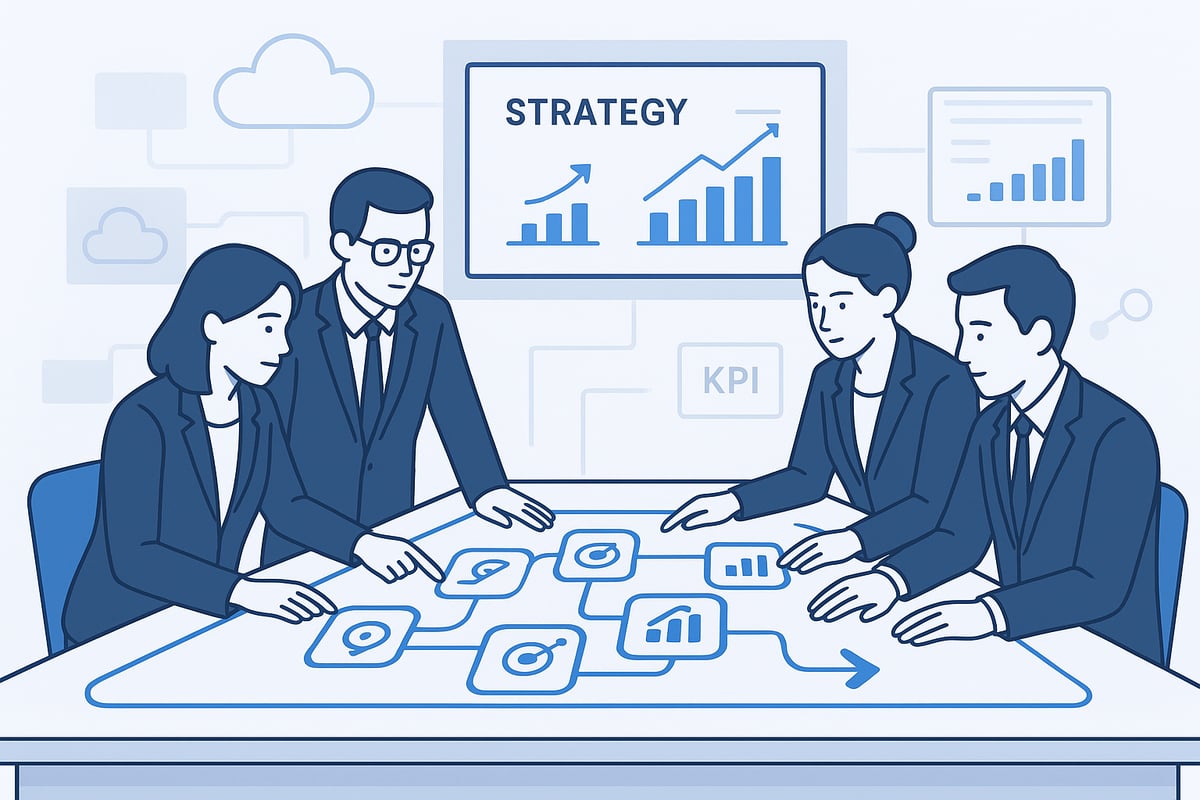
Strategic planning lays the foundation for successful custom enterprise software development in 2026. Enterprises must start by aligning technology initiatives with core business goals, ensuring every step is purposeful and outcome-driven. This approach not only maximizes return on investment but also positions organizations for long-term digital transformation.
Assessing Business Needs and Objectives
The first step in custom enterprise software development is a thorough assessment of your organization’s needs. Begin by mapping current workflows and identifying inefficiencies or pain points across departments. Are manual processes slowing your teams down? Do legacy systems hinder integration or compliance?
Engage stakeholders from IT, operations, finance, and end-users to gather a complete picture of requirements. Their insights will reveal unique workflows and help prioritize features that deliver tangible value. For example, a healthcare provider might consolidate disparate systems into a unified BPM, CRM, and ERP platform to streamline compliance and patient management.
Aligning software initiatives with organizational goals is crucial. Consider reviewing proven Enterprise App Development Strategies to ensure your planning process is comprehensive and future-proof. This alignment helps avoid costly missteps and keeps custom enterprise software development on track.
Use collaborative tools like Figma or Miro to visualize requirements and foster buy-in. The result is a clear, actionable blueprint that guides the rest of the project.
Building a Business Case and ROI Analysis
Building a strong business case is essential for justifying custom enterprise software development. Start by comparing the long-term costs and benefits of custom solutions versus off-the-shelf alternatives. Custom projects often reduce overhead and eliminate unused features, leading to significant cost savings over time.
Estimate the potential for productivity gains, process automation, and improved data-driven decision-making. For example, enterprises have reported up to a twofold increase in internal recruitment efficiency with AI-powered talent marketplaces. Factor in risk assessments around compliance, data security, and scalability to provide a holistic view of the investment.
A simple ROI table can help clarify the value:
| Factor | Off-the-Shelf | Custom Solution |
|---|---|---|
| Initial Cost | Lower | Higher |
| Long-Term Savings | Moderate | Significant |
| Feature Fit | Generic | Tailored |
| Scalability | Limited | High |
| Compliance | Variable | Purpose-built |
By quantifying these elements, you can demonstrate how custom enterprise software development drives both immediate and sustained value.
Defining Success Metrics and KPIs
Setting clear success metrics is vital for tracking the impact of custom enterprise software development. Define measurable goals such as efficiency improvements, user adoption rates, and reductions in downtime. These targets should align with your business objectives and be reviewed regularly.
Implement continuous feedback loops and agile project management to adapt quickly as needs evolve. For instance, a custom CRM might increase lead conversion rates by 15 percent, while automated reporting tools can reduce time-to-report from seven days to just fifteen seconds.
Key performance indicators (KPIs) to consider include:
- User adoption rate
- Process automation percentage
- Lead conversion improvement
- System downtime reduction
Regularly monitoring these KPIs ensures your custom enterprise software development project remains on course and delivers lasting benefits. By focusing on outcomes, enterprises can foster a culture of continuous improvement and digital excellence.
Step-by-Step Guide to Custom Enterprise Software Development in 2026
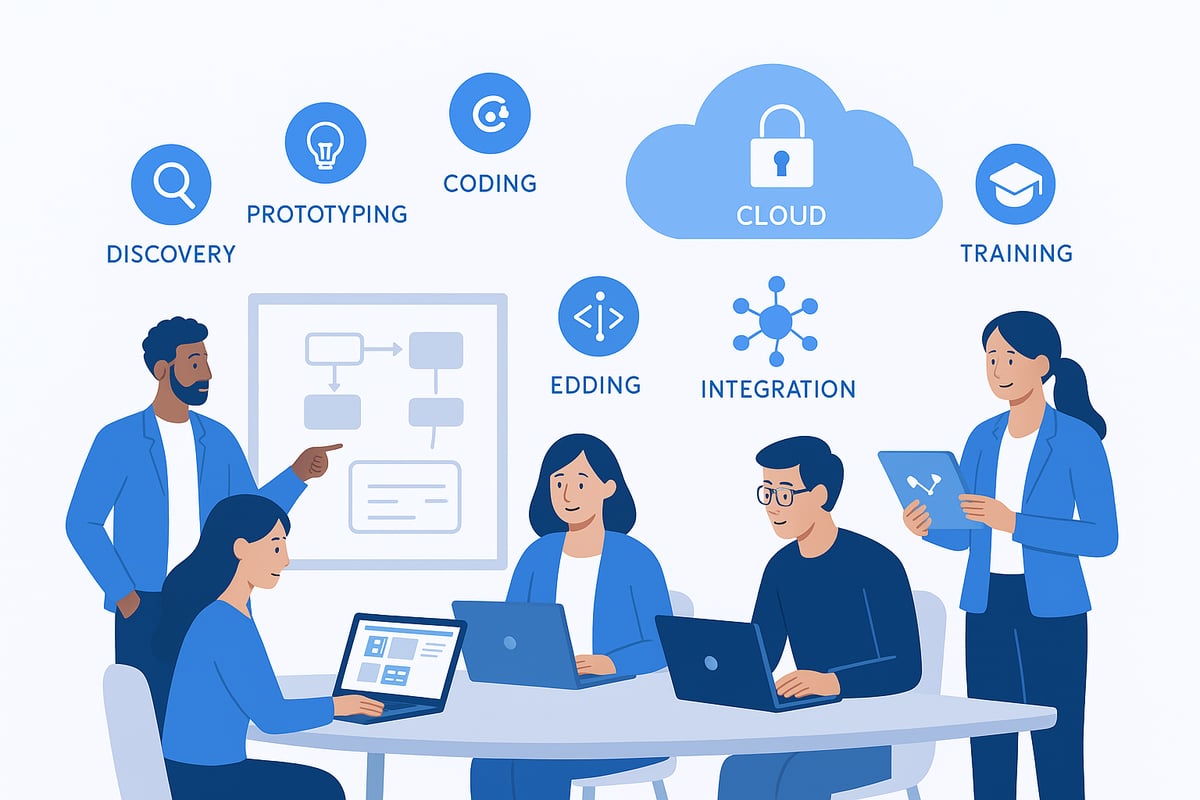
Navigating custom enterprise software development in 2026 requires a structured, agile approach. Enterprises must adapt to rapid technology shifts, regulatory demands, and increasing expectations for quality and speed. Here’s a step-by-step guide, breaking down each phase to help you deliver custom enterprise software development projects that drive measurable value.
Step 1: Discovery and Requirements Gathering
The first step in custom enterprise software development is understanding your business needs and translating them into actionable requirements. Start by gathering input from stakeholders across departments—IT, operations, finance, and end users. This ensures the final product addresses real pain points and aligns with business goals.
Conduct interviews and process mapping sessions to document workflows, bottlenecks, and regulatory requirements (such as GDPR or HIPAA). Prioritize features by separating must-haves from nice-to-haves, using collaborative tools like Figma or Miro for visual scoping.
A best practice is to allocate a focused two-week discovery sprint, as seen in Rolls Royce’s process with their product owner. This phase sets the foundation for the entire project, reducing the risk of scope creep later.
For a deeper look at how each stage unfolds, check out the Custom Development Process Explained, which details proven approaches to discovery and planning in custom enterprise software development.
Step 2: Solution Design and Prototyping
With requirements in hand, move to designing your custom enterprise software development solution. Create wireframes, interactive mockups, and clickable prototypes to visualize workflows and user journeys. Early prototypes help validate assumptions and spark feedback from stakeholders before writing a line of code.
Leverage design systems for consistency and scalability, ensuring your interface meets accessibility and UX standards. Tools like Figma enable rapid iterations, which is crucial for aligning design with real business processes.
Iterative feedback is essential. Run regular demo sessions with stakeholders to refine features and catch usability issues early. For example, high-fidelity prototypes created by Itransition have improved client communication and reduced costly rework in custom enterprise software development projects.
Step 3: Choosing the Right Technology Stack
Selecting the optimal technology stack is a pivotal decision in custom enterprise software development. Evaluate programming languages, frameworks, and platforms based on scalability, security, and maintenance needs. Popular choices include Java, Python, .NET, and modern no-code tools like Bubble for rapid prototyping.
Consider your cloud strategy—AWS, Azure, and Google Cloud each offer distinct strengths. For integration, platforms such as MuleSoft and Dell Boomi simplify connecting new solutions with legacy systems.
No-code and low-code platforms can speed up MVP delivery by up to 5x, according to Big House Technologies. This approach is ideal for quickly validating concepts in custom enterprise software development before investing in large-scale builds.
| Stack Element | Options | Use Case Example |
|---|---|---|
| Programming Lang. | Java, Python, .NET | Core enterprise logic |
| Cloud Platform | AWS, Azure, Google Cloud | Scalability, resilience |
| No-Code/Low-Code | Bubble, Mendix | Fast prototyping, MVP |
| Integration | MuleSoft, Dell Boomi | API management, system sync |
Step 4: Agile Development and Iterative Testing
Agile methodologies are the backbone of successful custom enterprise software development. Break the project into short sprints, each delivering incremental value. Hold regular stand-ups and sprint reviews to maintain transparency and adapt to changing needs.
Implement DevOps practices like CI/CD pipelines using Jenkins or Docker for automated testing and deployment. Automated tests with tools such as Selenium help catch bugs early, while containerization supports scalability and easier updates.
Security and compliance checks should be embedded throughout development. Microservices and containerization, as used by BairesDev for legacy modernization, allow for modular releases and faster feedback cycles. Frequent releases in custom enterprise software development mean users see value sooner and can provide actionable feedback.
Step 5: Integration and Data Migration
A critical step in custom enterprise software development is integrating new solutions with existing ERP, CRM, and legacy systems. Use APIs, connectors, and middleware to ensure seamless data flow and real-time updates across platforms.
Plan data migration carefully. Validate data, create rollback plans, and schedule user training to minimize disruptions. Common best practices include running parallel systems during cutover and using middleware for interoperability.
For example, Itransition’s migration of Atlassian tools for the International Air Transport Association demonstrates how robust integration and migration strategies can prevent downtime and data loss during custom enterprise software development.
A checklist for integration and migration:
- Map all data sources and destinations
- Validate data integrity before migration
- Prepare rollback and recovery plans
- Train users on new workflows
Step 6: User Training, Change Management, and Go-Live
The final stage of custom enterprise software development focuses on user adoption and operational readiness. Develop comprehensive training materials, host onboarding sessions, and create support channels to address questions quickly.
Change management is crucial. Communicate benefits and address concerns to reduce resistance. Decide between phased rollouts (gradual adoption) or big-bang launches (all at once), weighing the pros and cons for your organization.
After go-live, monitor user activity and system performance closely. Rapidly resolve issues and gather feedback for continuous improvement. BairesDev reports a 38% increase in net profits after optimizing enterprise systems, highlighting the financial impact of effective change management in custom enterprise software development.
Essential Technologies and Architectures for 2026
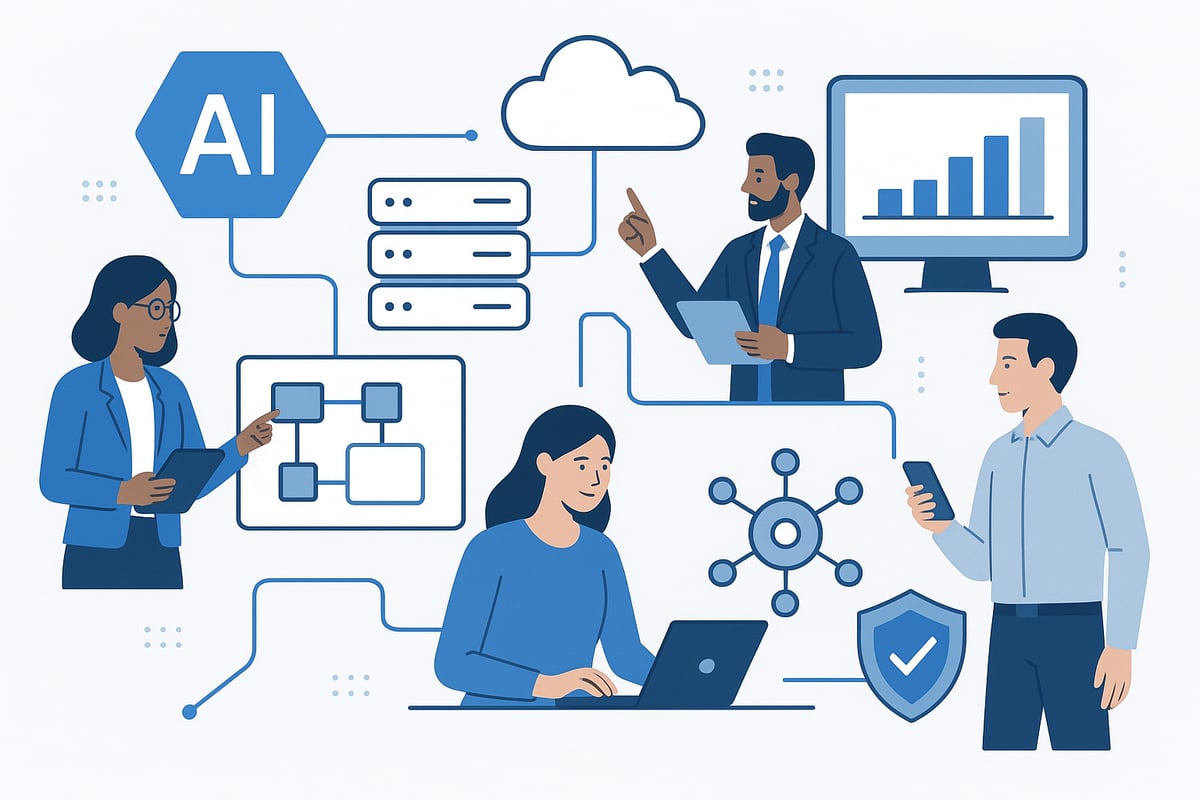
As custom enterprise software development becomes the backbone of digital transformation, staying ahead with the right technologies and architectures is essential. In 2026, organizations are leveraging a sophisticated mix of AI, automation, cloud-native designs, and robust security frameworks to build scalable and future-proof solutions.
AI, No-Code/Low-Code, and Automation
AI and automation are central to custom enterprise software development in 2026. Enterprises now rely on AI for predictive analytics, natural language processing, and intelligent workflows that streamline complex business operations. No-code and low-code platforms democratize development, enabling both IT and business teams to rapidly prototype and deploy solutions without deep coding expertise.
This shift accelerates time-to-market, reduces costs, and allows companies to respond faster to change. According to Low-Code and No-Code Platforms Growth, the adoption of these platforms is driving innovation across industries. Automated testing and deployment tools further minimize errors and enable continuous delivery, making custom enterprise software development more agile than ever.
Key benefits include:
- Rapid prototyping and MVP launch
- Lower development costs
- Empowered cross-functional teams
For enterprises, this means unlocking new possibilities in custom enterprise software development while maintaining flexibility and control.
Cloud-Native, Microservices, and API-First Approaches
Cloud-native architectures are now the foundation of custom enterprise software development. Building on resilient, scalable cloud infrastructure enables seamless updates, high availability, and cost optimization. Microservices break applications into modular components, allowing independent scaling and faster deployment cycles.
API-first strategies further enhance interoperability, providing an ecosystem approach where different software modules easily connect and communicate. As highlighted by Cloud-Native Architectures in 2026, over 90 percent of enterprises now use hybrid or multi-cloud setups to ensure business continuity and agility.
Let’s summarize key features:
| Technology | Benefit | Example Use Case |
|---|---|---|
| Cloud-Native | Scalability, resilience | Multi-region SaaS apps |
| Microservices | Modular updates, fast releases | Retail inventory systems |
| API-First | Easy integration, flexibility | Fintech payment gateways |
By embracing these architectures, custom enterprise software development teams can future-proof applications for evolving business needs.
Security, Compliance, and Data Management
Security is non-negotiable in custom enterprise software development. Organizations must embed security by design, from authentication to encryption and regular audits. Compliance with regulations like GDPR and HIPAA is mandatory, especially in healthcare and finance.
Modern solutions include advanced data management tools, enabling real-time analytics, business intelligence dashboards, and secure data warehousing. Power BI and Snowflake are popular choices for enterprises seeking actionable insights without compromising data integrity.
Best practices for 2026:
- Implement multi-factor authentication
- Schedule regular security audits
- Automate compliance monitoring
- Centralize data governance
These measures ensure that custom enterprise software development delivers not only innovation but also the trust and reliability demanded by today’s digital enterprises.
Best Practices and Common Pitfalls in Custom Enterprise Software Development
Building custom enterprise software development projects in 2026 demands both strategic vision and tactical discipline. Success is not just about launching a product, but ensuring it delivers ongoing value, is adopted by users, and scales with business needs.
Best Practices for Success
To maximize the ROI of custom enterprise software development, start with clear objectives and strong stakeholder alignment. This ensures everyone is pulling in the same direction from day one. Prioritize user experience by involving end-users in feedback loops, which helps drive adoption and prevents missed requirements.
Choose scalable and future-proof technologies, such as microservices or cloud-native platforms, to avoid costly rework. Security and compliance should be embedded from the start, leveraging frameworks like DevSecOps for proactive threat detection. For more on integrating security throughout the lifecycle, see DevSecOps and Integrated Security Practices.
Foster a collaborative culture between business and technical teams. Use agile methodologies for flexibility and quick adaptation to change. Finally, plan for ongoing support and continuous improvement so your solution evolves alongside your enterprise.
Avoiding Common Pitfalls
Many custom enterprise software development projects encounter trouble due to underestimated complexity. Integration with legacy systems often takes longer than anticipated. To avoid this, map dependencies early and build robust test plans.
Neglecting change management and user training can sink adoption rates. Communicate benefits clearly, offer hands-on onboarding, and provide strong support. Failing to plan for scalability means future growth can be hampered by technical limitations.
Be cautious about over-customizing, which can lead to technical debt and expensive maintenance. Always prioritize thorough testing and quality assurance before go-live. For a deeper dive into common mistakes and how to sidestep them, check out Avoiding Pitfalls in Software Projects.
Real-World Insights and Lessons Learned
Experience from hundreds of custom enterprise software development projects shows that small missteps compound over time. For instance, one company saved $200,000 in licensing by strategically migrating and customizing software rather than buying off-the-shelf.
A recent survey found that over 1,250 projects delivered across 130 sectors reinforce the value of industry expertise. Teams that invest in post-launch support, analytics, and iterative enhancements consistently report higher long-term ROI.
In summary, the journey does not end at launch. Ongoing monitoring, feedback collection, and continuous updates are essential for sustained success with custom enterprise software development.
Ready to turn your vision for custom enterprise software into a real product—fast? We’ve covered how no code and AI can cut costs and speed up development, but the real magic happens when you actually get your MVP in users’ hands. Whether you’re scaling up or launching something new, you don’t have to wait months to see results. If you want to see just how quickly you can bring an idea to life in 2026’s fast-paced market, check out how you can Launch Your MVP in Weeks, Not Months.

About Big House
Big House is committed to 1) developing robust internal tools for enterprises, and 2) crafting minimum viable products (MVPs) that help startups and entrepreneurs bring their visions to life.
If you'd like to explore how we can build technology for you, get in touch. We'd be excited to discuss what you have in mind.
Other Articles
Discover who competes with Replit in the AI coding and cloud development space. Compare features, pricing, and enterprise solutions in 2026.
Master chat gpt translate in 2025 with our expert guide Explore step by step workflows advanced features integration and real world use cases for success
Discover how to choose the best software development company in US for 2026. Get expert tips, avoid risks, and secure a partner that drives business success.