
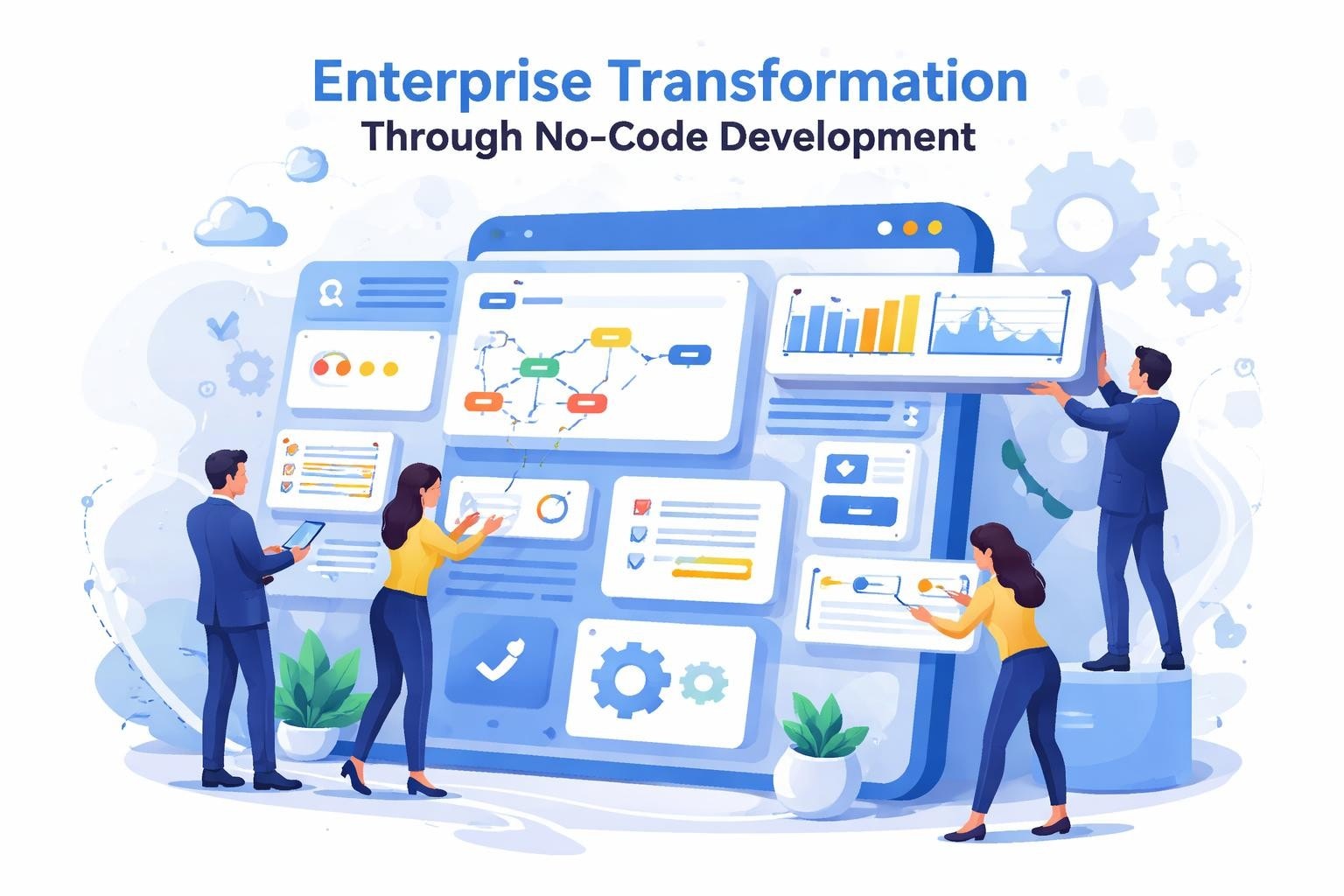
The digital transformation landscape has fundamentally changed how businesses approach software development. Organizations no longer need extensive technical teams to create sophisticated applications that drive their operations. Modern platforms enable companies to build enterprise apps without coding, democratizing technology creation and accelerating digital initiatives across industries. This shift represents more than just a trend; it's a fundamental reimagining of how enterprises approach innovation, allowing business users to transform ideas into functional software solutions within days rather than months.
The Enterprise No-Code Revolution
Traditional enterprise software development has long been characterized by extensive timelines, substantial budgets, and specialized technical talent. These barriers created bottlenecks that prevented businesses from rapidly responding to market changes or internal operational needs. The emergence of no-code platforms has dismantled these obstacles, enabling organizations to build enterprise apps without coding expertise.
The transformation is driven by several key factors:
- Visual development environments that replace complex programming languages
- Pre-built templates designed specifically for common business workflows
- Integration capabilities that connect with existing enterprise systems
- Scalability features that support growing user bases and data volumes
- Security frameworks that meet enterprise compliance requirements
Oracle's comprehensive overview of no-code development demonstrates how major technology providers recognize this shift toward accessible application creation. Enterprise organizations are leveraging these platforms to address everything from customer relationship management to supply chain optimization.
Why Enterprises Choose No-Code Solutions
The business case for no-code development extends far beyond simple cost savings. Companies adopting these platforms report accelerated time-to-market, improved agility, and enhanced collaboration between technical and business teams. When organizations build enterprise apps without coding, they fundamentally change how innovation happens within their walls.
Speed represents perhaps the most compelling advantage. Traditional enterprise application projects measured in quarters or years now complete in weeks. This velocity enables businesses to test hypotheses, gather user feedback, and iterate rapidly based on real-world performance data.
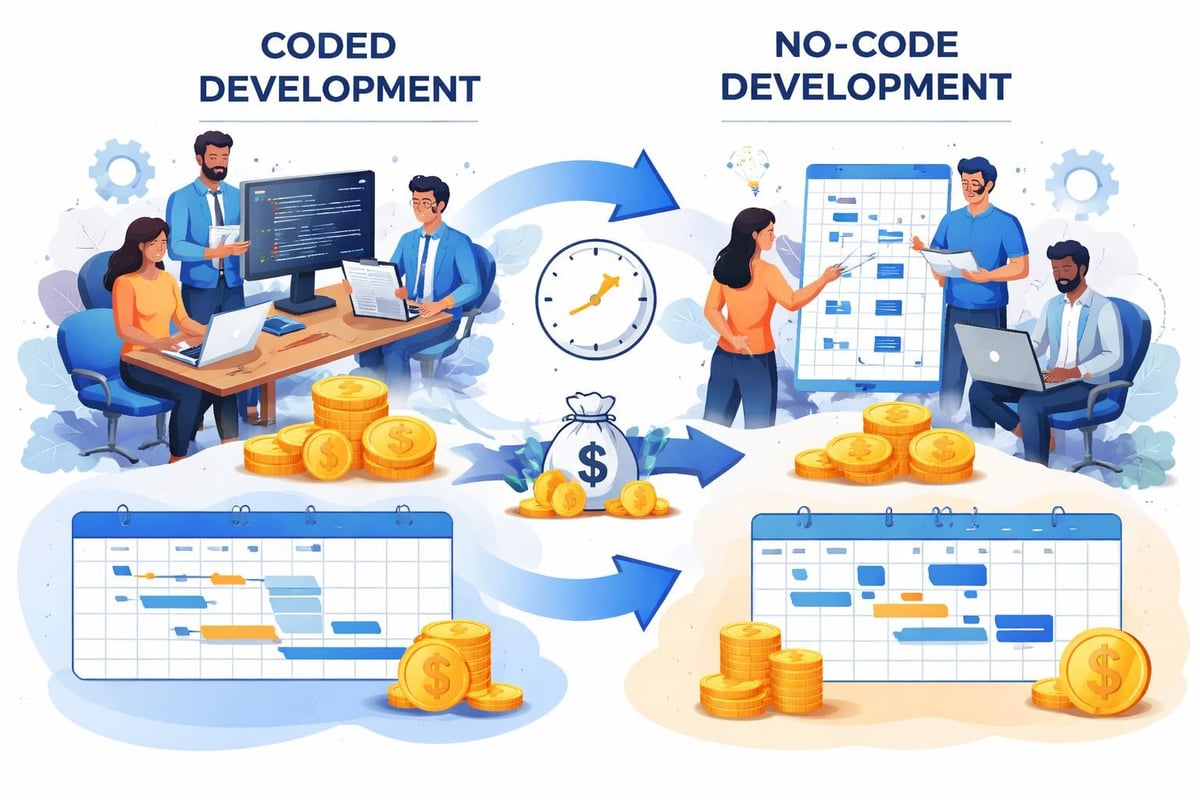
| Traditional Development | No-Code Development | Impact |
|---|---|---|
| 6-12 month timeline | 2-6 week timeline | 75-90% faster |
| $200K-$500K budget | $20K-$75K budget | 60-90% cost reduction |
| Dedicated dev team required | Business analysts can build | Reduced technical dependency |
| Limited iteration capacity | Rapid iteration enabled | Faster market response |
Leading No-Code Platforms for Enterprise Applications
The no-code ecosystem has matured significantly, with platforms now offering enterprise-grade capabilities that rival traditionally coded solutions. Multiple no-code development platforms provide specialized features designed for large-scale business operations.
Bubble for Complex Web Applications
Bubble has emerged as a premier platform for enterprises seeking to build sophisticated web applications without traditional coding. The platform provides extensive database functionality, complex workflow automation, and robust API integration capabilities. Organizations use Bubble to create customer portals, internal management systems, and even full-featured SaaS products.
The platform's strength lies in its flexibility and power. Unlike simplified app builders, Bubble enables developers to construct intricate business logic and create custom user experiences that match specific enterprise requirements. Companies working with experienced agencies can leverage application development platforms to maximize their investment in these technologies.
AI-Enhanced No-Code Development
Artificial intelligence is transforming how businesses build enterprise apps without coding. Google's Workspace Studio platform represents a new generation of tools that combine no-code interfaces with AI capabilities, enabling users to create intelligent agents and automated workflows through natural language instructions.
AI-enhanced no-code platforms offer:
- Natural language programming that converts business requirements into functional code
- Intelligent suggestion systems that recommend optimal workflows and data structures
- Automated testing capabilities that identify potential issues before deployment
- Predictive analytics integration that enhances application functionality
- Machine learning model deployment without data science expertise
These capabilities extend the reach of no-code development into previously inaccessible territory. Enterprises can now implement sophisticated AI features that would have required specialized talent and months of development work.
Building Secure Enterprise-Grade Applications
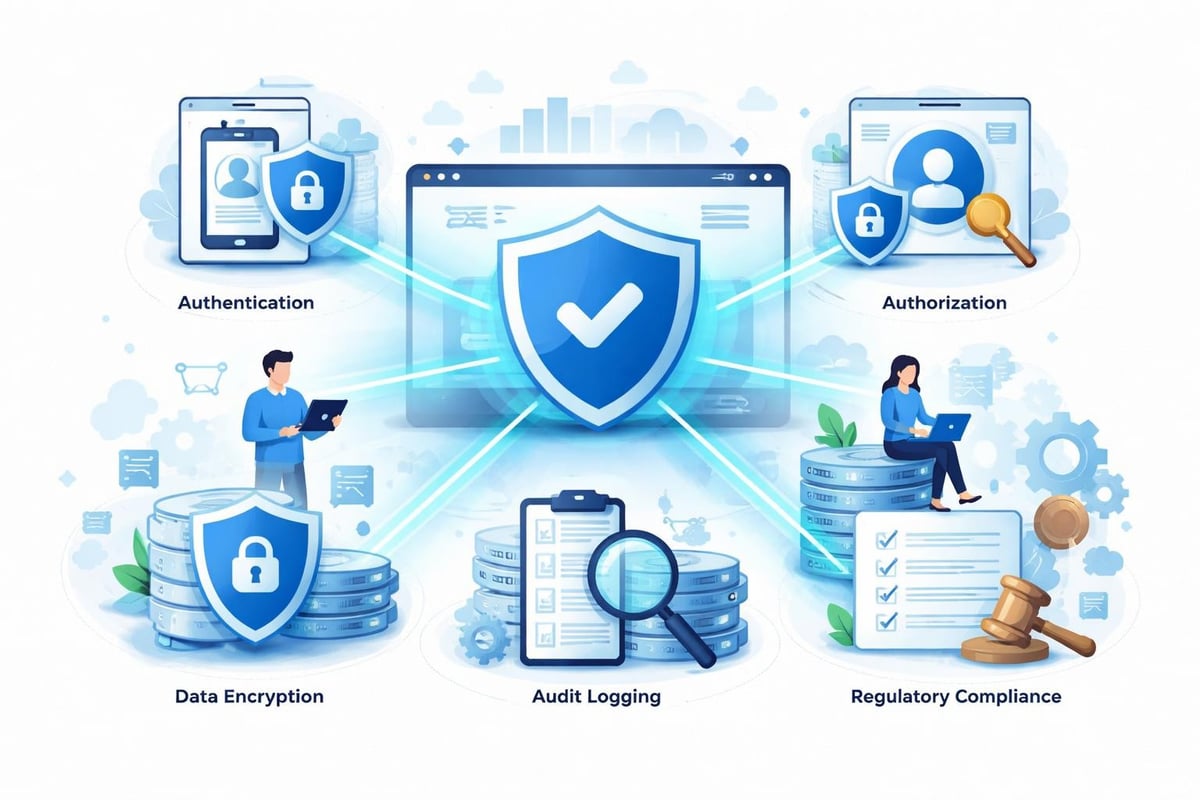
Security and compliance represent critical concerns for enterprise organizations. The misconception that no-code platforms compromise security continues to fade as vendors implement robust protection mechanisms. Modern platforms enable organizations to build enterprise apps without coding while maintaining the security standards required for sensitive business operations.
Security Features in No-Code Platforms
Enterprise no-code solutions incorporate comprehensive security frameworks including role-based access controls, data encryption at rest and in transit, SOC 2 compliance certifications, and regular security audits. Hexaware's partnership with Replit demonstrates how enterprise-focused no-code solutions prioritize security while maintaining accessibility for non-technical users.
Organizations must evaluate platforms based on their specific compliance requirements. Healthcare companies need HIPAA compliance, financial institutions require SOC 2 and other financial regulations, while government contractors need FedRAMP certification.
Data Architecture and Scalability
Successful enterprise applications require thoughtful data architecture regardless of how they're built. No-code platforms provide sophisticated database management capabilities that support complex relational structures, handle large data volumes efficiently, and integrate with existing enterprise data warehouses.
When businesses build enterprise apps without coding, they must still consider scalability from the outset. Platforms designed for enterprise use provide automatic scaling features, load balancing capabilities, and performance optimization tools that ensure applications maintain responsiveness as user bases grow.
Common Enterprise Use Cases
The versatility of no-code platforms enables diverse applications across every business function. Understanding successful implementation patterns helps organizations identify opportunities within their own operations.
Customer-Facing Applications
Many enterprises use no-code platforms to create customer portals, service request systems, and self-service knowledge bases. These applications improve customer experience while reducing support costs. Companies report deployment times measured in weeks rather than the months required for traditionally coded equivalents.
Popular customer-facing implementations include:
- Client onboarding portals with document management
- Service ticketing systems with automated routing
- Product configurators for complex offerings
- Customer feedback collection and analysis tools
- Appointment scheduling and resource booking systems
Organizations leveraging no-code tools for SaaS development find they can rapidly test product concepts and gather market validation before committing to extensive custom development.
Internal Operations and Workflow Automation
Internal tools represent the sweet spot for no-code development. These applications typically have well-defined requirements, limited user bases, and don't require the polish expected in consumer-facing products. Teams can build enterprise apps without coding to address specific operational challenges that don't justify traditional development investment.
Enterprise integration platforms connect no-code applications with existing business systems, creating unified workflows across disparate technologies. This integration capability transforms isolated applications into comprehensive business solutions.
| Application Type | Development Time | User Adoption Rate | ROI Timeline |
|---|---|---|---|
| HR onboarding portal | 3-4 weeks | 85-95% | 2-3 months |
| Inventory management | 4-6 weeks | 70-80% | 3-4 months |
| Project tracking system | 2-3 weeks | 90-95% | 1-2 months |
| Vendor management | 4-5 weeks | 75-85% | 3-5 months |
Implementation Strategies for Success
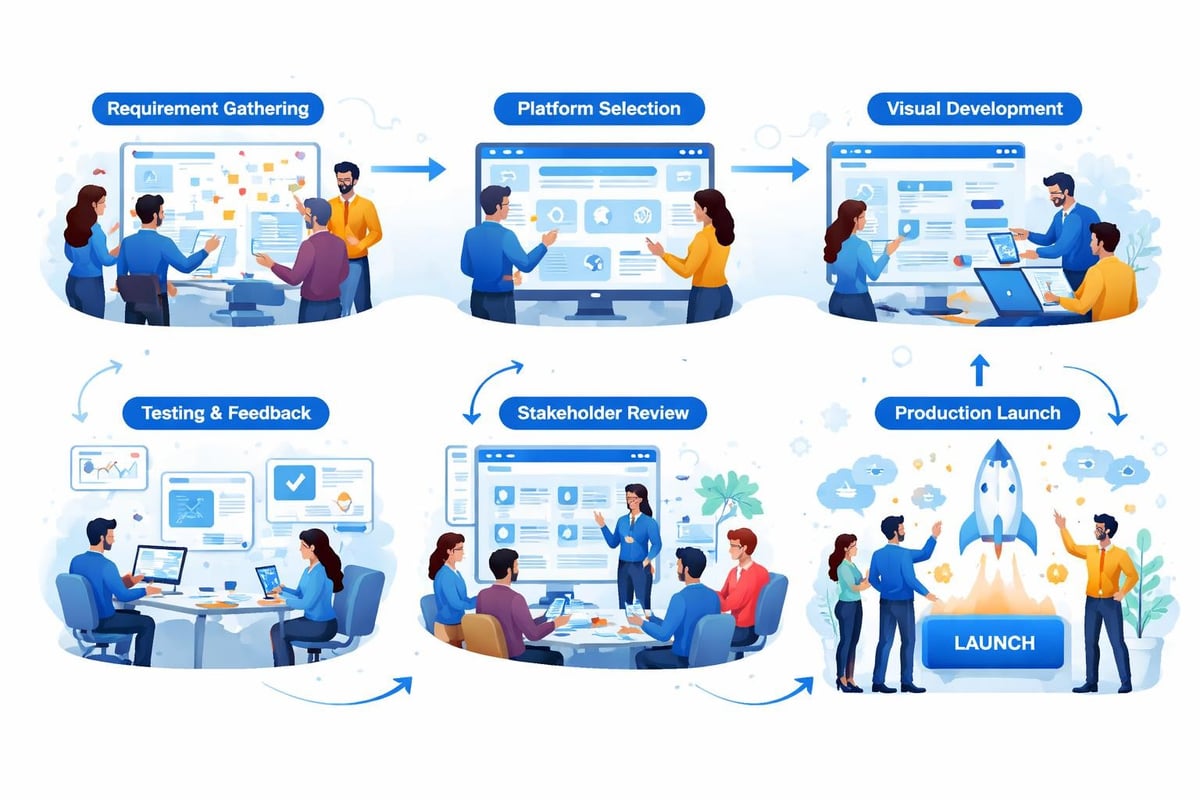
Successfully adopting no-code development requires more than selecting a platform. Organizations need strategic approaches that maximize value while minimizing risks associated with new technology adoption.
Building Internal Capability
Forward-thinking enterprises invest in building internal no-code expertise. This approach involves identifying power users within business departments, providing structured training on selected platforms, creating centers of excellence that share best practices, and establishing governance frameworks for application development.
Some organizations partner with specialized agencies initially while simultaneously building internal capabilities. Working with experienced no-code development agencies provides immediate expertise while transferring knowledge to internal teams through collaborative development.
Governance and Best Practices
As more business users gain ability to build enterprise apps without coding, governance becomes essential. Organizations must balance empowerment with control, ensuring applications meet quality standards while avoiding proliferation of unsupported shadow IT solutions.
Effective governance frameworks address:
- Application approval processes that review new projects before development
- Data security standards that all applications must meet
- Integration protocols for connecting with enterprise systems
- Testing and quality assurance requirements before production deployment
- Documentation standards that ensure maintainability
- Ownership and support responsibilities for deployed applications
These frameworks enable innovation while protecting organizational interests and ensuring long-term application sustainability.
Measuring Success and ROI
Quantifying the value of no-code initiatives helps secure ongoing investment and expand adoption. Enterprises track various metrics to assess program success and identify optimization opportunities.
Key Performance Indicators
Organizations measure no-code success through development velocity metrics comparing time-to-deployment against traditional methods, cost savings from reduced developer requirements and faster delivery, user adoption rates for deployed applications, and business impact metrics specific to each application's purpose.
The ability to build enterprise apps without coding enables experimentation that wasn't economically viable previously. Companies can test multiple solutions to business problems, measuring results and iterating based on performance data.
Long-Term Value Creation
Beyond immediate project-level returns, no-code adoption creates lasting organizational value. Business users develop technical literacy that improves their collaboration with IT teams, understand technology constraints and possibilities more clearly, and become more effective at identifying automation opportunities.
This cultural shift toward technology empowerment represents perhaps the most significant long-term benefit. Organizations become more agile and innovative as technology creation moves closer to business problems.
Overcoming Common Challenges
Despite the advantages, enterprises encounter obstacles when adopting no-code development. Understanding these challenges and proven mitigation strategies accelerates successful implementation.
Technical Limitations and Workarounds
While modern no-code platforms offer impressive capabilities, certain requirements may exceed their limitations. Organizations must realistically assess which use cases suit no-code development versus those requiring traditional coding. Understanding development tooling options helps teams make informed architectural decisions.
Hybrid approaches often provide optimal solutions, combining no-code development for standard business logic with custom code for specialized requirements. Many platforms support this extensibility, allowing developers to create custom components that business users then incorporate into their applications.
Change Management and Adoption
Technology adoption ultimately depends on people. Successful no-code programs address organizational change through executive sponsorship, clear communication about program goals and benefits, comprehensive training programs, and quick wins that demonstrate value and build momentum.
Resistance often stems from misunderstanding rather than fundamental opposition. IT teams may fear loss of control or quality degradation, while business users might doubt their ability to build applications. Addressing these concerns through education and collaborative projects builds confidence across stakeholder groups.
Future Trends in Enterprise No-Code
The trajectory of no-code development points toward increasing sophistication and broader adoption. Several emerging trends will shape how organizations build enterprise apps without coding in coming years.
Convergence with AI and Automation
Artificial intelligence integration represents the most significant evolution in no-code platforms. Research into LLM-based development approaches demonstrates how natural language interfaces will further lower barriers to application creation, enabling users to describe desired functionality conversationally rather than configuring visual builders.
This convergence extends beyond development interfaces to application capabilities themselves. No-code platforms increasingly incorporate AI features that users can activate through simple configurations, bringing machine learning capabilities to applications without data science expertise.
Industry-Specific Solutions
Generic no-code platforms are giving way to specialized solutions designed for specific industries. Healthcare providers use HIPAA-compliant platforms with built-in medical workflows, financial services leverage platforms with embedded compliance features, and manufacturing organizations adopt solutions with supply chain and IoT integration capabilities.
This specialization accelerates development by providing pre-built components aligned with industry requirements, reducing the configuration needed to create functional applications.
Selecting the Right No-Code Partner
Many enterprises choose to work with specialized agencies when implementing no-code solutions, particularly for initial projects or complex applications. Evaluating potential development partners requires assessment of platform expertise, enterprise experience, and development methodology.
Critical selection criteria include:
- Demonstrated experience with enterprise-scale implementations
- Technical depth in specific platforms relevant to your requirements
- Understanding of your industry's unique challenges and regulations
- Collaborative approach that transfers knowledge to internal teams
- Portfolio demonstrating diverse application types and complexity levels
The right partner accelerates success while building internal capabilities that enable long-term self-sufficiency. Organizations should view agency relationships as strategic partnerships rather than pure outsourcing arrangements.
The ability to build enterprise apps without coding has transformed from an intriguing possibility into a business imperative for organizations seeking competitive advantage through technology. No-code platforms enable enterprises to respond rapidly to market changes, empower business users to solve their own operational challenges, and free technical resources for truly differentiated innovation that requires custom development. Big House Technologies specializes in helping enterprises harness no-code and AI platforms to create scalable solutions that drive business results, providing end-to-end support from initial scoping through deployment and beyond, ensuring your organization maximizes the value of these transformative technologies.

About Big House
Big House is committed to 1) developing robust internal tools for enterprises, and 2) crafting minimum viable products (MVPs) that help startups and entrepreneurs bring their visions to life.
If you'd like to explore how we can build technology for you, get in touch. We'd be excited to discuss what you have in mind.
Other Articles
Discover how a custom software solution can transform your business in 2026. Learn benefits, costs, and modern development approaches including no-code.
Explore Cursor AI pricing in 2026. Compare free, Pro, and Business plans with detailed cost breakdowns to find the best fit for your development needs.
Discover how to hire Bubble developer for your 2025 project with this step-by-step guide. Learn key skills, vetting tips, and avoid costly hiring mistakes.