
In today’s fast-paced tech world, launching a startup is a race against time. Success often depends on how quickly you can bring your idea to life and test it in the real market.
This guide is designed for founders who want to get ahead by working with mvp developers for startups in 2026. You’ll learn how to choose the right development partner, build your MVP efficiently, and avoid common mistakes.
We’ll cover the latest trends, essential developer qualities, and step-by-step strategies to help you reach product-market fit and set the stage for long-term growth.
Understanding MVP Development in 2026
The landscape for mvp developers for startups is evolving rapidly as technology and market demands shift. In 2026, building a minimum viable product is not just about launching quickly—it is about learning fast, adapting, and leveraging the latest tools to stay ahead. Let us explore how the MVP concept, key trends, and the critical role of MVPs are shaping startup success.

The Evolving Definition of MVP
In 2026, the definition of an MVP is more dynamic than ever. Startups now expect mvp developers for startups to deliver products that enable rapid learning and adaptation. The days of launching with the bare minimum are over—today’s MVPs need to impress users quickly and gather actionable data right from the start.
Rapid iteration cycles are at the heart of this new approach. Successful teams use tight feedback loops, releasing new features or fixes in days, not months. User feedback is a cornerstone, with analytics platforms and in-app surveys guiding every product decision.
Data-driven development is non-negotiable. MVPs in 2026 are built with analytics hooks from day one, so founders can measure what matters and pivot fast. For example, several fintech startups recently launched simple yet polished MVPs, validated their core assumptions within weeks, and iterated based on real customer insights. These companies credit their success to partnering with mvp developers for startups who understand both technology and user-centric validation.
- Emphasis on rapid learning cycles
- Prioritizing user feedback and actionable data
- Case studies highlight the importance of fast, focused MVPs
Key Trends Impacting MVP Development
Several trends are reshaping how mvp developers for startups approach product creation. The rise of no-code and low-code platforms is a game changer. According to Gartner's Low-Code Development Forecast, by 2026, about 65% of all app development will use these tools, letting startups prototype and launch faster than ever.
AI and automation are now integral parts of MVPs. Developers use AI for everything from personalized onboarding to customer support chatbots, making products smarter from the start. Remote and distributed development teams have become the standard, enabling startups to tap into a global talent pool and work around the clock.
Security, scalability, and compliance are no longer optional. Investors and users expect every MVP to meet high standards for data protection and regulatory compliance from day one.
- Widespread adoption of no-code/low-code tools
- AI and automation integrated early in MVPs
- Remote teams and global collaboration are the new normal
- Security, scalability, and compliance are baseline requirements
Why MVPs Are Critical for Startups
For startups, the MVP approach remains the most effective way to reduce risk and maximize resources. MVP developers for startups help founders bring ideas to life quickly, so they can test assumptions before committing to a full-scale product.
The benefits are clear:
- Reduced time-to-market and lower development costs
- Early validation with real users
- Ability to attract early adopters and investors
Many successful companies owe their growth to MVP-first strategies. For example, startups that launched with focused MVPs were able to pivot or refine their products based on user feedback, leading to stronger product-market fit and increased investor interest.
The bottom line: working with skilled mvp developers for startups is the smartest way to validate ideas, adapt to market feedback, and lay the groundwork for future growth.
Essential Qualities of Top MVP Developers
Finding the right mvp developers for startups is crucial for turning a vision into a viable product. The best developers blend technical skills, product thinking, communication, and cost-consciousness to help startups succeed in 2026’s fast-moving landscape.

Technical Expertise for 2026
Technical prowess is a non-negotiable quality for mvp developers for startups. Developers must be fluent in cutting-edge frameworks and platforms, especially as no-code and AI-driven tools become mainstream.
| Framework/Platform | Use Case | 2026 Advantage |
|---|---|---|
| Bubble | No-code web MVPs | Rapid prototyping, easy edits |
| Flutter | Cross-platform mobile apps | Consistent UI, fast updates |
| React | Interactive web interfaces | Scalability, strong ecosystem |
| AI Integrations | Smart features, automation | Competitive edge, innovation |
Alongside frameworks, experience with cloud infrastructure and robust APIs is vital. MVP developers for startups must also understand compliance (GDPR, CCPA) and modern security standards, protecting both user trust and business growth.
Product Mindset and Startup Experience
The most effective mvp developers for startups do more than just code. They think like founders, translating business goals into actionable product features. Experience working within agile, fast-paced environments is essential.
Look for developers with a portfolio of MVPs built for early-stage companies. These examples reveal their ability to prioritize core features, adapt quickly, and deliver value with each iteration. Developers with startup experience can anticipate challenges unique to new ventures and help guide strategic pivots when needed.
Communication and Collaboration Skills
Transparent communication is key to remote teamwork, which is now the standard for mvp developers for startups. Top developers are responsive and proactive, ensuring alignment throughout the project.
They excel at collaborative problem-solving and embrace feedback cycles. Familiarity with project management tools like Figma, Slack, and Jira ensures smooth workflows. Regular check-ins and clear documentation help everyone stay on the same page, reducing costly missteps and delays.
Cost-Efficiency and Speed
Startups must balance quality with limited resources, making cost-efficient mvp developers for startups invaluable. The best teams optimize both budget and speed, often leveraging no-code and low-code solutions.
For example, using no-code tools can reduce both development costs and timelines dramatically. According to How to Build Scalable MVPs with No-Code Tools, startups can launch robust MVPs in weeks instead of months while keeping expenses manageable.
Benchmarks for 2026 indicate median MVP builds take four to eight weeks, with costs varying by complexity and region. By choosing developers skilled in these modern approaches, startups maximize their runway and focus on growth.
How to Choose the Right MVP Developer for Your Startup
Choosing the right mvp developers for startups in 2026 requires more than just technical skills. It is a multi-step process that balances vision, technology, and partnership. Each step below helps you avoid costly mistakes and sets your startup on the path to a successful MVP launch.

Step 1: Define Your MVP Scope and Goals
Begin by clarifying what your MVP must achieve. Outline the problem you are solving and identify core features that provide the most value to your first users. Avoid loading your MVP with every idea—focus on essentials.
Set measurable objectives and KPIs for your MVP launch. These could include user sign-ups, engagement rates, or feedback scores. A narrow, well-defined scope makes it easier for mvp developers for startups to deliver quickly and efficiently.
Consider this: a startup that focused only on its unique matching algorithm, leaving out non-essential features, launched in weeks instead of months and validated its concept with real users.
Step 2: Evaluate Developer Expertise and Approach
Carefully review the portfolio and skills of potential mvp developers for startups. Look for experience in your industry and with the latest frameworks such as Bubble, Flutter, or AI integrations. Prioritize developers who understand your business model and can translate goals into actionable features.
Cultural fit also matters. Do they share your vision and communicate clearly? A good partnership enables faster issue resolution and innovation. For a deeper dive into what to look for in a technical partner, check out Software Development for Startups, which expands on the criteria for choosing the right team.
A developer with startup experience will anticipate challenges and help you avoid common pitfalls.
Step 3: Assess Technology Stack and Tools
Choosing the right tech stack is crucial for long-term success. Compare no-code, low-code, and traditional development options. No-code platforms like Bubble allow mvp developers for startups to build and iterate rapidly, while low-code tools offer more customization with faster delivery than conventional coding.
| Approach | Pros | Cons |
|---|---|---|
| No-code | Fast, cost-effective | Limited customization |
| Low-code | Balance of speed & flexibility | Some complexity |
| Traditional | Full control, scalability | Higher cost, longer timeline |
Ensure your MVP can scale and adapt as your user base grows. Discuss with developers how each choice impacts future updates and integrations.
Step 4: Review Project Management and Communication Practices
Strong communication is essential, especially with remote teams. Top mvp developers for startups use transparent processes for project milestones, feedback, and reporting. Ask about their use of collaboration tools like Figma for design, Slack for messaging, and Jira for tracking tasks.
Regular check-ins and clear documentation help keep everyone aligned. Set expectations for response times, deliverables, and feedback cycles. This approach reduces misunderstandings and keeps your MVP timeline on track.
Step 5: Compare Pricing, Contracts, and Value
Understand how different pricing models work. Fixed-price contracts provide predictability, while hourly or milestone-based agreements offer flexibility. Protect your intellectual property by reviewing contract clauses carefully.
Here is a quick comparison:
| Model | Best for | Watch out for |
|---|---|---|
| Fixed | Clear, defined scope | Less flexibility |
| Hourly | Evolving requirements | Potential budget overruns |
| Milestone | Complex, phased projects | Requires clear deliverables |
Research average costs by region and platform. The best mvp developers for startups will be transparent about pricing, helping you optimize for both quality and budget.
The MVP Development Process: Step-by-Step Guide
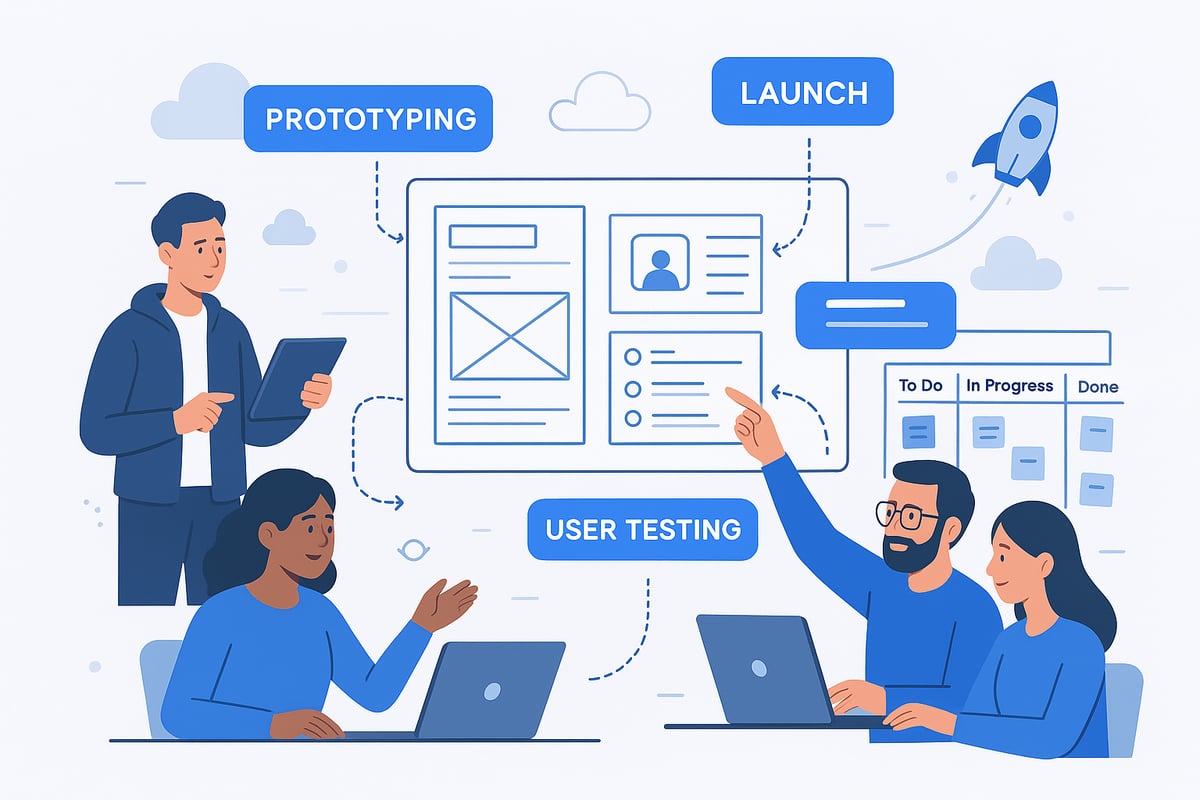
Building a winning product starts with a clear process. For founders navigating the world of mvp developers for startups, understanding each key stage is essential. Let’s break down the MVP journey into actionable steps you can follow for success in 2026.
Step 1: Discovery & Scoping
Every MVP journey starts with discovery and scoping. Here, mvp developers for startups work closely with founders to identify real user problems, define the value proposition, and outline core features.
The focus should be on solving a specific pain point, not building a full-featured product. Stakeholder alignment is crucial, ensuring everyone agrees on goals and priorities. Use tools like Figma and Miro for collaborative workshops, allowing rapid ideation and clear documentation.
A successful scoping session creates a living document to guide the team. For a deeper dive into structuring this phase, check out this Build MVP Step-by-Step Guide, which walks through scoping, documentation, and setting the right foundation.
Step 2: Rapid Prototyping & Design
With a clear scope, mvp developers for startups move quickly to prototyping and design. The goal is to visualize ideas and gather early feedback before heavy development begins.
Wireframes and interactive prototypes help test user flows and interface concepts. Prioritizing UI/UX at this stage boosts adoption and uncovers usability issues. Use Figma for wireframes and clickable prototypes, and involve potential users as early as possible.
Startups often pivot based on prototype feedback. This rapid learning loop helps prevent costly missteps down the road. Always keep the feedback cycle tight for maximum impact.
Step 3: Lean Development & Iteration
Lean development is all about building just enough to validate your idea. mvp developers for startups leverage agile sprints and continuous feedback to deliver working software in weeks, not months.
No-code and low-code platforms are game changers here, enabling rapid builds and easy updates. Teams should prioritize core features, iterate fast, and avoid overengineering. A typical sprint might include development, internal review, user feedback, and quick iteration.
Many successful MVPs launch in record time using this approach. Clear milestones and regular demos keep progress transparent and stakeholders engaged throughout the journey.
Step 4: Testing & Quality Assurance
Testing is the backbone of a robust MVP. mvp developers for startups run functional, usability, and security checks to catch issues early and ensure a smooth experience for users.
Functional testing confirms features work as intended. Usability testing uncovers pain points or confusion in the user journey. Security testing is non-negotiable, especially with rising compliance standards in 2026. Use tools like automated test suites, user session recordings, and bug tracking systems to streamline the process.
Continuous testing and feedback before launch reduces risk and supports a more polished MVP. Iterating on user input sets the stage for a successful rollout.
Step 5: Launch & Post-Launch Support
The launch phase is where all the preparation pays off. mvp developers for startups coordinate beta releases or soft launches to gather real-world data and monitor KPIs.
Early adopters provide valuable insights that inform the next iteration. Post-launch, it’s vital to track user behavior, address bugs, and refine features. Set up analytics dashboards and support channels to capture feedback quickly.
Planning for growth starts here. With strong post-launch support, mvp developers for startups help founders move from MVP to scalable product, laying the groundwork for future expansion and ongoing success.
Common MVP Development Pitfalls and How to Avoid Them
Building a minimum viable product can accelerate your startup’s path to market, but even experienced teams stumble over common pitfalls. Let’s break down the top mistakes mvp developers for startups face and how you can sidestep them.
Overbuilding and Feature Creep
One of the most frequent errors mvp developers for startups make is overloading the product with features before true validation. This can stretch budgets, delay launches, and cloud the core value you’re testing.
- Focus on one core problem
- Limit features to must-haves for your target user
- Use feedback loops to prioritize
Leveraging no-code platforms can help teams iterate quickly and avoid unnecessary complexity. For more on this trend, see Why No-Code Development Is the Future for Startups. Remember, a lean MVP is easier to test and pivot.
Poor Communication and Misalignment
With remote work now the standard, clear communication is vital for mvp developers for startups. Misunderstandings can stall progress, inflate costs, and derail product vision. In fact, the global tech talent shortage and distributed teams can make alignment even harder (World Economic Forum on Global Tech Talent Shortage).
- Schedule frequent check-ins
- Document requirements in shared tools
- Set clear expectations and deliverables
Transparent teamwork ensures everyone moves in the same direction, reducing costly missteps.
Ignoring User Feedback
Some mvp developers for startups fall into the trap of building in a vacuum. Skipping user testing or dismissing feedback means missing out on critical insights that can refine your product.
- Run early usability tests
- Collect feedback from real users
- Adjust features based on data
Case studies show that startups who pivoted after user input often found stronger product-market fit. Make feedback a continuous part of your process.
Underestimating Security and Compliance
Startups sometimes overlook security and compliance, thinking these are only concerns for larger companies. However, mvp developers for startups must address regulations like GDPR or CCPA from day one to avoid legal and reputational risks.
- Use checklists for data protection
- Build security into every stage
- Stay updated on industry standards
Recent breaches have shown how costly neglecting these areas can be. Protect your users and your business from the start.
Failing to Plan for Scale
Finally, some mvp developers for startups forget to consider future growth. Technical debt from rushed builds can hinder expansion and require expensive rework later.
- Design architecture with scalability in mind
- Document code and decisions for future teams
- Prioritize maintainable solutions
By thinking ahead, you’ll avoid bottlenecks and keep your startup agile as you move beyond MVP.
Scaling Beyond MVP: Next Steps for Startup Growth
Taking your startup beyond the MVP stage is where the real adventure begins. With the support of experienced mvp developers for startups, you can turn early traction into lasting growth. Let’s break down the essential next steps for scaling successfully.
Transitioning from MVP to Full Product
After launching your MVP, it’s crucial to assess whether you’re ready to invest in a full product build. Look for signs like strong user engagement, positive feedback, and steady growth in key metrics. Mvp developers for startups play a pivotal role in helping you analyze usage data and prioritize which features to develop next.
The transition phase should focus on validated learning. Use what you’ve discovered from real users to guide your roadmap. For example, many successful startups expand their products incrementally, adding only the features that drive real value. This ensures you’re aligning resources with genuine market demand.
Case in point: several SaaS companies in recent years have doubled their user base by scaling methodically beyond their MVP, always guided by data and user feedback.
Building a Long-Term Development Team
As your product evolves, you’ll need to decide whether to keep working with external mvp developers for startups or build an in-house team. Each approach has its merits. External partners offer flexibility, speed, and a broad skill set, which is ideal for rapid scaling. In contrast, an in-house team gives you deeper product ownership and long-term stability.
Consider structuring your team to include both internal and external talent initially. This hybrid model allows for knowledge transfer while maintaining momentum. According to industry data, most startups begin hiring core team members within 6–12 months after MVP launch, ensuring continuity and expertise as they scale.
Use collaboration tools and clear onboarding processes to create a seamless transition, regardless of your team’s structure.
Fundraising and Investor Relations Post-MVP
After validating your MVP, showcasing traction is essential for attracting investors. Mvp developers for startups can help you prepare compelling demo days and pitch decks by highlighting growth metrics, user adoption, and technical scalability.
Investors want evidence that your product meets a real need and can scale efficiently. Leverage your MVP’s performance data to tell a convincing story. According to the OECD Report on Startup Formation Trends, digital-first ventures with clear MVP validation are more likely to secure early-stage funding and expand globally.
Prepare for investor meetings by documenting your development journey, milestones, and next steps. This transparency boosts confidence and sets the stage for future rounds.
Continuous Improvement and Agile Iteration
Scaling isn’t a one-time event—it’s an ongoing process. The best mvp developers for startups embrace agile methodologies, using regular feedback loops to refine features and address user needs. Set up systems to collect user input, monitor KPIs, and prioritize improvements.
Employ tools like Jira or Trello for sprint planning, and use analytics platforms to track key metrics. Benchmarking your iteration cycles against industry averages can help you stay competitive—most startups in 2026 iterate every 2–4 weeks.
Remember, continuous improvement keeps your product relevant and resilient as the market evolves.
Preparing for Market Expansion
Once your core product is stable, it’s time to look beyond your initial audience. Mvp developers for startups can guide you through localization, compliance, and infrastructure upgrades to support new user segments and geographies.
Start by researching target markets, adapting your product for local languages, and ensuring data compliance with regional regulations. The OECD Report on Startup Formation Trends highlights how startups that plan for international growth from the MVP stage often achieve faster global traction.
Case studies show that early planning for expansion—combined with scalable architecture—sets the foundation for long-term success.
After diving into the key strategies for choosing the right MVP developer and seeing how no code and AI can fast track your product, it’s clear that speed and efficiency are game changers for startups in 2026. If you’re eager to turn your idea into a real product fast without sacrificing quality or blowing your budget, you’re not alone. The good news is you don’t have to wait months to see results. Ready to move from planning to launching? Launch Your MVP in Weeks, Not Months and see just how quickly you can get your startup off the ground.

About Big House
Big House is committed to 1) developing robust internal tools for enterprises, and 2) crafting minimum viable products (MVPs) that help startups and entrepreneurs bring their visions to life.
If you'd like to explore how we can build technology for you, get in touch. We'd be excited to discuss what you have in mind.
Other Articles
Unlock smart solutions with Bubble AI in 2025. Discover features, use cases, and expert tips to automate and scale your business with this AI-powered guide.
Unlock the secrets of developing an MVP in 2025 with step by step guidance trends and tools Learn how to build test and launch a standout product faster
Discover the best AI tools for coding in 2026. Learn how AI-powered development platforms boost productivity, streamline workflows, and transform software creation.