

Imagine launching a powerful bubble website in just days, without writing a single line of code. It sounds futuristic, but in 2026, this is your reality.
This guide is crafted for startup founders, entrepreneurs, and enterprise innovators eager to build and scale their bubble website quickly and efficiently.
We’ll reveal why Bubble remains the leading no-code platform, how to plan your project, and walk you through the entire build process with practical tips and best practices.
If you crave rapid results, want to maximize scalability, and save on development costs, this actionable bubble website guide will show you how to turn your vision into a launch-ready product.
Why Choose Bubble for Website Development in 2026?
Imagine building a bubble website that keeps pace with the fast-changing no-code world. In 2026, the no-code revolution is in full swing, and Bubble remains a leader. More companies are choosing platforms that let them innovate quickly, cut costs, and launch products without traditional coding bottlenecks.

The No-Code Revolution and Bubble’s Place in 2026
The no-code movement has exploded by 2026, empowering creators to launch digital products faster than ever. Bubble stands out thanks to its robust features and loyal user base. According to recent Bubble website development guide insights, Bubble holds a significant market share among visual web builders.
Compared to traditional coding, Bubble’s approach slashes development time and costs. While other platforms like Webflow or Adalo offer specialized tools, Bubble’s full-stack capabilities and visual logic set it apart. However, users should weigh potential trade-offs, such as vendor lock-in or performance limits for extremely large apps.
Many enterprises and startups now launch MVPs or SaaS tools as a bubble website, often going from idea to launch in a matter of weeks.
Core Features and Capabilities of Bubble
Bubble’s visual editor brings a true drag-and-drop experience for building responsive web apps. You can craft a bubble website using integrated database tools, workflow automations, and user authentication without writing code.
Key features include:
- Responsive UI builder with reusable elements
- Built-in database and workflow automation
- User roles, permissions, and authentication
- Plugin marketplace for third-party integrations
From marketplaces to CRMs, a bubble website can handle complex business logic and custom workflows. Bubble even supports extensibility through APIs and server-side plugins, giving you the flexibility to scale or customize as your project grows.
When Bubble is (and Isn’t) the Right Choice
A bubble website is ideal for MVPs, SaaS products, marketplaces, and internal tools. Its speed and flexibility make it a favorite among startups and enterprises alike. However, it may not be the best fit for projects needing ultra-high concurrency, bespoke frontends, or strict regulatory compliance.
Cost factors include varying pricing tiers, usage-based expenses, and potential plugin costs. Large-scale apps require careful planning to avoid performance bottlenecks. Consider migration strategies to minimize vendor lock-in risks.
Use this decision matrix to evaluate your fit:
- MVPs needing rapid launch: Strong fit
- Regulated industries: Review compliance needs
- High-performance, custom UI: May require alternatives
Notable Bubble Success Stories
Bubble powers a growing ecosystem of success stories. Complex apps like marketplaces, SaaS platforms, and learning management systems have launched as a bubble website and scaled impressively. Startups use Bubble to prototype and iterate quickly, while enterprises adopt it for digital transformation.
The Bubble community has seen remarkable growth, with more resources, templates, and expert support than ever. Recent case studies highlight time-to-market reductions of up to 70 percent and dramatic cost savings. Enterprises report smooth scaling from MVP to thousands of users, showing the true business impact of a bubble website.
Planning Your Bubble Website: Strategy, Scoping & Design
Careful planning is the foundation of every successful bubble website. Before you dive into building, clear strategy and thoughtful design choices will save you time, money, and frustration. Here’s how to approach your project with confidence and clarity.
Defining Your Website’s Purpose and Goals
Start by pinpointing the core purpose of your bubble website. Who is your target audience? Map out detailed user personas and consider their needs. Set measurable business goals and key performance indicators (KPIs) so you know exactly what success looks like.
List your must-have features, prioritizing what’s essential for launch. For most, this means focusing on an MVP before adding advanced functionality. Research competitors to spot gaps and benchmarks. Want a practical guide to scalable MVP planning? Check out this step-by-step guide to building scalable MVPs with Bubble for actionable strategies.
Avoid scope creep by sticking to your MVP goals. For example, if you’re launching a marketplace, start with user profiles, listings, and transactions before adding social features.
Scoping, Wireframing, and User Flows
Once your bubble website objectives are clear, visualize the user experience. Use tools like Figma or Bubble’s built-in wireframing features to sketch layouts and plan navigation.
Map user journeys for each persona. Identify the essential pages, workflows, and data models your bubble website needs. Consider a simple table for clarity:
| Page | Purpose |
|---|---|
| Home | Introduce platform |
| Dashboard | User management |
| Product Listing | Browse items |
| Checkout | Complete purchases |
Plan for responsive design and accessibility from the start. Share wireframes with stakeholders for feedback. For a multi-vendor marketplace, wireframe seller dashboards, product pages, and order management early to streamline development.
Database Architecture and Data Modeling in Bubble
A strong database is the engine of your bubble website. Define your data types—users, products, orders—and their relationships. Use one-to-one, one-to-many, or many-to-many structures as needed.
For example, an e-commerce bubble website might include:
- User: name, email, role
- Product: title, price, seller (linked to User)
- Order: buyer (User), product (Product), status
Leverage option sets for static data like categories or order statuses. Document your data models and privacy settings for security and future scalability. Always consider GDPR and privacy best practices when handling user data.
Big House Technologies: Your No-Code Partner
Partnering with experts can accelerate your bubble website journey. Big House Technologies is a leading no-code agency specializing in Bubble and AI development.
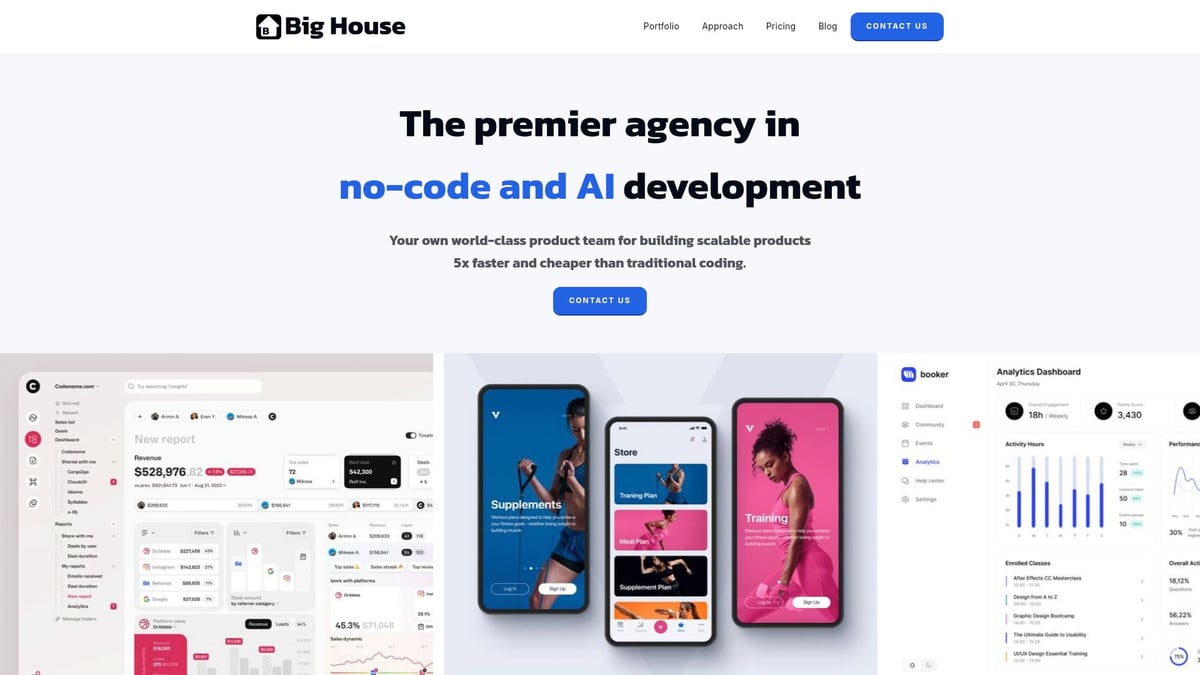
They help startups and enterprises with project scoping, UI/UX design, and custom workflows. Big House delivers rapid prototyping and cost-effective MVPs, leveraging a collaborative process that keeps you involved every step.
Clients benefit from flexible pricing, robust QA, and digital transformation support. Case studies show successful launches of SaaS apps and marketplaces using Bubble. Interested in expert guidance? Contact Big House for a free consultation and see how they can turn your bubble website vision into reality.
Step-by-Step Guide: Building Your Bubble Website in 2026
Building a bubble website in 2026 is easier and more powerful than ever. Follow this comprehensive step-by-step guide to launch a robust, scalable, and modern site—no coding required. Each phase focuses on practical actions, best practices, and what’s new for the 2026 platform.

Step 1: Setting Up Your Bubble Account and Project
Start your bubble website journey by creating an account. In 2026, Bubble’s onboarding is streamlined, guiding you through essential setup steps.
First, choose your plan:
- Free: Great for learning and prototyping.
- Paid: Unlocks advanced features and higher capacity.
- Enterprise: Tailored for large teams and mission-critical apps.
Access the dashboard, where you can:
- Create a new project.
- Set your project’s name and description.
- Configure privacy settings.
Connect your custom domain and activate SSL for security. Review project settings for API limits, storage, and backups.
Tip: For a SaaS app, select a scalable plan and enable team collaboration. This ensures your bubble website is ready for growth.
Step 2: Designing Your UI with Bubble’s Visual Editor
The visual editor is at the heart of every bubble website. Navigate the drag-and-drop interface, exploring new 2026 responsive modes for seamless mobile and desktop experiences.
Start with reusable elements:
- Headers and navigation bars
- Footers and call-to-action sections
- Custom forms and input fields
Leverage pre-built templates or create your own design system for consistent branding. Focus on accessibility by using proper contrast, labels, and keyboard navigation.
For pixel-perfect design:
- Use alignment guides and snapping tools.
- Preview in multiple device views.
- Test with different font sizes and colors.
Here’s a simple example for a landing page layout:
[Header]
[Hero Section with CTA]
[Features Grid]
[Signup Form]
[Footer]
Integrate custom fonts and images to match your brand. As you iterate, preview changes instantly and gather stakeholder feedback. Your bubble website should look great and work smoothly across all devices.
Step 3: Building Workflows and Automations
Workflows power the interactivity of your bubble website. The workflow engine lets you automate everything from user sign-up to advanced business logic.
Common workflow examples:
- User registration and login
- CRUD operations (Create, Read, Update, Delete)
- Automated emails and notifications
Use conditional logic to tailor user experiences. For example, show a welcome message if a user’s profile is incomplete.
Add backend workflows for heavy tasks, such as:
- Batch processing orders
- Scheduled database cleanups
Debug workflows using Bubble’s visual debugger. For complex automations, organize actions with custom events and clear naming conventions.
Performance tips:
- Limit the number of steps in critical workflows.
- Use database triggers for high-volume operations.
A well-structured workflow system makes your bubble website responsive and reliable, even as you scale.
Step 4: Database Setup and Security
Every bubble website relies on a well-designed database. Define data types such as User, Product, or Order, then add fields and relationships.
Plan your data model:
- One-to-one: Each user has one profile.
- One-to-many: A user has many orders.
- Many-to-many: Products belong to multiple categories.
Use option sets for static lists like status or roles. Set privacy rules to control who can view or modify data.
Here’s a basic data model example for an e-commerce site:
| Data Type | Fields |
|---|---|
| User | Name, Email, Role |
| Product | Title, Price, Category |
| Order | User, Product, Status |
Apply security best practices:
- Limit access to sensitive fields.
- Enable two-factor authentication.
- Regularly back up your data.
Stay compliant with 2026 privacy standards and document your schema for future updates. This foundation keeps your bubble website secure and scalable.
Step 5: Integrations and Extending Functionality
Enhance your bubble website by integrating plugins and external services. Browse Bubble’s expanded plugin marketplace for 2026, offering tools for payments, analytics, and more.
Popular integrations include:
- Payment gateways: Stripe, PayPal
- CRM systems: Salesforce, HubSpot
- Automation tools: Zapier, Integromat
Connect to APIs using REST or GraphQL. For advanced needs, add custom JavaScript or server-side plugins.
AI and automation are now essential. To discover the latest AI tools that supercharge your bubble website, explore the Top AI plugins for Bubble apps.
Best practices:
- Store API keys securely.
- Monitor integration performance.
- Test all external connections before launch.
Troubleshoot issues with real-time logs and support resources, ensuring your bubble website runs smoothly with all its connected services.
Step 6: Testing, Debugging, and Quality Assurance
Before launch, thoroughly test your bubble website. Use Bubble’s built-in debugger and issue checker to catch errors early.
Create test users to simulate real-world scenarios. Walk through all user flows, checking for:
- Usability and navigation
- Data accuracy
- Workflow reliability
Develop a QA checklist:
- Cross-browser compatibility
- Mobile responsiveness
- Security and privacy compliance
Gather feedback from beta testers and stakeholders. For automated testing, use scripts or third-party tools to validate critical paths.
Maintain version control, so you can roll back if needed. This rigorous QA process ensures your bubble website is ready for public use.
Step 7: Launching and Maintaining Your Bubble Website
Prepare for launch by completing a final QA sweep. Back up your database and confirm all integrations are functional.
Set up analytics tools to track user activity and key metrics. Onboard users with clear documentation and support channels.
For ongoing maintenance:
- Schedule regular updates and bug fixes.
- Roll out new features gradually.
- Monitor resource usage and scale as needed.
Tap into Bubble’s active community for troubleshooting and advice. With careful planning, your bubble website can grow from MVP to a thriving platform—serving users reliably in 2026 and beyond.
Advanced Tips and Best Practices for Bubble in 2026
Unlocking the full potential of your bubble website in 2026 means going beyond the basics. Mastering advanced techniques will help you scale, secure, and future-proof your project, ensuring it thrives in a rapidly evolving no-code landscape.

Optimizing Performance and Scalability
A successful bubble website must handle growth gracefully. Start by structuring your database for efficiency, using pagination and caching to keep page loads snappy. Monitor workflow costs to avoid surprises as user numbers climb. Bubble’s backend workflows are perfect for processing heavy data in the background.
For example, when scaling a SaaS app to 10,000+ users, optimize searches and minimize unnecessary database calls. Keep an eye on resource usage and leverage Bubble’s infrastructure updates for 2026. Comparing no-code platforms adoption statistics can help you set realistic benchmarks for scaling your bubble website. Regularly review performance analytics to spot and fix bottlenecks fast.
Enhancing UX/UI and Accessibility
A standout bubble website blends intuitive design with accessibility. Use Bubble’s advanced responsive tools to ensure layouts adapt across devices. Employ reusable elements for consistency, and add custom animations to enhance user experience.
Accessibility matters more than ever. Follow WCAG 2.2+ guidelines, test with screen readers, and use high-contrast design for all users. Personalization features let users tailor their dashboards, making your bubble website feel truly theirs. Explore community templates and design systems for inspiration, and always gather real user feedback before finalizing UI changes.
Security, Privacy, and Compliance
Security is non-negotiable for any bubble website. Implement detailed privacy rules to restrict data access, and use Bubble’s built-in authentication to manage user roles safely. Always encrypt sensitive data, both at rest and in transit.
Stay up to date with GDPR, CCPA, and new regulations. Schedule regular security audits and consider penetration testing for apps handling financial or medical data. Assign permissions wisely to prevent leaks. Keep documentation current, and monitor Bubble’s security updates to maintain compliance for your bubble website.
Leveraging AI and Automation in Bubble
Adding AI to your bubble website unlocks powerful new features. Integrate chatbots, recommendation engines, and analytics tools using Bubble’s plugin marketplace or direct API connections. Workflow automation can streamline business processes, reducing manual work and errors.
For example, use AI-driven lead scoring or content generation to save time and improve accuracy. Bubble’s support for external AI platforms makes it easy to connect services like Lovable. Always monitor AI usage for ethical concerns, and document automated processes so your bubble website remains transparent and reliable.
Community Resources, Support, and Continuous Learning
The bubble website community is a goldmine of resources. Tap into official documentation, forums, and webinars for up-to-date guidance. Join expert groups or attend global user summits to network and share ideas.
Third-party courses and certifications can fast-track your learning. Stay on top of platform changes and new features by following community blogs. Consider reading about choosing the right no-code platform to compare Bubble with alternatives, ensuring your bubble website remains competitive and future-ready.
Planning for Future Growth and Portability
Future-proofing your bubble website starts with smart planning. Document every workflow, data model, and integration for easy updates or migration. Consider hybrid architectures that combine Bubble with custom backends for flexibility.
If you ever need to migrate business logic to microservices, having organized documentation will ease the transition. Watch for new tech trends and adapt your roadmap accordingly. By staying agile, your bubble website can evolve alongside your users and the wider no-code ecosystem.
Bubble Website Trends and Predictions for 2026
The world of building a bubble website is evolving faster than ever. As we look ahead to 2026, several trends and predictions stand out, shaping both the no-code landscape and the role of Bubble in digital innovation.
The Evolving No-Code Landscape
No-code platforms are on a remarkable growth trajectory. By 2026, the market is expected to witness exponential expansion, driven by demand for rapid digital transformation. According to the No-Code Development Platforms Market Growth Forecast, the sector is predicted to grow significantly through 2029, with enterprises in industries like finance, healthcare, and education embracing no-code tools for agility.
Bubble remains at the forefront, offering a comprehensive solution for those wanting to launch a bubble website quickly. Its visual development approach and strong community give it an edge over emerging competitors. As organizations seek to innovate without heavy engineering, Bubble’s market share continues to rise alongside the overall no-code movement.
New Features and Innovations in Bubble
In 2026, Bubble continues to roll out features that redefine what’s possible with a bubble website. Recent updates include real-time collaboration, improved scalability, and enhanced security protocols. The plugin marketplace is more robust, offering advanced integrations and AI-driven extensions.
Bubble’s roadmap highlights deeper automation and more seamless API connections. For businesses, this means a bubble website can now support enterprise-grade needs with less technical overhead. Innovations like multi-user editing and live preview tools make development more collaborative and efficient.
The Rise of AI-Powered No-Code Development
Artificial intelligence is rapidly changing how users create and manage a bubble website. In 2026, AI-powered design assistants suggest layouts, automate workflow creation, and even generate content. These smart features reduce manual effort, allowing teams to focus on strategy and user experience.
Bubble’s integration with generative AI tools enables instant prototyping and testing. For example, you can use AI to map user flows or personalize the interface for different user segments. This synergy between AI and no-code unlocks new levels of speed and customization in bubble website development.
The Business Impact of Bubble Websites
The business case for adopting a bubble website in 2026 is stronger than ever. Companies report dramatic reductions in time-to-market and development costs. Startups use Bubble to pivot quickly, while enterprises deploy internal tools and SaaS platforms without traditional bottlenecks.
According to the No-Code Development Platforms Market Size and Forecast, the industry’s expansion is fueled by organizations seeking flexibility and scalability. Bubble empowers non-technical founders to innovate, democratizing access to web development and fueling global entrepreneurship.
Preparing for the Future: Skills and Mindset for Success
Success with a bubble website in 2026 requires more than technical know-how. Teams need an agile mindset, a willingness to experiment, and a commitment to continuous learning. Skills in UX, workflow logic, and integration will be highly valued.
Building cross-functional teams that blend design, development, and AI expertise is key. As the no-code space matures, career opportunities for bubble website specialists will only grow. Staying updated with new features, attending community events, and earning certifications will help you stay ahead in this dynamic field.
Now that you’ve seen how building a Bubble website in 2026 can be faster, smarter, and surprisingly affordable, you might be wondering how to turn your own idea into a real product—without waiting months or blowing your budget. The truth is, with the right no code tools and a strategic partner, you can go from concept to launch at record speed. If you’re ready to see what a focused, modern approach can do for your business, check out how you can Launch Your MVP in Weeks, Not Months. Let’s bring your vision to life together!

About Big House
Big House is committed to 1) developing robust internal tools for enterprises, and 2) crafting minimum viable products (MVPs) that help startups and entrepreneurs bring their visions to life.
If you'd like to explore how we can build technology for you, get in touch. We'd be excited to discuss what you have in mind.
Other Articles
Discover what is vibe coding, how AI-driven development works, and why it's transforming software creation for businesses in 2026.
We ran an experiment comparing Bubble and Webflow by building identical websites to test SEO and performance. Read on to explore the results and determine which platform offers better features for your business.
Discover essential app development strategies, trends, and best practices for 2026. Learn how no-code platforms are transforming software creation.