
No-code platforms like Bubble are transforming the digital landscape, enabling rapid app development for organizations of all sizes. As more enterprises demand robust, scalable solutions, knowing how to scale bubble apps to enterprise level becomes mission critical.
In this expert guide, you’ll discover proven strategies and actionable steps to future-proof your Bubble apps for 2026. We’ll explore Bubble’s evolving capabilities, how to overcome scalability challenges, optimize performance, ensure security, and integrate with powerful enterprise systems.
Ready to unlock enterprise-grade scalability? Follow our step-by-step roadmap and see how today’s no-code solutions can fuel tomorrow’s business growth.
Understanding Bubble’s Scalability Landscape in 2026
The way organizations approach how to scale bubble apps to enterprise level is changing fast. In 2026, Bubble’s platform has evolved to meet the demands of large-scale operations, but understanding its scalability landscape is vital for any team planning for enterprise growth.

The Evolution of Bubble as a No-Code Platform
Bubble’s journey to 2026 has been marked by significant leaps in performance, flexibility, and enterprise adoption. Today, the platform offers robust infrastructure, a mature plugin ecosystem, and diverse deployment options. Enterprises are increasingly choosing Bubble for mission-critical apps due to its dedicated hosting, improved reliability, and advanced customization.
A quick glance at Bubble’s 2026 improvements:
| Feature | 2020 | 2026 (Enterprise) |
|---|---|---|
| Dedicated Hosting | Limited | Global, Isolated Nodes |
| Plugin Ecosystem | 500+ | 2,500+ (vetted, secure) |
| Workflow Performance | Moderate | Highly Optimized |
| Deployment Options | Shared Only | Multi-region, Private |
Recent statistics reveal Bubble’s enterprise market share is steadily rising, with app performance benchmarks now rivaling traditional SaaS platforms. For a deep dive into these numbers, check out Bubble's Enterprise Adoption Trends.
Despite these gains, some myths persist. For example, it’s a misconception that no-code tools can’t handle complex workflows or high concurrency. In reality, successful enterprise deployments—like CRM platforms and customer portals—are proving otherwise. Dedicated plans and infrastructure upgrades now give teams confidence in how to scale bubble apps to enterprise level with fewer trade-offs.
Identifying Scalability Challenges Unique to Bubble
While Bubble’s capabilities have grown, every enterprise team must recognize its unique scalability hurdles. Multi-user concurrency can strain app performance if workflows or database queries aren’t optimized. Handling thousands of simultaneous users requires careful planning around data structure and backend logic.
Performance bottlenecks often arise from inefficient workflows, heavy database queries, or slow API calls. As you consider how to scale bubble apps to enterprise level, storage and bandwidth become critical, especially for media-heavy applications.
Plugin compatibility and third-party integrations also introduce risks. Not all plugins are built for enterprise loads, and some may lack proper updates or security controls. Additionally, Bubble’s native security and compliance features, while strong, may not cover every regulatory need for sectors like healthcare or finance.
To address these challenges, advanced monitoring, architecture reviews, and regular performance audits are essential. By staying proactive, you can overcome these obstacles and confidently pursue how to scale bubble apps to enterprise level without compromise.
Architecting Bubble Apps for Enterprise-Scale Growth
Scaling a Bubble app to the enterprise level is not just about adding more users or data. It begins with thoughtful planning, robust architecture, and a smart strategy. If you're serious about how to scale bubble apps to enterprise level, you need to lay a strong foundation from the very beginning.

Planning for Scalability from Day One
The secret to how to scale bubble apps to enterprise level is starting with scalability in mind. Begin by mapping out user flows, especially for high-traffic scenarios. Understand where bottlenecks might occur as your app grows.
Use a modular design, separating front-end and back-end logic. This makes your app easier to maintain and upgrade. Choose your data structures wisely: relational models are great for structured data, while non-relational can offer flexibility for unstructured or rapidly changing data.
Reusable elements and custom states can boost performance. By keeping components modular, you can update features without breaking the whole app. Consider working with Custom Bubble app development services to architect your application for future growth and enterprise readiness.
Here's a quick checklist for scalable planning:
- Map all user journeys and forecast peak usage
- Use reusable elements for common UI components
- Separate business logic from presentation layers
- Design for easy integration with external systems
This upfront investment ensures you won't hit a wall as your app scales.
Advanced Database Optimization Strategies
Database optimization is a cornerstone of how to scale bubble apps to enterprise level. Start by indexing key fields to speed up searches. Minimize nested searches, as they can slow down performance at scale.
Normalize your data to reduce redundancy, but denormalize selectively for read-heavy operations. For large data sets, implement efficient pagination and filtering to ensure users get fast results, even with 100,000+ records.
For example, a CRM app managing hundreds of thousands of contacts should use paginated views, proper indexing, and scheduled backend workflows to archive old data. Caching frequently accessed data, like user profiles or settings, can significantly reduce database load.
Consider this simple table for database optimization:
| Strategy | Use Case | Benefit |
|---|---|---|
| Indexing | Search-heavy tables | Faster queries |
| Pagination | Large data sets | Quick load times |
| Caching | Frequently-read data | Reduced DB strain |
| Normalization | Data integrity, updates | Consistency |
| Denormalization | Read-heavy, reporting | Performance |
Combining these strategies will keep your app responsive, even as your user base and data grow.
Workflow and API Performance Tuning
Workflows and APIs are often the pulse of enterprise Bubble apps. To master how to scale bubble apps to enterprise level, break complex workflows into smaller, asynchronous tasks. This keeps your app responsive and prevents slowdowns during heavy operations.
Use Bubble’s backend workflows for resource-intensive processes like data imports or exports. For APIs, apply rate limiting and throttling to avoid overload. If you need heavy processing, consider integrating with external databases or microservices.
Monitoring is critical. Track workflow run times, API response times, and error rates. Use Bubble’s built-in metrics or third-party tools to set up alerts for any performance dips.
By combining these workflow and API tuning tactics, you’ll ensure your Bubble app delivers enterprise-grade performance, reliability, and user satisfaction.
Ensuring Security, Compliance, and Reliability
Securing your application, meeting compliance demands, and ensuring reliability are non-negotiable when exploring how to scale bubble apps to enterprise level. Enterprises expect bulletproof systems that protect data, meet legal standards, and deliver uninterrupted service. Let’s break down the essential strategies for building trust and resilience into your Bubble deployments.

Enterprise-Grade Security Best Practices
Security is at the core of how to scale bubble apps to enterprise level. Start by implementing robust authentication, such as multi-factor authentication (MFA), and granular authorization. Assign user roles and permissions carefully, restricting access to sensitive data.
Protect all data with SSL encryption in transit and enable encryption at rest for critical information. Always sanitize user inputs to defend against XSS and CSRF attacks. Bubble’s privacy rules help, but regular reviews and updates are vital.
Consider these best practices:
- Use strong password policies and session timeouts.
- Limit API key exposure and rotate credentials periodically.
- Schedule periodic security audits and penetration tests.
- Enable audit logs to track access and changes.
A sample privacy rule for Bubble:
When Current User's Role is Admin: Allow access to all data fields.
Else: Limit access to non-sensitive fields only.
Proactively monitoring and updating these controls ensures that your apps remain secure as they scale.
Meeting Compliance Standards (GDPR, HIPAA, SOC 2, etc.)
Compliance is a cornerstone for organizations learning how to scale bubble apps to enterprise level. Regulatory frameworks like GDPR, HIPAA, and SOC 2 require clear policies for data collection, processing, and storage. Bubble offers native compliance features, including consent management and audit trails, but external validation is often necessary.
To achieve compliance:
- Document all data flows and user consent.
- Set up automatic audit logs for all sensitive operations.
- Use dedicated infrastructure for regulated data.
- Integrate third-party compliance monitoring tools.
Healthcare and finance apps may require advanced controls. For instance, achieving HIPAA compliance demands strict access controls and encryption. For more details on Bubble’s compliance tools and certifications, review Bubble's Security and Compliance Features.
Success story: A healthtech startup used Bubble’s audit logs and role-based access to pass a third-party HIPAA audit, meeting industry standards while scaling rapidly.
Building Redundancy and High Availability
Reliability is a must when considering how to scale bubble apps to enterprise level. Enterprises need systems that recover swiftly from failures and minimize downtime. Bubble’s dedicated hosting plans offer robust uptime guarantees, but you should implement extra layers of protection.
Key strategies:
- Schedule automated daily backups and test restores regularly.
- Architect apps for failover, using load balancers or multiple server regions.
- Set up real-time monitoring and alerting for outages or anomalies.
- Document incident response protocols for rapid recovery.
For example, an enterprise CRM on Bubble maintained 99.99% uptime by using backup servers and automated disaster recovery workflows. This level of reliability reassures stakeholders and keeps mission-critical operations running smoothly.
Integrating Bubble Apps with Enterprise Systems
Successfully integrating Bubble apps with complex enterprise systems is a pivotal step when exploring how to scale bubble apps to enterprise level. As enterprises demand seamless connectivity with existing tools, robust integration strategies become the backbone of scalable app architecture.
API Integration Strategies
A core component of how to scale bubble apps to enterprise level is designing APIs that can handle enterprise traffic and complexity. Bubble offers native support for RESTful and GraphQL APIs, making it possible to connect with enterprise systems such as ERPs, CRMs, and legacy software.
When dealing with large data transfers or real-time sync, leveraging middleware platforms like Zapier or Make helps orchestrate data flows and automate tasks. For instance, integrating Bubble with Salesforce can streamline sales operations, ensuring real-time updates between platforms.
Enterprises must also consider API rate limits, data transformation, and error handling. Using external integration platforms can help overcome native limitations and enable robust two-way communication.
For a comprehensive look at how no-code platforms like Bubble empower enterprise workflows and integrations, check out this No-code platforms for enterprise workflows resource.
Managing Authentication and Single Sign-On (SSO)
Enterprise security standards require strong authentication and seamless user experiences. Implementing OAuth2, SAML, or enterprise SSO protocols in Bubble allows organizations to manage secure access efficiently.
With SSO, users can access Bubble apps using their existing enterprise credentials, reducing friction and improving security. Azure AD, Google Workspace, and Okta are popular identity providers for SSO integration.
User provisioning and lifecycle management are critical, especially as teams scale. A case study of a Bubble app with Azure AD SSO integration demonstrates how to scale bubble apps to enterprise level by ensuring secure, centralized user management.
Orchestrating Multi-System Workflows
As enterprise apps grow, orchestrating workflows across multiple systems becomes essential for data consistency and process automation. Event-driven architecture enables Bubble to react to triggers from other platforms, keeping information up to date.
Monitoring and debugging multi-system integrations help identify bottlenecks and data mismatches quickly. Using logs, audit trails, and alerting tools ensures reliability.
Maintaining data integrity across systems is a must. By focusing on these strategies, enterprises can confidently approach how to scale bubble apps to enterprise level for even the most demanding, interconnected environments.
Optimizing Performance for Enterprise-Scale Users
Delivering a seamless experience for thousands of users can make or break your enterprise app. When considering how to scale bubble apps to enterprise level, performance optimization is not a luxury—it is a necessity. Let us break down the key strategies every enterprise team needs to know.
Front-End Optimization Techniques
Front-end performance is the first impression for enterprise users. A slow-loading dashboard or laggy interface can erode trust fast. Start by compressing images and static assets to reduce load times. Use lazy loading for images, data, and repeating groups so users only download what they need, when they need it.
Content Delivery Networks (CDNs) are essential for serving assets quickly to users across different regions. Responsive design is not just for mobile—it ensures your app looks sharp and loads fast on every device, from desktops to tablets.
To minimize client-side delays, avoid heavy workflows running directly in the browser. Instead, offload processing to the backend whenever possible. For example, a Bubble dashboard optimized for 10,000+ daily users used dynamic data loading, modular UI components, and minimized custom code to keep the interface lightning fast.
Here is a quick checklist for front-end optimization:
- Compress and optimize all images and static files.
- Implement lazy loading for repeating groups and lists.
- Use a CDN for global asset delivery.
- Design responsively for all devices.
- Limit client-side logic and heavy rendering.
When you are planning how to scale bubble apps to enterprise level, these front-end tweaks can deliver massive gains.
Backend and Server Optimization
Backend optimization is where enterprise-grade performance is unlocked. Bubble’s server scaling options in 2026 offer more flexibility and power than ever, including dedicated hosting plans tailored for large-scale deployments. If your app needs guaranteed uptime and rapid response times, consider Bubble's Dedicated Hosting for Enterprises to access isolated resources and priority support.
Offload heavy processing tasks, such as data imports or analytics, to external services or Lambda functions. Use scheduled backend workflows for tasks that are not time-sensitive, like nightly data syncs or batch notifications.
Monitoring backend performance is crucial. Integrate third-party tools to track API response times, workflow execution, and server load. This helps you pinpoint bottlenecks before they impact users.
A sample backend optimization strategy:
- Upgrade to dedicated or reserved instances for consistent performance.
- Use asynchronous backend workflows for resource-intensive operations.
- Integrate with external processing services for compute-heavy tasks.
- Schedule background jobs during off-peak hours.
- Monitor performance metrics with analytics tools.
Backend optimization is a must for any organization focused on how to scale bubble apps to enterprise level.
Continuous Performance Monitoring and Scaling
Optimizing once is not enough. Enterprises need ongoing visibility into app performance. Set up real-time dashboards to monitor latency, server load, and workflow execution times. Automated alerts are invaluable—they notify your team before users ever notice a slowdown.
Bubble offers built-in analytics, but most enterprise teams use external monitoring solutions for deeper insights. Compare key metrics like error rates, load times, and user activity to identify trends and improvement areas.
Scaling resources is part of the journey. When usage spikes, upgrade your Bubble plan or add more server capacity. Use performance data to make informed decisions about when and how to scale bubble apps to enterprise level.
Regularly review user feedback to catch subtle performance issues. Combine agile development practices with continuous optimization to stay ahead of user expectations. With these strategies, your Bubble app can deliver enterprise-grade performance today and tomorrow.
Leveraging Advanced Tools, AI, and No-Code Agencies for Enterprise Success
Scaling Bubble apps for enterprise success in 2026 requires more than just robust architecture. Enterprises must leverage advanced tools, AI capabilities, and expert partnerships to stay ahead. Let’s explore how to scale bubble apps to enterprise level using the latest innovations and strategies.
Utilizing Third-Party Plugins and Advanced Bubble Features
A crucial step in how to scale bubble apps to enterprise level is harnessing the power of top-tier plugins and Bubble’s advanced features. Plugins for analytics, security, and automation can fill critical gaps and boost performance.
Consider building custom plugins for unique business needs. This ensures you’re not limited by generic solutions and can tailor integrations to your processes. Bubble’s plugin marketplace is expanding rapidly, featuring tools for SSO, advanced reporting, and payment gateways.
For enterprises with complex requirements, integrating AI features such as chatbots or predictive analytics can unlock new efficiencies. Explore specialized resources like AI tools for Bubble developers for curated solutions that accelerate growth.
The Role of AI in Scaling Bubble Apps
AI is transforming how to scale bubble apps to enterprise level by enabling smarter workflows and deeper insights. Embedding AI-powered automation can reduce manual effort, improve customer experiences, and drive data-informed decisions.
Real-world examples include automated customer support bots, intelligent lead scoring, and personalized dashboards. By connecting Bubble with platforms that offer machine learning, you can deliver features once reserved for custom code.
When choosing AI integrations, focus on proven use cases. For instance, predictive analytics can help forecast sales, while natural language processing can streamline support tickets. These advancements empower enterprises to compete with tech giants, even without a large in-house development team.
Partnering with No-Code Development Agencies
Many organizations discover that the fastest way for how to scale bubble apps to enterprise level is through expert agencies. No-code agencies bring deep platform expertise, refined processes, and scalable solutions tailored for enterprise demands.
Agencies accelerate delivery by applying reusable frameworks, proven architectural patterns, and rigorous QA. They can also manage complex integrations, compliance requirements, and large-scale deployments that would challenge most internal teams.
To select the right partner, look for a track record of successful enterprise launches and transparent communication. Consider their experience in your industry, as regulatory and operational needs can vary significantly.
Big House Technologies: Enterprise-Scale No-Code Solutions
Big House Technologies stands out as a leader in helping enterprises master how to scale bubble apps to enterprise level. Their end-to-end services span from initial scoping and design to launch and ongoing optimization.
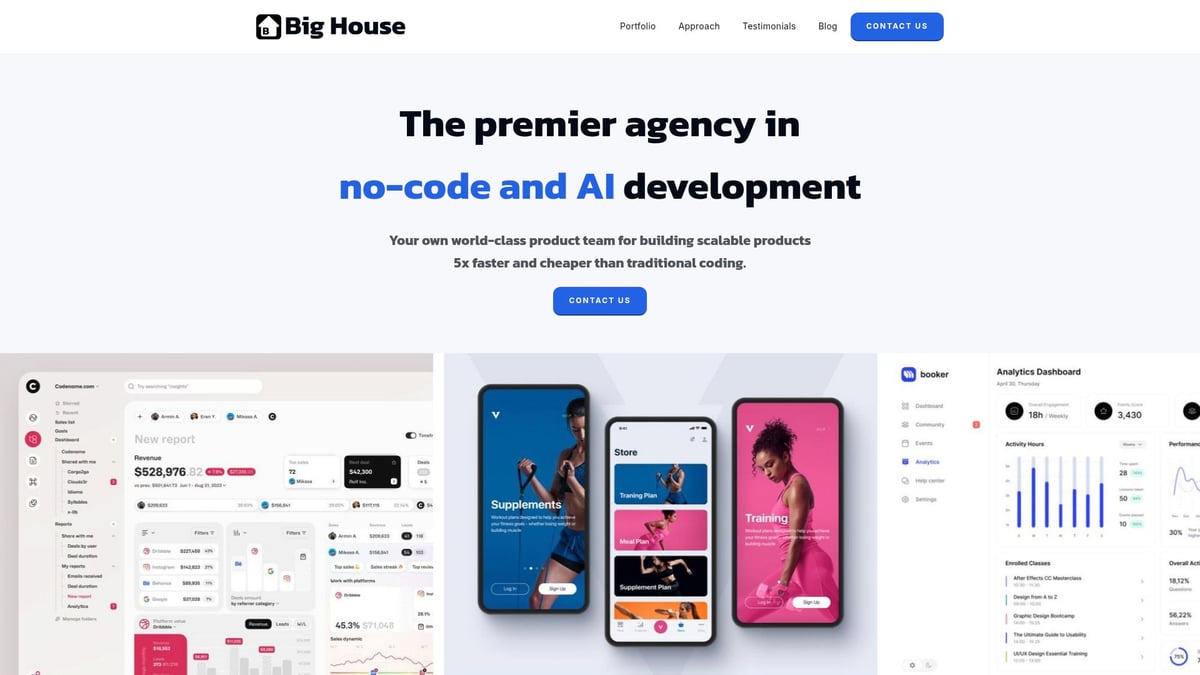
Clients like IMSI have realized measurable results, such as saving €2M through streamlined workflows and automation. Big House Technologies offers flexible engagement models, transparent pricing, and a commitment to cost-efficiency.
With a focus on both speed and long-term scalability, Big House Technologies supports enterprises at every stage. Their team includes specialists in architecture, compliance, and AI, ensuring mission-critical Bubble projects succeed and evolve with business needs. For tailored guidance, consider working with a Bubble consultant for enterprises to maximize ROI.
Building an Internal No-Code Center of Excellence
To sustain growth, enterprises should build an internal center of excellence focused on how to scale bubble apps to enterprise level. This involves upskilling teams, establishing governance frameworks, and fostering a culture of rapid iteration.
Train staff on Bubble best practices, compliance, and security. Develop checklists for quality assurance and regular app audits. Encourage innovation by rewarding teams who deliver new features quickly and securely.
By combining advanced tools, expert partners, and internal champions, enterprises can unlock the full potential of Bubble and future-proof their digital transformation efforts.
Future-Proofing Your Bubble App for 2026 and Beyond
Adapting to the future is crucial for anyone focused on how to scale bubble apps to enterprise level. The no-code ecosystem and Bubble itself keep evolving, so staying ahead means anticipating changes and preparing your app for long-term success.
Anticipating Platform and Technology Changes
To future-proof your approach on how to scale bubble apps to enterprise level, keep a close eye on Bubble’s roadmap. New features for 2026 may include enhanced infrastructure, improved plugin support, and expanded compliance options.
Regularly review Bubble’s forums and documentation to track updates. Industry trends in no-code and low-code are also shifting, so consider emerging regulations and best practices. For example, upcoming compliance needs like HIPAA or GDPR will shape how you build and maintain enterprise apps. For healthcare-focused solutions, this Bubble's HIPAA Compliance Discussion is a valuable resource.
Stay proactive to ensure your app remains secure, competitive, and ready for future demands.
Scaling Beyond Bubble: When to Consider Hybrid Architectures
Sometimes, the best answer to how to scale bubble apps to enterprise level is adopting a hybrid architecture. As your app grows, you may hit platform limits or need advanced features only custom code or traditional stacks provide.
Integrating Bubble with AWS or other cloud services lets you handle heavy workloads, leverage microservices, or process large data sets outside Bubble’s environment. For global enterprises, this hybrid strategy ensures scalability without sacrificing speed.
A real-world example is using Bubble for rapid prototyping and user interfaces, while offloading complex processes to dedicated cloud functions. This approach gives you flexibility and future-ready performance.
Building for Global Scale
Global reach is a key part of how to scale bubble apps to enterprise level. Start by designing for internationalization and localization. Support multiple languages and currencies to serve diverse user bases.
Consider data residency requirements and deploy your app across multiple regions if needed. Bubble’s dedicated hosting and third-party integrations can help you meet local compliance and performance expectations.
To make your app truly enterprise-grade, plan for time zones, cultural preferences, and accessibility standards. A globally scalable app opens doors to new markets and supports business growth.
Continuous Improvement and Iteration
No matter where you are in your journey on how to scale bubble apps to enterprise level, continuous improvement is essential. Gather user feedback, analyze performance, and use agile methodologies for rapid releases.
Set up processes for ongoing optimization, from UI tweaks to backend upgrades. Measure ROI and track business impact to ensure your scaling efforts align with enterprise goals.
Remember, future-proofing is not a one-time task. It’s a mindset that prioritizes adaptability, innovation, and resilience as your Bubble app grows with your business.
After exploring the step by step strategies for scaling Bubble apps to the enterprise level—like architecting for growth, optimizing performance, and integrating with your existing systems—you might be wondering how these best practices apply to your own project. Every business challenge is unique, and sometimes you just need a personalized roadmap to get started. If you’re serious about building an enterprise ready Bubble app and want expert eyes on your idea, why not take the next step?
Get a Free App Feasibility Review
and let’s see how you can turn your vision into a scalable, high impact product.

About Big House
Big House is committed to 1) developing robust internal tools for enterprises, and 2) crafting minimum viable products (MVPs) that help startups and entrepreneurs bring their visions to life.
If you'd like to explore how we can build technology for you, get in touch. We'd be excited to discuss what you have in mind.
Other Articles
Discover the 2026 guide to custom enterprise app development solutions Explore trends tech stacks costs security and real case studies to drive growth
Discover the vibe coding meaning and how this AI-driven development approach is transforming software creation for enterprises and startups in 2026.
Learn how to turn Figma designs into software with no-code tools, AI platforms, and modern development workflows. Expert guide for 2026.