
Imagine a world where artificial intelligence effortlessly reads, interprets, and understands any text. In 2026, this is not science fiction, but reality. The way we consume and process information is being transformed before our eyes.
This essential guide reveals how ai reads text, the remarkable journey of the technology, and its growing impact on daily life. Whether you are a professional, student, or tech enthusiast, understanding these tools will help you stay competitive.
Get ready to explore the fundamentals, the latest advancements, practical use cases, and best practices for leveraging AI-powered text reading in the future.
How AI Reads Text: Technology Fundamentals
Imagine a future where ai reads text with near-human precision, opening new possibilities for every industry. Understanding how this technology works is essential to leveraging its power in 2026.
The Evolution of Text-Reading AI
The journey of how ai reads text began with simple Optical Character Recognition (OCR) systems. Early OCR, like Tesseract, could only identify printed letters without understanding meaning.
Milestones appeared with the rise of Natural Language Processing (NLP) and deep learning. The introduction of transformer models, such as Google's BERT and OpenAI's GPT series, marked a leap in contextual understanding. These models shifted the field from rule-based systems to data-driven approaches, making ai reads text tasks more accurate and flexible.
Open-source frameworks fueled innovation, letting researchers and developers build on shared progress. For a deeper dive into the evolution of these transformer models and their impact, see Advancements in Transformer-Based NLP.
Core Technologies Powering AI Text Reading
Today, ai reads text using a blend of advanced technologies. OCR remains key for digitizing printed and handwritten material, turning physical documents into machine-readable data.
Natural Language Processing allows ai reads text systems to interpret meaning, context, and intent. Machine learning and neural networks enable recognition of patterns, even in noisy data. Large language models (LLMs) like those found in Microsoft Azure’s Read API now power deep comprehension, making sense of complex documents.
These technologies work together, letting ai reads text tools handle everything from scanned invoices to live chat messages with ease.
Accuracy and Limitations in 2026
By 2026, ai reads text with impressive accuracy, often exceeding 95% on clean, printed documents. However, challenges remain. Handwriting, non-standard fonts, and noisy backgrounds can reduce performance.
Context ambiguity is another hurdle, as ai reads text systems may struggle with sarcasm or nuanced language. Recent improvements have boosted multilingual and domain-specific accuracy, with benchmarks from Stanford NLP showing steady gains.
For example, ai reads text solutions excel at processing legal documents, where precision is critical, but may find casual emails more difficult due to informal language and slang.
Data Privacy and Security Considerations
As ai reads text becomes mainstream, handling sensitive data securely is vital. Compliance with regulations like GDPR and CCPA is non-negotiable. Encryption and anonymization are standard best practices to protect information.
Risks of data leakage persist, so leading providers invest in robust security protocols. In healthcare, for instance, ai reads text is used on medical records, requiring strict adherence to HIPAA standards.
Regular audits, staff training, and technological safeguards help ensure that ai reads text workflows remain private and compliant in every industry.
Real-World Examples of AI Reading Text
The impact of ai reads text is visible across sectors:
- Automated invoice processing saves finance teams countless hours.
- Accessibility tools empower visually impaired users by reading screens aloud.
- Social media platforms use ai reads text for content moderation and sentiment analysis.
- Law firms rely on ai reads text to review lengthy contracts quickly.
- In healthcare, ai reads text from handwritten doctor’s notes, improving patient care.
These examples highlight how ai reads text is already transforming daily workflows, making information more accessible and actionable.
Key Applications and Use Cases in 2026
As we move into 2026, ai reads text technology is transforming industries and daily life. From automating business processes to making education more accessible, the possibilities are expanding rapidly. Let’s explore how this innovation is driving real-world change across sectors.
Business Automation and Document Processing
Across industries, ai reads text solutions are streamlining how organizations handle paperwork. By extracting data from invoices, receipts, and contracts, businesses reduce manual entry and speed up workflows. AI-driven automation can cut processing time by up to 70 percent for large enterprises.
For example, insurance companies now deploy AI to automate claims processing, improving accuracy and customer satisfaction. The technology enables real-time verification and flagging of anomalies. Many top companies featured in Top AI Apps for 2025 are showcasing these advances, highlighting how ai reads text is central to digital transformation.
Education and Accessibility
In education, ai reads text tools are breaking down barriers for students with disabilities. Text-to-speech engines empower learners by converting textbooks and worksheets into audio, supporting those with visual impairments or dyslexia.
Real-time translation and transcription help bridge language gaps, while AI-powered summarization personalizes study materials for each student. Since 2024, accessibility tool adoption has risen by 30 percent, largely thanks to the versatility of ai reads text platforms. Schools and universities are increasingly integrating these solutions to foster inclusive learning environments.
Customer Service and Experience
Customer service has been revolutionized as ai reads text powers intelligent chatbots and support systems. These bots efficiently read and interpret customer emails, route tickets, and even generate personalized responses.
E-commerce brands benefit from 24/7 support, with AI handling up to 80 percent of routine queries by 2025. This shift reduces wait times and ensures customers get the help they need quickly. The adaptability of ai reads text allows businesses to deliver consistent, high-quality service across multiple channels and languages.
Content Moderation and Compliance
Social platforms and enterprises rely on ai reads text to maintain safe, compliant environments. AI algorithms scan user-generated content, flagging inappropriate language, hate speech, or misinformation before it reaches the public.
Automated moderation tools help reduce the burden on human reviewers, cutting manual moderation by 60 percent in some companies. In finance, ai reads text ensures regulatory compliance by rapidly reviewing communications and documentation for sensitive information, supporting case studies in financial compliance and risk management.
Healthcare and Medical Records
In healthcare, ai reads text is transforming medical record management. AI rapidly extracts data from handwritten notes, scanned forms, and electronic health records, streamlining patient intake and insurance verification.
Hospitals now use AI to update EHRs in real time, improving diagnostic accuracy and workflow efficiency. By 2026, medical record processing is projected to be 50 percent faster, reducing administrative overhead and supporting better patient outcomes. The adoption of ai reads text in healthcare is paving the way for smarter, more connected care.
Step-by-Step Guide: Implementing AI Text Reading Solutions
Embarking on the journey to harness how ai reads text in your organization? This step-by-step guide will walk you through everything you need, from planning to scaling up your solution. Each stage is crucial to ensure your implementation is smooth, secure, and delivers real value.
Step 1: Assessing Your Needs and Goals
Start by clarifying why you want ai reads text capabilities. Are you looking to process invoices, analyze emails, or digitize handwritten notes?
- Identify key document types and languages.
- Define business goals, such as reducing manual entry or improving accuracy.
- Assess the complexity and volume of your text data.
- Involve stakeholders from IT, compliance, and operations.
- Example: A retailer aiming to automate receipt processing for faster expense tracking.
Understanding your objectives early helps you select the right tools and ensures your project delivers measurable results.
Step 2: Choosing the Right AI Platform or Tool
Selecting the right platform is vital when ai reads text for your business. Compare leading solutions like Google Cloud Vision, AWS Textract, Microsoft Azure, and open-source options.
- Evaluate for accuracy, speed, scalability, and integration.
- Check language and domain support.
- Balance pricing models with your budget.
- Consider enterprise versus startup needs.
- Example: Choosing Google Cloud Vision for high-volume, multi-language support.
If you need to integrate AI features into custom applications, the Building Apps with AI Guide offers practical tips for making the right choice.
Step 3: Preparing and Cleaning Your Data
For the best results when ai reads text, data quality is non-negotiable. Clean, well-formatted input leads to higher accuracy.
- Digitize paper documents with high-resolution scanners.
- Standardize formats for consistency.
- Handle challenging data, like handwriting or multiple languages, with preprocessing tools.
- Annotate and label data for custom AI training.
- Example: Preparing old archives by removing noise and correcting skewed scans.
Investing time in data preparation pays off with more reliable AI output and fewer errors down the road.
Step 4: Integrating AI with Existing Workflows
Seamless integration ensures ai reads text becomes part of your daily operations, not a separate silo.
- Use APIs to connect AI with ERP, CRM, or accounting systems.
- Automate data extraction and routing to relevant teams.
- Build dashboards for real-time monitoring.
- Ensure compatibility with legacy software.
- Example: Linking AI invoice reading to update accounts automatically.
Effective integration minimizes manual intervention, speeds up processes, and maximizes ROI.
Step 5: Testing, Training, and Optimization
Testing is essential to guarantee ai reads text with high accuracy and speed. Set clear benchmarks from the outset.
- Train with real-world samples to reflect actual use cases.
- Continuously refine models based on feedback and new data.
- Address edge cases, like rare document types or unusual formats.
- Example: Improving contract analysis by feeding annotated legal documents into the AI.
Iterative improvements help your solution adapt to changing needs and maintain top performance.
Step 6: Ensuring Security and Compliance
Security is a top priority when ai reads text, especially with sensitive information.
- Encrypt all data in transit and at rest.
- Set up access controls and detailed audit trails.
- Conduct regular security and compliance checks.
- Train staff on privacy best practices.
- Example: Healthcare companies meeting HIPAA standards for patient records.
Staying compliant with GDPR, CCPA, or industry-specific rules protects both your data and your reputation.
Step 7: Measuring Success and Scaling Up
Once your ai reads text solution is live, focus on measuring outcomes and planning for growth.
- Track metrics like accuracy, processing time, and cost savings.
- Collect user feedback for ongoing improvements.
- Prepare for greater volumes and more document types.
- Scale infrastructure to meet enterprise demands.
- Example: Expanding from one department to global operations.
A well-implemented solution grows with your organization, delivering increasing value over time.
Top AI Text Reading Tools and Platforms for 2026
Choosing the right platform is key when ai reads text for your organization or project. The landscape in 2026 is rich, with commercial, open-source, and niche solutions designed for various needs. Let’s explore the top platforms, their features, and how to select the best tool for your workflow.
Leading Commercial Solutions
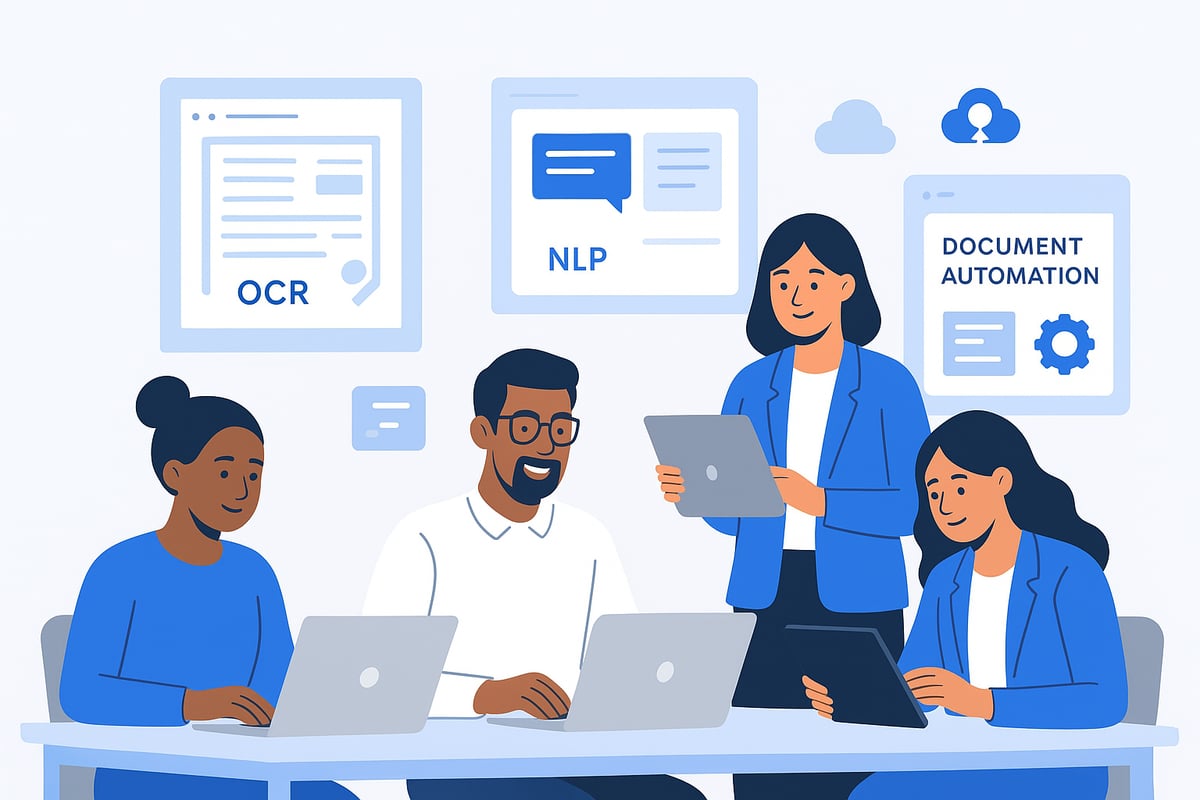
When it comes to enterprise-grade performance, several commercial platforms stand out as leaders in how ai reads text. Google Cloud Vision, AWS Textract, and Microsoft Azure Read offer robust APIs, high accuracy, and scalable infrastructure for large-scale document processing. For instance, Google Cloud Vision achieves 98 percent accuracy on printed documents. AWS Textract processes over 100 million documents monthly, making it a favorite for high-volume needs.
Features often include:
- Batch processing and real-time recognition
- Multilingual support
- Seamless integration with cloud storage and business apps
For those looking to get started quickly, many platforms are available as downloadable apps or API services. You can find more details in this Artificial Intelligence App Download resource. Adoption is soaring, with more businesses integrating commercial AI solutions into daily operations.
Open-Source and Customizable Options
Open-source projects empower developers and organizations to tailor solutions when ai reads text in unique environments. Tesseract remains a top choice for OCR, known for its flexibility and community support. NLP libraries like spaCy and Hugging Face Transformers provide advanced natural language understanding, making them ideal for projects needing deeper semantic analysis.
Benefits include:
- Full control over customization
- No recurring licensing fees
- Active user communities for troubleshooting
However, open-source tools may require more technical expertise for setup and maintenance. For academic research or specialized workflows, these platforms offer a high degree of adaptability.
Specialized Tools for Niche Use Cases
Not every scenario is covered by general solutions. When ai reads text from handwritten forms, legal contracts, or multilingual documents, specialized tools like ABBYY FineReader, Rossum, and Mindee excel. ABBYY achieves over 90 percent accuracy on complex handwritten forms. Rossum is favored for invoice data extraction in finance.
Niche solutions often support:
- Handwriting and signature recognition
- Domain-specific language models
- Compliance with industry regulations
Selecting a specialized tool makes a difference for sectors like healthcare or law, where accuracy and compliance are critical.
Integration and Automation Platforms
For seamless operations, integration and automation platforms are crucial when ai reads text as part of a larger workflow. Tools like Zapier, UiPath, and Microsoft Power Automate combine AI-powered text reading with robotic process automation (RPA) to eliminate repetitive manual tasks.
Key advantages include:
- Automated data routing between business systems
- Real-time monitoring and alerts
- Reduced manual intervention, saving up to 40 percent of workflow time
The growing trend toward automation has accelerated AI adoption globally. For more context, explore these AI Adoption Statistics 2025 to see how organizations are leveraging AI across industries.
Choosing the Best Solution for Your Needs
Selecting the optimal platform when ai reads text depends on your specific requirements. Consider factors like scalability, language support, integration with your current systems, and total cost of ownership. Conducting a proof-of-concept or using trial periods helps validate performance before full deployment.
Questions to ask:
- What document types and languages do you need to process?
- How much customization is necessary?
- Are there compliance or security requirements?
Small businesses may prioritize ease of use and affordability, while enterprises often value scalability and support. Reviewing resource guides like Artificial Intelligence App Download can help you compare options and make informed decisions.
Future Trends and Innovations in AI Text Reading
The future of ai reads text is set to transform how we interact with information. From smarter context-aware models to on-device processing, the latest trends are reshaping every industry. Let’s explore what’s next for ai reads text and how these innovations will impact your daily life and business.
Advances in Multimodal AI and Contextual Understanding
Multimodal AI is redefining how ai reads text by combining text, image, and even audio analysis. These systems don’t just read words, they understand tone, context, and intent, making text interpretation more accurate than ever. Imagine an AI that can summarize a meeting by analyzing both spoken words and shared visuals.
Advancements like Contextual AI's RAG 2.0 Platform are raising the bar for retrieval-augmented generation, allowing ai reads text models to deliver more relevant and precise outputs. This leap in contextual intelligence is driving better user experiences and smarter automation.
Real-Time and On-Device AI Text Reading
The shift from cloud-based to on-device ai reads text is gaining momentum. Today’s edge AI enables instant processing on smartphones and wearables, reducing latency and boosting privacy. Users benefit from offline capabilities, making text reading tools more accessible and reliable.
By 2026, 60% of new devices are expected to feature on-device ai reads text, supporting real-time translation, note-taking, and accessibility. This trend is especially valuable in remote or sensitive environments where internet connectivity is limited.
AI Reading Handwriting and Non-Latin Scripts
Recent breakthroughs mean ai reads text can now accurately interpret handwriting, signatures, and complex scripts. Support for underrepresented alphabets like Arabic, Mandarin, and Cyrillic is expanding rapidly, bridging communication gaps worldwide.
Since 2024, non-Latin script support has grown by 30%, letting ai reads text empower global users. From digitizing historical archives to processing handwritten prescriptions, these advances are unlocking vast new possibilities.
Ethical, Legal, and Social Implications
With greater power comes greater responsibility. As ai reads text becomes more pervasive, concerns about bias, fairness, and transparency are rising. Regulatory frameworks like the EU AI Act are shaping how organizations deploy document automation and ensure accountability.
Ensuring explainable AI decisions and reducing bias are top priorities. Businesses must balance innovation with ethical safeguards, making ai reads text both powerful and trustworthy for everyone.
AI for Personalization and Content Creation
Personalization is reaching new heights as ai reads text learns to generate tailored summaries, recommendations, and even full articles. In marketing, education, and entertainment, AI-driven content is becoming the norm.
A striking example is AI-Driven Immersive Audiobook Production, where neural text-to-speech and spatial audio effects create rich listening experiences. By 2026, 50% of all digital content is projected to be generated with ai reads text, making personalized information accessible at scale.
The Role of Human-in-the-Loop Systems
While automation is advancing, human oversight remains crucial. Hybrid workflows, where humans review and refine AI outputs, ensure that ai reads text maintains high accuracy and reliability for critical documents.
Ninety percent of enterprises are integrating these human-in-the-loop systems, especially for legal, medical, and compliance use cases. This partnership leverages AI’s speed while retaining expert judgment for nuanced decisions.
Preparing for the Next Wave of AI Reading Innovation
To thrive in an era where ai reads text shapes business and society, organizations must invest in new skills. Upskilling teams, adopting adaptable AI solutions, and planning strategically are key steps for future readiness.
A growing number of companies are rolling out AI literacy programs and scalable platforms. In fact, 65% of organizations plan to upskill their workforce by 2026, ensuring they can harness the full potential of ai reads text.
You’ve now seen just how powerful and practical AI text reading can be for streamlining business processes, boosting accessibility, and getting ahead of the curve in 2026. If you’re wondering how to bring these innovations into your own organization, you don’t have to figure it out alone. Whether you’re looking to automate document handling or create smarter internal tools, we can help you harness the right AI solutions for your goals. Ready to explore what AI can do for your team’s internal workflows? Transform Your Internal Tools with AI

About Big House
Big House is committed to 1) developing robust internal tools for enterprises, and 2) crafting minimum viable products (MVPs) that help startups and entrepreneurs bring their visions to life.
If you'd like to explore how we can build technology for you, get in touch. We'd be excited to discuss what you have in mind.
Other Articles
Discover the top app development company in US for 2026. Explore expert insights, industry trends, and how leading firms can elevate your digital success.
Discover the best AI girlfriend app options in 2026. Compare features, customization, and user experiences to find your ideal AI companion platform.
Discover how AI automation for enterprise apps transforms workflows, reduces costs, and accelerates delivery in 2026. Expert insights included.