
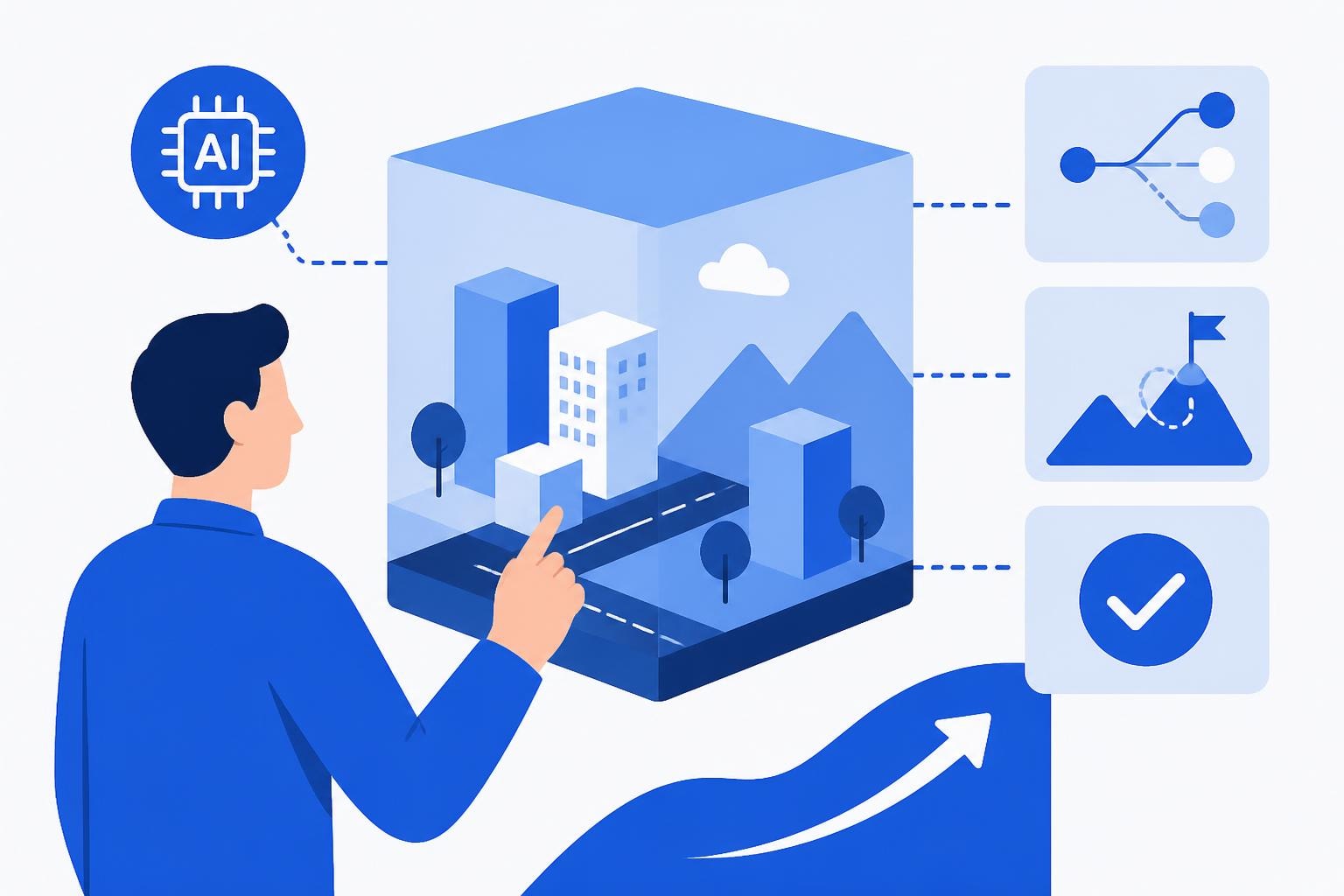
The business landscape in 2026 demands faster innovation cycles, reduced development costs, and smarter decision-making. Traditional trial-and-error approaches no longer suffice when competitors leverage advanced technologies to gain strategic advantages. Artificial intelligence simulation represents a transformative shift in how organizations test ideas, validate assumptions, and optimize operations before committing resources to physical implementation. By creating virtual environments that mirror real-world conditions, companies can explore countless scenarios, identify optimal solutions, and mitigate risks with unprecedented precision. For no-code platforms and development agencies, understanding ai simulation unlocks new opportunities to deliver sophisticated solutions without extensive technical overhead.
Understanding AI Simulation in Modern Business
At its core, an ai simulation creates digital representations of real-world systems, processes, or environments where intelligent algorithms can learn, test, and optimize. Unlike traditional simulations that follow predetermined rules, ai-powered versions adapt and evolve based on data patterns and outcomes. This fundamental distinction enables businesses to explore complex scenarios that would be impossible or prohibitively expensive to test in physical environments.
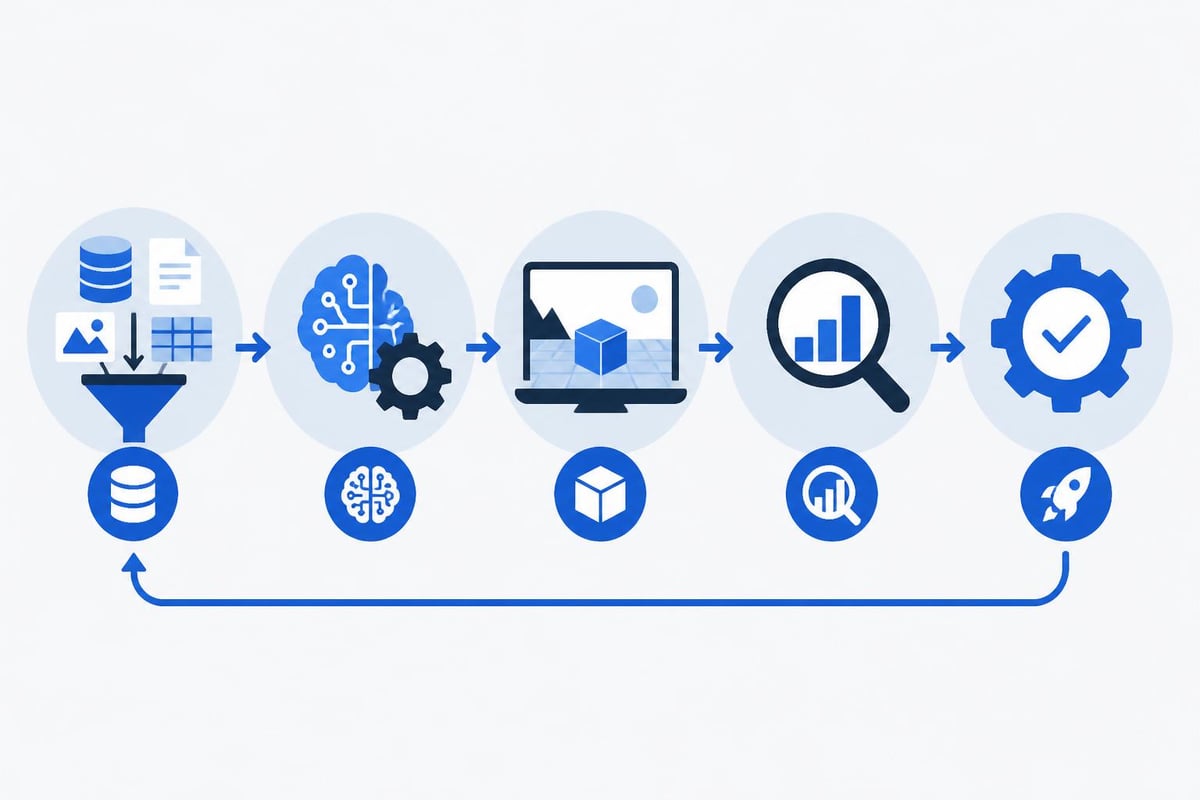
The technology stack behind ai simulation typically combines several components:
- Machine learning models that recognize patterns and make predictions
- Virtual environments that replicate real-world conditions with varying fidelity
- Data synthesis engines that generate realistic scenarios for testing
- Reinforcement learning frameworks that enable systems to improve through trial and error
Why AI Simulation Matters for No-Code Development
The intersection of ai simulation and no-code platforms creates powerful opportunities for rapid prototyping and validation. Development agencies can now build sophisticated simulation environments without writing extensive custom code, democratizing access to technologies once reserved for large enterprises with dedicated AI teams.
NVIDIA's approach to data simulation demonstrates how synthetic data generation enables comprehensive testing scenarios. For startups and enterprises alike, this capability means validating product concepts, user flows, and system architectures before investing in full-scale development.
No-code platforms excel at simulation implementation because they:
- Reduce time-to-market for proof-of-concept simulations
- Enable rapid iteration based on simulation results
- Lower barrier to entry for businesses without AI expertise
- Facilitate visual modeling that stakeholders easily understand
Practical Applications Across Industries
Manufacturing operations have embraced ai simulation to optimize production lines, predict equipment failures, and reduce downtime. Digital twins powered by simulation technology create virtual replicas of physical assets, enabling engineers to test modifications, maintenance schedules, and operational parameters without disrupting actual production.
In healthcare, pharmaceutical companies leverage ai simulation for drug discovery and clinical trial design. By simulating molecular interactions and patient responses, researchers can identify promising compounds faster and design more effective studies. The recent advancements in protein ensemble simulation illustrate how AI methods accelerate scientific discovery through computational modeling.
Financial Services and Risk Management
Financial institutions deploy ai simulation for stress testing portfolios, modeling market scenarios, and optimizing trading strategies. Monte Carlo simulations enhanced with machine learning capabilities provide deeper insights into risk exposure and potential outcomes across thousands of scenarios simultaneously.
| Application Area | Primary Benefit | Implementation Complexity |
|---|---|---|
| Portfolio Optimization | Risk reduction 30-40% | Medium |
| Fraud Detection | False positive reduction 50%+ | High |
| Customer Behavior Modeling | Conversion rate improvement 15-25% | Low-Medium |
| Operational Efficiency | Cost savings 20-35% | Medium-High |
Supply chain management represents another domain where ai simulation delivers measurable value. Companies simulate demand fluctuations, supplier disruptions, and logistics constraints to develop resilient strategies. This proactive approach proved invaluable during recent global supply chain disruptions, as organizations with sophisticated simulation capabilities adapted faster than competitors.
Building AI Simulations with No-Code Platforms
The emergence of no-code AI development tools has transformed who can build and deploy simulation environments. Where traditional approaches required teams of data scientists and software engineers, modern platforms enable business analysts and product managers to construct meaningful simulations.
Key considerations when building simulations on no-code platforms:
- Data quality and availability determine simulation accuracy and usefulness
- Model complexity versus interpretability affects stakeholder buy-in and trust
- Integration with existing systems ensures simulation insights drive real decisions
- Scalability requirements as simulation scope and usage expand over time
The integration of AI and machine learning in simulation processes showcases how modern tools accelerate design optimization and model building. For agencies like those specializing in no-code versus custom code development, this evolution means delivering enterprise-grade simulation capabilities at a fraction of traditional costs.
Selecting the Right Simulation Approach
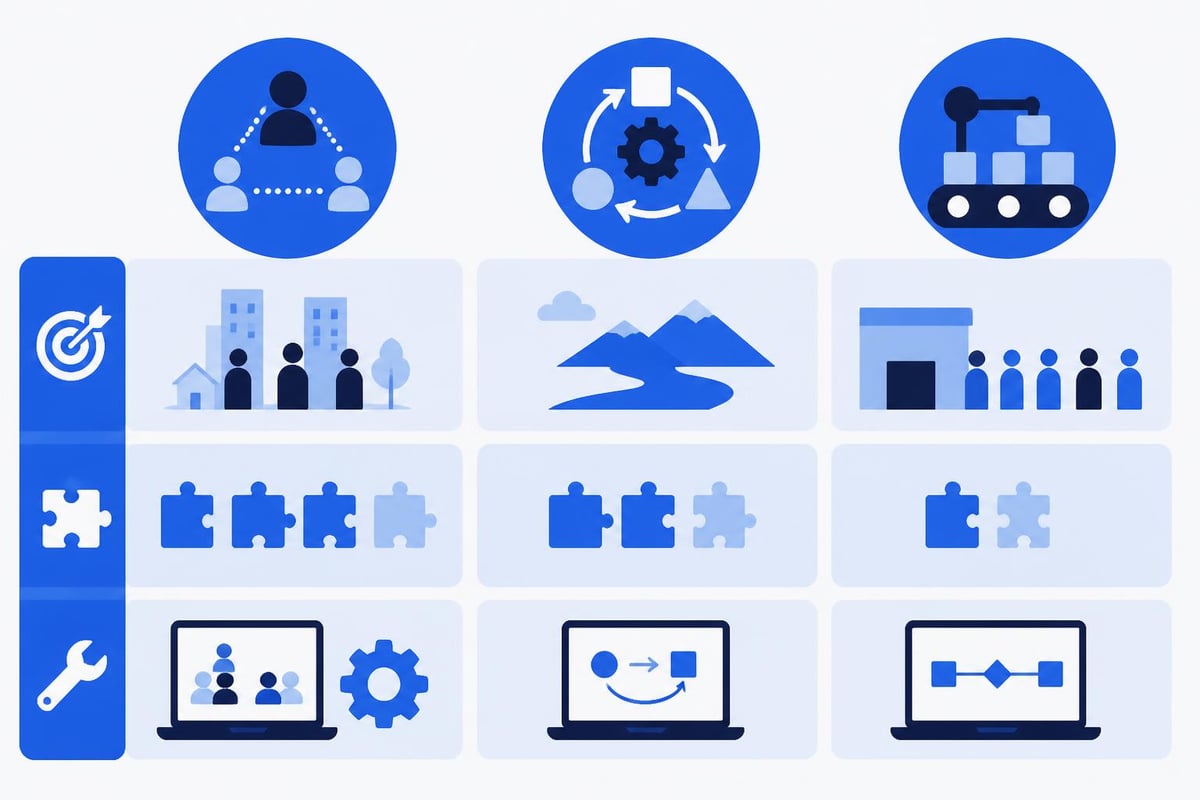
Different business challenges require distinct simulation methodologies. Agent-based simulations model individual entities and their interactions, making them ideal for customer behavior analysis or market dynamics. System dynamics simulations focus on high-level flows and feedback loops, better suited for strategic planning and policy analysis.
Discrete event simulations track specific occurrences through time, perfect for process optimization in manufacturing or service delivery. When building AI-powered applications, understanding which simulation type addresses your specific challenge proves crucial for project success.
Technical Implementation Strategies
Modern ai simulation platforms leverage cloud infrastructure to provide scalable computing resources on demand. This architecture enables organizations to run thousands of simulation iterations in parallel, dramatically reducing time required for comprehensive scenario analysis.
Data Preparation and Model Training
The foundation of any effective ai simulation lies in high-quality training data. Organizations must balance using historical data that captures past patterns with synthetic data that explores scenarios beyond historical experience. The framework for simulation-based synthetic data generation provides guidance on creating digital twin environments that produce realistic training datasets.
Data preparation steps include:
- Collecting relevant historical data from operational systems
- Cleaning and normalizing data to ensure consistency
- Identifying key variables and relationships that drive outcomes
- Generating synthetic variations that expand scenario coverage
- Validating data quality through statistical analysis and domain expertise
Machine learning models trained on this combined dataset learn to recognize patterns and predict outcomes across known and novel scenarios. Reinforcement learning approaches enable these models to discover optimal strategies through simulated trial and error, as detailed in AnyLogic's AI integration capabilities.
Integration with Production Systems
Simulation value multiplies when insights seamlessly inform operational decisions. Modern no-code platforms facilitate this integration through API connections, automated workflows, and real-time data synchronization. Organizations can deploy simulation models that continuously analyze current conditions and recommend optimal actions.
For example, an e-commerce platform might use ai simulation to optimize inventory placement across warehouses. The simulation considers factors like regional demand patterns, shipping costs, and warehouse capacity constraints. As actual sales data flows in, the model updates predictions and recommends inventory transfers to minimize delivery times and costs.
Measuring Simulation ROI and Performance
Quantifying ai simulation value requires clear metrics aligned with business objectives. Leading organizations establish baseline performance measurements before implementing simulation-driven optimization, enabling precise calculation of improvements.
| Performance Metric | Measurement Method | Typical Improvement Range |
|---|---|---|
| Decision Quality | Outcome accuracy vs. predictions | 25-45% |
| Time to Insight | Hours saved in analysis | 60-80% |
| Cost Reduction | Operational expenses decreased | 15-35% |
| Innovation Speed | Time from idea to validated concept | 40-70% |
Companies implementing ai simulation report significant reductions in costly real-world experimentation. Rather than building multiple physical prototypes or running extended pilot programs, they explore alternatives virtually and commit resources only to the most promising options.
Continuous Improvement Through Feedback Loops
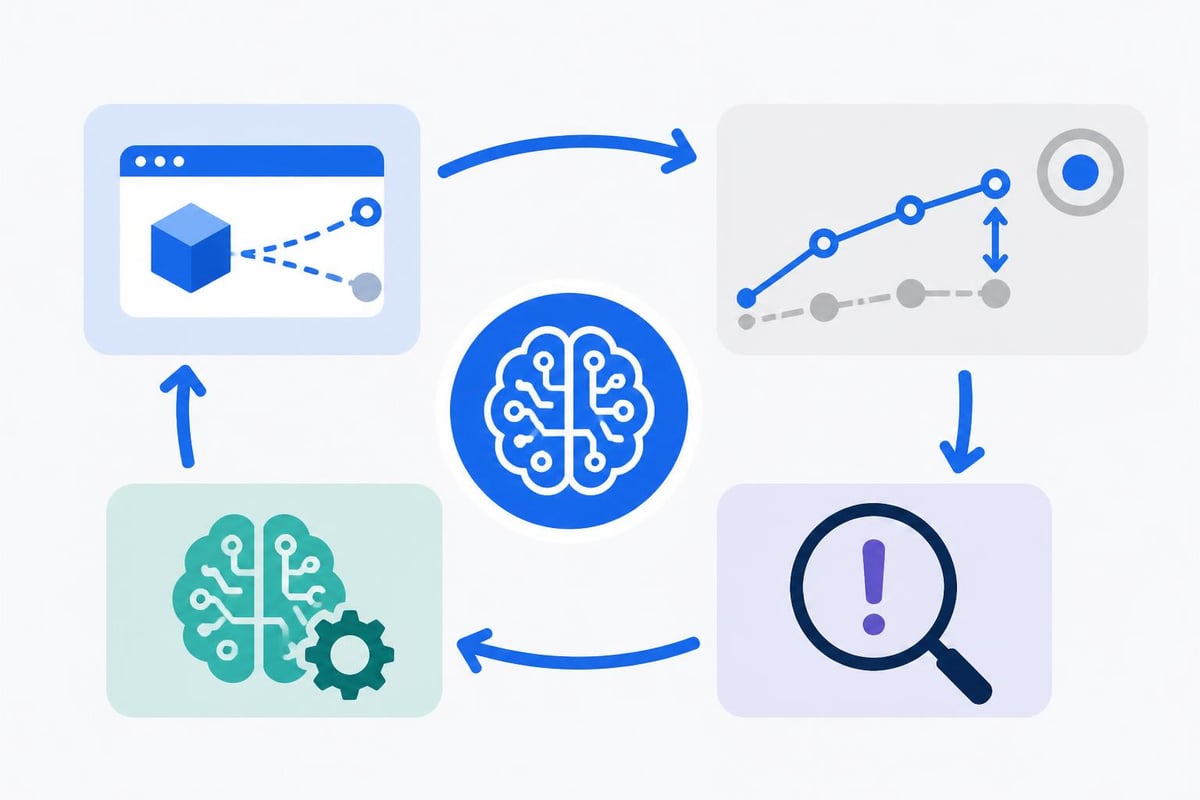
The most successful simulation implementations establish continuous learning cycles. As real-world outcomes become available, organizations compare actual results against simulation predictions, identify discrepancies, and refine their models. This iterative process steadily improves simulation accuracy and business value over time.
For agencies supporting enterprise internal tool development, building feedback mechanisms into simulation tools ensures clients extract maximum long-term value from their investment.
Advanced Simulation Techniques for 2026
As ai simulation technology matures, several advanced techniques have become accessible through no-code platforms. Multi-agent reinforcement learning enables simulations where multiple intelligent entities interact and compete, revealing emergent behaviors and optimal strategies in competitive environments.
Emerging simulation capabilities include:
- Generative models that create entirely new scenarios based on learned patterns
- Causal inference engines that distinguish correlation from causation in complex systems
- Hybrid physics-AI models combining first-principles physics with data-driven learning
- Federated learning simulations that preserve data privacy while training across organizations
Altair's romAI applications demonstrate how AI enhances traditional simulation workflows, enabling faster optimization and more accurate predictions. For businesses exploring AI-based design tools, these advanced techniques open new possibilities for automated optimization and intelligent design.
Digital Twins and Real-Time Simulation
The convergence of IoT sensors, cloud computing, and ai simulation has enabled true digital twins that mirror physical assets in real time. These virtual replicas continuously sync with actual conditions, enabling organizations to simulate "what-if" scenarios based on current state rather than historical averages.
Manufacturing facilities deploy digital twins that predict equipment failures hours or days in advance, enabling preventive maintenance that minimizes downtime. NVIDIA's design and simulation solutions showcase how AI accelerates digital twin creation and operational efficiency gains.
Overcoming Implementation Challenges
Despite compelling benefits, organizations encounter common obstacles when deploying ai simulation capabilities. Data availability and quality frequently limit simulation accuracy, particularly for businesses lacking comprehensive historical datasets. Strategic partnerships, third-party data acquisition, and synthetic data generation help address these gaps.
Stakeholder skepticism represents another barrier, especially when simulation recommendations conflict with intuition or established practices. Building trust requires transparency in model logic, clear explanation of assumptions, and gradual validation through pilot projects that demonstrate value before wide-scale deployment.
Common implementation challenges and solutions:
| Challenge | Impact | Solution Approach |
|---|---|---|
| Insufficient training data | Low accuracy, limited scenarios | Synthetic data generation, transfer learning |
| Model complexity | Stakeholder confusion, low adoption | Explainable AI techniques, visualization tools |
| Integration difficulties | Manual data transfer, delayed insights | API-first architecture, automated workflows |
| Computing resource constraints | Slow simulations, limited scale | Cloud-based platforms, optimized algorithms |
Organizations succeed by starting small with well-defined use cases that deliver measurable value. Early wins build momentum and demonstrate ROI, justifying expanded investment in simulation capabilities. For startups working with Bubble development agencies, this phased approach aligns perfectly with MVP development methodology.
Building Internal Capabilities
While no-code platforms reduce technical barriers, organizations still need team members who understand simulation concepts, interpret results, and translate insights into action. Investing in training programs that build simulation literacy across business units pays dividends as usage expands.
Cross-functional teams combining domain expertise with simulation knowledge produce the most valuable implementations. Marketing professionals who understand customer behavior can guide simulations that optimize campaign strategies. Operations managers with process knowledge can identify the most impactful optimization opportunities.
Future Directions in AI Simulation
The next evolution of ai simulation will likely emphasize accessibility, autonomy, and integration. Natural language interfaces will enable business users to define simulation scenarios and interpret results without technical expertise. Autonomous simulation systems will proactively identify optimization opportunities and recommend testing scenarios without human prompting.
Integration with decision support systems will tighten the loop between simulation insights and operational execution. Rather than generating reports that humans must interpret and act upon, future simulations will directly trigger workflow automation, adjust system parameters, or recommend specific actions with supporting rationale.
Anticipated developments through 2028:
- Conversational AI interfaces for simulation definition and control
- Automated scenario generation based on business objectives
- Real-time simulation that updates continuously as conditions change
- Cross-domain simulation that models interactions across business functions
- Collaborative simulation environments supporting distributed teams
The democratization of ai simulation through no-code platforms continues accelerating. What required specialized expertise and significant investment just years ago now becomes accessible to small businesses and individual entrepreneurs. This shift will intensify competition as more organizations leverage simulation for strategic advantage.
For development agencies specializing in AI tools and applications, staying current with simulation capabilities ensures they can deliver cutting-edge solutions that differentiate clients in their markets.
AI simulation has evolved from an academic curiosity to an essential business capability that drives competitive advantage across industries in 2026. Organizations that embrace these technologies gain unprecedented ability to test ideas, optimize operations, and make data-driven decisions with confidence. Whether you're building digital twins for manufacturing optimization, creating virtual environments for product testing, or developing sophisticated risk models for financial services, the combination of AI and no-code development platforms makes these capabilities more accessible than ever. Big House Technologies specializes in helping enterprises and startups harness the power of ai simulation through scalable no-code solutions, transforming complex challenges into practical applications that deliver measurable results.

About Big House
Big House is committed to 1) developing robust internal tools for enterprises, and 2) crafting minimum viable products (MVPs) that help startups and entrepreneurs bring their visions to life.
If you'd like to explore how we can build technology for you, get in touch. We'd be excited to discuss what you have in mind.
Other Articles
Discover the ultimate guide to custom bubble app development services for 2026 Learn benefits AI trends and how to choose the right partner for business growth
Master bubble app load time optimization with expert strategies for faster apps in 2026 Diagnose issues optimize workflows and leverage the latest Bubble features
Discover how to choose the perfect no-code platform for your enterprise by evaluating scalability, integration, and security needs. Empower innovation with the right tools and expert guidance from Big House.