
As organizations grow, connecting dozens of apps, databases, and workflows often becomes a bottleneck. Manual integrations can slow progress, drain resources, and frustrate teams.
Today, enterprise integration platforms no-code are transforming how companies automate and connect their entire tech stack. These platforms remove complexity, reduce costs, and let both IT and business users build powerful integrations in minutes.
In this guide, discover the top 7 platforms for 2026, each designed to empower teams to automate, connect, and innovate—no coding required.
What Are No-Code Enterprise Integration Platforms?
Modern enterprises juggle dozens of apps, databases, and cloud services. Connecting these systems used to demand teams of developers and months of coding. Today, enterprise integration platforms no-code are transforming this landscape.
Definition and Core Concepts
Enterprise integration platforms no-code are cloud-based solutions that let organizations connect, automate, and orchestrate data flows between software systems—all without writing code. Unlike traditional iPaaS or middleware, these platforms use visual, drag-and-drop interfaces and a library of prebuilt connectors for popular apps and APIs.
This approach democratizes integration, putting powerful automation tools in the hands of business users, not just IT. For a deeper dive into how this shift empowers non-technical teams, see How no-code empowers enterprises.
No-code integration platforms simplify complex processes, letting users build, test, and modify workflows quickly. Built-in automation features, error handling, and monitoring make them accessible and reliable for both technical and non-technical staff.
Key Benefits for Enterprises
Adopting enterprise integration platforms no-code brings key advantages:
- Speed: Deploy and modify integrations in hours, not months.
- Cost reduction: Save on development and maintenance, reducing reliance on specialized IT resources.
- Scalability: Handle high data volumes and complex workflows as the business grows.
- Flexibility: Adapt to evolving business needs without major rework or downtime.
These benefits enable organizations to react quickly to market changes, support digital transformation, and empower teams across departments.
Typical Use Cases
Enterprise integration platforms no-code drive value across industries. Common scenarios include:
- Syncing data between CRM, ERP, and HRIS systems
- Integrating e-commerce and logistics platforms for seamless order processing
- Building real-time analytics pipelines for business intelligence
- Automating cross-department workflows, approvals, and notifications
These platforms allow enterprises to streamline operations and unlock new efficiencies without custom development.
No-Code vs. Low-Code vs. Traditional Integration
How do these approaches compare? Here’s a quick overview:
| Approach | Technical Skill Needed | Time to Value | Cost |
|---|---|---|---|
| No-Code | Minimal (business) | Fast (days) | Low/Medium |
| Low-Code | Some coding | Moderate | Medium |
| Traditional | High (developers) | Slow (months) | High |
Enterprise integration platforms no-code are best for rapid prototyping, business-led automations, and scenarios where agility matters most.
Market Growth and Trends
Industry analysts highlight explosive growth for enterprise integration platforms no-code. According to Gartner, over 70% of new business apps will use low-code or no-code tools by 2026. The move toward composable, API-driven architectures is fueling this trend, as is the push for stronger security and compliance baked into modern platforms.
As these platforms evolve, they’re becoming essential for enterprises seeking agility, innovation, and future-proof technology stacks.
How to Choose the Right No-Code Integration Platform
Selecting the best enterprise integration platforms no-code can feel overwhelming with so many options on the market. A structured approach helps you focus on what matters most for your organization.
Evaluation Criteria
Start by assessing the connector library of each platform. Check if they support your critical apps like Salesforce, SAP, or custom APIs. Evaluate the ease of use: Does the interface make it simple for non-technical users? Strong onboarding and documentation are a must.
Security is paramount. Look for SOC 2, GDPR, and SSO support. Performance matters too, so consider real-time versus batch sync, scalability, and reliability. For a deeper dive into what features to compare, see this guide on enterprise workflow automation tools.
Pricing Models and Total Cost of Ownership
Enterprise integration platforms no-code come with different pricing models. Some offer subscription tiers, others use pay-as-you-go or custom enterprise licenses. Watch for hidden costs, such as connector limits, overages, or premium support fees.
Evaluate ROI, especially for large-scale deployments. Analyze not just upfront costs, but also long-term savings on development and maintenance. This ensures your investment delivers lasting value.
Vendor Support and Community
Responsive vendor support is crucial for enterprise integration platforms no-code. Prioritize platforms that offer onboarding, training, and dedicated account managers.
A strong user community adds value, providing access to shared templates, plug-ins, and real-world advice. Marketplaces and third-party add-ons can further extend platform capabilities, supporting ongoing innovation.
Future-Proofing and Extensibility
Your needs will evolve, so choose enterprise integration platforms no-code that adapt easily. Look for platforms that support new apps, APIs, and emerging technologies like AI or IoT.
Some platforms offer custom scripting or code extensions for advanced scenarios. This balance between no-code simplicity and technical depth ensures your integrations stay relevant as your business grows.
Example Evaluation Matrix
A scoring matrix can simplify platform selection. Assign weights to each criterion based on your priorities. For example:
| Criteria | Weight | Platform A | Platform B | Platform C |
|---|---|---|---|---|
| Connectors | 30% | 8 | 9 | 7 |
| Ease of Use | 20% | 9 | 7 | 8 |
| Security | 20% | 10 | 8 | 9 |
| Support | 15% | 7 | 8 | 8 |
| Extensibility | 15% | 8 | 9 | 7 |
Tally up the scores to see which enterprise integration platforms no-code best fit your needs.
Top 7 Enterprise Integration Platforms No-Code Solutions 2026
Selecting the right enterprise integration platforms no-code can be a game changer for organizations aiming to automate, scale, and innovate at record speed. In 2026, the landscape is defined by platforms that combine drag-and-drop simplicity with the power to connect complex systems, all without traditional coding. Below, we break down the top seven solutions, highlighting what makes each stand out and how they empower both business users and IT professionals.
Big House Technologies
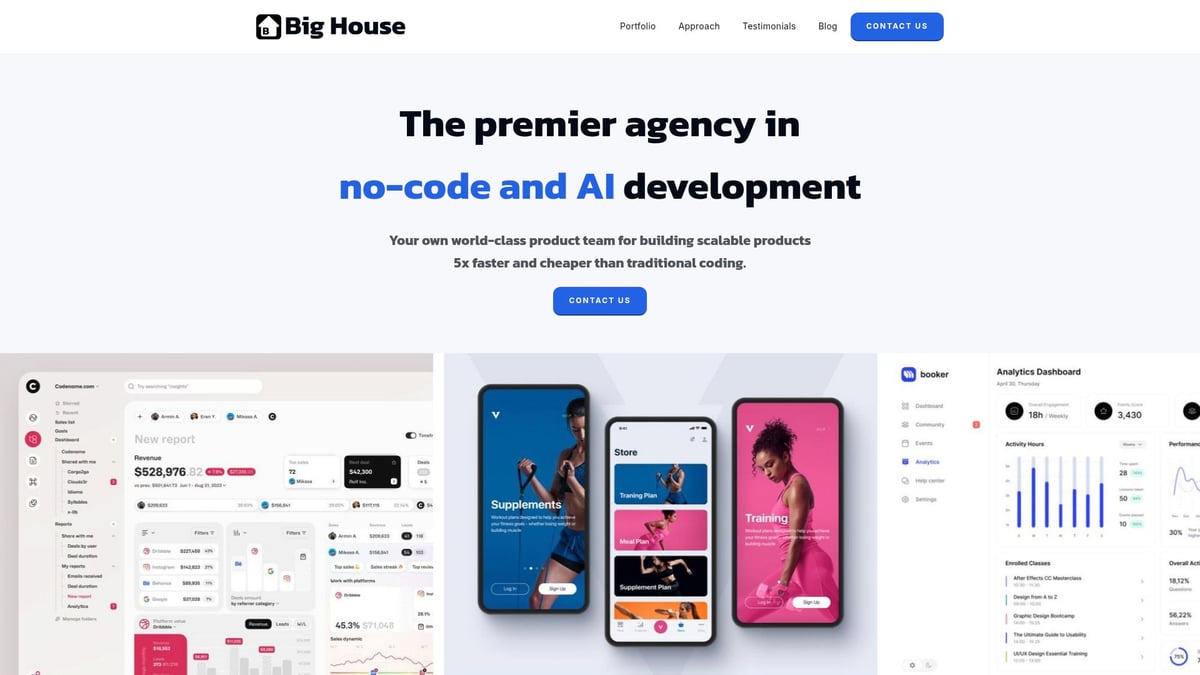
Big House Technologies is making waves in the enterprise integration platforms no-code space with its end-to-end offering. Their flexible pricing includes Basic, Growth, and custom Enterprise plans, ensuring accessibility for startups and large enterprises alike.
Core Features:
- No-code integration engine for automating multi-app workflows.
- AI-powered workflow automation and scalable app development, leveraging Bubble.
- Advanced UI/UX design and comprehensive QA/testing.
Unique Selling Points:
- Delivers projects up to 5x faster and with 3-4x cost savings.
- Deep expertise in both no-code and AI, ensuring future-proof solutions.
- End-to-end partnership, guiding clients from scoping to launch.
Target Audience: Enterprises and startups wanting rapid, secure, and scalable integration and automation.
Ideal Use Cases:
- Internal tool integration and digital transformation.
- Rapid MVP launches and large-scale workflow automation.
Pros:
- Exceptional speed and cost efficiency.
- High-quality delivery and collaborative approach.
- Proven results, such as saving clients 2 million euros.
Cons:
- Custom pricing requires direct inquiry.
- Heavy focus on Bubble and Lovable platforms may not fit every tech stack.
For more insight into why enterprises choose no-code for internal tools, see No-code for internal tool development.
Stacksync
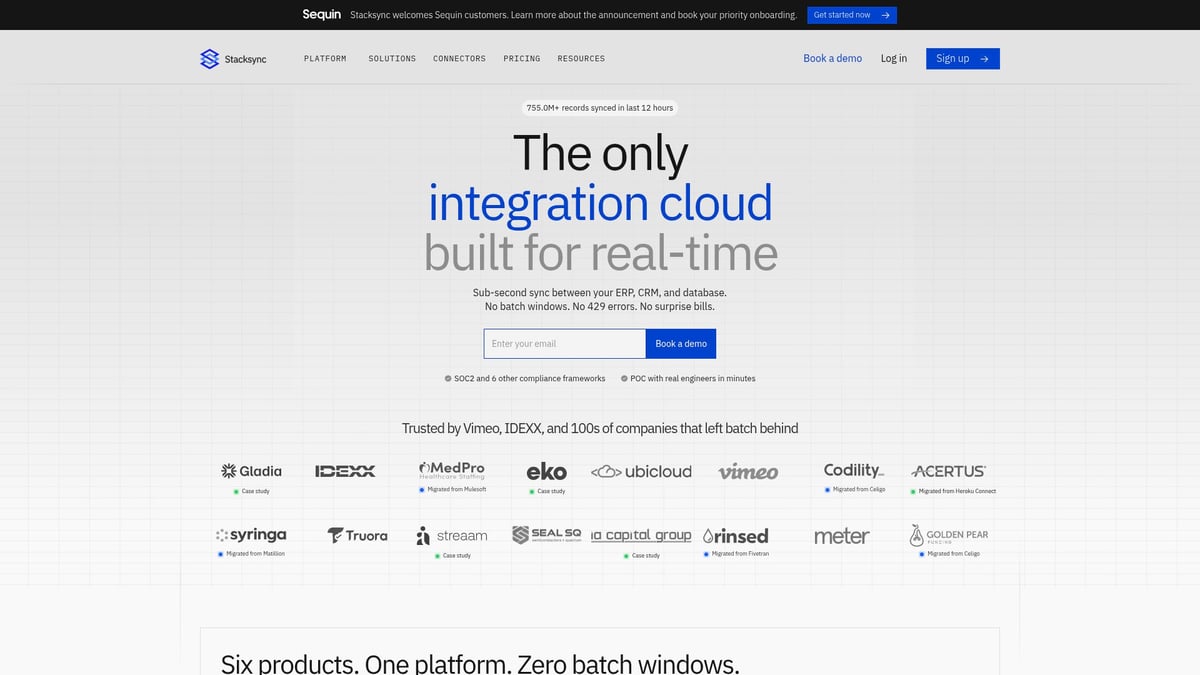
Stacksync is a top choice among enterprise integration platforms no-code for organizations that demand real-time data movement and robust automation. Their tiered pricing accommodates businesses from mid-market to enterprise.
Core Features:
- Real-time, two-way sync with millisecond speeds.
- Extensive connector library, including Salesforce, HubSpot, NetSuite, and Snowflake.
- Workflow automation, issue management dashboard, and smart API rate limiting.
Unique Selling Points:
- Custom sync frequencies and configuration as code.
- GitHub integration, advanced monitoring, and transparent logging.
Target Audience: Enterprises needing reliable, scalable, and secure integration across SaaS, databases, and internal tools.
Ideal Use Cases:
- CRM and ERP sync.
- Real-time ETL and reverse ETL.
- E-commerce and 3PL automation.
Pros:
- High scalability and robust security.
- Minimal infrastructure management.
- Transparent monitoring.
Cons:
- Learning curve for advanced features.
- Premium pricing for larger deployments.
Workato
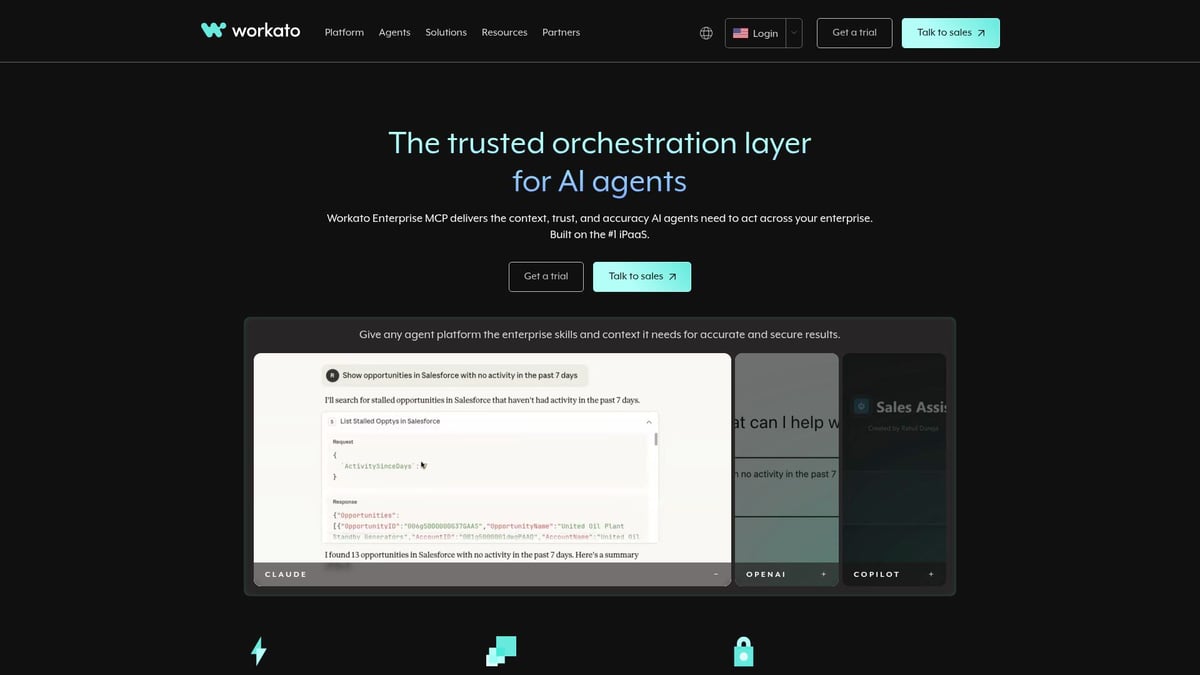
Workato stands out in the enterprise integration platforms no-code arena with its visual workflow builder and over 1000 prebuilt connectors. Its custom enterprise pricing and free trial make it accessible for evaluation.
Core Features:
- No-code workflow builder with AI-powered automations.
- API management and advanced governance controls.
- Hybrid cloud and on-premise support.
Unique Selling Points:
- Enterprise-grade scalability and security.
- Recipe sharing and community marketplace.
Target Audience: Mid-to-large enterprises with complex integration and automation needs.
Ideal Use Cases:
- HR, finance, and sales operations automation.
- Custom API orchestration and multi-cloud data sync.
Pros:
- Extensive connector support and strong compliance.
- Flexible deployment options.
Cons:
- Steep learning curve for advanced capabilities.
- Higher cost for small teams.
Zapier
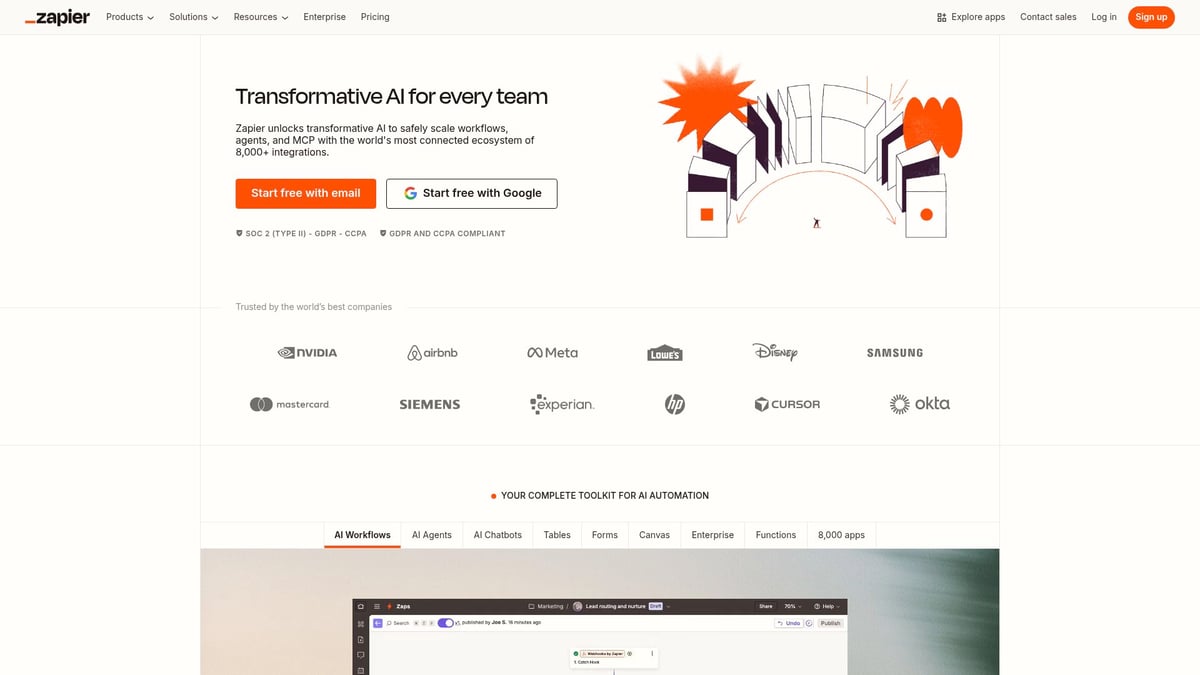
Zapier is synonymous with enterprise integration platforms no-code for its approachable interface and massive app ecosystem. With a free tier and paid plans starting at $19.99/month, Zapier is well-positioned for SMBs and teams needing quick wins.
Core Features:
- 6000+ app integrations.
- Drag-and-drop automation builder with conditional logic.
- Multi-step workflows and scheduling.
Unique Selling Points:
- User-friendly interface and fast onboarding.
- Strong adoption among SMBs and departments.
Target Audience: SMBs, marketing teams, non-technical users, and enterprises seeking rapid automation.
Ideal Use Cases:
- Marketing automation.
- Lead management and notifications.
- Simple cross-app workflows.
Pros:
- Easy to use and affordable entry point.
- Rapid deployment.
Cons:
- Limited for highly complex or high-volume enterprise scenarios.
- Some advanced features require premium plans.
MuleSoft Composer
MuleSoft Composer brings the power of enterprise integration platforms no-code to organizations deeply invested in Salesforce. With custom enterprise pricing, it is designed for scalability and compliance.
Core Features:
- No-code integration for the Salesforce ecosystem.
- Prebuilt connectors for major SaaS and on-premises apps.
- Real-time data sync and monitoring tools.
Unique Selling Points:
- Deep Salesforce integration and connection to legacy systems.
- Strong security and compliance posture.
Target Audience: Enterprises with heavy Salesforce usage, IT and business teams seeking rapid integration.
Ideal Use Cases:
- CRM, ERP, and finance system sync.
- Automating business processes within Salesforce.
Pros:
- Robust governance and scalability.
- Seamless alignment with Salesforce environments.
Cons:
- Best fit for Salesforce-centric organizations.
- Less flexible for non-Salesforce stacks.
Tray.io
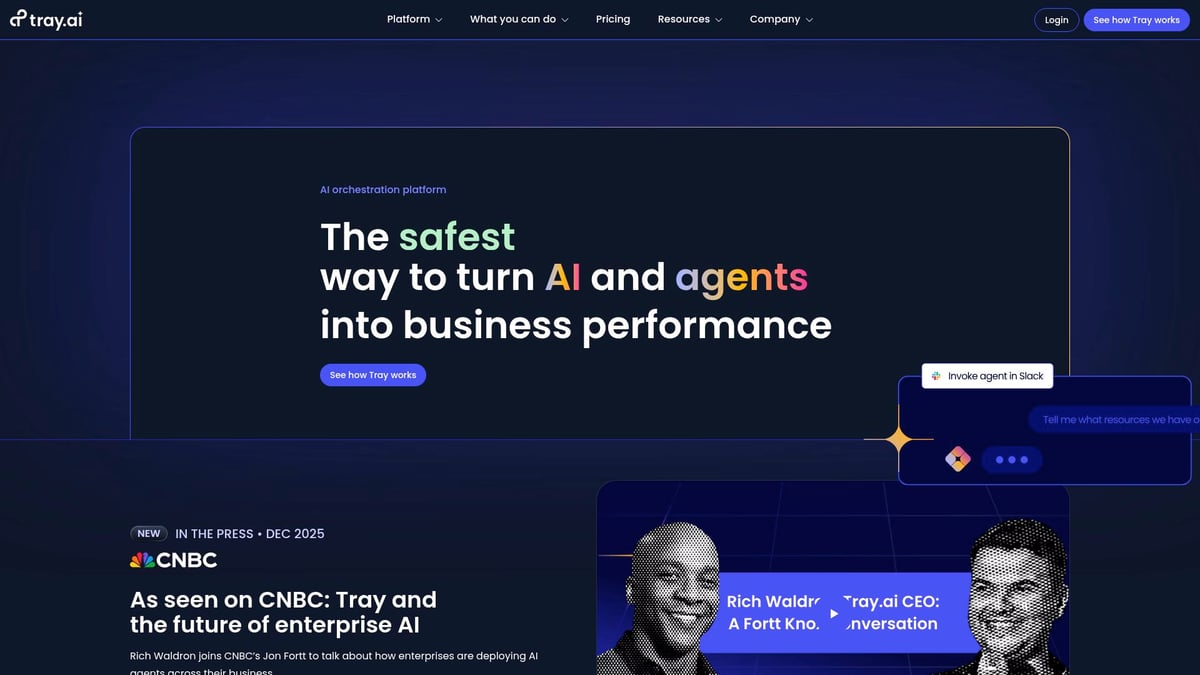
Tray.io is a leader in enterprise integration platforms no-code, offering a hybrid no-code/low-code approach. With custom pricing and a free trial, it appeals to both technical and non-technical users.
Core Features:
- Visual workflow builder and 600+ connectors.
- Logic-based automation, API integration, and data mapping.
- Error handling and flexible extension options.
Unique Selling Points:
- Scalable for complex, multi-app workflows.
- Flexible API support and responsive customer support.
Target Audience: Enterprises, SaaS companies, and IT teams needing advanced integrations.
Ideal Use Cases:
- SaaS product integrations.
- Lead routing and data enrichment.
- Multi-app orchestration.
Pros:
- Powerful for a range of users.
- Strong scalability and support.
Cons:
- Some features require technical knowledge.
- Cost can increase with scale.
Make (formerly Integromat)
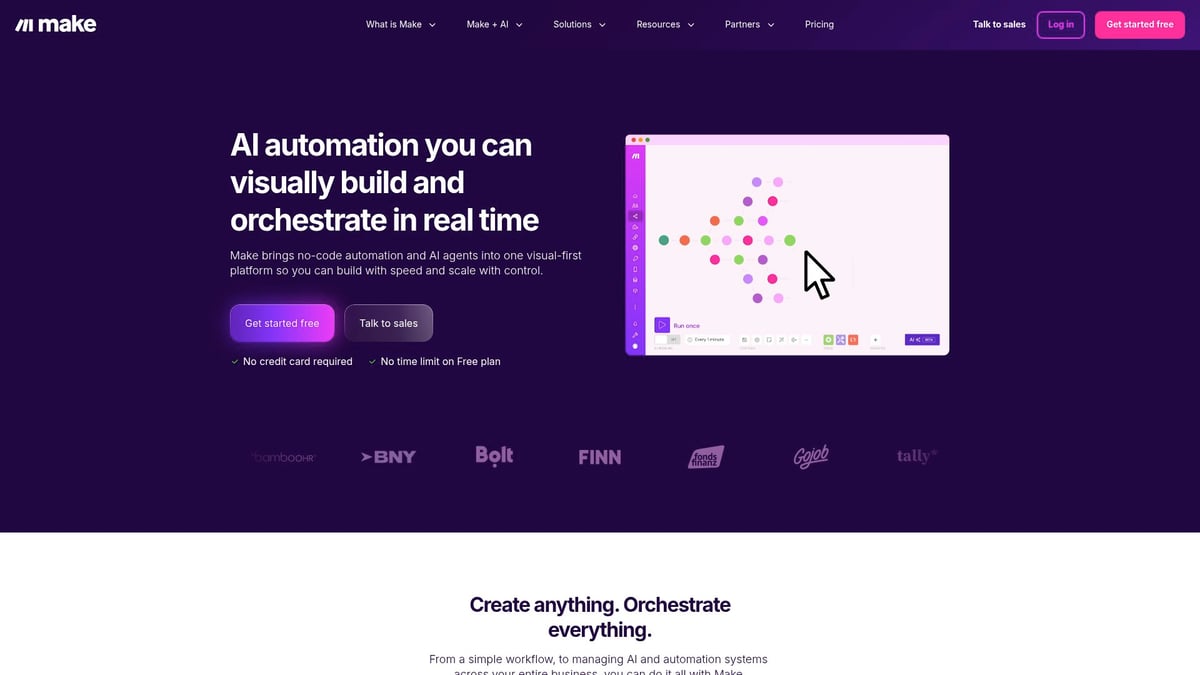
Make is a standout among enterprise integration platforms no-code for its flexible modular design and affordable pricing. With a free tier and paid plans from $9/month, it serves a wide spectrum of users.
Core Features:
- Visual scenario builder with 1000+ app integrations.
- Real-time and scheduled automations.
- In-depth logging and error handling.
Unique Selling Points:
- Highly customizable and low barrier to entry.
- Visual debugging tools for building complex workflows.
Target Audience: SMBs, freelancers, and enterprises with diverse integration needs.
Ideal Use Cases:
- E-commerce order sync and marketing automation.
- Data aggregation and custom notifications.
Pros:
- Customizable and scalable.
- Affordable entry point.
Cons:
- Learning curve for beginners.
- Advanced features are gated behind higher plans.
Across these platforms, the enterprise integration platforms no-code market is evolving rapidly. According to Gartner forecasts 70% of new apps will use low-code/no-code by 2026, adoption is accelerating as organizations seek simplicity, speed, and flexibility. Choosing the right platform depends on your integration needs, tech stack, and scale of operations.
Key Trends Shaping No-Code Enterprise Integration in 2026
Enterprise integration platforms no-code are rapidly evolving, bringing new possibilities to organizations aiming for seamless connectivity and automation. Let us explore the major trends shaping this landscape in 2026, highlighting how these platforms are transforming enterprise operations.
AI-Driven Integration and Automation
AI is taking center stage in enterprise integration platforms no-code. Platforms now use machine learning to optimize workflows, suggest automations, and detect anomalies before they become issues.
Features like automated data mapping, smart troubleshooting, and predictive recommendations are becoming standard. This makes integrations faster and more reliable, reducing manual intervention and errors.
Composable and Modular Architectures
Composable architectures allow businesses to assemble integration solutions from reusable modules and connectors. This modular approach is core to enterprise integration platforms no-code, enabling faster adaptation to new demands.
With drag-and-drop interfaces, users can quickly piece together workflows, swap components, or extend functionality without starting from scratch. The result is a flexible, sustainable integration strategy.
Enhanced Security and Compliance
Security and compliance are top priorities for any enterprise integration platforms no-code. Modern solutions now embed robust features such as SOC 2, GDPR, HIPAA, and SSO right out of the box.
Audit trails, access controls, and detailed monitoring are standard, making it easier for organizations to meet strict regulatory requirements. This focus on security boosts confidence for enterprises handling sensitive data.
Real-Time and Event-Driven Integrations
The shift from batch processing to real-time, event-driven integrations is transforming how businesses operate. Enterprise integration platforms no-code now support instant data syncs and trigger-based workflows for mission-critical processes.
For example, financial transactions, inventory updates, and customer support automation all benefit from real-time data movement. This immediacy helps organizations stay responsive and competitive.
Democratization of Integration
One of the most impactful trends is the democratization of integration. Enterprise integration platforms no-code empower business technologists—those outside traditional IT—to build and manage workflows.
With intuitive interfaces, onboarding resources, and active user communities, non-technical users can drive automation and innovation. This shift accelerates digital transformation across all departments.
Integration with Emerging Technologies
Enterprise integration platforms no-code are expanding their reach by supporting emerging technologies like IoT, blockchain, and advanced analytics. Standard connectors for these tools help enterprises future-proof their digital ecosystems.
As new technologies arise, platforms are adding flexible APIs and extensibility options. This ensures organizations can easily incorporate innovations without major rework.
Example: Industry Adoption Statistics
Adoption of enterprise integration platforms no-code is accelerating. According to Integration Platform-as-a-Service market projected to reach $20.93 billion by 2031, the iPaaS market is experiencing significant growth, highlighting the increasing reliance on no-code solutions for enterprise connectivity.
Recent surveys show that over 70 percent of enterprises plan to invest in these platforms by 2026. This surge reflects the business value and operational efficiency gained from no-code integration.
If you’re ready to cut through the complexity and actually speed up your integration projects, you’re not alone—so many teams are turning to no code solutions to launch faster, save money, and keep up with ever changing business needs. Whether you’re aiming to automate workflows, connect internal tools, or bring an MVP to life, you don’t have to wait months or blow your budget. Curious how top founders get their products up and running in record time? See what’s possible and get inspired by checking out real results here: See What We’ve Built for Founders Like You

About Big House
Big House is committed to 1) developing robust internal tools for enterprises, and 2) crafting minimum viable products (MVPs) that help startups and entrepreneurs bring their visions to life.
If you'd like to explore how we can build technology for you, get in touch. We'd be excited to discuss what you have in mind.
Other Articles
Unlock 2026 success with our enterprise automation consulting guide covering trends, best practices, case studies, and actionable strategies for measurable ROI.
Discover 7 smart ways to hire mobile app developer in 2025 with proven strategies for sourcing vetting and future proof contracts to ensure project success
Discover the 2026 guide to custom enterprise app development solutions Explore trends tech stacks costs security and real case studies to drive growth