
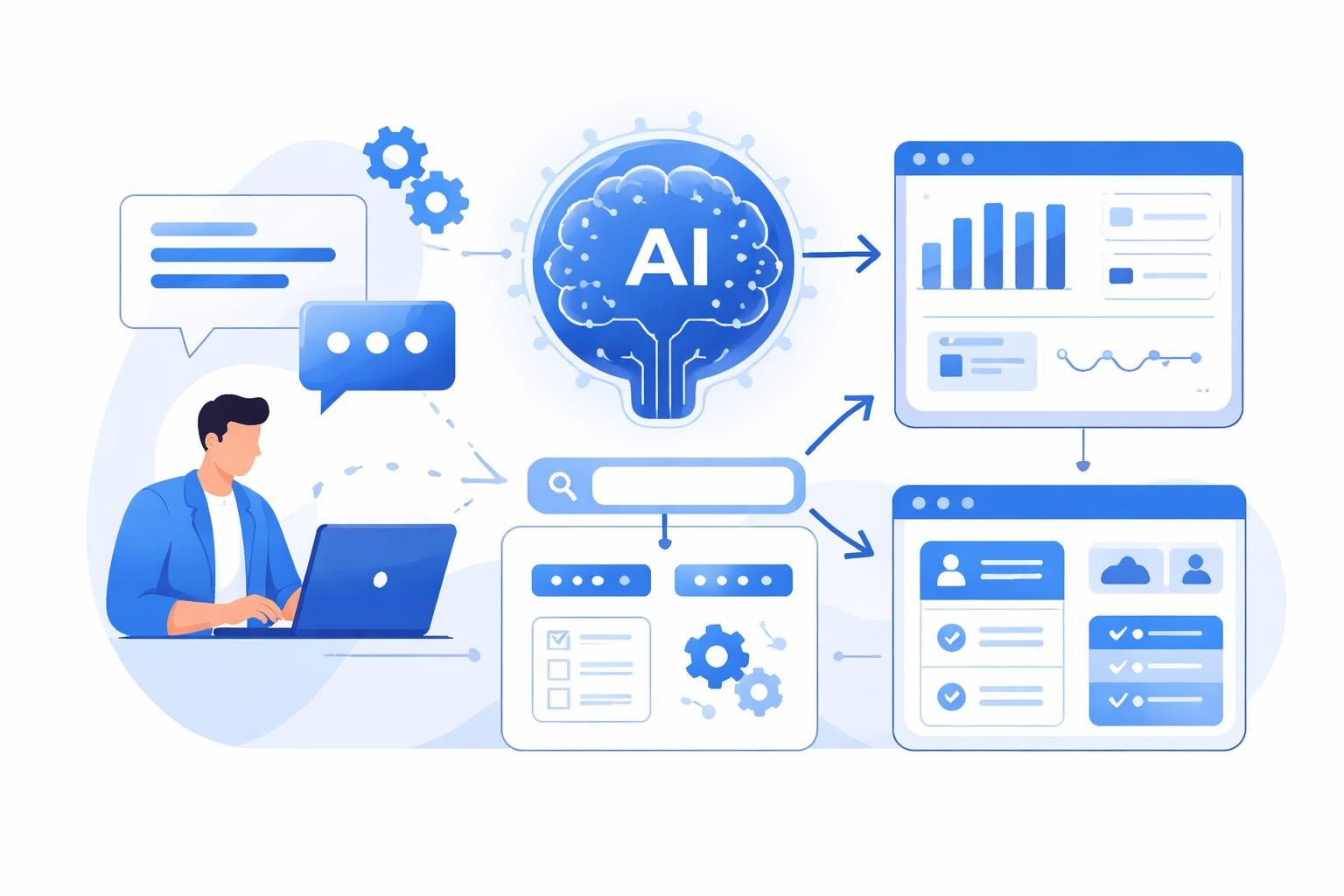
The landscape of internal tool development has shifted dramatically with the emergence of vibe coding as a legitimate enterprise development approach. Organizations in 2026 are discovering that building admin panels, dashboards, and workflow automation tools no longer requires months of traditional development cycles. Instead, vibe coding enables teams to describe their needs in natural language and watch as AI transforms those descriptions into functional applications. This approach is particularly powerful for internal tools where speed and iteration matter more than pixel-perfect design, making it an ideal complement to established no-code platforms and traditional development methods.
Understanding Vibe Coding for Enterprise Internal Tools
Vibe coding represents a paradigm shift in how businesses approach internal software development. Rather than writing code line-by-line or even dragging components in a visual builder, developers and business users describe what they want in conversational language. The AI interprets these descriptions and generates working code, interfaces, and functionality.
This approach works exceptionally well for internal tools because:
- Requirements often change rapidly based on team feedback
- Visual polish matters less than functionality and speed
- Multiple stakeholders can participate in the development process
- Iteration cycles need to be measured in hours, not weeks
- Documentation happens naturally through the conversational prompts
The Salesforce guide to vibe coding explains how this differs from traditional low-code development by emphasizing intent over implementation. While low-code platforms require understanding specific components and workflows, vibe coding internal tools start with describing business problems in plain language.
The Technical Foundation
Modern vibe coding platforms combine large language models with code generation capabilities, component libraries, and deployment infrastructure. When building internal tools, the AI doesn't just generate isolated snippets, it creates entire features including database schemas, API endpoints, user interfaces, and business logic.
For enterprises evaluating this approach, understanding the technical architecture matters. Most platforms operate on a generate-review-refine cycle where developers prompt the AI, examine the generated code, test functionality, and provide additional instructions to refine the output.
| Development Stage | Traditional Approach | Vibe Coding Approach | Time Savings |
|---|---|---|---|
| Requirements Gathering | Detailed specifications | Conversational description | 40-60% |
| Initial Development | Manual coding | AI generation + refinement | 60-80% |
| Iteration | Code changes + testing | Prompt refinement | 50-70% |
| Documentation | Separate process | Built into prompts | 70-90% |
Selecting the Right Platform for Your Internal Tools
The vibe coding tools landscape has matured significantly in 2026, with platforms offering different strengths depending on your specific internal tool requirements. Comparing the best vibe coding tools reveals that enterprises should evaluate platforms based on security features, integration capabilities, and deployment options.
Enterprise-Grade Considerations
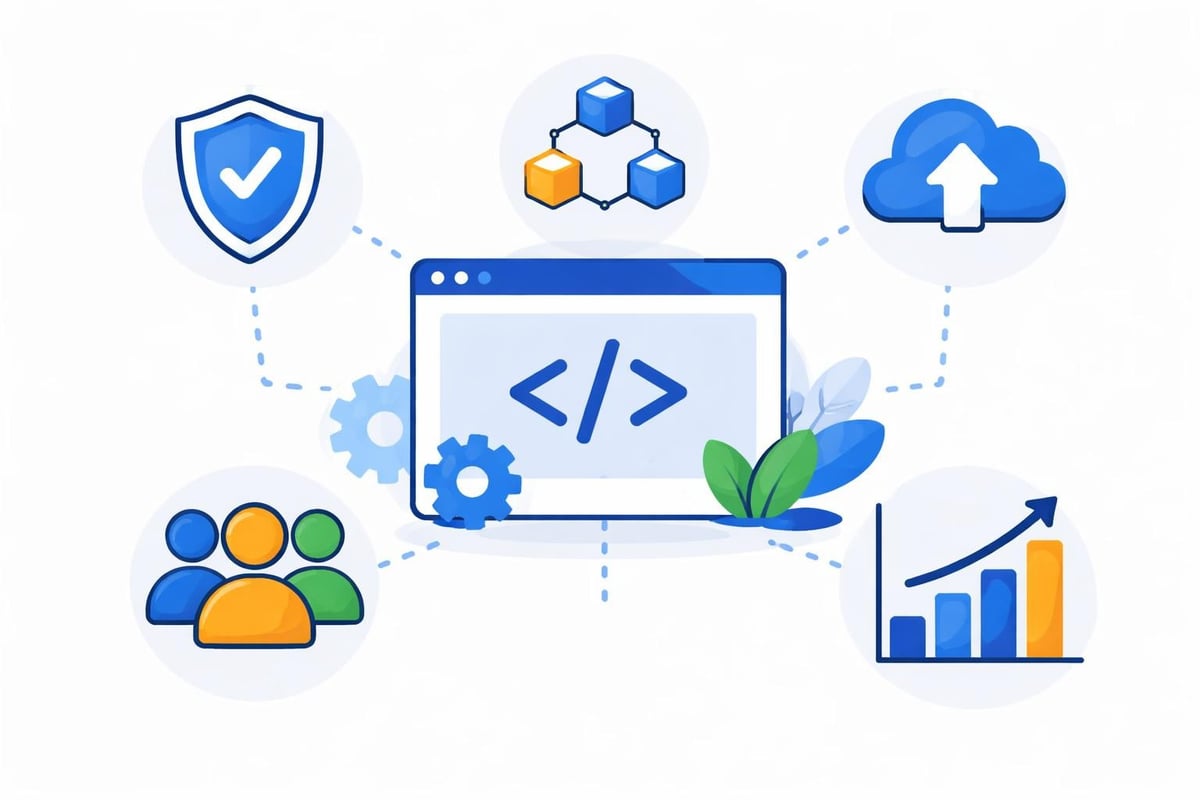
Security remains paramount when building internal tools that access sensitive business data. Research has shown that AI-generated code can contain security vulnerabilities, making thorough code review essential even when using vibe coding internal tools. Enterprises should implement review processes where security teams examine generated code before deployment.
Key security requirements include:
- Role-based access control generation
- Data encryption at rest and in transit
- Audit logging for compliance requirements
- Single sign-on integration
- API security best practices
Platforms like DronaHQ's vibe coding solution specifically address enterprise security concerns with features designed for regulated industries. This matters when building internal tools that handle customer data, financial information, or intellectual property.
Integration with Existing Development Workflows
Successful vibe coding internal tools initiatives don't replace existing development processes, they augment them. Organizations achieving the best results integrate vibe coding with their current development tooling and workflows rather than treating it as a completely separate approach.
Modern teams often use hybrid strategies where vibe coding handles rapid prototyping and basic CRUD operations while traditional development or no-code platforms handle complex business logic and critical system integration. This combination delivers speed without sacrificing quality or security.
Building Common Internal Tools with Vibe Coding
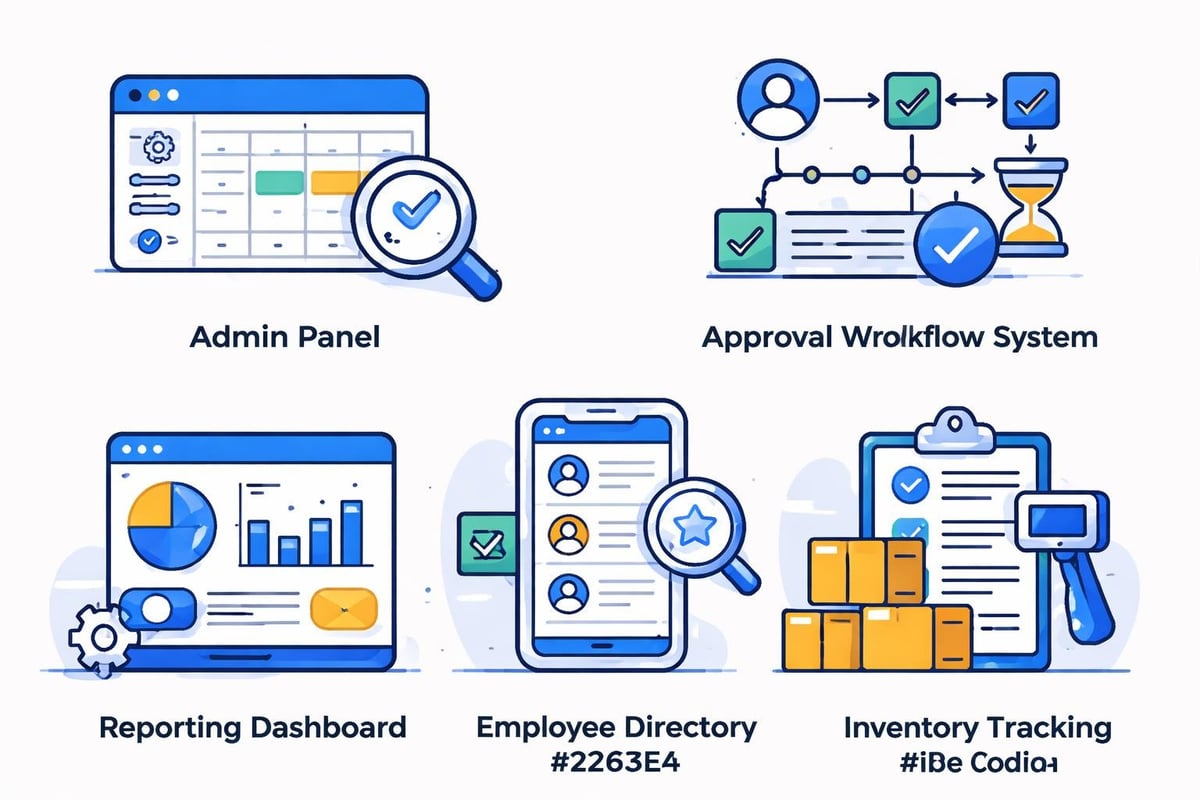
Internal tools fall into several categories, each with different requirements and complexity levels. Vibe coding excels at certain types while requiring more careful implementation for others.
Admin Panels and Data Management Interfaces
Admin panels represent the sweet spot for vibe coding internal tools. These applications typically need tables, forms, filtering, sorting, and basic CRUD operations, all of which AI can generate effectively from natural language descriptions.
A typical prompt sequence might include:
- "Create an admin panel for managing customer records with fields for name, email, company, status, and last contact date"
- "Add filtering by status and company, plus search across name and email"
- "Include bulk actions for updating status and exporting to CSV"
- "Add role-based permissions so managers can edit all records but representatives only see their assigned customers"
Each prompt builds on previous work, creating increasingly sophisticated functionality through conversational iteration. This approach proves faster than traditional development while maintaining clear documentation of requirements through the prompt history.
Workflow Automation Dashboards
Organizations need dashboards that visualize business processes, track KPIs, and trigger automated actions. Vibe coding platforms can generate these interfaces by understanding business context rather than requiring detailed technical specifications.
Dashboard components commonly generated include:
- Real-time metrics with data source connections
- Visualization charts and graphs
- Alert triggers based on thresholds
- Approval workflows with notification systems
- Activity logs and audit trails
The quality of generated dashboards depends significantly on how well developers articulate business logic. Research into the co-creation process in vibe coding emphasizes that successful projects involve iterative dialogue where developers refine their descriptions based on what the AI produces.
Quality Control and Code Review Processes
While vibe coding dramatically accelerates development, successful enterprises implement rigorous quality control measures. The code generated by AI requires the same scrutiny as any other code entering production systems.
Establishing Review Standards
Organizations should adapt their existing code review practices for vibe coding internal tools rather than skipping review entirely. The benchmark for evaluating AI-generated code demonstrates that human review remains essential for catching logic errors, security issues, and edge cases that AI might miss.
| Review Focus Area | What to Check | Common Issues |
|---|---|---|
| Security | Authentication, authorization, data validation | Missing input sanitization, weak access controls |
| Performance | Database queries, API calls, data loading | N+1 queries, missing indexes, inefficient loops |
| Business Logic | Calculations, workflows, edge cases | Incorrect assumptions, missing validations |
| Maintainability | Code structure, naming, documentation | Inconsistent patterns, unclear variable names |
| Integration | API connections, data formats, error handling | Missing error cases, incorrect data mapping |
Testing Strategies for AI-Generated Code
Testing vibe coding internal tools requires the same rigor as traditionally developed software. Automated testing becomes even more valuable because it catches regressions when prompts are refined and code regenerated.
Smart teams implement:
- Unit tests for business logic to verify calculations and data transformations
- Integration tests for API connections ensuring third-party services work correctly
- End-to-end tests for critical workflows validating complete user journeys
- Security testing scanning for common vulnerabilities in generated code
- Performance testing identifying bottlenecks before they impact users
Scaling Vibe Coding Across Development Teams
As organizations see success with initial vibe coding internal tools projects, they face the challenge of scaling this approach across multiple teams while maintaining consistency and quality.
Building Organizational Knowledge
Unlike traditional development where knowledge resides in documented coding standards, vibe coding expertise centers on effective prompting techniques and understanding platform capabilities. Organizations benefit from creating internal prompt libraries that capture successful patterns.
Effective knowledge sharing includes:
- Templates for common internal tool types
- Prompt patterns that generate secure, performant code
- Integration examples for company-specific systems
- Troubleshooting guides for common AI misunderstandings
- Review checklists adapted for AI-generated code
Teams working with enterprise product development can integrate vibe coding into their existing processes by treating it as another tool in their development toolkit rather than a complete replacement for established practices.
Training and Enablement
Successfully deploying vibe coding internal tools across an organization requires training that goes beyond basic platform features. Teams need to understand when vibe coding makes sense versus when traditional development or established no-code tools for SaaS founders prove more appropriate.
Training programs should cover prompt engineering techniques, code review for AI-generated output, security considerations, and integration patterns. Organizations achieving the best results treat vibe coding as a skill to develop rather than a magic solution that requires no expertise.
Cost Analysis and ROI Considerations
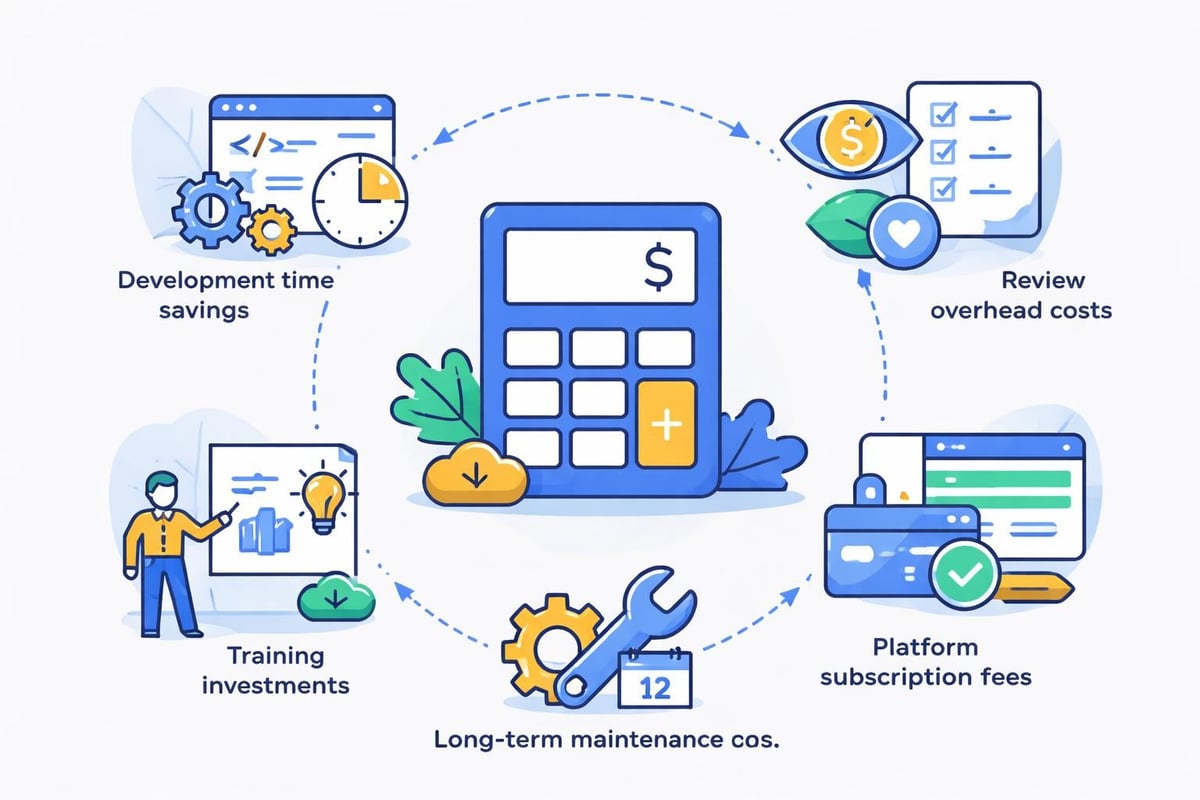
Understanding the true cost of vibe coding internal tools requires looking beyond platform subscription fees to consider the total cost of ownership including development time, review overhead, and long-term maintenance.
Direct Cost Savings
The most obvious benefit comes from reduced development time. Internal tools that previously required weeks or months of traditional development can often be built in days using vibe coding. This acceleration particularly benefits projects with:
- Straightforward CRUD operations
- Standard interface patterns
- Clear business logic
- Minimal complex integrations
- Rapid iteration requirements
When comparing no-code vs custom code cost, vibe coding often falls between these approaches, delivering faster development than custom code with more flexibility than traditional no-code platforms.
Hidden Costs to Consider
Organizations sometimes underestimate the overhead associated with vibe coding internal tools. While initial development is faster, teams must account for:
- Code review time - AI-generated code requires thorough review by experienced developers
- Security auditing - Additional scrutiny needed to verify AI hasn't introduced vulnerabilities
- Refactoring cycles - Generated code may need restructuring as tools evolve
- Platform dependency - Switching costs if the vibe coding platform changes or discontinues
- Training investment - Team members need time to develop effective prompting skills
Real-World Implementation Patterns
Organizations successfully using vibe coding internal tools typically follow similar implementation patterns that balance speed with quality and security.
The Prototype-to-Production Pipeline
Rather than using vibe coding for final production code, many teams use it for rapid prototyping that gets refined through traditional development. This hybrid approach captures the speed benefits while ensuring production code meets all quality standards.
The typical pipeline includes:
- Business stakeholder describes needs in natural language
- Developer uses vibe coding to create working prototype in hours
- Stakeholders test prototype and provide feedback
- Iterate with additional prompts until functionality is correct
- Development team reviews and refactors generated code
- Add comprehensive tests and security hardening
- Deploy to production with standard DevOps processes
This approach works particularly well for building internal dashboards where visual feedback drives requirements refinement.
Maintenance and Evolution
Internal tools built with vibe coding require ongoing maintenance like any software. The conversational prompt history serves as living documentation, making it easier for new team members to understand how the tool was built and why certain decisions were made.
When requirements change, developers can either add new prompts to extend functionality or refactor existing code through traditional methods. The best approach depends on the complexity of changes and whether the AI can reliably understand the modifications needed.
Integration with No-Code and AI Development Platforms
Vibe coding doesn't exist in isolation. Forward-thinking organizations integrate it with established platforms to create comprehensive development ecosystems that match different tools to different problems.
Complementing No-Code Platforms
Platforms like Bubble excel at complex applications with sophisticated business logic, custom workflows, and extensive integrations. Vibe coding internal tools shine for simpler applications that need rapid development and frequent iteration. Using both approaches strategically maximizes development efficiency.
Teams at AI-powered development agencies often use vibe coding for administrative interfaces and internal utilities while building core product functionality on no-code platforms. This separation of concerns allows each tool to operate in its strength area.
Building on AI Development Foundations
The same AI capabilities powering vibe coding extend across modern development workflows. Organizations investing in AI product development tools find that vibe coding internal tools represent one application of broader AI-assisted development capabilities.
Synergies across AI development tools include:
- Shared component libraries and design systems
- Consistent authentication and authorization patterns
- Integrated testing and deployment pipelines
- Common data models and API specifications
- Unified monitoring and logging infrastructure
Governance and Best Practices
As vibe coding internal tools proliferate across organizations, governance becomes essential to prevent sprawl, ensure security, and maintain code quality.
Establishing Guidelines
Organizations need clear policies about when vibe coding is appropriate, what review processes apply, and how generated code should be documented and maintained. These guidelines should be specific enough to ensure consistency but flexible enough to allow teams to move quickly.
| Governance Area | Policy Requirements | Enforcement Method |
|---|---|---|
| Tool Selection | Approved platforms only | Procurement controls |
| Code Review | Required for all generated code | Pull request checks |
| Security Scanning | Automated vulnerability checks | CI/CD pipeline gates |
| Documentation | Prompt history + code comments | Repository templates |
| Access Control | Role-based permissions | Platform configuration |
Monitoring and Optimization
Successful vibe coding internal tools initiatives include ongoing monitoring of development velocity, code quality metrics, and security findings. This data informs continuous improvement of prompting techniques, review processes, and platform selection.
Organizations should track metrics including:
- Time from requirement to deployment
- Code review finding frequency and severity
- Security vulnerability rates in generated code
- Developer satisfaction with vibe coding tools
- Business user satisfaction with delivered tools
Future Considerations for Enterprise Adoption
The vibe coding landscape continues evolving rapidly. Organizations planning long-term investments should consider how this technology might develop and what that means for their internal tool strategy.
Platform Maturity and Standardization
As vibe coding tools mature, expect greater standardization around security practices, code quality, and integration patterns. Early adopters should stay engaged with platform vendors to influence development roadmaps and ensure their requirements are addressed.
The conversation around AI software development increasingly includes vibe coding as a legitimate enterprise approach rather than an experimental technology. This shift brings additional scrutiny to security, compliance, and governance requirements.
Skills Development for the Future
Development teams of 2026 and beyond will need different skill combinations than traditional developers. Understanding how to effectively prompt AI, review generated code, and architect systems that leverage AI capabilities becomes as important as knowing specific programming languages.
Organizations investing in vibe coding internal tools should simultaneously invest in team training, knowledge sharing, and career development pathways that recognize these emerging skills. The goal is building teams that can fluidly move between vibe coding, no-code platforms, and traditional development based on project requirements.
Vibe coding internal tools represent a powerful addition to enterprise development capabilities, particularly when combined with established no-code platforms and traditional development approaches. The key to success lies in understanding when this approach delivers the most value, implementing rigorous quality controls, and building team capabilities around effective AI collaboration. Big House Technologies specializes in helping organizations navigate these decisions, combining Bubble's no-code platform, Lovable's AI capabilities, and strategic guidance to deliver internal tools that meet enterprise requirements for security, scalability, and maintainability. Whether you're building your first internal tool or scaling across your organization, our team can help you leverage the right approach for your specific needs.

About Big House
Big House is committed to 1) developing robust internal tools for enterprises, and 2) crafting minimum viable products (MVPs) that help startups and entrepreneurs bring their visions to life.
If you'd like to explore how we can build technology for you, get in touch. We'd be excited to discuss what you have in mind.
Other Articles
Discover the vibe coding meaning and how this AI-driven development approach is transforming software creation for enterprises and startups in 2026.
Learn how to build apps with AI and no-code platforms. Discover the tools, techniques, and best practices for creating powerful applications without coding.
Discover the 7 best business soft solutions for 2025. Compare features, pricing, and benefits to find the ideal software to boost productivity and growth.