
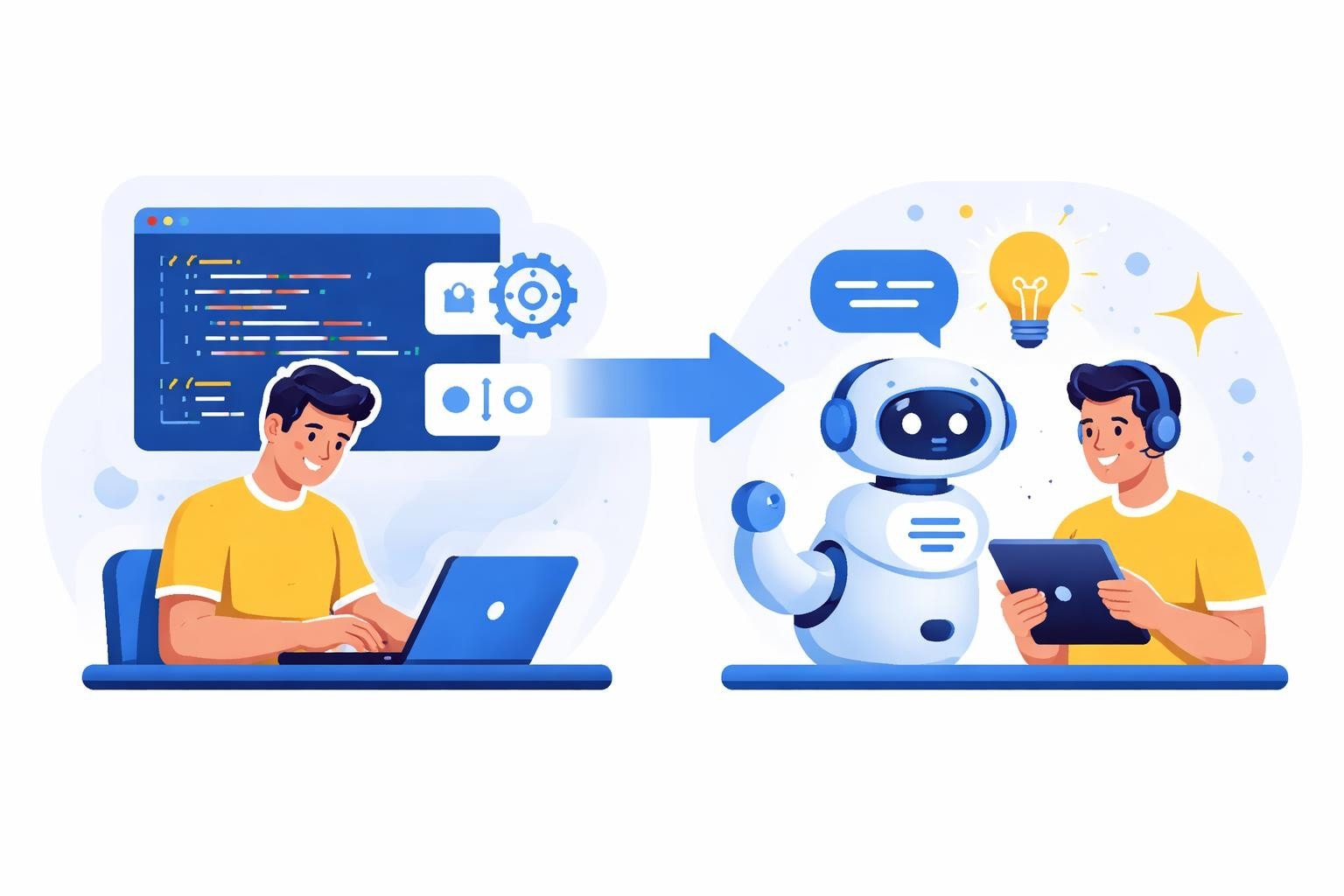
Software development has undergone countless transformations over the decades, but few shifts have been as radical as the emergence of vibe coding. This conversational approach to programming, where developers interact with AI models through natural language to generate functional code, represents a fundamental reimagining of how we build software. Rather than manually writing each line of code, practitioners describe their intentions, review AI-generated solutions, and iterate through dialogue. This paradigm shift is democratizing software creation while simultaneously raising important questions about quality control, security, and the future role of developers.
Understanding the Vibe Coding Phenomenon
Vibe coding emerged as developers began leveraging large language models to accelerate their workflows. The term itself captures something essential about the practice: it's less about rigorous syntax and more about conveying the intended "vibe" or essence of what you want to accomplish. Instead of memorizing API documentation or debugging semicolons, developers engage in a back-and-forth conversation with AI assistants.
The practice gained such cultural traction that Collins Dictionary named it Word of the Year for 2025, reflecting its impact on both technical and mainstream consciousness. This recognition underscores how profoundly AI-assisted development has penetrated the software industry.
The Core Mechanics
At its foundation, vibe coding operates through iterative dialogue. A developer might start by describing a feature requirement in plain English: "Create a user authentication system with email verification and password reset functionality." The AI responds with code implementations, which the developer reviews, tests, and refines through additional prompts.
Key characteristics include:
- Natural language interfaces replacing traditional syntax
- Rapid prototyping through conversational iteration
- Lower barriers to entry for non-traditional developers
- Emphasis on intent over implementation details
- Continuous refinement through dialogue
This conversational model fundamentally differs from traditional development, where deep technical knowledge of specific languages and frameworks was essential. The accessibility factor has particularly resonated with business analysts and technical professionals who understand business logic but lack extensive coding experience.

The Enterprise Perspective on Conversational Development
For enterprises and startups seeking rapid solution delivery, vibe coding presents compelling advantages. The speed at which functional prototypes can be generated has accelerated product development cycles dramatically. What traditionally required weeks of development can now materialize in hours or days through effective AI collaboration.
Speed and Efficiency Gains
Organizations implementing vibe coding approaches report significant time savings across multiple development phases:
| Development Phase | Traditional Timeline | Vibe Coding Timeline | Time Savings |
|---|---|---|---|
| Initial Prototype | 2-3 weeks | 2-3 days | 85-90% |
| Feature Implementation | 1-2 weeks | 1-3 days | 70-85% |
| Testing Framework Setup | 3-5 days | 4-8 hours | 80-85% |
| Documentation | 1 week | 1-2 days | 75-85% |
These efficiency improvements align particularly well with no-code and AI development platforms that already emphasize rapid delivery. When combined with visual development tools, conversational AI coding creates a powerful acceleration effect.
The efficiency extends beyond pure coding time. Developers spend less time context-switching between documentation, Stack Overflow searches, and their IDE. The AI assistant serves as an integrated knowledge base, reducing cognitive load and maintaining flow state.
Business Analyst Empowerment
One of the most transformative aspects of vibe coding is how it enables business analysts to bridge the technical gap. Professionals who deeply understand business requirements but lack programming expertise can now translate those requirements directly into functional code through conversation.
This empowerment manifests in several ways:
- Direct requirement translation without developer intermediaries
- Rapid mockup creation for stakeholder validation
- Business logic implementation by those who understand it best
- Reduced communication overhead between business and technical teams
- Faster iteration on business-critical features
For organizations building internal tools and dashboards, this democratization dramatically reduces bottlenecks. Teams can create operational systems without waiting for developer availability.
Quality Considerations and Trust Dynamics
While vibe coding offers remarkable speed advantages, Microsoft Research studies reveal complex trust dynamics between developers and AI-generated code. Understanding when to trust AI output versus when to scrutinize deeply requires developing new professional intuitions.
The Verification Challenge
Generated code often appears functional on surface-level testing but may harbor subtle issues in edge cases, security vulnerabilities, or performance bottlenecks. Experienced developers learn to recognize patterns that warrant closer inspection:
- Authentication and authorization implementations
- Database query optimization and indexing
- Input validation and sanitization
- Error handling and recovery mechanisms
- Resource management and memory leaks
The challenge intensifies because AI-generated code typically follows common patterns and may miss domain-specific nuances that traditional developers would catch through experience. Research into developer behaviors shows a spectrum of reliance, with some practitioners accepting AI suggestions uncritically while others maintain rigorous verification protocols.
Security Implications and Mitigation
Security risks in vibe coding demand particular attention. AI models trained on public code repositories may inadvertently reproduce vulnerable patterns or outdated security practices. Organizations must implement robust safeguards.
Effective mitigation strategies include:
- Mandatory code review by security-aware developers
- Automated security scanning integrated into CI/CD pipelines
- Regular penetration testing of AI-assisted code
- Clear guidelines on which components require human expertise
- Continuous training on emerging security vulnerabilities
Even prominent figures like Linus Torvalds have expressed cautious support, emphasizing that vibe coding works for certain contexts while critical systems demand traditional rigor.

Integration with Modern Development Workflows
The most successful vibe coding implementations don't replace existing development practices but rather enhance them. Forward-thinking organizations integrate conversational AI into their established workflows, creating hybrid approaches that leverage both speed and reliability.
The Hybrid Development Model
Rather than adopting an all-or-nothing approach, sophisticated teams deploy vibe coding strategically across different project phases and component types. This nuanced application maximizes benefits while managing risks.
| Component Type | AI Involvement | Human Oversight | Rationale |
|---|---|---|---|
| UI Prototypes | High (80-90%) | Low | Rapid iteration, low risk |
| Business Logic | Medium (50-70%) | High | Domain expertise critical |
| API Integrations | High (70-80%) | Medium | Standard patterns apply |
| Security Features | Low (20-30%) | Very High | Critical vulnerabilities |
| Performance Optimization | Medium (40-60%) | High | Context-dependent solutions |
This strategic deployment aligns well with enterprise product development methodologies that prioritize both velocity and quality. Teams can accelerate low-risk components while maintaining rigorous standards for critical systems.
Complementing No-Code Platforms
The synergy between vibe coding and no-code development platforms creates particularly powerful combinations. Bubble's visual development environment, for instance, handles interface design and workflow logic, while conversational AI can generate custom JavaScript plugins, API integrations, and complex data transformations that extend platform capabilities.
This complementary relationship provides:
- Visual development for user interfaces and basic workflows
- AI-generated code for custom functionality beyond platform limitations
- Reduced need for traditional full-stack developers
- Faster time-to-market for complex applications
- Lower development costs without sacrificing capability
Organizations leveraging both approaches report development cost reductions of 60-75% compared to traditional custom development while maintaining comparable functionality and user experience quality.
Prompting Techniques and Best Practices
Effective vibe coding requires developing new skills around prompt engineering and AI collaboration. Research into vibe coding workflows identifies specific techniques that yield superior results.
Structured Prompting Strategies
Experienced practitioners structure their prompts to provide context, constraints, and success criteria. Generic requests produce generic code; specific, well-structured prompts generate tailored solutions.
Effective prompt elements include:
- Context setting: Describe the broader application architecture and purpose
- Specific requirements: Detail exact functionality, inputs, and expected outputs
- Constraints: Specify performance requirements, technology limitations, security needs
- Style preferences: Define coding conventions, naming patterns, comment density
- Test scenarios: Outline edge cases and validation criteria
For example, rather than prompting "create a login function," effective practitioners might say: "Create a secure login function for a SaaS application using JWT tokens with 24-hour expiration. Include rate limiting (5 attempts per 15 minutes), password strength validation (minimum 12 characters, mixed case, numbers, symbols), and comprehensive error handling that doesn't leak security information. Follow async/await patterns and include unit tests covering success, invalid credentials, and rate limit scenarios."
Iterative Refinement Patterns
The conversation doesn't end with the initial code generation. Skilled vibe coders engage in structured refinement cycles, progressively improving the solution through targeted feedback.
Common refinement patterns include:
- Performance optimization: "Refactor this to reduce database queries using eager loading"
- Error handling enhancement: "Add comprehensive try-catch blocks with specific error types"
- Code organization: "Split this into smaller, single-responsibility functions"
- Test coverage: "Generate additional unit tests covering these edge cases"
- Documentation: "Add JSDoc comments explaining parameters and return values"
This iterative approach mirrors traditional code review processes but compresses multiple feedback cycles into rapid conversational exchanges. The key skill becomes recognizing what to refine and articulating improvements precisely.

Economic Implications for Software Development
The economic impact of vibe coding extends beyond individual productivity gains to fundamentally alter software development economics. Organizations reevaluating their development tooling strategies must consider how conversational AI affects team composition, project budgets, and competitive dynamics.
Cost Structure Transformation
Traditional software development cost structures heavily weight senior developer salaries and extended timelines. Vibe coding shifts this equation by reducing the specialized expertise required for many tasks while compressing development cycles.
Traditional vs. Vibe-Enhanced Development Costs:
- Personnel: 40-60% reduction through smaller specialized teams
- Timeline: 50-70% acceleration for initial releases
- Maintenance: Variable impact depending on code quality practices
- Training: Increased onboarding efficiency for new team members
- Infrastructure: Minimal change in hosting and deployment costs
These economics particularly favor startups and enterprises building internal tools, MVPs, or business applications where speed-to-market creates competitive advantage. The cost reduction enables more experimental product development and faster validation cycles.
The Accessibility Dividend
Beyond direct cost savings, vibe coding's accessibility creates broader economic value by expanding who can participate in software creation. Organizations can leverage existing staff knowledge more effectively when business analysts, product managers, and domain experts can directly implement solutions.
This democratization effect compounds in organizations with distributed expertise. Rather than centralizing all development through a technical bottleneck, capabilities distribute across teams who understand their specific domains. The result: faster solutions more accurately aligned with actual business needs.
Navigating the Learning Curve and Cultural Shift
Adopting vibe coding requires more than technical capability; it demands cultural adaptation and new mental models. Studies of developer perceptions reveal varying comfort levels with AI collaboration and distinct learning curves across experience levels.
Developer Mindset Evolution
Traditional developers often face the steepest adjustment. Years of training emphasized understanding how code works at fundamental levels. Vibe coding inverts this, focusing on what code should accomplish while delegating implementation details to AI.
Key mindset shifts include:
- From implementation focus to verification and validation focus
- From writing code to reviewing and refining code
- From syntax expertise to requirement articulation skills
- From individual craft to collaborative human-AI partnership
- From complete understanding to strategic understanding with targeted deep dives
Paradoxically, junior developers sometimes adapt faster, lacking ingrained habits around manual coding. However, this creates risks when juniors haven't developed the underlying understanding to recognize problematic AI outputs.
Organizational Change Management
Successfully integrating vibe coding across development teams requires deliberate change management. Organizations achieving smooth transitions typically implement phased approaches with clear guidelines.
Effective adoption frameworks establish:
- Pilot programs testing vibe coding on low-risk projects
- Clear quality gates defining when AI code needs human review
- Training programs teaching effective prompting and verification
- Documentation standards capturing AI interactions and decisions
- Continuous evaluation measuring outcomes and refining practices
The most successful implementations avoid dogmatic all-or-nothing approaches. Instead, they create frameworks allowing teams to apply vibe coding where it adds value while maintaining traditional practices where appropriate.
Future Trajectories and Emerging Patterns
As vibe coding matures through 2026, several trends shape its evolution. The practice continues developing beyond simple code generation toward more sophisticated AI collaboration patterns that enhance rather than replace developer expertise.
Advanced Collaboration Models
Emerging patterns move beyond basic prompt-response cycles toward persistent AI collaborators that maintain context across entire projects. These advanced models understand application architecture, remember previous decisions, and proactively suggest improvements aligned with established patterns.
Future vibe coding environments may integrate:
- Persistent project context allowing AI to understand full application scope
- Proactive refactoring suggestions based on evolving codebase analysis
- Automated test generation covering edge cases humans might miss
- Performance monitoring integration connecting AI suggestions to production metrics
- Security vulnerability prediction based on emerging threat patterns
These capabilities transform AI from a code generation tool into a true development partner, augmenting human judgment with computational analysis at scale.
The Specialization Question
An open question remains whether vibe coding will commoditize general software development while increasing demand for specialized expertise. Early indicators suggest a bifurcation: routine development becomes more accessible while complex architecture, security, and performance optimization become more valuable.
Organizations may increasingly structure teams around this division, employing specialized no-code product teams for rapid delivery while maintaining expert developers for critical systems. This hybrid model balances accessibility with expertise, speed with rigor.
Vibe coding represents a fundamental shift in how we approach software creation, offering unprecedented speed and accessibility while demanding new quality assurance practices and security awareness. The paradigm works best when integrated thoughtfully into existing development workflows rather than replacing proven practices entirely. Whether you're building your first MVP or scaling enterprise solutions, Big House Technologies combines the rapid development capabilities of no-code platforms with AI-enhanced workflows to deliver scalable, production-ready applications. Our team guides clients through strategic technology decisions, ensuring you leverage modern development approaches while maintaining the quality standards your business demands.

About Big House
Big House is committed to 1) developing robust internal tools for enterprises, and 2) crafting minimum viable products (MVPs) that help startups and entrepreneurs bring their visions to life.
If you'd like to explore how we can build technology for you, get in touch. We'd be excited to discuss what you have in mind.
Other Articles
Stay ahead in sw dev with this essential 2025 guide covering trends, skills, AI integration, security, and practical steps for modern software development success.
Discover 7 smart ways to hire mobile app developer in 2025 with proven strategies for sourcing vetting and future proof contracts to ensure project success
Discover how internal tools deepen AI capabilities in modern enterprises, from automation to predictive analytics, using no-code platforms.