

The landscape of software creation has transformed dramatically over the past decade, with programing development evolving from purely code-based approaches to include powerful no-code and AI-assisted platforms. As organizations seek faster time-to-market and more cost-effective solutions, understanding the full spectrum of programing development methodologies has become essential. Whether you're building enterprise applications, launching startup MVPs, or developing internal tools, knowing when and how to apply different development approaches can mean the difference between project success and costly delays.
Understanding Modern Programing Development Approaches
Programing development in 2026 encompasses far more than writing lines of code. The field has expanded to include traditional programming, low-code platforms, no-code solutions, and AI-assisted development tools that dramatically accelerate the creation process.
Traditional programing development still forms the backbone of complex, highly customized applications. This approach provides maximum flexibility and control, allowing developers to build precisely what's needed without platform constraints. However, it comes with longer development timelines and higher costs.
The emergence of no-code platforms has revolutionized how enterprises approach internal tool development, enabling business users to participate in the creation process. These platforms democratize programing development by providing visual interfaces that generate production-ready code automatically.
Key Development Methodologies
Different projects require different approaches to programing development. Understanding various programming methodologies helps teams select the right framework for their specific needs.
- Agile Development: Iterative approach with frequent releases and continuous feedback
- Waterfall Methodology: Sequential development with defined phases and milestones
- DevOps Integration: Combining development and operations for continuous delivery
- Rapid Application Development: Fast prototyping and iterative refinement
- Hybrid Approaches: Combining no-code platforms with traditional coding where needed
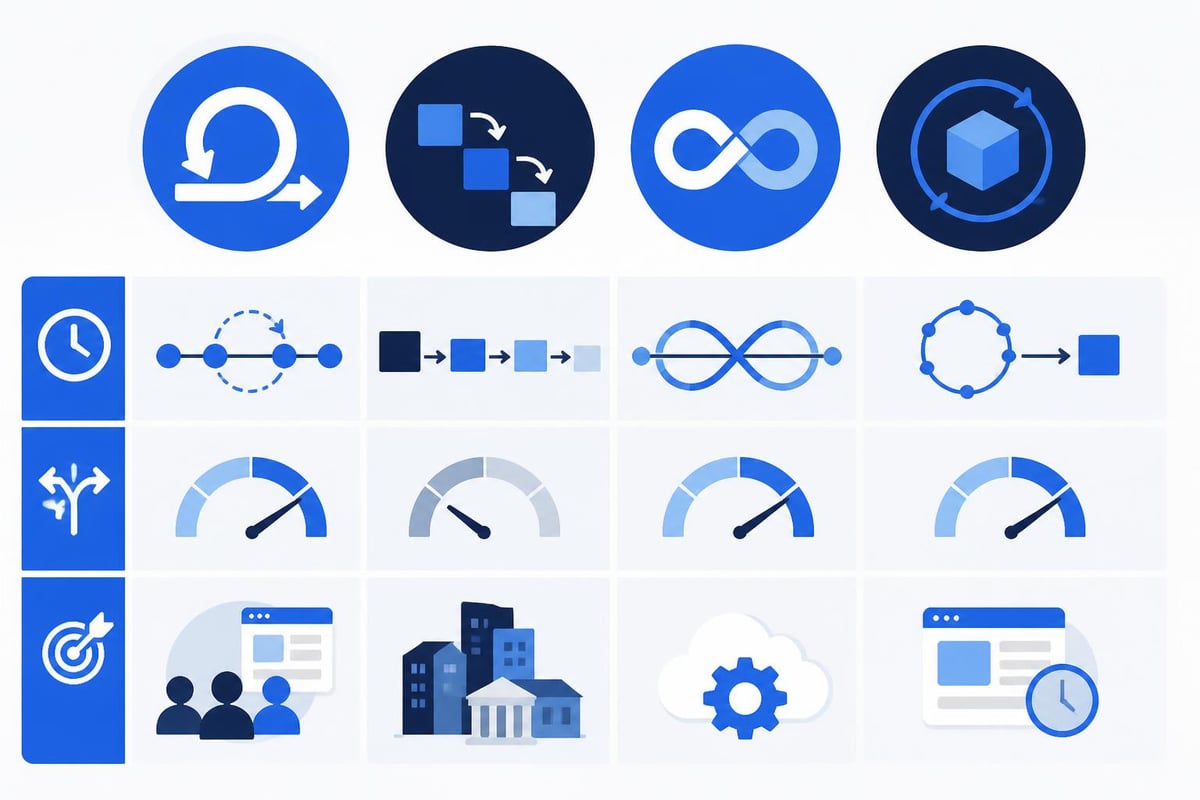
The choice of methodology directly impacts project timelines, costs, and outcomes. For instance, when comparing no-code versus custom code costs, organizations often find that no-code solutions reduce development time by 60-80% while maintaining quality standards.
Essential Standards and Best Practices
Quality programing development requires adherence to established standards that ensure maintainability, scalability, and reliability. Following coding standards in software engineering creates a foundation for long-term project success.
Core Quality Principles
Every development project should prioritize these fundamental aspects:
| Quality Attribute | Description | Impact |
|---|---|---|
| Maintainability | Code can be easily updated and modified | Reduces long-term costs by 40-60% |
| Reliability | System performs consistently under defined conditions | Minimizes downtime and user frustration |
| Efficiency | Optimal use of system resources | Improves performance and reduces infrastructure costs |
| Readability | Code is easily understood by team members | Accelerates onboarding and collaboration |
| Usability | Intuitive user experience and interface | Increases adoption and user satisfaction |
Maintainability stands as perhaps the most critical factor in programing development. Code written today will likely need modifications tomorrow, whether for bug fixes, feature additions, or platform updates. Writing maintainable code means future developers can understand and modify it without extensive documentation review.
The basics of software development best practices emphasize simplicity as a guiding principle. Complex solutions might seem impressive, but they often create technical debt that hampers future development efforts.
Code Organization and Structure
Well-organized programing development follows consistent patterns that team members can quickly understand and navigate.
- Use descriptive naming conventions for variables, functions, and classes
- Implement modular architecture with clear separation of concerns
- Maintain consistent indentation and formatting across the codebase
- Document complex logic with inline comments explaining the "why" not just the "what"
- Create reusable components rather than duplicating code
When working with AI-based design to code tools, maintaining these organizational principles becomes even more important. AI-generated code requires human oversight to ensure it aligns with project standards and architectural decisions.
Collaborative Development Strategies
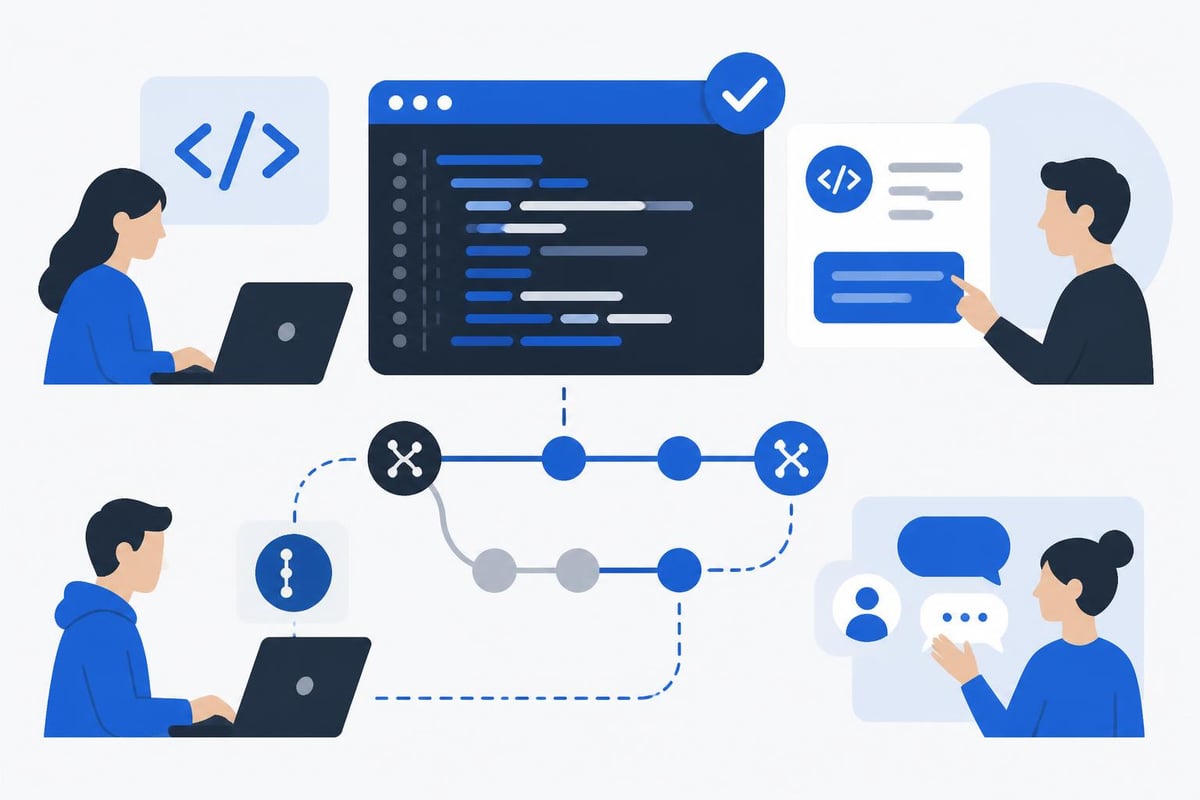
Modern programing development rarely happens in isolation. Teams must coordinate efforts across designers, developers, project managers, and stakeholders. Implementing collaborative coding practices transforms individual efforts into cohesive, high-quality products.
Version Control and Team Coordination
Version control systems like Git form the foundation of collaborative programing development. They enable multiple developers to work simultaneously while tracking every change and maintaining project history.
Best practices for version control include:
- Commit changes frequently with descriptive messages
- Create feature branches for new development work
- Conduct code reviews before merging to main branches
- Use pull requests to facilitate team discussion
- Tag releases to mark stable versions
- Maintain a clean commit history through strategic rebasing
Communication extends beyond code commits. Regular stand-ups, sprint planning sessions, and retrospectives keep teams aligned on priorities and challenges. When building applications with platforms like Bubble, clear communication becomes even more critical as both technical and non-technical team members contribute to development.
Code Review Processes
Code reviews serve multiple purposes in programing development: catching bugs, sharing knowledge, maintaining standards, and improving overall code quality.
Effective code reviews focus on:
- Functionality: Does the code accomplish its intended purpose?
- Standards Compliance: Does it follow agreed-upon conventions?
- Performance: Are there efficiency concerns or bottlenecks?
- Security: Does it introduce vulnerabilities?
- Maintainability: Will future developers understand this code?
Refactoring and Technical Debt Management
Even well-planned programing development accumulates technical debt over time. Requirements change, new patterns emerge, and initial implementations reveal inefficiencies. Understanding when and how to refactor code keeps projects healthy and sustainable.
Recognizing Refactoring Opportunities
Technical debt manifests in various ways throughout programing development projects:
- Duplicate code appearing in multiple locations
- Overly complex functions that try to do too much
- Unclear naming that obscures intent
- Tight coupling between components that should be independent
- Outdated patterns that newer approaches have superseded
Strategic refactoring addresses these issues without disrupting functionality. The key is making incremental improvements rather than attempting wholesale rewrites that introduce new risks.
| Refactoring Type | When to Apply | Expected Benefit |
|---|---|---|
| Extract Method | Functions exceed 20-30 lines | Improved readability and reusability |
| Rename Variables | Names don't reflect purpose | Enhanced code comprehension |
| Consolidate Duplicates | Same code appears 3+ times | Reduced maintenance burden |
| Simplify Conditionals | Nested if statements exceed 3 levels | Better logic flow |
| Break Dependencies | Components too tightly coupled | Increased modularity |
Modern programing development platforms increasingly handle refactoring automatically. AI tools for developers can identify code smells and suggest improvements, though human judgment remains essential for architectural decisions.
Testing and Quality Assurance
Quality programing development integrates testing throughout the development lifecycle rather than treating it as a final checkpoint. Comprehensive testing strategies catch issues early when they're least expensive to fix.
Testing Pyramid Strategy
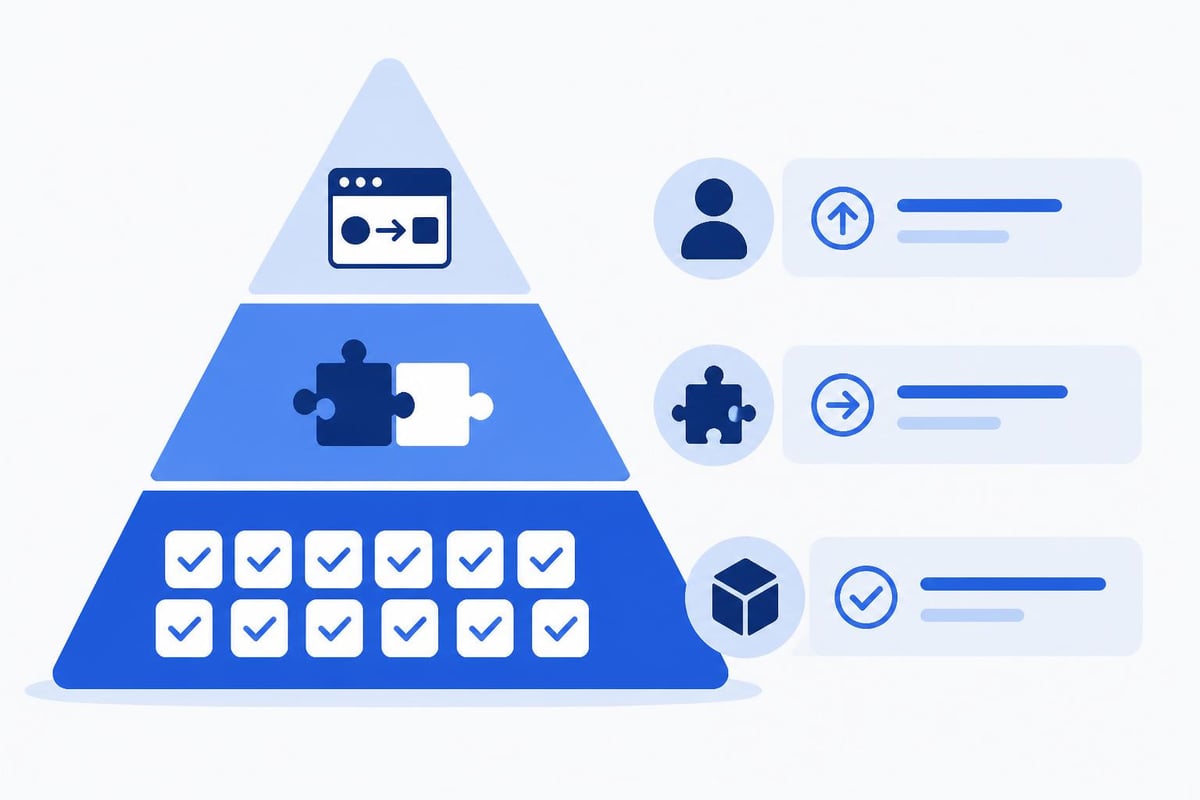
Effective testing follows a pyramid structure with different types of tests serving specific purposes:
- Unit Tests (Foundation): Test individual functions and components in isolation
- Integration Tests (Middle): Verify that different modules work together correctly
- End-to-End Tests (Peak): Simulate real user workflows through the entire system
Automated testing accelerates programing development by providing immediate feedback on code changes. Continuous integration pipelines run test suites automatically, preventing broken code from reaching production.
For no-code platforms, testing takes different forms. Rather than unit testing individual functions, agencies building Bubble MVPs focus on workflow testing, data validation, and user acceptance testing to ensure quality.
Performance Testing Considerations
Beyond functional correctness, programing development must address performance requirements:
- Load testing to verify system behavior under expected user volumes
- Stress testing to identify breaking points and failure modes
- Performance profiling to identify bottlenecks and optimization opportunities
- Security testing to uncover vulnerabilities before deployment
Security and Compliance in Development
Security cannot be an afterthought in programing development. Building security into every phase prevents costly vulnerabilities and protects user data from the start.
Secure coding practices include:
- Input validation to prevent injection attacks
- Proper authentication and authorization controls
- Encryption for sensitive data both in transit and at rest
- Regular dependency updates to patch known vulnerabilities
- Principle of least privilege for system access
When selecting databases for no-code platforms, security considerations influence architecture decisions. Different data types require different protection levels, and compliance requirements like GDPR or HIPAA may mandate specific approaches.
Documentation and Knowledge Management
Documentation often gets deprioritized in programing development, yet it's crucial for long-term project success. Good documentation serves both immediate team members and future maintainers.
Essential Documentation Types
- README files: Project overview, setup instructions, and basic usage
- API documentation: Endpoint specifications, parameters, and response formats
- Architecture diagrams: System design and component relationships
- Deployment guides: Configuration requirements and release procedures
- Troubleshooting guides: Common issues and their solutions
Living documentation evolves alongside the codebase rather than becoming outdated artifacts. Many modern programing development tools generate documentation automatically from code comments and annotations, ensuring accuracy.
Continuous Integration and Deployment
Modern programing development embraces automation through CI/CD pipelines that streamline the path from code commit to production deployment.
Continuous integration automatically:
- Runs test suites on every code change
- Checks code quality and standards compliance
- Builds application artifacts
- Reports failures immediately to developers
Continuous deployment extends this automation to production releases, reducing manual steps and human error. However, deployment automation requires robust testing and monitoring to catch issues before they impact users.
| CI/CD Stage | Purpose | Tools & Approaches |
|---|---|---|
| Source Control | Version management | Git, GitHub, GitLab |
| Build | Compile and package | Automated build scripts |
| Test | Validation | Automated test suites |
| Deploy | Release to environments | Deployment automation |
| Monitor | Track performance | Application monitoring |
For AI software development projects, CI/CD pipelines must accommodate model training, validation, and deployment alongside traditional application code.
Platform Selection and Technology Stack
Choosing the right tools dramatically impacts programing development efficiency and outcomes. The decision extends beyond technical capabilities to consider team skills, project timeline, and budget constraints.
Traditional programming languages like Python, JavaScript, or Java offer maximum flexibility but require experienced developers and longer timelines. These approaches make sense for highly specialized applications or when platform limitations would be too restrictive.
No-code platforms like Bubble enable rapid development with visual interfaces and pre-built components. Application development platforms have matured significantly, now supporting complex business logic and scalable architectures that previously required custom code.
AI-assisted development tools like Lovable combine the speed of no-code with the flexibility of traditional programming. These platforms use artificial intelligence to generate code from natural language descriptions, dramatically accelerating initial development while maintaining customization options.
Evaluation Criteria
When selecting programing development approaches, consider:
- Development speed requirements and time-to-market pressures
- Budget constraints and total cost of ownership
- Team expertise and learning curve considerations
- Scalability needs for user growth and data volumes
- Integration requirements with existing systems
- Maintenance and update processes
The internal tool developer landscape particularly benefits from no-code approaches, as these applications typically have well-defined requirements and don't need the extreme customization of customer-facing products.
Performance Optimization Strategies
Efficient programing development considers performance from the start rather than attempting optimization after issues arise. Early architectural decisions have lasting impact on application speed and resource usage.
Database optimization forms a critical component of performant applications:
- Index frequently queried fields
- Optimize query structure to minimize data retrieval
- Implement caching for commonly accessed data
- Use appropriate data types to minimize storage requirements
- Archive historical data to maintain query speed
Frontend performance directly impacts user experience and engagement rates. Techniques include lazy loading images, minimizing JavaScript bundle sizes, implementing service workers for offline functionality, and optimizing asset delivery through CDNs.
When working with AI applications, performance considerations extend to model inference times and resource consumption. Balancing accuracy with speed often requires careful tuning and optimization.
Scaling Considerations
Successful applications eventually outgrow their initial architecture. Forward-thinking programing development anticipates growth and builds scalability into foundational decisions.
Horizontal scaling adds more servers to handle increased load, while vertical scaling increases the capacity of existing servers. Most modern applications favor horizontal scaling for its flexibility and cost-effectiveness.
Key scaling strategies include:
- Stateless application design enabling easy load balancing
- Database replication and sharding for data layer scaling
- Microservices architecture for independent component scaling
- Content delivery networks for global asset distribution
- Auto-scaling policies that adjust resources based on demand
Organizations building with Bubble benefit from platform-managed scaling that handles infrastructure concerns automatically, allowing teams to focus on application logic rather than server management.
Mastering programing development requires balancing technical excellence with practical business needs, combining established best practices with innovative new approaches. Whether you choose traditional coding, no-code platforms, or AI-assisted development depends on your specific project requirements, timeline, and team capabilities. Big House Technologies specializes in helping enterprises and startups navigate these decisions, leveraging no-code and AI platforms to deliver scalable software solutions faster and more cost-effectively than traditional development approaches. Ready to transform your ideas into fully functional products? Let's discuss how our comprehensive approach can accelerate your next project.

About Big House
Big House is committed to 1) developing robust internal tools for enterprises, and 2) crafting minimum viable products (MVPs) that help startups and entrepreneurs bring their visions to life.
If you'd like to explore how we can build technology for you, get in touch. We'd be excited to discuss what you have in mind.
Other Articles
Discover 9 essential apps like Chat GPT to try in 2025 Compare features pricing and benefits to find the best AI chatbot for productivity creativity and research
Discover how to scale Bubble apps to enterprise level with expert 2026 strategies covering performance, security, integration, and future-proofing for success.
Discover the future of ai software development in 2025 with trends, tools, workflows, and best practices to boost productivity and future proof your projects.