
With the tech landscape evolving at lightning speed, the debate around bubble developer vs full-stack developer is more relevant than ever. The surge in no-code platforms is reshaping how products are built and who can build them.
Businesses and aspiring professionals now face a critical decision. Should you embrace the rapid, visual approach of a Bubble developer, or invest in the versatility and depth of a full-stack developer? Each path offers unique strengths and opportunities.
In this article, we’ll break down their core skills, ideal projects, costs, scalability, career prospects, and real-world examples. Let’s discover which role is the best fit for your goals in 2026.
Defining the Roles: Bubble Developer vs Full-Stack Developer
Understanding the bubble developer vs full-stack developer landscape is essential for anyone navigating the modern development world. Both roles are shaping how businesses build software, but their skill sets and approaches differ significantly.
What is a Bubble Developer?
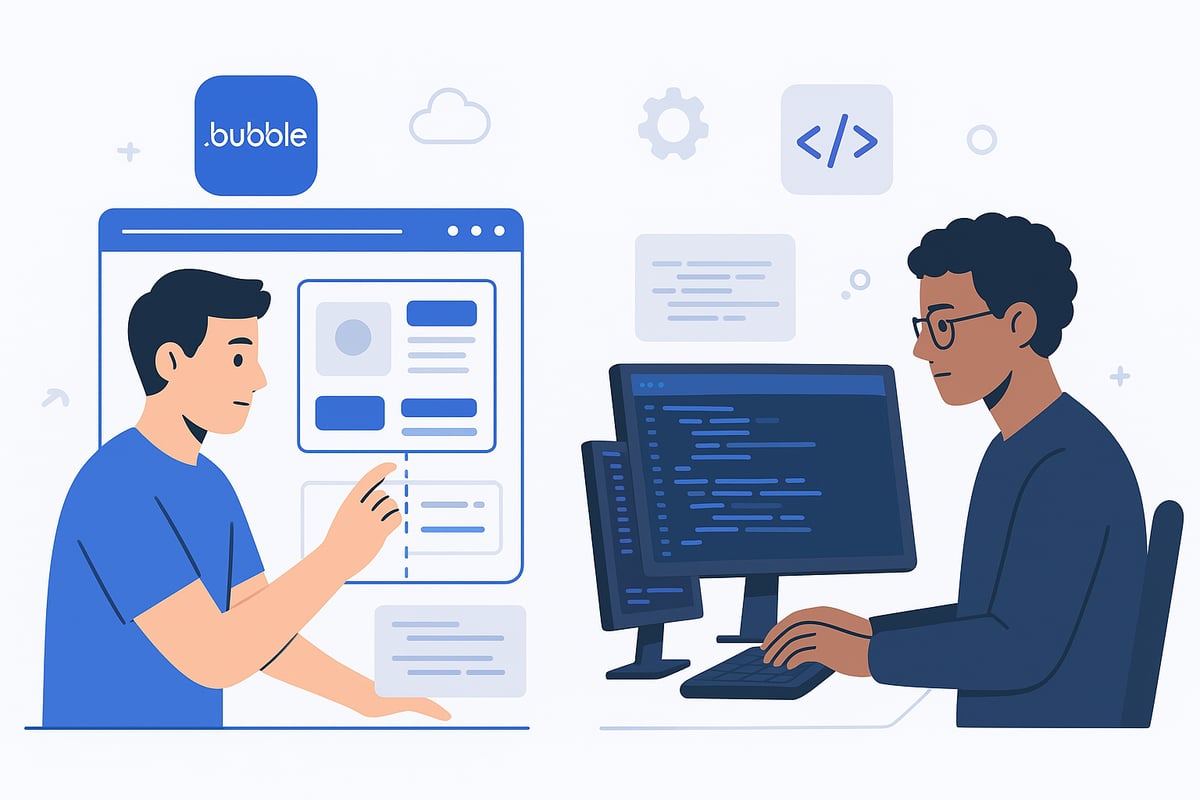
A Bubble developer specializes in building web applications using Bubble, a leading no-code platform. Their main responsibility is to create functional apps without writing traditional code, relying on visual workflows and drag-and-drop components.
Bubble developers need a strong grasp of logical thinking, user interface and user experience (UI/UX) design, and deep knowledge of the Bubble platform itself. For example, a Bubble developer might launch a marketplace app by configuring workflows, integrating payments, and designing responsive layouts—all without custom code.
Bubble's popularity has surged, with over 2 million users reported in 2024. This growth highlights the rising demand for the bubble developer vs full-stack developer debate as more businesses consider no-code solutions. For more on Bubble’s industry impact, see Bubble's User Growth and Market Impact.
What is a Full-Stack Developer?
A full-stack developer is proficient in both frontend and backend technologies, making them highly versatile. These professionals work with languages and frameworks such as JavaScript, React, Node.js, and Python, handling everything from interface design to database management.
Their responsibilities include managing databases, implementing server-side logic, and integrating APIs. For instance, a full-stack developer might build a custom SaaS platform from scratch, tailoring every aspect to specific business requirements.
Industry demand for these skills remains strong. In 2025, 38% of job postings listed full-stack experience as a requirement, reflecting how the bubble developer vs full-stack developer choice impacts hiring and project planning.
Key Overlaps and Distinctions
While both roles build web applications, the bubble developer vs full-stack developer comparison reveals distinct methods and priorities. Bubble developers leverage visual tools to rapidly prototype and iterate, focusing on speed and accessibility. Full-stack developers, by contrast, prioritize deep customization and control through code.
Both roles require collaboration with designers and stakeholders. For example, an e-commerce site can be built on Bubble for rapid launch, while a full-stack developer might create a highly customized version with unique features.
| Role | Approach | Example Project | Speed | Customization |
|---|---|---|---|---|
| Bubble Developer | No-code, visual | Marketplace app | Fast | Moderate |
| Full-Stack Developer | Custom code | Custom SaaS platform | Slower | High |
How Roles Have Evolved by 2026
By 2026, the bubble developer vs full-stack developer landscape has shifted dramatically. No-code adoption has surged within enterprise environments, allowing Bubble developers to take on more complex projects. Full-stack roles, meanwhile, have evolved to include cloud infrastructure and AI integration as standard skills.
According to Gartner, 70% of new applications will use low-code or no-code tools by 2026. This trend means Bubble developers are now trusted with larger projects, while full-stack developers are expected to innovate with advanced technologies.
Choosing the Right Role for Your Project
Selecting between a bubble developer vs full-stack developer depends on project complexity, timeline, and budget. Bubble is ideal for rapid MVPs or budget-sensitive startups, while full-stack is better for highly customized, scalable solutions.
Consider your team's skills, maintenance needs, and long-term scalability. For example, a startup might choose Bubble for a fast MVP launch, then transition to a full-stack solution as the product grows and requires advanced features.
Core Skills and Technical Competencies
Choosing the right path in the bubble developer vs full-stack developer debate requires a close look at the technical skills, learning curve, and unique competencies each role demands. Let’s break down what sets these two roles apart and where they overlap.
Technical Skills: Bubble Developers
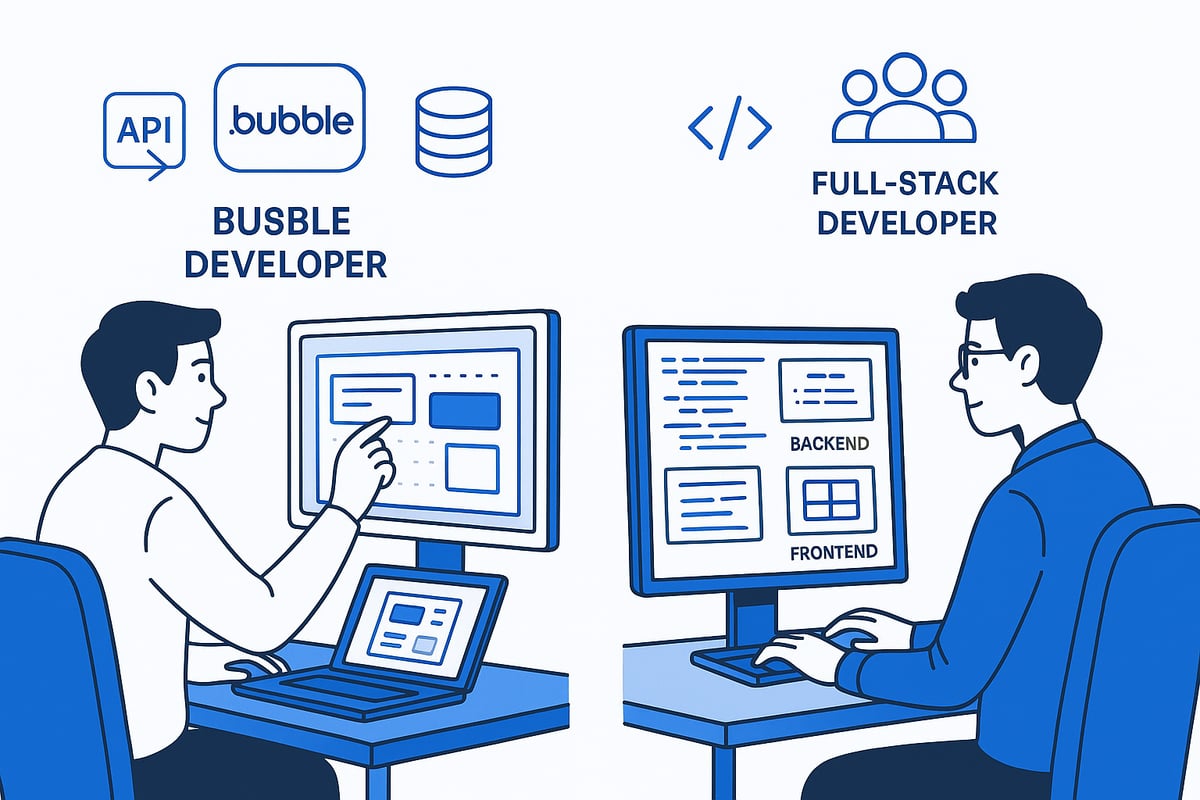
Bubble developers excel at building web applications visually, focusing on logic, UI/UX, and platform-specific knowledge. They use Bubble’s drag-and-drop interface to design responsive layouts and set up workflows without writing traditional code. Mastery of Bubble’s editor and understanding how to integrate APIs or third-party plugins is key.
For example, a Bubble developer can create a booking platform with payment integration in just days. While they can quickly launch scalable MVPs, some advanced features may require custom code or plugins. If you want to see how scalable MVPs are built using no-code tools like Bubble, check out Scalable MVPs with No-Code Tools.
The bubble developer vs full-stack developer comparison starts here, with Bubble’s speed and accessibility as core strengths.
Technical Skills: Full-Stack Developers
A full-stack developer brings a broad range of technical abilities, covering both frontend and backend. They are proficient in languages like JavaScript and Python, and use frameworks such as React, Angular, or Vue for user interfaces. On the backend, they handle server logic, databases, and integration with external APIs.
Below is a quick comparison:
| Skill Area | Bubble Developer | Full-Stack Developer |
|---|---|---|
| UI/UX | Visual Editor | CSS, HTML, JS Frameworks |
| Backend | Visual Workflows | Node.js, Python, SQL/NoSQL |
| Integrations | Plugins, API Connector | Custom API Logic |
When tackling the bubble developer vs full-stack developer question, remember full-stack developers can build a multi-tenant SaaS platform from scratch, offering maximum customization and control.
Learning Curve and Accessibility
The learning curve for a bubble developer vs full-stack developer is very different. Bubble is designed for accessibility, making it possible for non-developers and entrepreneurs to launch MVPs within weeks. Its visual approach reduces barriers and speeds up time to market.
Full-stack development, on the other hand, often requires formal education or substantial self-study. It can take months or years to reach proficiency. If you have an idea and want it live fast, Bubble is appealing. For highly customized solutions, full-stack expertise remains essential.
This contrast highlights another key difference in the bubble developer vs full-stack developer landscape.
Problem-Solving and Troubleshooting
Bubble developers rely on built-in visual debugging tools, robust community forums, and Bubble’s support system to resolve issues. They can quickly identify workflow errors or fix UI glitches using visual cues, making troubleshooting more approachable for beginners.
Full-stack developers use advanced debugging tools, IDEs, and server logs to solve complex issues. They have the flexibility to address unique business logic or performance bottlenecks through custom code. For a bubble developer vs full-stack developer, problem-solving style and toolset are major factors in choosing the right fit.
Collaboration and Team Dynamics
In the bubble developer vs full-stack developer comparison, collaboration styles differ. Bubble developers often work closely with non-technical stakeholders, like startup founders or business teams, translating ideas into functional apps through direct feedback.
Full-stack developers typically operate within larger, cross-functional teams, working alongside designers, product managers, and other engineers. Strong communication and project management skills are important for both roles, but the scale and structure of teamwork can influence which path fits your project best.
Understanding these dynamics is crucial for making an informed choice in the bubble developer vs full-stack developer journey.
Project Suitability and Use Cases
Choosing between a bubble developer vs full-stack developer is all about matching the right talent to your project’s needs. Each role brings unique strengths, and understanding where each excels can help you avoid costly missteps. Let’s break down where each shines, their constraints, and how businesses are leveraging these skills in real scenarios.

Ideal Projects for Bubble Developers
When speed and budget are top priorities, bubble developer vs full-stack developer decisions often favor Bubble. Bubble developers shine in rapid prototyping, MVP launches, and internal business tools where visual workflows accelerate delivery.
- MVPs for startups looking to test ideas fast
- Event management or booking apps needing quick deployment
- Internal dashboards for small businesses with limited resources
For example, a two-week turnaround for an event management app is achievable with Bubble’s no-code platform. These use cases are ideal when requirements may evolve quickly and technical resources are limited.
Ideal Projects for Full-Stack Developers
If your project demands deep customization, advanced security, or plans to scale to enterprise levels, the bubble developer vs full-stack developer comparison leans toward full-stack professionals. Full-stack developers handle complex architectures, custom integrations, and high-traffic platforms.
- Healthcare or fintech systems with strict compliance
- E-commerce sites supporting thousands of users
- SaaS platforms needing unique features and robust APIs
For instance, building a healthcare management system with specific workflows and HIPAA compliance is best suited for full-stack expertise. Their versatility ensures the technology stack is tailored to exact needs.
Limitations and Constraints
Both approaches come with trade-offs in the bubble developer vs full-stack developer discussion. Bubble’s visual tools can hit limits with performance or customization for highly specialized logic. Large-scale social networks or apps with proprietary algorithms may outgrow Bubble’s capabilities.
- Bubble: Limited backend logic, performance bottlenecks at scale
- Full-stack: Longer timelines, higher upfront costs
A social networking app needing custom recommendation engines would likely struggle on Bubble but thrive with a full-stack approach. Understanding these boundaries is key to picking the right path.
Real-World Case Studies
Startups frequently use the bubble developer vs full-stack developer framework to decide how to launch and iterate. One startup rapidly built and launched an MVP using Bubble, then pivoted features based on user feedback. In contrast, a fintech company invested in full-stack development to ensure tight security and scalable infrastructure for a trading platform.
In fact, according to the State of No-Code Development 2024, 65% of startups using no-code solutions report launching products faster than those relying on traditional methods. This speed advantage is a game-changer for early-stage ventures.
Future Trends in Project Suitability
Looking ahead, the bubble developer vs full-stack developer landscape is evolving. No-code tools like Bubble are handling more complex projects each year, while hybrid approaches are gaining traction. Teams often use Bubble for the frontend and custom code for backend scalability.
- AI-powered chatbots built with Bubble and custom APIs
- Enterprises adopting hybrid no-code and code solutions for efficiency
As AI-assisted development grows, both roles will continue to adapt, making the decision even more nuanced for future projects.
Cost, Speed, and Scalability
In the bubble developer vs full-stack developer debate, understanding cost, speed, and scalability is essential for choosing the right approach. Let’s break down how each path stacks up in real-world scenarios.
Development Speed Comparison
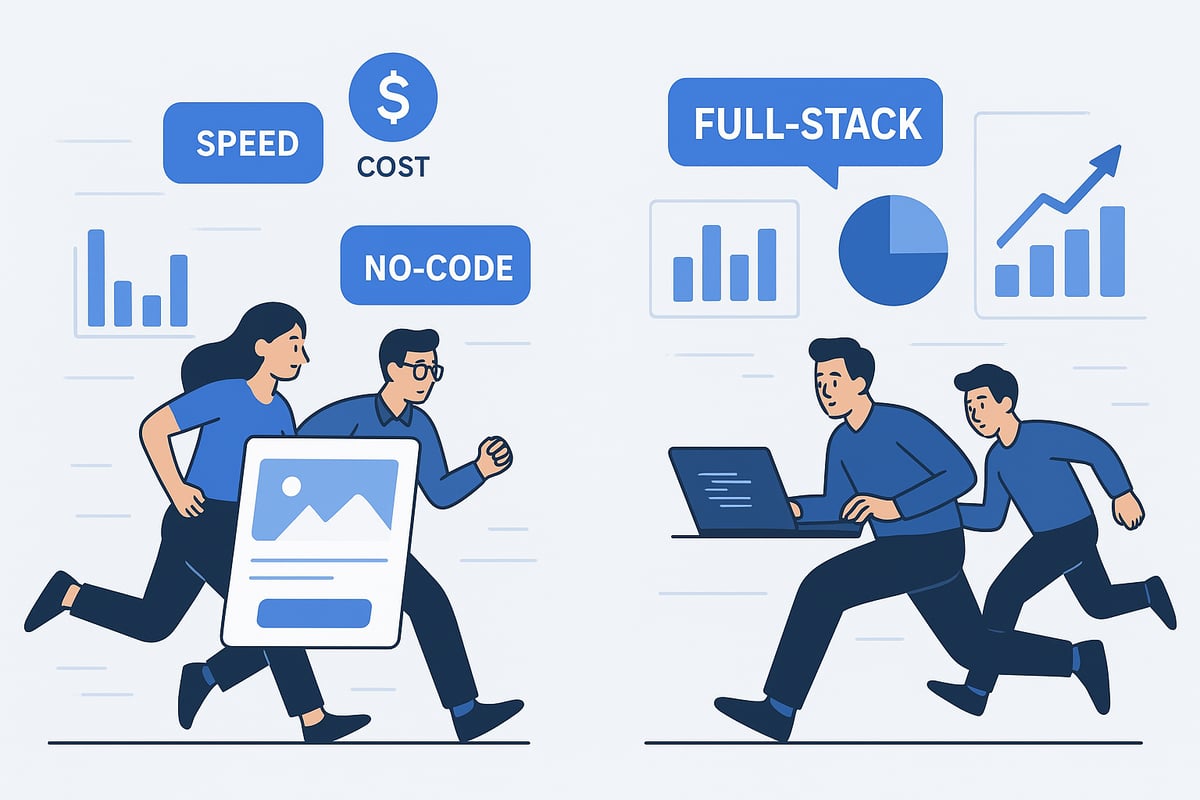
When comparing bubble developer vs full-stack developer options, speed is a clear differentiator. Bubble’s pre-built components and visual workflows allow teams to launch apps in days or weeks. For example, a marketplace app can be live in just three weeks using Bubble.
Full-stack developers, working with custom code, often require several months to build and test the same solution. This longer timeline comes from the need to set up infrastructure, write code for both frontend and backend, and handle integrations from scratch. For startups or MVPs, the ability to move quickly with Bubble can be a game-changer.
Cost Analysis
The bubble developer vs full-stack developer decision also impacts your budget. Bubble projects typically have lower upfront costs, thanks to subscription-based pricing and reduced labor hours. In fact, no-code projects can reduce costs by up to 75 percent, as highlighted in recent Low-Code Development Market Growth Analysis.
On the other hand, full-stack development often demands higher-skilled labor and more resources, leading to a larger initial investment. While this may pay off for complex, custom solutions, many startups find Bubble’s cost structure more appealing in the early stages.
Maintenance and Upgrades
Maintenance is another important factor in the bubble developer vs full-stack developer comparison. With Bubble, updates and new features are rolled out through the visual editor, minimizing downtime and technical headaches. This makes it easy for non-technical founders to manage their products.
Full-stack solutions generally require ongoing developer support for updates, bug fixes, and feature releases. This can mean additional costs and a slower response time when rolling out changes. For teams with limited technical resources, Bubble’s streamlined maintenance is a major benefit.
Scalability Considerations
Scalability is where the bubble developer vs full-stack developer choice becomes crucial. Bubble is ideal for small to medium-scale applications, offering performance tuning but with some limits as user numbers grow. If you expect your app to serve millions of users, full-stack development provides more control over infrastructure and optimization.
For projects that start small but plan to scale, some teams use a hybrid approach, beginning with Bubble and transitioning to custom code as demand increases. This flexibility makes it easier to match your technology to your growth stage.
Security and Compliance
Security and compliance requirements often influence the bubble developer vs full-stack developer decision. Bubble offers platform-level security and popular compliance certifications, which is suitable for many use cases. However, if your project demands custom security features or must meet strict regulatory standards, full-stack development allows for tailored implementations.
Industries like healthcare or finance may require advanced security protocols that are best handled with custom code. For most startups and SMBs, Bubble’s built-in protections are sufficient, but always assess your specific needs before choosing.
Career Opportunities and Industry Demand
The career outlook for technology professionals is shifting quickly, and the bubble developer vs full-stack developer debate is front and center. By 2026, companies are actively seeking talent in both areas, but with different priorities.
Recent surveys show that 60% of SMBs plan to hire no-code specialists, reflecting the growing need for rapid, cost-effective solutions. Meanwhile, full-stack developers remain essential for organizations needing custom and scalable platforms.
Job Market Trends in 2026
In the bubble developer vs full-stack developer landscape, demand is booming for both roles, but the drivers differ. No-code talent is rising fast, especially as businesses look to prototype and launch products quickly.
Full-stack developers are still in high demand for complex projects that require deep customization and integration. According to TechRepublic, six out of ten SMBs are actively recruiting no-code professionals. Traditional developers, however, are being tasked with more advanced responsibilities, including integrating AI and cloud solutions.
If you're considering where to focus your skills, both paths offer strong job prospects. For a deeper dive, see our guide on Best Countries to Hire Bubble Developers.
Salary and Compensation
When comparing bubble developer vs full-stack developer salaries, there are clear distinctions. Bubble developers typically earn competitive pay, with the median salary around $85,000 in 2025. Full-stack developers, with their broader technical skill set, command a higher median of approximately $110,000.
Below is a quick comparison:
| Role | Median Salary (2025) |
|---|---|
| Bubble Developer | $85,000 |
| Full-Stack Developer | $110,000 |
While full-stack roles have a higher earning ceiling, Bubble developers can achieve rapid career growth by delivering results quickly and taking on product leadership roles. Compensation packages often reflect project complexity and company size.
Career Growth and Learning Paths
The bubble developer vs full-stack developer choice also impacts future career growth. Bubble developers often branch into product management, entrepreneurship, or become tech leads for no-code initiatives. Their ability to prototype and iterate fast is a huge asset for startups.
Full-stack developers, on the other hand, can specialize further in in-demand areas like cloud services, DevOps, or AI. Many transition to senior engineering or CTO roles. Switching between the two roles is possible, especially as hybrid teams become more common in tech organizations.
If you're passionate about solving business problems and scaling products, both roles offer clear upward mobility.
Industry Adoption and Future Outlook
Industry adoption of no-code is accelerating, so the bubble developer vs full-stack developer comparison is more relevant than ever. Enterprises are leveraging platforms like Bubble for internal tools and workflow automation, while still relying on full-stack teams for core infrastructure and advanced features.
Hybrid approaches are emerging, where teams blend no-code agility with custom backend development. According to a recent report, the use of no-code in enterprise environments is set to increase rapidly. Learn more about this trend in our article on No-Code Platforms for Enterprise Workflows.
As the tech landscape evolves, both Bubble and full-stack skill sets will remain valuable, especially for companies seeking innovation and speed.
Real-World Scenarios & Decision Framework
Choosing between a bubble developer vs full-stack developer can shape your project's success. Real-world scenarios demand a clear framework for making the right call. Here, we break down practical considerations, step-by-step decision tools, and examples to guide you through the process.
Assessing Business Needs
Start by evaluating your project’s specific goals and constraints. Is speed to market your top priority, or do you need deep customization? The bubble developer vs full-stack developer debate hinges on factors such as:
- Project timeline and urgency
- Technical complexity and integrations
- Available budget and resources
For example, if you’re a startup founder with limited funds and need an MVP quickly, a Bubble developer might be ideal. However, enterprise SaaS solutions with intricate requirements often benefit from a full-stack approach. Matching your business needs with the right expertise is crucial in making an informed choice.
Decision-Making Checklist
To simplify the bubble developer vs full-stack developer selection, use this checklist:
- Do you need rapid prototyping or deep customization?
- What is your anticipated user base size?
- How critical are ongoing maintenance and scalability?
- Is your budget fixed or flexible?
- Are there unique security or compliance needs?
Gather input from stakeholders and technical advisors before making the final call. For instance, a nonprofit evaluating development options should weigh future growth against current constraints. This structured approach ensures you select the role best aligned with your vision.
Hybrid Approaches
In many cases, the best solution isn’t one or the other but a blend of both. A hybrid bubble developer vs full-stack developer model lets you use Bubble for the frontend, while a custom backend handles complex logic and integrations. This API-driven architecture offers flexibility and speed.
For example, a SaaS platform might use Bubble for its user interface and a Node.js backend for specialized features. To dive deeper into how hybrid strategies work in custom development, check out these Custom Application Developer Insights. Combining skill sets can provide the best of both worlds for your project.
When to Reconsider Your Choice
As your business evolves, your initial decision might need revisiting. If your MVP outgrows platform limitations or you require advanced features, transitioning from a bubble developer vs full-stack developer approach may be necessary.
Common triggers to reconsider include:
- Performance issues at scale
- New compliance or integration needs
- Shifting business models
Market trends, such as those highlighted in Gartner's 2026 Low-Code Market Forecast, show that low-code adoption is set to rise, but custom development will remain vital for many scenarios. Always be ready to pivot as your requirements change.
After exploring the key differences between Bubble developers and full stack developers in 2026, it’s clear that the right choice can dramatically speed up your journey from idea to launch. If you’re looking to turn your vision into a real product without waiting months or blowing through your budget, you’re not alone—more founders and teams are choosing no code to get their MVPs off the ground quickly. Ready to see how you can make it happen? You can move from concept to launch faster than you think—check out how to Launch Your MVP in Weeks, Not Months.

About Big House
Big House is committed to 1) developing robust internal tools for enterprises, and 2) crafting minimum viable products (MVPs) that help startups and entrepreneurs bring their visions to life.
If you'd like to explore how we can build technology for you, get in touch. We'd be excited to discuss what you have in mind.
Other Articles
Master bubble app building in 2026 with this step by step guide covering no code creation features AI integration best practices and real world success stories.
Discover why no-code platforms like Bubble are transforming enterprise software development, offering faster build times, reduced costs, and empowering non-technical teams to create scalable, customized internal tools.
Discover the 8 best software to develop your next big project in 2025. Explore top tools for speed, collaboration, scalability, and innovation to future proof success.