
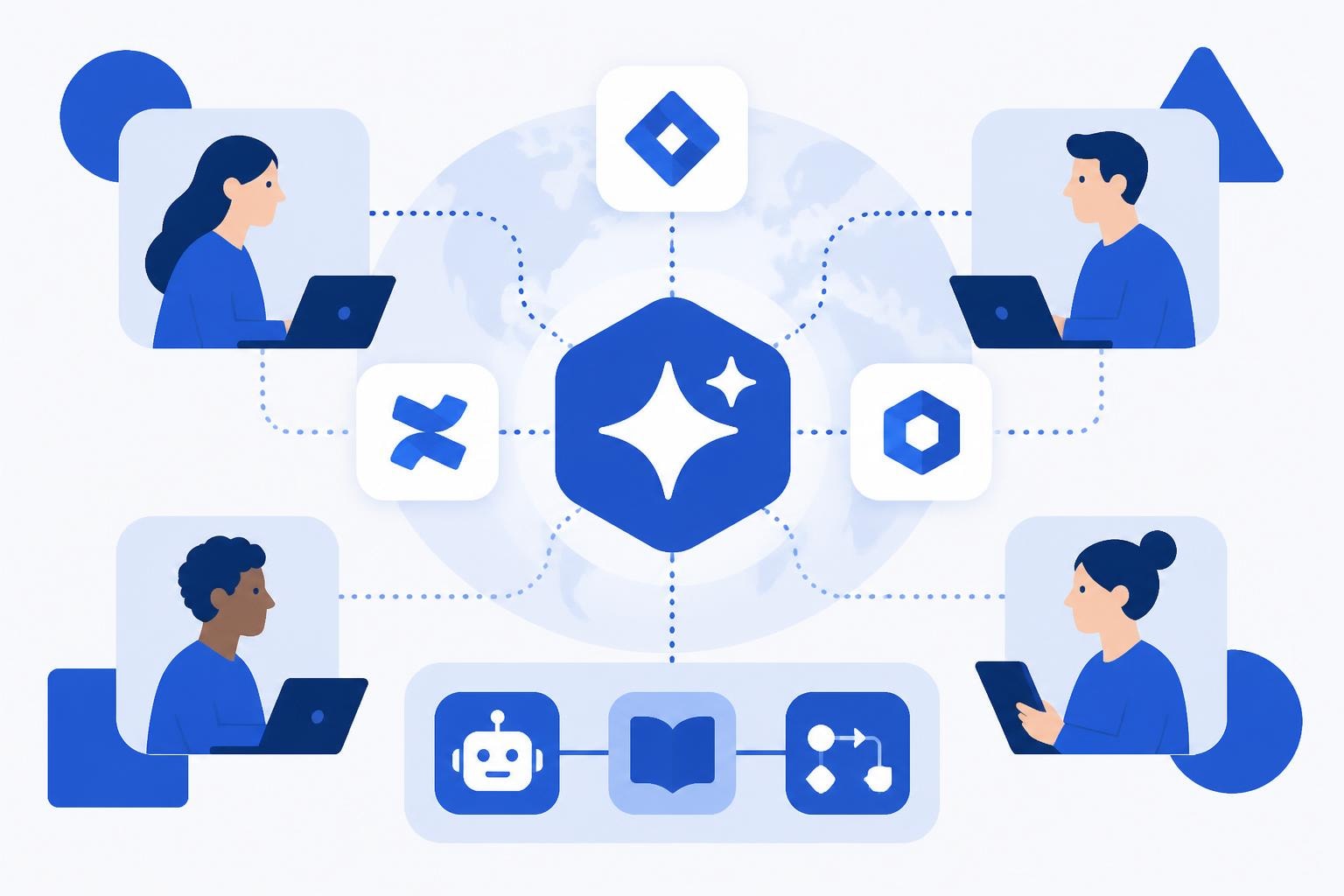
The landscape of team collaboration and project management has fundamentally shifted with the integration of artificial intelligence into enterprise tools. Atlassian AI represents a significant leap forward in how development teams, product managers, and business stakeholders interact with their work management systems. As organizations increasingly adopt no-code and AI-powered development methodologies, understanding how Atlassian's intelligence features can streamline workflows becomes essential for maintaining competitive advantage. This technology doesn't just automate repetitive tasks; it fundamentally reimagines how teams discover information, make decisions, and execute complex projects across distributed environments.
Understanding the Atlassian AI Ecosystem
Atlassian AI encompasses multiple intelligent features designed to enhance productivity across the company's cloud product suite. The technology integrates seamlessly with Jira, Confluence, and the newer Rovo platform, creating a unified intelligence layer that understands context, suggests actions, and automates routine work.
At its core, Atlassian Intelligence leverages machine learning to analyze patterns within your team's existing data. This means the system becomes smarter over time, learning from how your specific organization works rather than relying solely on generic algorithms. For no-code development teams working with platforms like Bubble or Lovable, this contextual understanding proves particularly valuable when managing client projects, tracking feature requests, and coordinating cross-functional workflows.
Key Components of Atlassian AI
The platform consists of several distinct but interconnected capabilities:
- Intelligent Search: Surfaces relevant content across all connected tools and repositories
- Automated Summarization: Generates concise overviews of lengthy discussions, documents, and issue threads
- Natural Language Processing: Enables conversational queries and content creation
- Workflow Automation: Suggests and implements repetitive task patterns
- Knowledge Discovery: Identifies connections between projects, documents, and team members
Integration depth sets atlassian ai apart from standalone AI tools. Rather than operating as a separate application, the intelligence features embed directly into existing workflows, appearing contextually when teams need assistance most.
Rovo: Atlassian's Dedicated AI Teammate
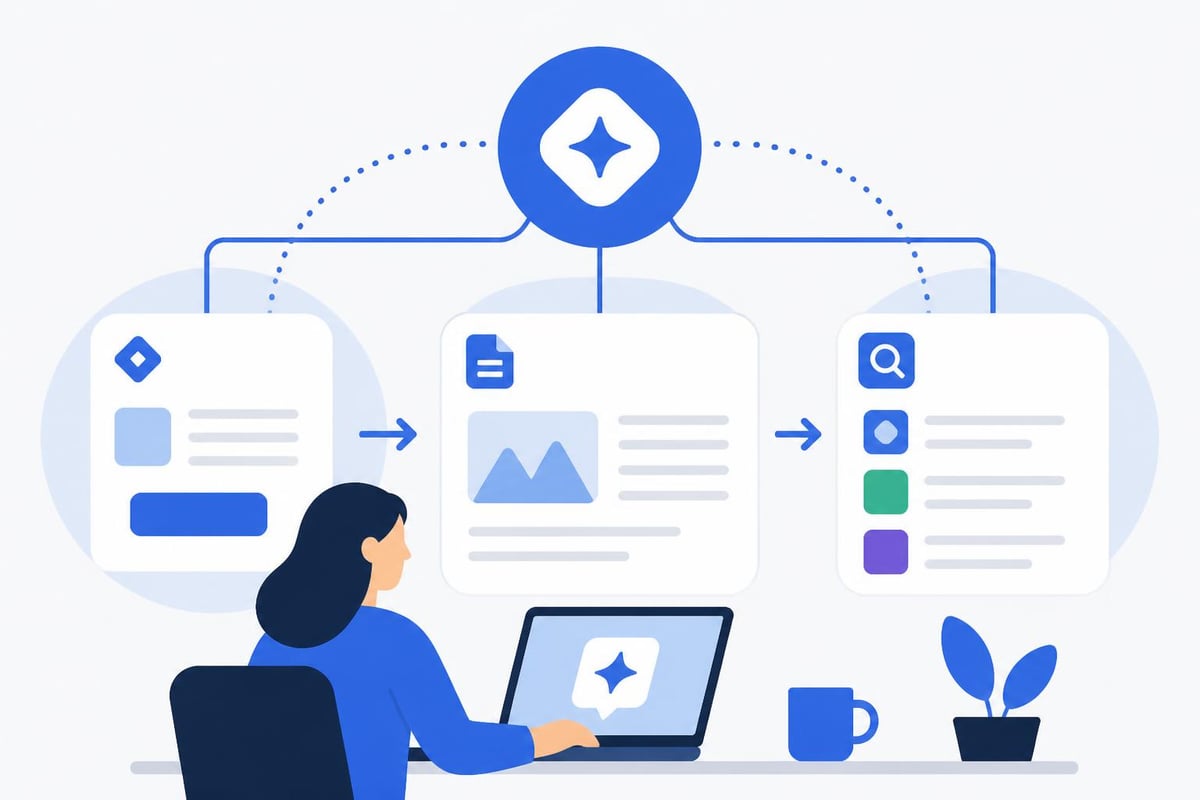
While Atlassian Intelligence provides smart features across individual products, Rovo represents a comprehensive AI solution designed to serve as a virtual team member. Launched as a standalone yet integrated offering, Rovo focuses on three primary capabilities that address common organizational challenges.
Search functionality in Rovo goes beyond simple keyword matching. The system understands natural language queries and can locate information stored across Jira issues, Confluence pages, Slack conversations, Google Drive documents, and dozens of other connected platforms. For agencies managing multiple client projects simultaneously, this unified search capability eliminates the frustration of remembering where specific information lives.
The chat interface allows team members to ask questions conversationally and receive answers synthesized from organizational knowledge. Rather than reading through entire documentation sets, developers can query specific implementation details, project requirements, or client preferences directly through chat. This proves especially valuable when onboarding new team members or when context-switching between different client environments.
Automation Through Rovo Agents
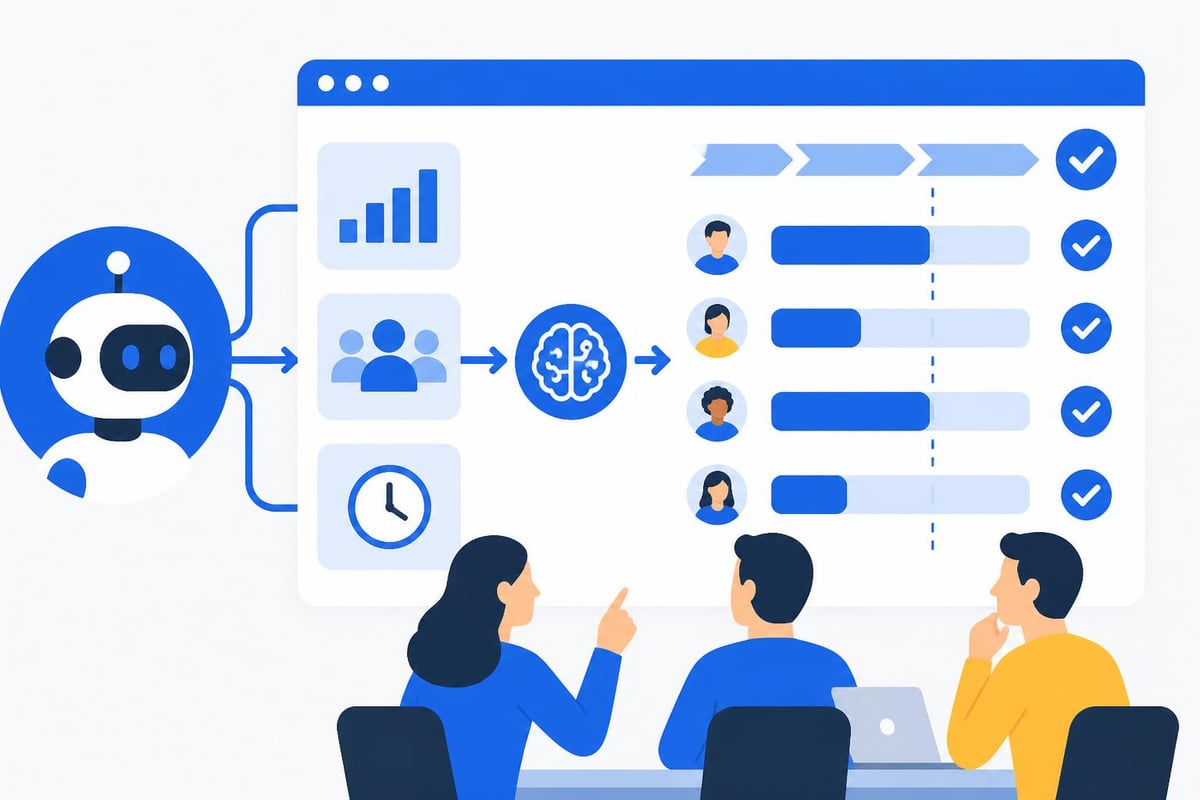
Rovo Agents take automation beyond simple if-then logic. These AI-powered assistants can:
- Monitor specific conditions across multiple tools simultaneously
- Synthesize information from various sources to inform decisions
- Execute complex multi-step workflows without manual intervention
- Learn from team feedback to improve recommendations over time
- Escalate edge cases to human team members when appropriate
Organizations building AI-powered no-code development solutions can leverage Rovo Agents to handle routine project management tasks. For example, an agent might automatically update client stakeholders when development milestones complete, gather feedback through conversational interfaces, and route requests to appropriate team members based on expertise and availability.
Practical Applications for Development Teams
The true value of atlassian ai emerges in real-world application scenarios that development agencies face daily. Consider the common challenge of requirement gathering and documentation. Traditionally, this process involves lengthy meetings, manual note-taking, and iterative document reviews that consume significant billable hours.
With Atlassian Intelligence, teams can record client discovery sessions and have the system automatically generate structured documentation in Confluence. The AI identifies key requirements, potential technical constraints, and action items, creating a draft that human team members can refine rather than starting from scratch. This approach aligns perfectly with how internal tool developers need to rapidly capture and translate business requirements into technical specifications.
Enhancing Jira Workflows
| Traditional Approach | Atlassian AI Approach | Time Savings |
|---|---|---|
| Manual issue creation from requirements | AI-generated tickets from meeting notes | 60-70% |
| Manual sprint planning and estimation | AI-suggested story points and sprint composition | 40-50% |
| Manual testing plan creation | AI-generated test scenarios based on acceptance criteria | 50-60% |
| Manual status updates to stakeholders | Automated summaries of sprint progress | 70-80% |
According to TechCrunch's coverage of Atlassian Intelligence, these features dramatically reduce the administrative overhead that typically consumes development capacity. For agencies operating on fixed-bid projects, this efficiency directly impacts profitability and client satisfaction.
Knowledge Management and Documentation
Documentation represents one of the most undervalued yet critical aspects of software development. Poor documentation leads to knowledge silos, repeated questions, and increased onboarding time for new team members. Atlassian AI addresses these challenges through intelligent content creation and organization.
Confluence's AI capabilities extend beyond simple grammar checking. The system can:
- Generate comprehensive documentation templates based on project type
- Suggest relevant existing pages when creating new content
- Identify documentation gaps by analyzing question patterns
- Automatically link related concepts across different pages
- Translate technical jargon into business-friendly language for client-facing documents
For teams building solutions on platforms like Bubble or Lovable, maintaining current technical documentation proves essential. When developers update a data model or modify API integrations, atlassian ai can suggest which documentation pages need corresponding updates, ensuring consistency across the knowledge base.
Cross-Platform Intelligence
Modern development workflows span multiple tools and platforms. Development teams might use GitHub for version control, Figma for design, Slack for communication, and various testing platforms. Rovo's ability to connect with over 150 first-party and third-party applications means the AI can synthesize information across these disparate systems.
This integration proves particularly valuable when troubleshooting issues or conducting retrospectives. Rather than manually gathering data from multiple sources, teams can ask Rovo to compile relevant information, identify patterns, and suggest root causes based on historical data.
Addressing Developer Productivity Paradoxes
While AI tools promise significant time savings, recent research has uncovered interesting complications. A report highlighted by IT Pro reveals that developers save over 10 hours weekly through AI assistance, yet organizational inefficiencies consume equivalent time, leaving them equally overworked.
This paradox highlights that technology alone doesn't solve productivity challenges. Organizations must also address:
- Communication overhead from poorly structured meetings and unclear requirements
- Context switching costs when developers juggle too many concurrent projects
- Approval bottlenecks that delay work despite rapid development capabilities
- Tool sprawl that fragments information across too many platforms
Atlassian AI helps mitigate these organizational inefficiencies through features like automated meeting summaries, centralized knowledge search, and workflow automation. However, companies must also examine their processes and organizational structure to fully capture productivity gains.
Balancing Automation with Human Judgment
Smart organizations recognize that AI should augment rather than replace human expertise. In low-cost MVP development scenarios, for instance, AI can rapidly generate initial wireframes, data schemas, and basic workflows. However, experienced developers still need to review these outputs, validate assumptions against business requirements, and make strategic architectural decisions.
The most effective teams establish clear guidelines about when to trust AI recommendations and when to apply human oversight. Critical decisions about security architecture, data privacy compliance, or complex business logic should always involve human review, while routine tasks like status updates or basic documentation can safely rely on automation.
Security and Privacy Considerations
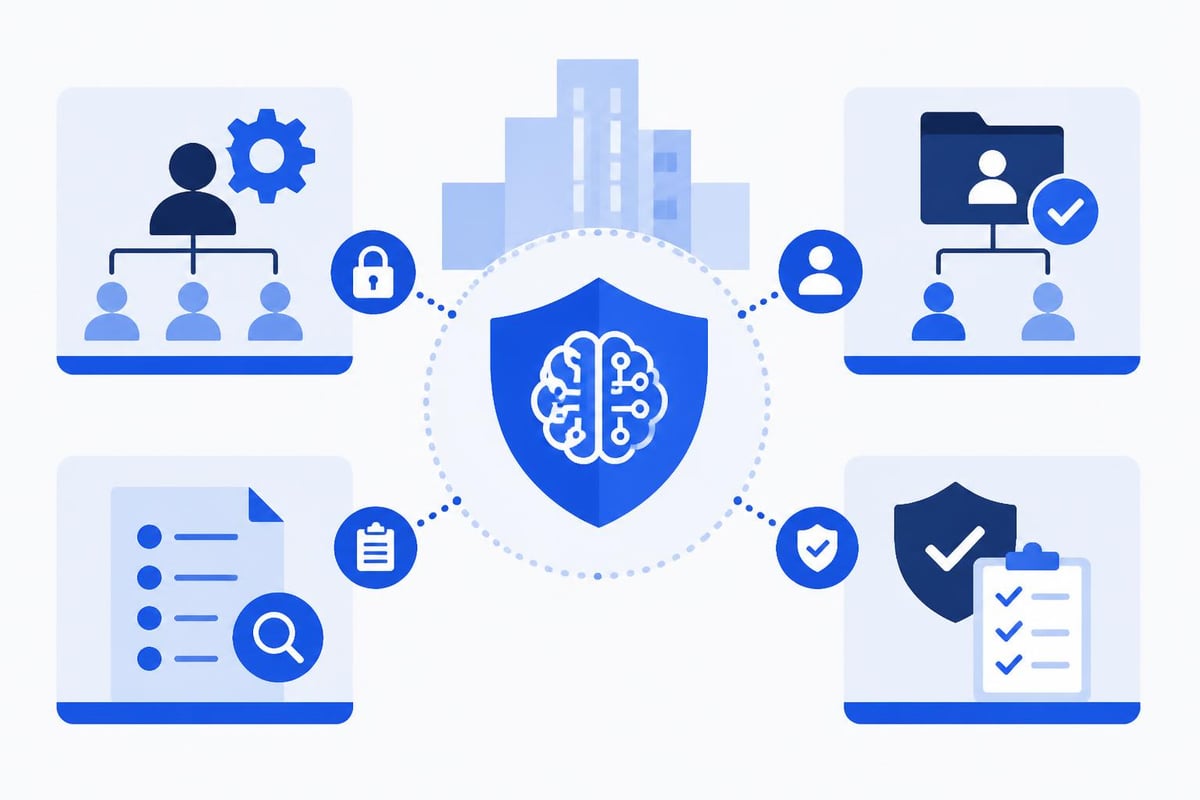
Organizations evaluating atlassian ai must understand how the system handles sensitive data. Atlassian's implementation of AI features emphasizes data protection and privacy compliance, with several key safeguards:
- Data processed by AI remains within your organization's instance and isn't used to train general models
- Administrators control which teams and projects can access AI features
- All AI interactions maintain the same permission structures as the underlying content
- Organizations can opt out of AI features entirely if regulatory requirements demand it
For agencies working with enterprise clients or in regulated industries, these privacy protections prove essential. Clients entrust development partners with confidential business information, competitive strategies, and proprietary processes. Ensuring AI systems respect these boundaries maintains trust and enables broader adoption.
Compliance and Governance
| Governance Feature | Description | Benefit |
|---|---|---|
| Granular Permissions | Control AI access at organization, workspace, and project levels | Prevents unauthorized access to sensitive data |
| Audit Logging | Track all AI interactions and generated content | Supports compliance and accountability requirements |
| Content Attribution | AI-generated content clearly marked and traceable | Maintains transparency and enables quality control |
| Opt-in Architecture | Features require explicit activation rather than default enablement | Gives organizations control over adoption pace |
These governance capabilities allow enterprises turning to no-code solutions to maintain security standards while accessing modern productivity tools.
Getting Started with Atlassian AI
Organizations interested in implementing atlassian ai should approach activation strategically rather than enabling all features immediately. Understanding the specific AI features available across different Atlassian products helps teams prioritize which capabilities deliver maximum value for their specific workflows.
Start with low-risk, high-impact use cases to build confidence and demonstrate value. Content summarization, for instance, provides immediate benefits without requiring significant process changes. Teams can begin having AI summarize long discussion threads or meeting notes, allowing members to evaluate output quality in low-stakes scenarios.
Establish feedback loops where team members regularly assess AI-generated content and provide corrections. This feedback helps the system improve recommendations while also building organizational knowledge about where AI excels and where human review remains necessary.
Implementation Roadmap
A phased approach to atlassian ai adoption typically follows this pattern:
- Assessment Phase: Identify workflow pain points and opportunities for automation
- Pilot Phase: Enable AI features for a small team or single project type
- Evaluation Phase: Measure time savings, quality improvements, and user satisfaction
- Expansion Phase: Roll out successful features to broader organization
- Optimization Phase: Refine workflows based on usage patterns and feedback
For agencies managing multiple client projects, running pilots with internal initiatives before applying to client work reduces risk and builds expertise. Teams can experiment with AI-powered features on their own project management, documentation, or operational workflows before introducing these capabilities into client deliverables.
Integration with No-Code Development Workflows
The intersection of atlassian ai and no-code development creates particularly powerful synergies. No-code platforms like Bubble and Lovable already accelerate development through visual programming and pre-built components. Adding intelligent project management and documentation on top amplifies these efficiency gains.
Consider a typical no-code development workflow. Business analysts gather requirements, designers create interfaces, developers configure logic and data structures, and QA teams validate functionality. Each handoff between these roles traditionally requires documentation, status meetings, and coordination overhead.
With Atlassian Intelligence, many coordination tasks become automated. When designers complete mockups in Figma, Rovo can automatically create corresponding Jira tickets for developers, pre-populating technical requirements based on design specifications. As developers implement features, AI-generated documentation updates keep stakeholders informed without requiring manual status reporting.
Enhancing Client Communication
Client communication represents another area where atlassian ai delivers substantial value. Agencies often struggle balancing transparent progress updates with team productivity. Too many status meetings disrupt development flow, while too few updates leave clients anxious about project health.
AI-powered summarization provides a middle ground. Systems can automatically generate client-appropriate progress reports from internal Jira tickets, Confluence updates, and team discussions. These summaries translate technical jargon into business outcomes, highlight completed milestones, flag potential risks, and present upcoming deliverables in formats clients understand.
Organizations specializing in building internal tools and dashboards can leverage these communication features to demonstrate value continuously. Rather than waiting for scheduled demos, clients receive ongoing visibility into development progress, increasing satisfaction and reducing scope change requests born from uncertainty.
Maximizing ROI from Atlassian AI
Measuring the return on investment from atlassian ai requires tracking both quantitative and qualitative metrics. Time savings represent the most obvious measure, but organizational benefits extend beyond simple efficiency gains.
Quantitative metrics to track include:
- Hours saved on documentation and administrative tasks
- Reduction in time spent searching for information
- Decrease in meeting duration due to better preparation
- Acceleration in onboarding time for new team members
- Increase in project throughput with same team size
Qualitative improvements often prove equally valuable:
- Higher employee satisfaction from reduced repetitive work
- Better decision quality from access to comprehensive information
- Improved knowledge retention as institutional knowledge becomes searchable
- Enhanced client satisfaction from proactive communication
- Stronger team collaboration through better information sharing
According to Computerworld's analysis of Atlassian's AI capabilities, organizations implementing these features report significant improvements in team efficiency and collaboration quality. However, realizing these benefits requires commitment to change management and ongoing optimization.
Building AI-Augmented Teams
The future of software development involves humans and AI working collaboratively, each contributing their unique strengths. Humans provide creativity, strategic thinking, empathy, and nuanced judgment. AI contributes speed, consistency, pattern recognition, and tireless availability.
Successful teams establish clear divisions of responsibility. AI handles routine information synthesis, initial draft creation, pattern identification, and continuous monitoring. Humans focus on strategic decisions, complex problem-solving, client relationship management, and quality validation.
This partnership model aligns well with how AI tools augment bubble development workflows, where AI suggests component configurations or generates initial logic while developers apply business understanding and architectural expertise to create robust, scalable solutions.
Future Developments in Atlassian AI
The capabilities available in atlassian ai as of 2026 represent just the beginning of intelligent workflow automation. The Atlassian Marketplace already features numerous AI apps extending core platform capabilities with specialized intelligence for specific industries and use cases.
Emerging trends point toward several developments on the horizon:
- Predictive analytics that forecast project risks before they materialize
- Autonomous agents capable of executing multi-step workflows with minimal human supervision
- Cross-organizational intelligence that learns from aggregate anonymized data while respecting individual privacy
- Voice interfaces enabling hands-free interaction with knowledge bases and project management systems
- Emotional intelligence that detects team stress or communication breakdowns and suggests interventions
For website design and digital agencies like Get To Page One Ltd, these advancing capabilities will enable more sophisticated client service delivery, from automated SEO audits to intelligent content strategy recommendations based on market trends and competitor analysis.
Organizations positioning themselves to leverage these emerging capabilities will maintain competitive advantages in increasingly crowded markets. Early adoption builds institutional knowledge, refines processes, and develops team capabilities that become difficult for competitors to replicate.
Optimizing Team Adoption
Technology provides tools, but organizational culture determines whether teams actually use them effectively. Successful atlassian ai adoption requires addressing both technical and human factors throughout implementation.
Technical enablement involves:
- Proper configuration of integrations and permissions
- Customization of AI features to match organizational workflows
- Integration with existing tools and platforms
- Performance monitoring and optimization
Cultural adoption requires:
- Clear communication about AI's role as augmentation rather than replacement
- Training programs that build confidence and competence
- Recognition and rewards for teams successfully leveraging AI capabilities
- Open feedback channels where concerns receive genuine consideration
- Leadership modeling through active AI feature usage
Development agencies should recognize that different team members will adopt AI capabilities at different rates. Some will enthusiastically experiment with every new feature, while others require more gradual exposure and concrete demonstrations of value. Creating space for both approaches, while gently encouraging progression, typically yields better long-term adoption than mandating universal usage immediately.
Atlassian AI fundamentally transforms how development teams collaborate, manage knowledge, and deliver projects by embedding intelligence directly into daily workflows. The combination of Atlassian Intelligence features across Jira and Confluence with Rovo's advanced capabilities creates a comprehensive ecosystem that addresses real productivity challenges facing modern organizations. For agencies seeking to maximize efficiency while maintaining quality, integrating these AI capabilities with no-code development approaches creates powerful synergies. Big House Technologies specializes in helping enterprises and startups leverage both AI-powered platforms and intelligent project management tools to deliver scalable solutions faster and more cost-effectively than traditional development approaches, combining technical expertise with strategic workflow optimization to transform ideas into fully functional products.

About Big House
Big House is committed to 1) developing robust internal tools for enterprises, and 2) crafting minimum viable products (MVPs) that help startups and entrepreneurs bring their visions to life.
If you'd like to explore how we can build technology for you, get in touch. We'd be excited to discuss what you have in mind.
Other Articles
Learn how replit com python helps developers build, test, and deploy Python applications quickly with cloud-based tools, AI assistance, and collaboration.
Unlock enterprise growth with a bubble consultant for enterprises. Discover 2026 strategies, real case studies, and proven steps for scalable no code solutions.
No-code solutions are revolutionizing software development, making it faster, more affordable, and scalable. Learn how platforms like Bubble and agencies like Big House can help bring your ideas to life.