

Python developers in 2026 are increasingly turning to cloud-based integrated development environments (IDEs) that eliminate local setup headaches and enable rapid prototyping. One platform that has gained significant traction is Replit, particularly for Python development. Using replit com python, developers can write, test, and deploy Python applications directly from their browser without installing Python, managing virtual environments, or configuring deployment pipelines. This shift toward browser-based development environments aligns perfectly with the broader no-code and low-code movement, where speed and accessibility trump traditional development complexity. For businesses looking to build MVP software solutions quickly, understanding how platforms like Replit complement no-code tools becomes increasingly valuable.
Understanding Replit Com Python's Core Capabilities
Replit com python provides a comprehensive development environment that runs entirely in the cloud. When you create a new Python project on Replit, you're accessing a containerized Linux environment with Python pre-installed, complete with package management through pip and a built-in terminal.
Instant Development Environment Setup
The traditional Python development workflow requires developers to install Python, configure PATH variables, create virtual environments, and manage dependencies. Replit eliminates these steps entirely. Within seconds of creating a new Python repl (Replit's term for a project), you have a fully functional development environment.
Key features that make replit com python stand out:
- Pre-configured Python runtime with multiple version options
- Integrated package installer that handles dependencies automatically
- Built-in code editor with syntax highlighting and autocomplete
- Real-time code execution without manual compilation or run commands
- Persistent file storage that maintains your project state
The platform supports Python 3.x versions, allowing developers to specify which version they need for compatibility with specific libraries or frameworks. This flexibility makes it suitable for both learning environments and production-ready applications.
Database Integration for Python Applications
One critical aspect of application development is data persistence. Replit com python includes a built-in key-value database system that Python applications can access directly. According to the Replit database tutorial, developers can store and retrieve data without configuring external database services.
Here's how the database integration compares to traditional approaches:
| Feature | Replit Database | Traditional Setup |
|---|---|---|
| Configuration Time | Instant | 15-30 minutes |
| External Services | None required | MySQL, PostgreSQL, MongoDB setup |
| Cost for Small Projects | Free | Variable hosting costs |
| Learning Curve | Minimal | Moderate to high |
| Scalability | Limited for large apps | Highly scalable |
The built-in database works well for prototypes, educational projects, and small-scale applications. For enterprise solutions requiring more robust data handling, developers can still connect to external databases like PostgreSQL or MongoDB through standard Python libraries.
Getting Started with Replit Com Python Development
For developers new to the platform, understanding how to navigate replit com python efficiently saves significant time. The comprehensive guide on using Python with Replit covers fundamental concepts that accelerate the learning curve.
Creating Your First Python Project
Starting a new Python project on Replit follows a streamlined process:
- Navigate to replit.com and create an account or sign in
- Click "Create Repl" from the dashboard
- Select "Python" from the template options
- Name your project and configure privacy settings
- Begin coding immediately in the main.py file
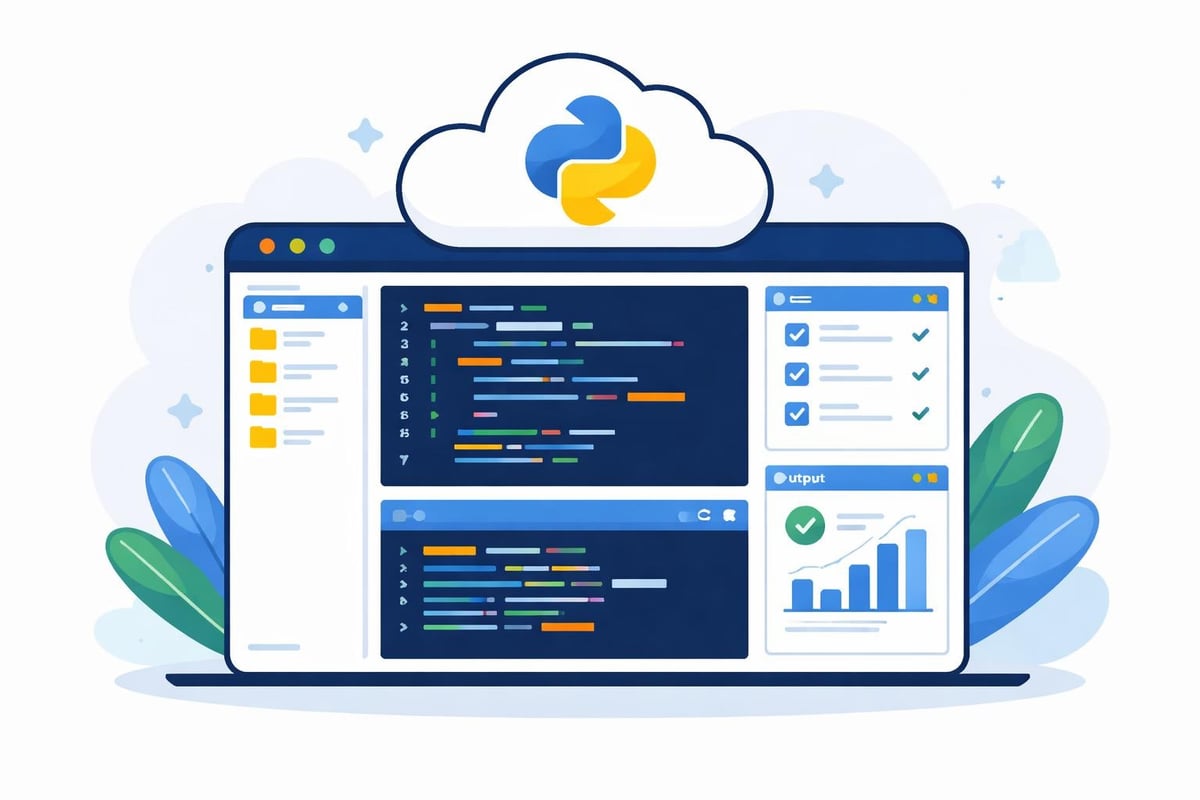
The interface presents three primary panels: the file explorer on the left, the code editor in the center, and the console/output panel on the right. This layout mirrors professional IDEs while maintaining simplicity for beginners.
Installing Python Packages and Dependencies
Package management represents one of the strongest features of replit com python. Instead of manually running pip install commands, Replit detects import statements in your code and prompts you to install missing packages automatically.
Manual package installation options:
- Use the Packages tool in the left sidebar to search and install libraries
- Run
pip install package-namein the Shell tab for custom installations - Create a requirements.txt file for dependency management across team members
This automatic detection feature prevents the common frustration of runtime errors due to missing dependencies. When team members fork or clone a project, Replit automatically installs all required packages based on the project configuration.
Advanced Features for Professional Python Development
Beyond basic coding capabilities, replit com python offers features that support professional development workflows. These capabilities make it competitive with traditional local development environments while maintaining the convenience of cloud-based access.
Collaboration and Real-Time Code Sharing
Modern software development increasingly emphasizes collaboration. Replit implements Google Docs-style multiplayer coding, where multiple developers can edit the same Python file simultaneously. Each developer's cursor appears with their name, and changes sync in real-time.
Collaboration features include:
- Live cursor tracking showing where teammates are working
- Integrated chat for discussing code without leaving the IDE
- Thread-based comments on specific code lines
- Fork functionality for creating independent project branches
- Public sharing options for educational content or open-source projects
This collaborative approach mirrors how no-code agencies approach development, where multiple stakeholders need visibility into project progress. The ability to share a live coding session with clients or team members transforms how technical discussions happen.

AI-Powered Coding Assistance
In 2026, replit com python integrates artificial intelligence features that accelerate development significantly. Replit's Ghostwriter AI provides context-aware code suggestions, generates boilerplate code, and even explains complex code sections in natural language.
According to Tom's Guide's analysis of Replit, the AI integration represents one of the platform's most compelling features for both beginners and experienced developers. The AI understands project context, meaning suggestions align with your existing codebase rather than providing generic code snippets.
| AI Feature | Benefit | Use Case |
|---|---|---|
| Code Completion | Faster typing | Completing function calls, method chains |
| Code Generation | Rapid prototyping | Creating entire functions from descriptions |
| Code Explanation | Learning tool | Understanding unfamiliar libraries or patterns |
| Bug Detection | Fewer errors | Identifying syntax and logic issues early |
These AI-powered development tools complement traditional coding by handling repetitive tasks while developers focus on business logic and architecture.
Deployment and Production Considerations
Writing code represents only part of the development lifecycle. Replit com python extends its value proposition by simplifying deployment, traditionally one of the most complex aspects of Python development.
One-Click Deployment Options
Every Python repl on Replit runs on a public URL by default when it includes a web server. For Flask, Django, or FastAPI applications, this means instant hosting without configuring servers, domains, or deployment pipelines.
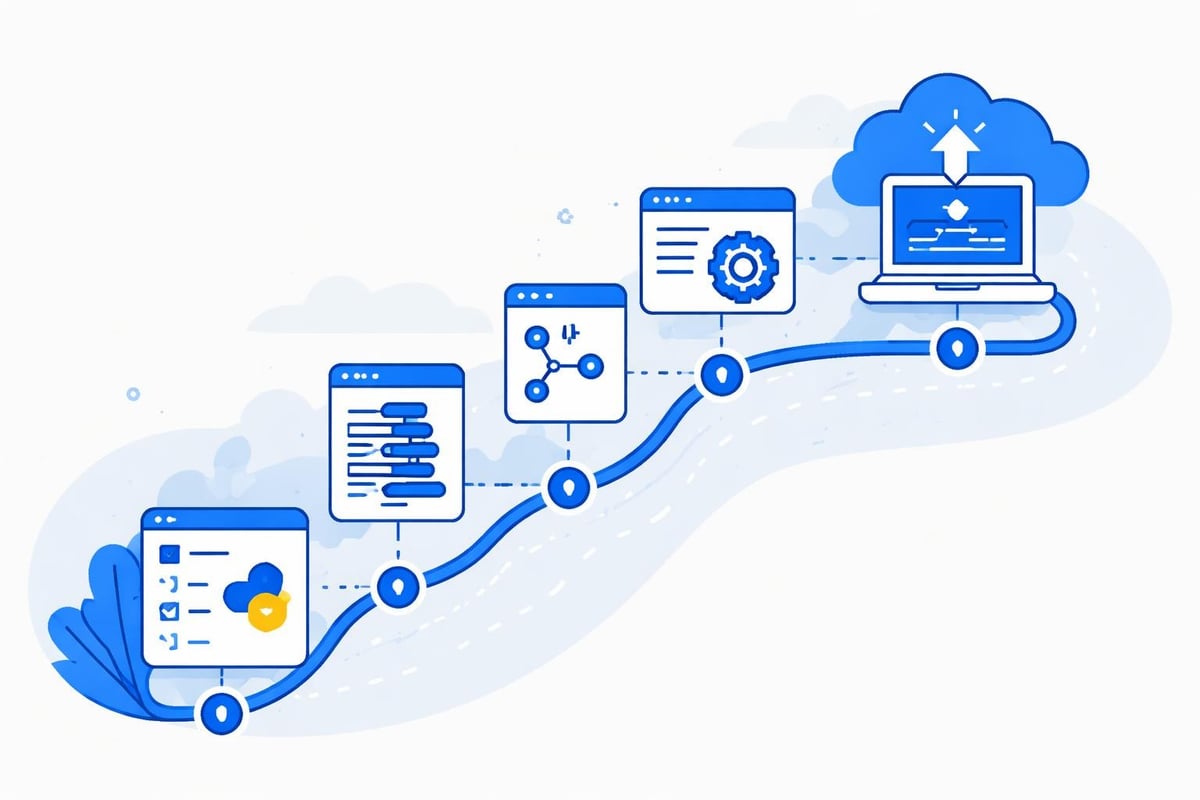
Deployment workflow:
- Write your Python web application using any framework
- Click the "Run" button to start the server
- Replit automatically generates a public URL
- Share the URL for immediate access to your application
- Enable "Always On" for continuous uptime (paid feature)
This simplified deployment process particularly benefits developers building prototypes or MVPs where speed matters more than infrastructure complexity. The 10-minute tutorial for building your first Replit app demonstrates how quickly developers can go from concept to deployed application.
Limitations and When to Consider Alternatives
While replit com python excels at rapid development and prototyping, enterprise applications may encounter limitations. The free tier includes compute and memory constraints that prevent running resource-intensive applications. Network latency for users far from Replit's servers can impact performance.
Scenarios where Replit works best:
- Educational projects and coding tutorials
- API prototypes and proof-of-concept applications
- Personal tools and automation scripts
- Hackathon projects requiring quick deployment
- Collaborative coding sessions and interviews
Scenarios requiring alternative solutions:
- High-traffic production applications serving thousands of concurrent users
- Applications requiring specific compliance certifications
- Projects needing custom infrastructure configurations
- Systems with strict data residency requirements
For businesses evaluating whether cloud IDEs fit their development strategy, understanding these tradeoffs helps make informed decisions. Organizations might use replit com python for initial development and prototyping while deploying production systems on dedicated infrastructure.
Educational Applications and Learning Python
Beyond professional development, replit com python has become a cornerstone platform for Python education. The educational resources from Math LibreTexts demonstrate how academic institutions integrate Replit into their curriculum.
Why Educators Choose Replit for Python Teaching
Traditional computer science education faces significant setup challenges. Students use different operating systems, have varying levels of technical expertise, and often struggle with environment configuration before writing their first line of code. Replit com python eliminates these barriers.
Educational advantages:
- Zero installation requirements reduce class setup time
- Consistent environment ensures all students see the same behavior
- Teachers can view student code in real-time for immediate feedback
- Assignment templates streamline homework distribution
- Automatic testing frameworks enable self-paced learning
The platform includes features specifically designed for educational contexts, such as classroom management tools, assignment tracking, and automated grading capabilities. Teachers can create template repls that students fork, ensuring everyone starts with the correct dependencies and structure.
Building Programming Competency
For individuals learning Python independently, the detailed instructions on Replit for Python programming provide structured pathways from basic syntax to advanced concepts. The immediate feedback loop of cloud-based development helps learners see results instantly.
This rapid iteration cycle mirrors the philosophy behind no-code development platforms, where reducing the time between idea and implementation accelerates learning and innovation. When students can test their code immediately without compilation delays or environment issues, they engage more deeply with programming concepts.
Pricing Structure and Value Proposition
Understanding the cost structure of replit com python helps businesses and individuals make informed decisions about adopting the platform. According to TechRaisal's overview of Replit pricing, the platform offers multiple tiers designed for different use cases.
Free Tier Capabilities
The free tier provides substantial functionality for learning, prototyping, and small projects. Users get access to the complete IDE, collaboration features, and basic compute resources. Projects can run while actively developing but enter sleep mode after periods of inactivity.
Paid Plans for Professional Use
Replit's paid tiers add capabilities essential for professional development:
- Always On: Keeps applications running continuously without sleep mode
- Boosted Resources: Increased CPU and RAM for resource-intensive applications
- Private Projects: Hide source code from public view
- Priority Support: Faster response times for technical issues
- Custom Domains: Connect your own domain names to deployed applications
| Plan Type | Monthly Cost | Best For |
|---|---|---|
| Free | $0 | Learning, experimentation, public projects |
| Hacker | $7 | Individual developers, side projects |
| Pro | $20 | Professional developers, client work |
| Teams | Custom | Organizations, educational institutions |
For businesses evaluating development tools, comparing Replit's pricing against the cost of maintaining local development infrastructure, CI/CD pipelines, and deployment systems reveals significant potential savings for certain project types.
Integrating Replit Into Development Workflows
Professional development teams using replit com python often integrate it as one tool within a broader ecosystem rather than as a complete replacement for traditional development environments. This hybrid approach leverages Replit's strengths while maintaining robust production infrastructure.
Common Integration Patterns
Development teams might use Replit for specific phases of their workflow while relying on other tools for production deployment. For instance, teams could prototype APIs on Replit, gather stakeholder feedback using the instant deployment URL, then migrate the code to a more robust hosting solution.
Workflow integration strategies:
- Use Replit for initial prototyping and proof-of-concept development
- Conduct technical interviews with live coding sessions on Replit
- Create internal tools and automation scripts that don't require enterprise infrastructure
- Build educational content and documentation with embedded, executable examples
- Develop API integrations before incorporating them into main applications
This approach aligns with how agencies building MVPs think about tool selection, choosing the right platform for each development phase rather than forcing every project into a single toolchain.
Version Control and Code Management
Replit includes integrated version control through its connection to GitHub. Developers can link their Replit projects to GitHub repositories, enabling standard git workflows while maintaining the convenience of browser-based development.
Version control features:
- Direct GitHub repository imports
- Commit and push changes from the Replit interface
- Pull updates from remote repositories
- Branch management without command-line git
- Merge conflict resolution tools
This GitHub integration ensures that code written in replit com python can easily transition to other development environments or deployment pipelines. Teams don't face lock-in concerns since all code remains accessible through standard git repositories.
Comparing Replit to Alternative Development Approaches
Understanding where replit com python fits in the broader landscape of development tools helps businesses choose appropriate solutions. The platform occupies a unique position between traditional local IDEs and no-code platforms.
Replit Versus Local Development
Local development environments offer maximum control and customization. Developers can configure every aspect of their setup, use any tools they prefer, and work offline. However, this flexibility comes with setup complexity and maintenance overhead.
Replit trades some of that configurability for convenience. Developers can't customize the underlying operating system or install system-level dependencies, but they gain instant access from any device and simplified collaboration.
Replit Versus No-Code Platforms
While replit com python requires coding knowledge, it shares philosophical similarities with no-code platforms in prioritizing accessibility and speed. For businesses exploring who competes with Replit in the broader development tools market, understanding these positioning differences clarifies use cases.
Comparison framework:
| Aspect | Replit (Code) | No-Code Platforms | Traditional IDEs |
|---|---|---|---|
| Setup Time | Minutes | Minutes | Hours |
| Learning Curve | Moderate | Low | Moderate to High |
| Customization | High | Medium | Very High |
| Deployment Speed | Fast | Fastest | Variable |
| Scalability | Limited | Platform-dependent | Unlimited |
Organizations might use Replit for backend API development while building user interfaces with no-code tools, creating a hybrid development approach that maximizes team efficiency.
Security and Data Privacy Considerations
For businesses evaluating replit com python for production use, understanding security implications becomes critical. Cloud-based development platforms handle source code and potentially sensitive data, requiring careful security assessment.
Code Privacy and Intellectual Property
Free Replit projects are public by default, meaning anyone can view the source code. For proprietary development, paid plans offer private repositories. Organizations should implement clear policies about what code can be developed on free versus paid accounts.
Security best practices:
- Never commit API keys, passwords, or credentials to Replit projects
- Use environment variables for sensitive configuration data
- Enable two-factor authentication on Replit accounts
- Review team member access permissions regularly
- Understand data residency requirements for your jurisdiction
While Replit implements industry-standard security measures, organizations with strict compliance requirements (HIPAA, SOC 2, etc.) should verify that the platform meets their specific needs before deploying production applications.
Data Protection in Replit Databases
The built-in Replit database stores data on Replit's infrastructure. For applications handling personal information or sensitive business data, understanding data retention, backup procedures, and access controls becomes essential. Many production applications choose to connect replit com python projects to external databases where they maintain direct control over data security.
Future Trends in Cloud-Based Python Development
The trajectory of platforms like replit com python suggests broader shifts in how software development happens. As of 2026, several trends are accelerating the adoption of cloud-based development environments across enterprises and startups alike.
AI Integration Deepening
Current AI features in Replit represent early implementations of what will become increasingly sophisticated assistance. Future versions will likely generate more complex code structures, automatically optimize performance, and provide architectural guidance based on best practices.
This evolution mirrors trends in AI-powered software development tools more broadly, where artificial intelligence handles increasingly complex tasks while humans focus on creative problem-solving and business logic.
Hybrid Development Approaches
Rather than replacing traditional development entirely, cloud IDEs like replit com python are becoming specialized tools within comprehensive development strategies. Teams use them for specific scenarios where their strengths shine while maintaining traditional setups for other work.
Emerging use patterns:
- Edge computing development and testing
- Microservices prototyping before containerization
- Client demonstrations and stakeholder presentations
- Distributed team pair programming sessions
- Quick bug reproduction environments
This specialization allows organizations to optimize their toolchain for different development phases and team structures, similar to how no-code agencies select different platforms for various client needs.
The evolution of replit com python demonstrates how cloud-based development tools are democratizing software creation while accelerating development cycles for professionals. Whether you're prototyping a new feature, teaching programming concepts, or building an MVP, understanding these platforms expands your development toolkit significantly. Big House Technologies combines the speed advantages of platforms like Replit with enterprise-grade no-code solutions to deliver scalable applications faster than traditional development approaches, helping businesses transform ideas into production-ready software without the typical complexity and timeline constraints.

About Big House
Big House is committed to 1) developing robust internal tools for enterprises, and 2) crafting minimum viable products (MVPs) that help startups and entrepreneurs bring their visions to life.
If you'd like to explore how we can build technology for you, get in touch. We'd be excited to discuss what you have in mind.
Other Articles
Explore the Chai AI app in 2026 Discover features benefits and user insights Learn how to create chat and connect for a smarter more creative experience
Hire mobile developer with confidence in 2025. Discover trends, skills, costs, and proven strategies to find and secure top talent for your next app project.
Discover how Atlassian AI revolutionizes team collaboration, project management, and workflow automation for modern development teams.