
Choosing an app builder company represents one of the most critical decisions for businesses looking to digitize operations or launch new products in 2026. With the proliferation of no-code platforms, AI-powered development tools, and specialized agencies, the landscape has never been more diverse or complex. Whether you're an enterprise seeking internal tools or a startup racing to market with an MVP, understanding what distinguishes exceptional app builder companies from mediocre ones can mean the difference between project success and costly failure.
Understanding the Modern App Builder Company Landscape
The app development industry has fundamentally transformed over the past few years. Traditional agencies that once relied exclusively on hand-coded solutions now compete with specialized firms leveraging no-code and low-code platforms to deliver faster, more affordable results.
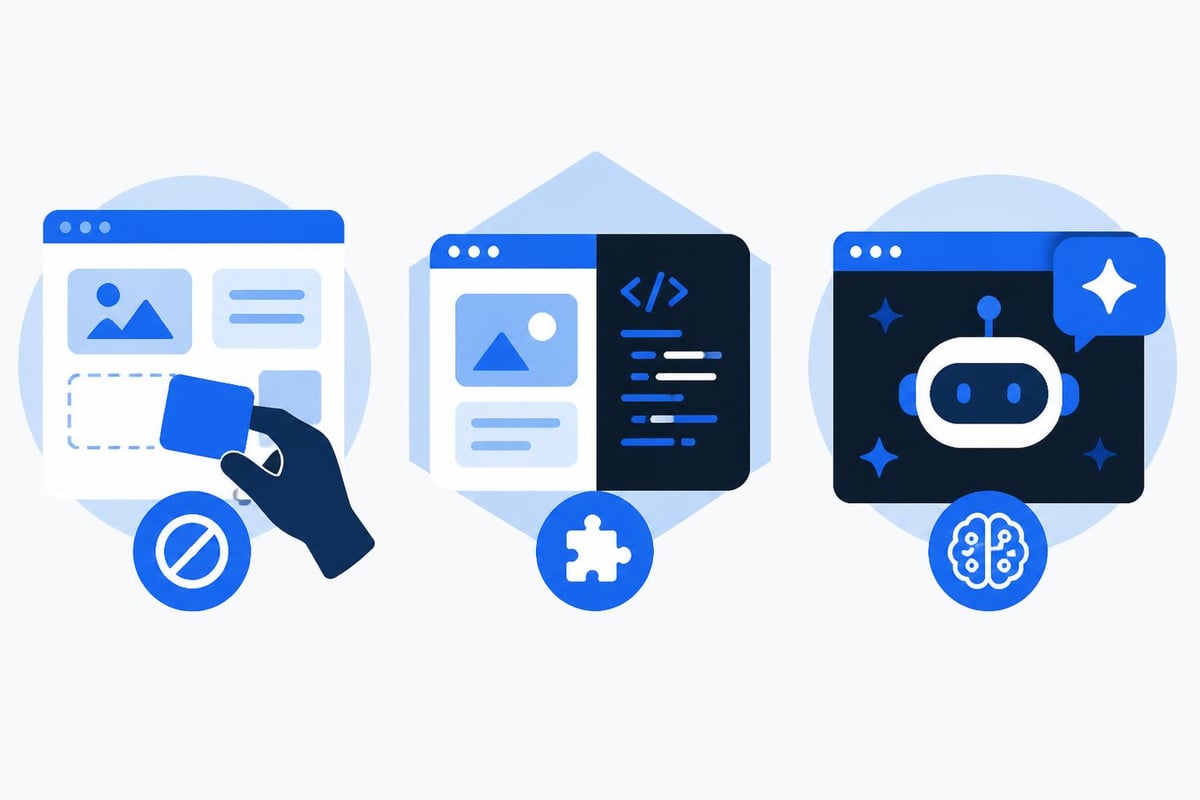
An app builder company in 2026 typically falls into one of several categories. Pure no-code agencies focus entirely on platforms like Bubble, Webflow, or Adalo. Hybrid firms combine no-code foundations with custom code for complex features. AI-first companies utilize platforms like Lovable to accelerate development cycles. Understanding these distinctions helps you identify which type aligns with your project requirements.
Market Trends Shaping App Development
According to recent research on the state of app building, the no-code sector continues experiencing explosive growth, with enterprises increasingly adopting these platforms for mission-critical applications. This shift reflects growing confidence in platform stability, security, and scalability.
Key trends influencing the market include:
- Increased integration between AI and no-code platforms
- Enterprise adoption of no-code for internal tool development
- Rising demand for rapid MVP development and testing
- Greater emphasis on platform-agnostic development approaches
- Focus on total cost of ownership rather than initial development fees
The distinction between an app builder company and traditional software development firm has blurred considerably. Many leading agencies now offer hybrid approaches, combining the speed of no-code with custom functionality where needed.
Evaluating Technical Capabilities and Platform Expertise
When selecting an app builder company, technical proficiency extends far beyond basic platform knowledge. The best firms demonstrate deep expertise in specific tools while understanding when and how to integrate complementary technologies.
Platform Specialization Versus Generalization
Specialist agencies focusing on one or two primary platforms typically deliver superior results compared to generalists. A company deeply experienced with Bubble, for instance, knows the platform's limitations, optimal workflows, and advanced techniques that general developers might miss.
| Specialist Approach | Generalist Approach |
|---|---|
| Deep platform knowledge | Broad technology exposure |
| Optimized development workflows | Flexible tool selection |
| Platform-specific best practices | Technology-agnostic solutions |
| Faster development timelines | Longer learning curves |
| Limited platform options | Multiple platform choices |
Agencies specializing in no-code MVP development often achieve faster delivery with fewer bugs because they've encountered and solved similar challenges repeatedly.
Assessing Development Processes
Professional app builder companies follow structured methodologies that ensure consistent quality. During evaluation, examine whether the company employs established best practices for complex projects.
Critical process elements include:
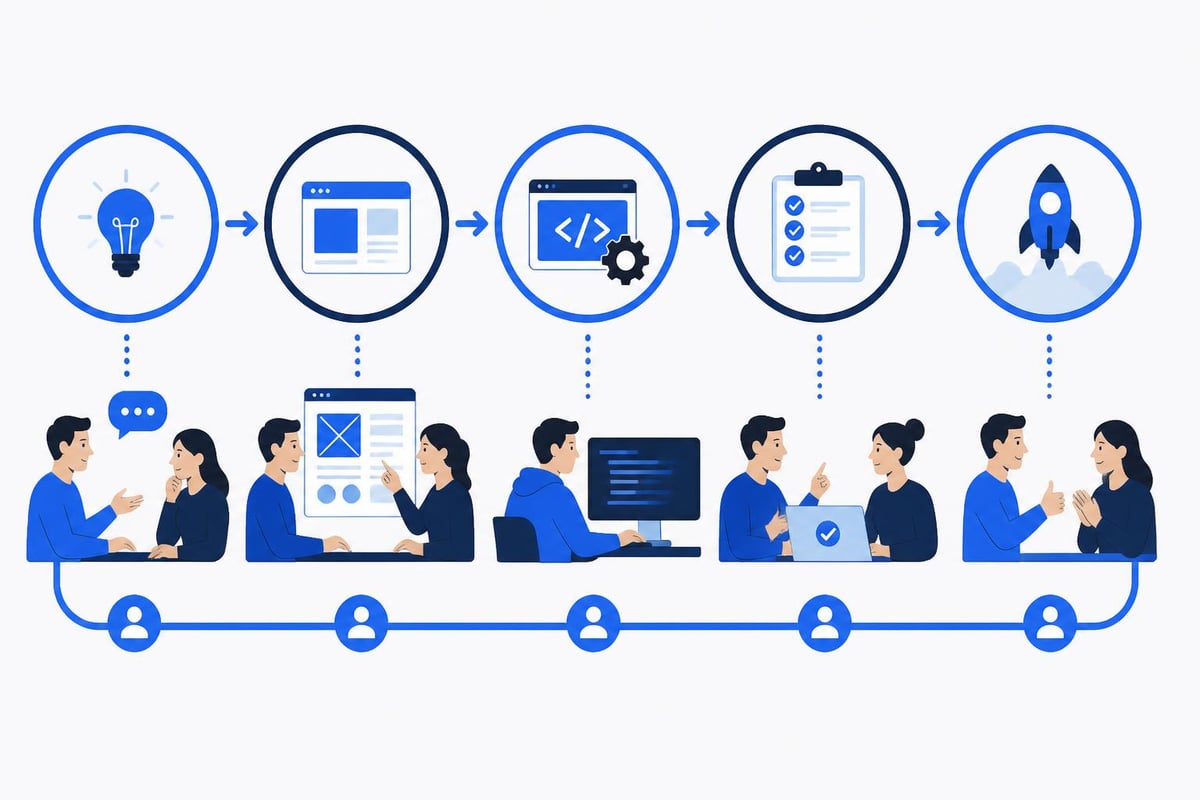
- Scoping and discovery phases that clarify requirements before development begins
- Design systems ensuring visual consistency and brand alignment
- Testing protocols covering functionality, performance, and user experience
- Deployment procedures minimizing downtime and risk
- Maintenance frameworks supporting ongoing updates and improvements
The importance of best practices in app development cannot be overstated. Companies following systematic approaches consistently deliver more reliable solutions.
Cost Structures and Value Propositions
Pricing models vary dramatically across app builder companies, making direct comparisons challenging without understanding what drives costs and how different structures align with project goals.
Common Pricing Models
Most app builder companies offer one of several pricing structures, each with distinct advantages depending on project scope and timeline uncertainty.
- Fixed-price projects: Best for well-defined scopes with minimal expected changes
- Time and materials: Flexible approach suited to evolving requirements
- Retainer arrangements: Ongoing support and development relationships
- Value-based pricing: Compensation tied to business outcomes or metrics
- Hybrid models: Combining fixed and flexible components
Companies exploring low-cost MVP development tools often discover that no-code approaches significantly reduce initial investment while maintaining quality.
Hidden Costs and Long-Term Considerations
Beyond quoted development fees, several factors influence total cost of ownership. Platform subscription fees, third-party integrations, hosting infrastructure, and ongoing maintenance all impact budget requirements.
Smart buyers evaluate not just development costs but operational expenses over the application's expected lifetime. An app builder company charging premium rates but delivering efficient, maintainable code might prove less expensive long-term than budget alternatives requiring extensive rework.
Quality Indicators and Red Flags
Distinguishing exceptional app builder companies from subpar options requires examining specific quality markers and warning signs that predict project outcomes.
Portfolio and Case Study Analysis
Review portfolios critically, looking beyond visual appeal to understand complexity, functionality, and business impact. The best case studies detail challenges encountered, solutions implemented, and measurable results achieved.
When reviewing portfolios, assess:
- Similarity to your project requirements and industry
- Application complexity and feature sophistication
- Performance under real-world usage conditions
- Client testimonials and verifiable outcomes
- Longevity of deployed applications
Companies specializing in app development services typically showcase diverse projects demonstrating versatility across industries and use cases.
Communication and Collaboration Practices
Project success depends heavily on effective collaboration between clients and development teams. Evaluate how potential partners manage communication, handle feedback, and involve clients throughout development.
Understanding best practices for client collaboration helps set appropriate expectations for project communication rhythms and decision-making processes.
Technical Architecture and Scalability Planning
An often-overlooked aspect of selecting an app builder company involves their approach to technical architecture and future scalability. Applications that work perfectly at launch may struggle as user bases grow or feature requirements expand.
Database Design and Data Management
Professional developers prioritize robust database architecture from project inception. Poor data structures create technical debt that becomes increasingly expensive to address as applications mature.
Questions to ask potential partners include how they handle data relationships, optimize queries for performance, implement backup systems, and plan for data migration scenarios. Companies experienced with enterprise clients typically demonstrate sophisticated data management practices.
Integration Capabilities
Modern applications rarely function in isolation. The ability to integrate with existing systems, third-party services, and future tools determines long-term viability.
| Integration Type | Importance | Complexity |
|---|---|---|
| Payment processors | Critical | Medium |
| CRM systems | High | Medium-High |
| Marketing automation | Medium | Medium |
| Analytics platforms | High | Low-Medium |
| Custom APIs | Variable | High |
Agencies utilizing platforms like Bubble for application development can leverage extensive plugin ecosystems while also building custom API connections when needed.
Security and Compliance Considerations
Security represents a non-negotiable requirement for any application handling sensitive data or operating in regulated industries. Your chosen app builder company must demonstrate thorough understanding of security best practices and compliance requirements.
Common Security Requirements
Different industries face varying security and compliance obligations. Healthcare applications must address HIPAA requirements, financial services need SOC 2 compliance, and European markets require GDPR adherence.
Essential security practices include:
- User authentication and authorization systems
- Data encryption in transit and at rest
- Regular security audits and penetration testing
- Vulnerability monitoring and patch management
- Incident response procedures and documentation
Research on mobile application security practices reveals common challenges developers face and recommended approaches for building secure applications from the ground up.
Platform Security Versus Application Security
Understanding the distinction between platform-level security and application-specific security helps evaluate proposals accurately. No-code platforms provide foundational security features, but developers must still implement proper application-level controls.
An experienced app builder company explains which security measures the platform handles automatically and which require explicit implementation during development.
Development Timelines and Project Management
Timeline expectations vary dramatically between traditional development and no-code approaches. Understanding realistic delivery schedules helps avoid disappointment and properly plan business launches.
Factors Influencing Development Speed
Multiple variables affect how quickly an app builder company can deliver finished applications. Scope complexity, design requirements, integration needs, and testing thoroughness all impact timelines.
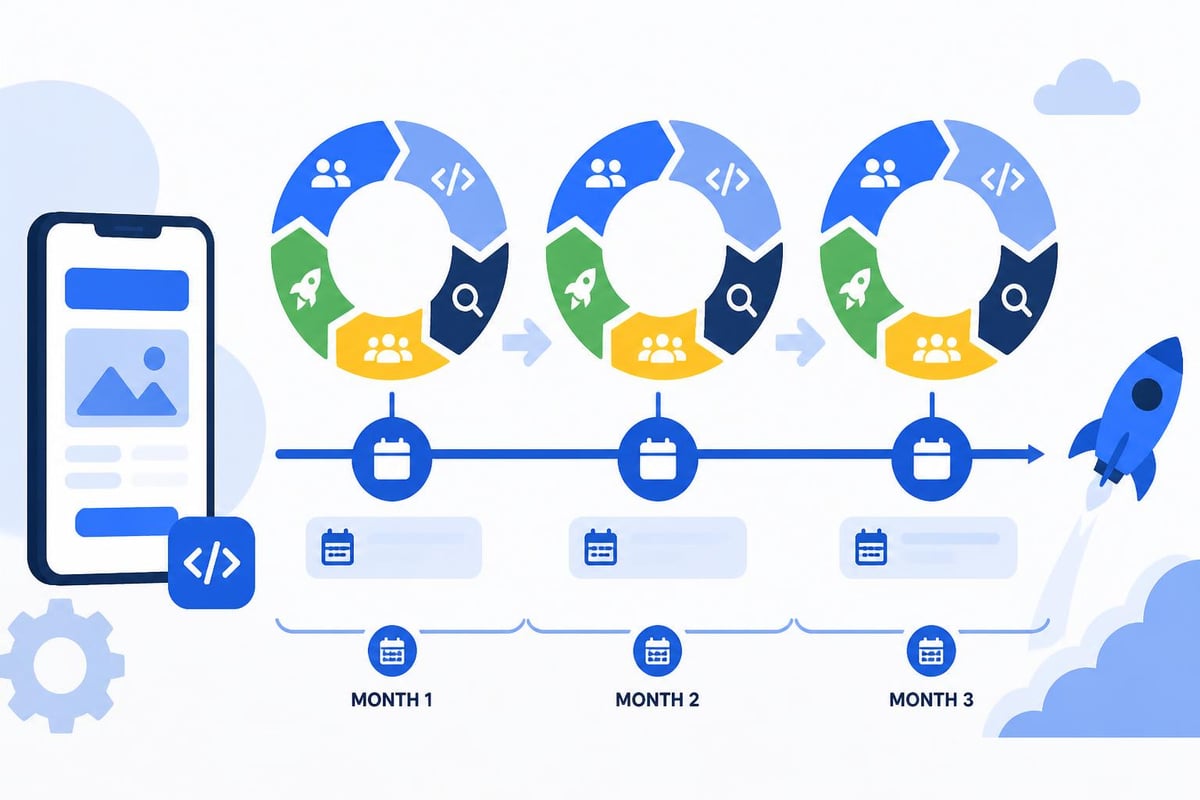
No-code and AI-powered development platforms enable significantly faster delivery compared to traditional coding. Projects that might require six months using conventional methods can often launch in 6-8 weeks using platforms like Bubble or Lovable.
When exploring AI-powered no-code development tools, many businesses discover timeline reductions of 60-70% compared to traditional development approaches.
Agile Versus Waterfall Methodologies
Most modern app builder companies employ agile methodologies, delivering working software in iterative sprints rather than waiting for complete development before any release.
Agile advantages include:
- Faster time to initial deployment
- Earlier user feedback incorporation
- Reduced risk through incremental delivery
- Greater flexibility for requirement changes
- Improved transparency throughout development
Companies following Power Apps best practices typically emphasize user needs assessment and iterative improvement cycles.
Design Excellence and User Experience
Technical capability alone doesn't guarantee successful applications. User interface design and overall experience determine whether end users embrace or abandon your application.
Design Process and Deliverables
Professional app builder companies invest significant effort in design before writing any code or building platform components. This upfront investment prevents costly revisions during development.
Typical design deliverables include user journey maps, wireframes, high-fidelity mockups, and interactive prototypes. These artifacts ensure alignment between stakeholders before development resources are committed.
Agencies specializing in MVP design to development understand how to balance aesthetic appeal with rapid delivery timelines.
Responsive Design and Cross-Platform Considerations
Applications must function seamlessly across devices and screen sizes. Whether targeting web, mobile, or both, responsive design principles ensure consistent experiences.
Guidelines for customizing app interfaces emphasize responsive layouts, intuitive navigation, and consistent branding as foundational elements of successful applications.
Post-Launch Support and Maintenance
The relationship with your app builder company shouldn't end at deployment. Ongoing support, maintenance, and enhancement capabilities determine long-term success.
Maintenance and Update Strategies
Applications require continuous attention post-launch. Bug fixes, security patches, platform updates, and feature enhancements all demand ongoing development resources.
Common support arrangements include:
- Emergency support: Critical bug fixes and downtime response
- Regular maintenance: Scheduled updates and optimization
- Feature development: Ongoing enhancement and expansion
- Performance monitoring: Proactive issue identification
- User support assistance: Help desk and training support
Understanding whether the app builder company offers these services in-house or requires third-party arrangements helps plan for total ownership costs.
Platform Evolution and Migration
No-code platforms evolve rapidly, introducing new features while occasionally deprecating old ones. Your development partner should proactively manage platform updates to ensure continued stability.
Companies building internal dashboards and tools particularly benefit from partners who maintain applications long-term as business requirements evolve.
Making the Final Selection Decision
After evaluating technical capabilities, pricing, processes, and cultural fit, synthesizing information to make confident selection decisions requires structured comparison.
Creating Evaluation Scorecards
Develop weighted scorecards reflecting your priorities. Technical expertise might weigh 30%, cost 20%, timeline 15%, communication 20%, and portfolio relevance 15%, for example.
This systematic approach prevents emotional decision-making and ensures critical factors receive appropriate consideration during evaluation.
Reference Checks and Due Diligence
Beyond portfolio reviews, conduct thorough reference checks with previous clients. Ask specific questions about communication responsiveness, deadline adherence, budget management, and post-launch support quality.
The most valuable references come from clients with similar project types, company sizes, and industry contexts. Their experiences provide the most relevant insights for your situation.
Strategic Partnerships for Connecting Talent
When your app builder company completes development, you may need additional resources for specialized tasks or ongoing enhancements. Platforms like FreelanceDEV connect businesses with freelance developers across web, mobile, and software development specializations, providing flexible talent access for specific project needs.
Similarly, marketing your completed application requires creative assets that resonate with target audiences. Tools like AdsRaw enable rapid creation of UGC-style ad videos using AI, allowing you to test multiple creative approaches without extensive production budgets.
Maximizing ROI from Your App Development Investment
Successful app development extends beyond selecting the right app builder company. Strategic planning, clear communication, and realistic expectations all contribute to project outcomes and return on investment.
Defining Success Metrics
Before development begins, establish clear success criteria. Whether measuring user adoption rates, process efficiency improvements, revenue generation, or cost savings, quantifiable metrics enable objective outcome assessment.
Share these metrics with your app builder company during scoping. Understanding business objectives allows developers to prioritize features delivering maximum impact toward defined goals.
Preparing for Development Partnership
The most successful client relationships involve active participation throughout development. Allocate internal resources for requirement clarification, design feedback, testing participation, and user acceptance activities.
Companies that treat development as a collaborative partnership consistently achieve better outcomes than those adopting purely transactional approaches. Your knowledge of business processes and user needs complements the app builder company's technical expertise, creating synergies that elevate final products.
Selecting the right app builder company fundamentally shapes your application's success trajectory, influencing everything from initial delivery speed to long-term scalability and maintenance costs. By systematically evaluating technical capabilities, development processes, pricing models, and partnership fit, you position your project for optimal outcomes. Big House Technologies specializes in transforming enterprise and startup visions into scalable software solutions using leading no-code and AI platforms, delivering comprehensive development services from scoping through deployment with a focus on speed, quality, and cost-efficiency that ensures your ideas become fully functional products on time and within budget.

About Big House
Big House is committed to 1) developing robust internal tools for enterprises, and 2) crafting minimum viable products (MVPs) that help startups and entrepreneurs bring their visions to life.
If you'd like to explore how we can build technology for you, get in touch. We'd be excited to discuss what you have in mind.
Other Articles
Unlock rapid app development in 2025 with this low code guide Explore benefits challenges step by step adoption and real world use cases for innovation
Unlock enterprise backend systems modernization for 2026 with key trends, step by step frameworks, technology choices, and proven strategies to future proof your business.
Explore Cursor AI pricing in 2026. Compare free, Pro, and Business plans with detailed cost breakdowns to find the best fit for your development needs.