
Are you feeling boxed in by the limitations of Lovable for your app projects this year? You are not alone—many developers and teams are actively searching for smarter, more flexible alternatives to lovable that go beyond basic prototypes.
With the demand for scalable, customizable app builders on the rise, it is time to explore what the future holds. In this article, you will discover seven fresh platforms that redefine how you build, scale, and launch applications.
From powerful no-code builders to cutting-edge AI-driven tools, we will break down their features, pricing, pros and cons, and who each solution is best suited for. Get ready to compare, choose, and take your app ideas to the next level.
7 Fresh Alternatives to Lovable for 2026
The demand for flexible, scalable app builders is skyrocketing. If you feel boxed in by Lovable’s limitations, you’re not alone. The search for robust alternatives to lovable is heating up, especially as the no-code AI platforms market is projected to surge to $24.7 billion by 2029, reflecting a 38.2% CAGR [source].
Below, you’ll discover seven innovative alternatives to lovable, each offering unique strengths for different types of teams, projects, and ambitions. Whether you want no-code ease, AI-powered speed, or the ability to scale production apps, you’ll find a platform that fits.
Let’s dive into the top alternatives to lovable for 2026.
Bubble
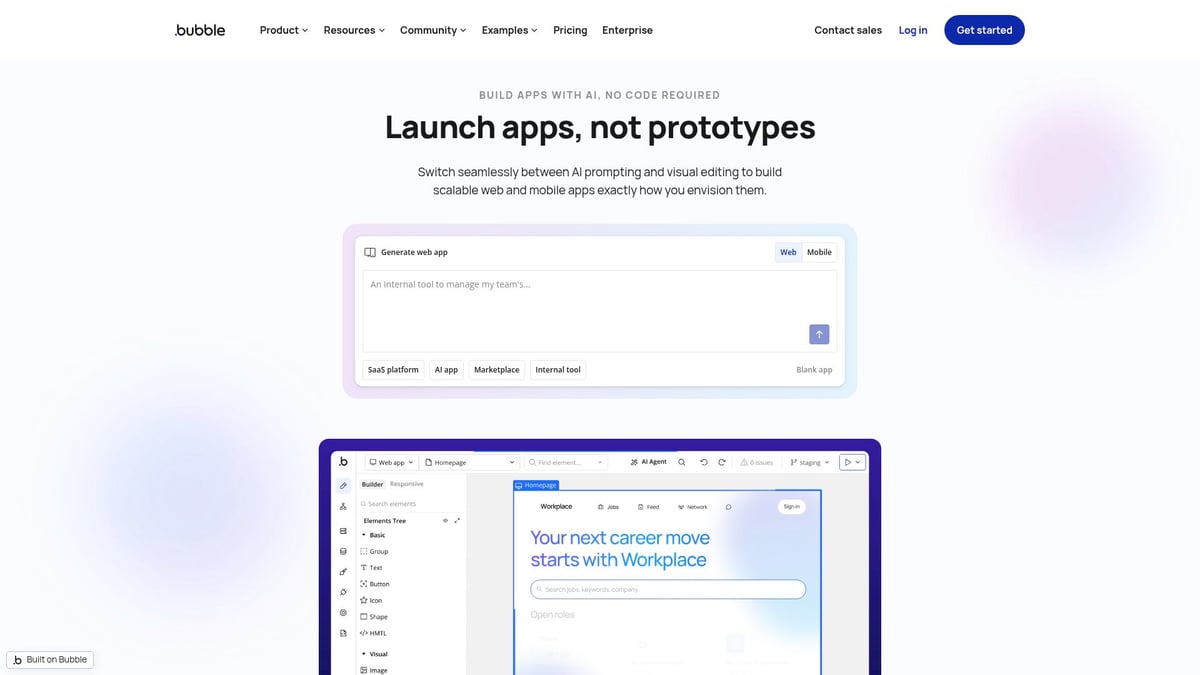
Bubble is a heavyweight among alternatives to lovable, empowering users to build complex web apps with zero coding required. Its drag-and-drop visual editor, workflow engine, and integrated database make it a go-to choice for startups and enterprises alike.
Key Features:
- Visual editor for UI/UX
- Workflow automation
- Plugin marketplace
- Integrated database
- Export and API support
Pricing:
- Free tier (limited capacity)
- Paid plans from $32/month (custom domains, more capacity)
Unique Benefits:
Bubble unlocks a high degree of customization and backend logic, so you can launch production-ready apps—not just prototypes. Its strong community and plugin system mean you’re rarely stuck for functionality.
Pros:
- No-code flexibility
- Scalable infrastructure
- Export options
- Active community
Cons:
- Steeper learning curve for non-technical users
- Performance varies with app complexity
Best For:
Startups, entrepreneurs, and enterprises wanting full-featured apps without hiring developers.
Example:
Many use Bubble to launch MVPs or internal tools that need to grow with their business. Curious how to build a scalable MVP? See this guide on building scalable MVPs without code.
Bubble is one of the most complete alternatives to lovable, especially for those seeking both speed and depth in their web app projects.
Bolt.new
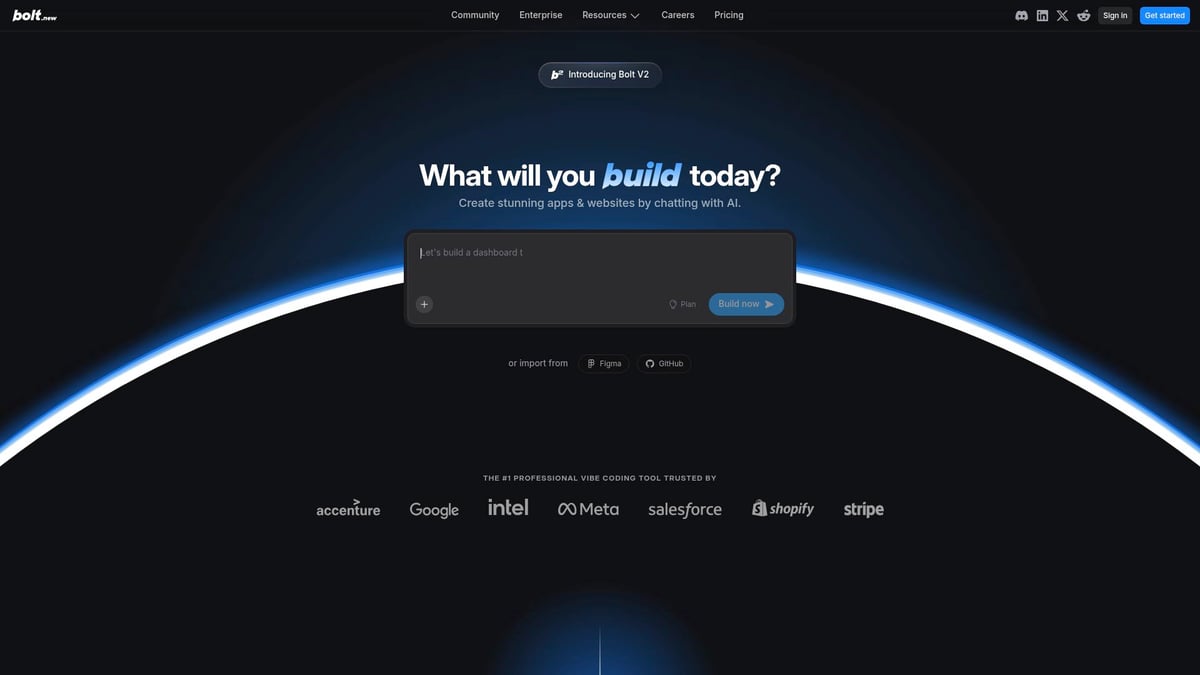
Bolt.new offers a fresh perspective among alternatives to lovable, blending AI-powered code generation with a browser-based IDE for rapid app development.
Core Features:
- AI prompt-to-code generation
- In-browser IDE
- Instant preview
- Live deployment
- React Native support for mobile
Pricing:
- Free (400k tokens/day)
- Pro: $25/month
- Teams: $30/user/month
Unique Selling Points:
Bolt.new stands out by combining code generation with real-time editing, covering both frontend and backend needs. This means you can prototype and iterate quickly, deploying changes directly from your browser.
Pros:
- Minimal setup
- Supports multiple frameworks
- Collaborative coding
- Fast deployment
Cons:
- Requires some coding knowledge for custom features
- Token limits on free plan
Best For:
Technical founders, developers, and small teams who want to move fast from idea to live product.
Example:
Bolt.new is popular for hackathons, fast MVP launches, and workshops where speed is critical.
If you’re seeking AI-driven alternatives to lovable that don’t lock you into a single framework, Bolt.new is well worth a try.
WeWeb
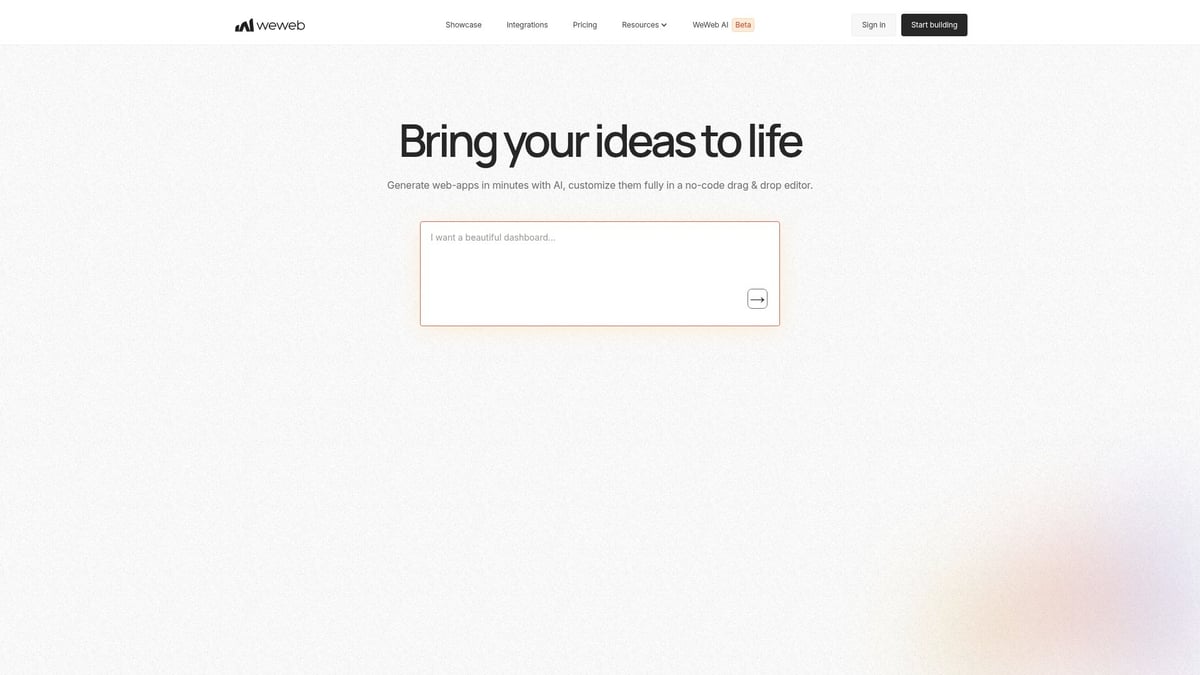
WeWeb is a hybrid AI/no-code builder that deserves a spot among alternatives to lovable, especially for teams that want both AI speed and hands-on control.
Key Features:
- AI UI generation
- Visual drag-and-drop editor
- Backend connections (Supabase, Xano, REST APIs)
- Code export to Vue.js
Pricing:
- Free seat (1M AI tokens)
- Essential: $16/month
- Pro: $42/month/seat
- Hosting: from $10/month
Benefits:
With WeWeb, you can use AI to generate a layout, then refine it visually, giving you flexibility without vendor lock-in. Strong integration options make it easy to connect with real-world data.
Pros:
- Visual freedom after AI generation
- Exportable code
- Robust integrations
Cons:
- Advanced features require paid plans
- Learning curve for backend integration
Best For:
Designers, product teams, and non-coders who want to move fast yet retain control.
Example:
WeWeb is often used for client-facing apps that need a custom UI and backend connectivity.
Among alternatives to lovable, WeWeb stands out for letting you blend AI speed with pixel-perfect design.
eesel AI
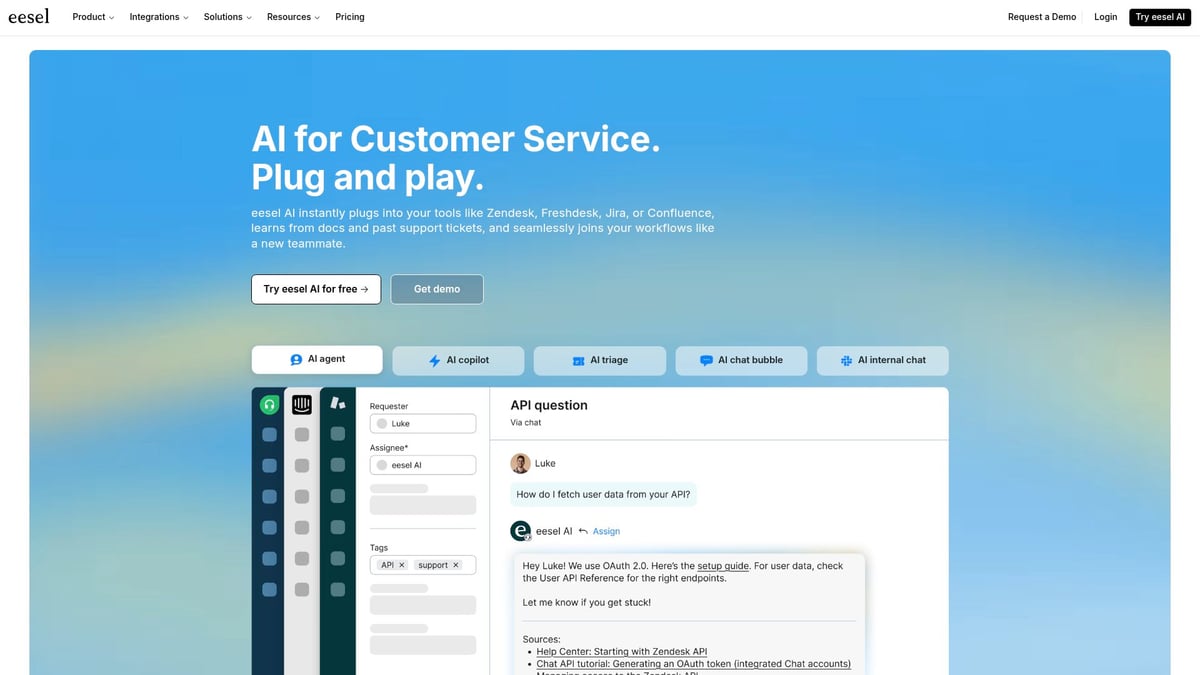
eesel AI is a unique entry in the list of alternatives to lovable, focusing on automating workflows by connecting AI directly to your existing business tools.
Core Features:
- Integrates with helpdesks (Zendesk, Intercom)
- Connects knowledge bases (Confluence, Google Docs)
- Runs AI agents for support and internal knowledge
- Simulation mode for safe testing
Pricing:
- Team Plan: $299/month
- Business Plan: $799/month
- Enterprise: custom pricing
Unique Selling Points:
eesel AI sets itself apart by eliminating the need to build new apps. Instead, it leverages your current tools, using AI to automate support and knowledge management.
Pros:
- Fast implementation
- Scalable for enterprise
- Learns from historical data
- No need for new UI
Cons:
- Not a traditional app builder
- Limited to automating existing workflows
Best For:
Support, IT, and operations leaders who want automation without building from scratch.
Example:
eesel AI helps mid-sized businesses automate support ticket responses and manage internal knowledge bases with minimal setup.
If you’re considering alternatives to lovable for automation and AI integration, eesel AI offers a streamlined, business-friendly approach.
Retool
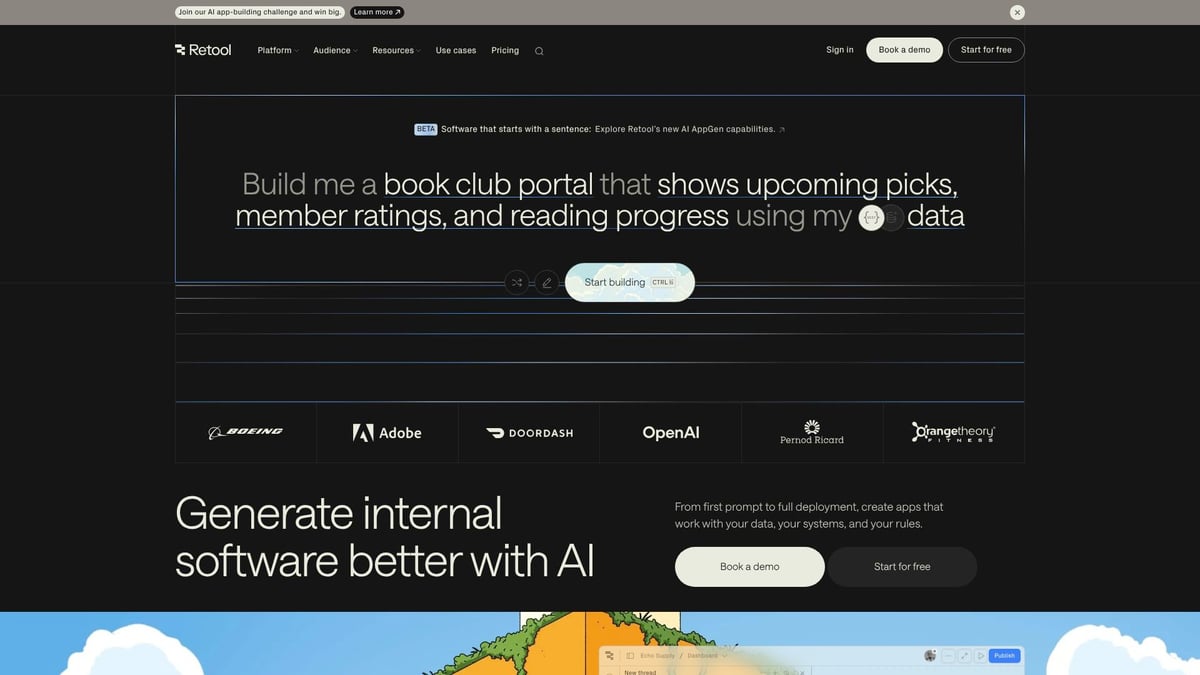
Retool is a powerhouse among alternatives to lovable, specializing in building internal tools and dashboards with low code.
Key Features:
- Component library
- Connects to databases/APIs
- Custom JavaScript/SQL support
- Role-based access controls
Pricing:
- Free for up to 5 users
- Team: $12/month/user
- Business: $50/month/user
- Enterprise: custom
Benefits:
Retool accelerates the creation of admin panels, dashboards, and other internal tools. Its flexible data integration and security controls make it a favorite for IT and operations teams.
Pros:
- Fast internal tool development
- Flexible integrations
- Strong security features
Cons:
- Less suited for public-facing apps
- Some technical knowledge required
Best For:
Companies needing internal apps, operations teams, IT departments.
Example:
Retool is used to build inventory management dashboards and customer support panels.
For those prioritizing internal workflows, Retool shines as one of the most reliable alternatives to lovable.
Big House Technologies
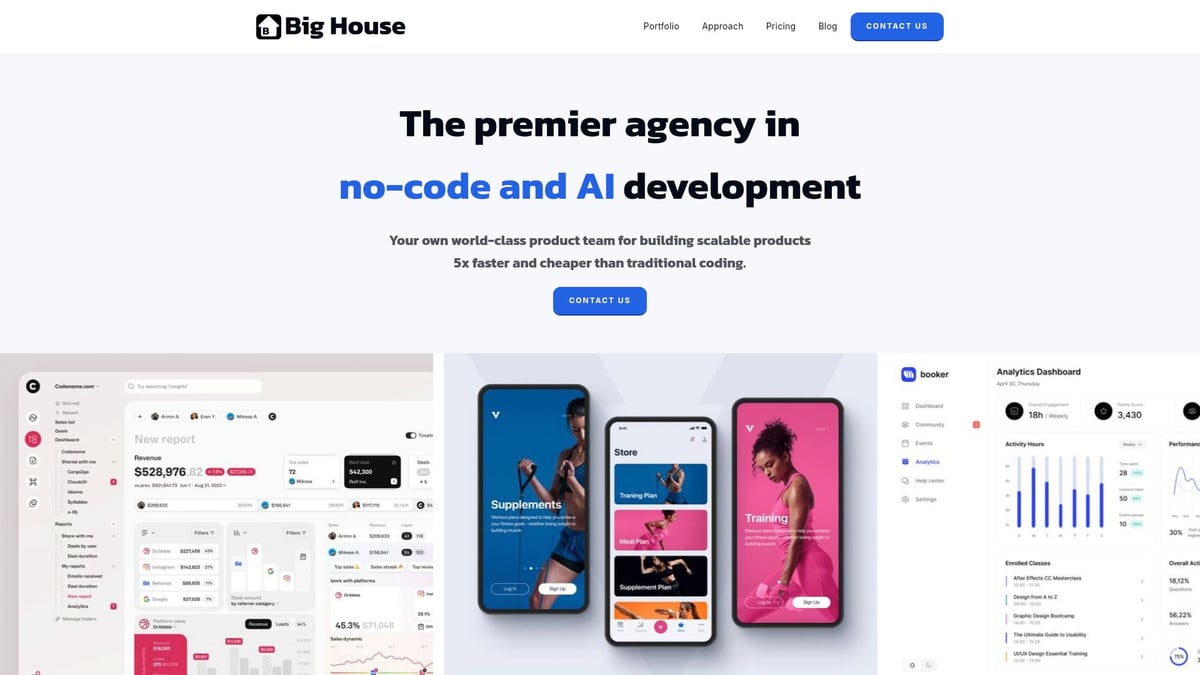
Big House Technologies stands out among alternatives to lovable as a leading no-code and AI development agency, offering custom-built solutions with speed and expertise.
Core Services:
- Custom no-code software (Bubble)
- AI-driven app development
- UX/UI design
- Project scoping, testing, QA
Pricing:
- Basic (MVPs)
- Growth (complex projects)
- Enterprise (custom solutions)
- Pricing on request
Benefits:
Big House delivers up to 5x faster and at a fraction of the cost of traditional dev shops. Their team brings deep Bubble and AI expertise, rigorous QA, and a collaborative process.
Pros:
- Proven track record
- Collaborative approach
- Sector-specific experience (finance, oil & gas)
Cons:
- Agency model may not fit DIY users
- Custom quotes mean less pricing transparency
Best For:
Startups, enterprises, entrepreneurs needing end-to-end delivery.
Example:
They’ve helped clients like Humi SR&ED and IMSI launch digital products quickly and efficiently.
If you want a partner for your journey through alternatives to lovable, Big House Technologies offers expertise and results.
Glide
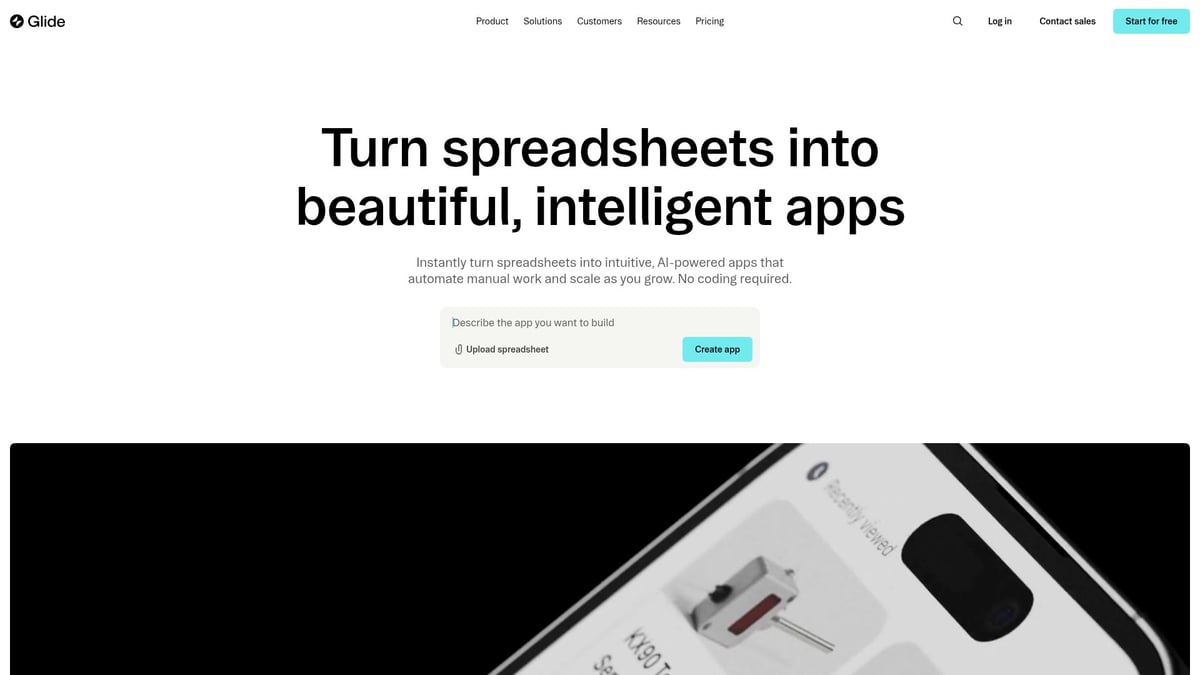
Glide brings a unique flavor to the alternatives to lovable list by letting you turn spreadsheets into fully functional apps in minutes.
Core Features:
- App creation from Google Sheets/Excel
- Drag-and-drop interface
- Web and mobile export
- Template library
Pricing:
- Free plan
- Paid plans from $25/month
Benefits:
Glide is perfect for non-technical users who need to get an app up and running fast. Its data-driven design makes it ideal for MVPs and internal tools.
Pros:
- No coding required
- Fast setup
- Mobile-ready
- Affordable pricing
Cons:
- Limited customization for complex needs
- Reliant on spreadsheet structure
Best For:
Small businesses, HR teams, anyone managing data in spreadsheets.
Example:
HR teams use Glide for employee directories, while small businesses rely on it for inventory tracking.
For those wanting the simplest alternatives to lovable, Glide is a powerful, user-friendly solution.
How to Choose the Right Lovable Alternative for Your Needs
Choosing between the many alternatives to lovable can feel overwhelming. The right platform depends on your project’s goals, team skills, and long-term vision.
Key Questions to Guide Your Decision
Start by mapping out your project requirements. Are you building a simple tool or a complex, scalable app? Consider how much backend logic, integration, and customization you’ll need. This helps narrow down which alternatives to lovable can truly support your vision.
Next, think about your team’s technical skills. No-code platforms work best for non-developers, while low-code or AI-driven tools are better if you have some coding experience. If you’re unsure where your needs fit, check out this guide for choosing the right no-code platform.
Pricing is another major factor. Compare free tiers, usage-based pricing, and flat fees. For example, Bubble’s free plan includes 50,000 workload units, while Bolt.new’s free tier offers up to 2.5 million tokens per month. Make sure to look at how costs will scale as your app grows.
Comparing Top Alternatives to Lovable
Integration is key. Will your chosen platform connect easily with your databases, APIs, or business tools? If you need advanced integrations, Retool and WeWeb stand out.
Production readiness also matters. Look for strong security, reliable uptime, and support for scaling to more users. Flexibility is crucial, too. Can you export your code or switch providers later? Avoiding vendor lock-in will save headaches down the line.
Here’s a quick comparison:
| Platform | Best For | Free Plan? | Custom Code? | Integration Strength |
|---|---|---|---|---|
| Bubble | Complex SaaS apps | Yes | Moderate | High |
| Glide | Internal tools, MVP | Yes | No | Medium |
| Retool | Internal dashboards | Yes | Yes | Very High |
| eesel AI | Automation | No | No | Enterprise |
Real-World Scenarios
Picture building a full-featured SaaS with Bubble, then comparing it to a quick internal tool built in Glide. Or, if your team needs robust dashboards, Retool could be ideal. For automating support, eesel AI might be the smarter choice.
Still unsure which path to take? Dive deeper into the low-code vs. no-code comparison to see how different approaches stack up among alternatives to lovable.
Every business is unique. Weigh your priorities, test free plans, and choose the platform that fits your current needs while leaving room to grow. With so many strong alternatives to lovable available, your perfect app builder is just a decision away.
Now that you’ve seen just how many options are out there beyond Lovable, it’s clear the right platform can help you move from idea to launch faster than ever. Whether you’re building your first MVP or looking to scale without getting bogged down in code, you have real alternatives for 2026. If you’re ready to turn those ideas into a working product and don’t want to wait months, why not take the next step? Launch Your MVP in Weeks, Not Months and discover how quickly you can bring your vision to life.

About Big House
Big House is committed to 1) developing robust internal tools for enterprises, and 2) crafting minimum viable products (MVPs) that help startups and entrepreneurs bring their visions to life.
If you'd like to explore how we can build technology for you, get in touch. We'd be excited to discuss what you have in mind.
Other Articles
Discover how AI operating systems are transforming computing in 2026. Learn about AI-native platforms, implementation strategies, and business applications.
Discover the best database for no-code platforms in 2026. Compare Airtable, PostgreSQL, Firebase, and more for enterprise and startup needs.
Discover how artificial intelligence simulation enables businesses to test strategies, reduce risk, and accelerate innovation with no-code tools.