
Enterprises face a digital revolution at breakneck speed, with 2026 set to shatter records for tech investment and innovation. The stakes are high, as leaders must adapt quickly or risk falling behind in a landscape defined by AI, automation, and remote work acceleration.
This guide is your essential roadmap for selecting enterprise digital transformation partners, empowering you to build future-ready strategies and stay ahead of the curve. We’ll help decision-makers navigate a complex market, decode critical selection criteria, and master best practices for successful collaboration.
Explore the evolving digital landscape, discover partnership models, learn how to evaluate and choose the right partner, and uncover industry-specific insights and future trends. Ready to gain a competitive edge? Dive in for practical guidance that will shape your transformation journey.
The Evolving Landscape of Enterprise Digital Transformation
The landscape of enterprise digital transformation partners is shifting at an unprecedented pace as we approach 2026. Enterprises worldwide are accelerating their digital journeys, driven by market demands and disruptive technologies. According to recent research, the global digital transformation market is set to surpass $3.9 trillion by 2026, with annual growth rates climbing each year. For more detailed statistics on this explosive growth, see the Digital Transformation Market Growth Projections.
Today, the main catalysts fueling the rise of enterprise digital transformation partners include:
| Key Driver | Description |
|---|---|
| Artificial Intelligence (AI) | Intelligent automation, predictive analytics, and process optimization. |
| Automation | Streamlining operations, reducing manual tasks, and boosting efficiency. |
| Cloud Migration | Flexibility, scalability, and global accessibility for critical systems. |
| Data Analytics | Real-time decision-making and actionable business insights. |
| Customer Experience | Personalization, omnichannel engagement, and seamless digital interactions. |
These factors are pushing enterprises to rethink their technology strategies and seek out the right enterprise digital transformation partners who can deliver both innovation and measurable results.
The COVID-19 pandemic and the global shift to remote work have further accelerated digital initiatives. Enterprises that once viewed digital transformation as a long-term strategy are now making it a top priority. The demand for robust, secure, and scalable solutions has never been higher, and this urgency is reflected in increased technology budgets and faster project timelines.
As digital ecosystems become more complex, the integration of new solutions with legacy systems presents significant challenges. Enterprises require digital transformation partners that can bridge skills gaps, bring cutting-edge innovations, and manage end-to-end implementation. The need for seamless integration across departments, from finance to supply chain to customer service, has made the role of these partners even more critical.
Technology partners now play a pivotal role in helping organizations stay ahead of rapid change. They not only provide technical expertise, but also help enterprises navigate regulatory requirements, data governance, and security protocols. This partnership approach is enabling companies to unlock new business models, tap into emerging technologies, and foster a culture of continuous innovation.
For example, a global manufacturing leader recently worked with multiple enterprise digital transformation partners to launch an AI-driven supply chain optimization project. By combining the strengths of a leading system integrator with a specialized AI vendor, the company achieved a 25% reduction in operational costs and improved forecasting accuracy. Stories like these are becoming more common as organizations look to partners for both strategic guidance and hands-on delivery.
Industry reports indicate that over 80% of large enterprises plan to increase their digital transformation investments by 2026. This surge in investment is not just about technology, but about building long-term, resilient partnerships that can evolve with business needs. The right enterprise digital transformation partners will be those who can deliver agility, scalability, and sustained value in a rapidly changing environment.
In summary, the evolving landscape is defined by rapid growth, increasing complexity, and a relentless focus on outcomes. Enterprises must carefully select digital transformation partners who can help them navigate this dynamic terrain and secure their competitive advantage for years to come.

Types of Enterprise Digital Transformation Partners
Selecting the right enterprise digital transformation partners is a pivotal step for organizations aiming to future-proof their business. The landscape is diverse, with each partner type offering unique strengths and capabilities. Understanding these distinctions can help enterprises make informed decisions and maximize transformation success.

Key Categories of Enterprise Digital Transformation Partners
Enterprise digital transformation partners generally fall into several main categories:
- Consulting Firms: These partners provide strategic direction, change management, and roadmap planning.
- System Integrators: Experts in integrating multiple technologies and platforms, ensuring seamless workflow across systems.
- Software Vendors: Offer proprietary platforms, applications, and custom solutions tailored to enterprise needs.
- Managed Service Providers (MSPs): Deliver ongoing IT management, support, and optimization.
- Boutique Agencies: Focus on niche solutions, innovation, and industry-specific challenges.
Each type brings different expertise, making it essential to align partner selection with your strategic goals.
Comparing Roles and Value: Table
Here’s a quick comparison of common enterprise digital transformation partners:
| Partner Type | Primary Role | Pros | Cons |
|---|---|---|---|
| Consulting Firm | Strategy, Roadmap | Broad expertise, proven frameworks | May lack deep tech specialization |
| System Integrator | Implementation, Integration | End-to-end delivery, tech know-how | Can be costly, longer onboarding |
| Software Vendor | Solution Development | Custom tools, rapid deployment | May push own products, limited flexibility |
| Managed Service Provider | Support, Optimization | Scalability, 24/7 support | Less focus on innovation |
| Boutique Agency | Innovation, Niche Focus | Agile, tailored solutions | Limited resources for large-scale projects |
For more on how software vendors fit into this landscape, see this Enterprise app development company overview.
The Power of Multi-Partner Ecosystems
In complex digital journeys, enterprises often combine several types of enterprise digital transformation partners. Multi-partner ecosystems allow organizations to leverage specialized expertise and accelerate innovation while managing risk.
For instance, a global enterprise might use a system integrator for large-scale platform migration and partner with a specialized AI vendor to deliver advanced analytics. This approach enables agility and access to best-in-class capabilities.
Partner Usage Patterns Among Leading Enterprises
According to recent studies, over 80 percent of Fortune 500 companies engage more than one type of enterprise digital transformation partners for major initiatives. This trend highlights the importance of building a flexible partner network to address evolving business needs.
Choosing the right mix of partners is crucial for sustainable transformation, continuous innovation, and long-term competitive advantage.
Step-by-Step Guide to Selecting the Right Digital Transformation Partner
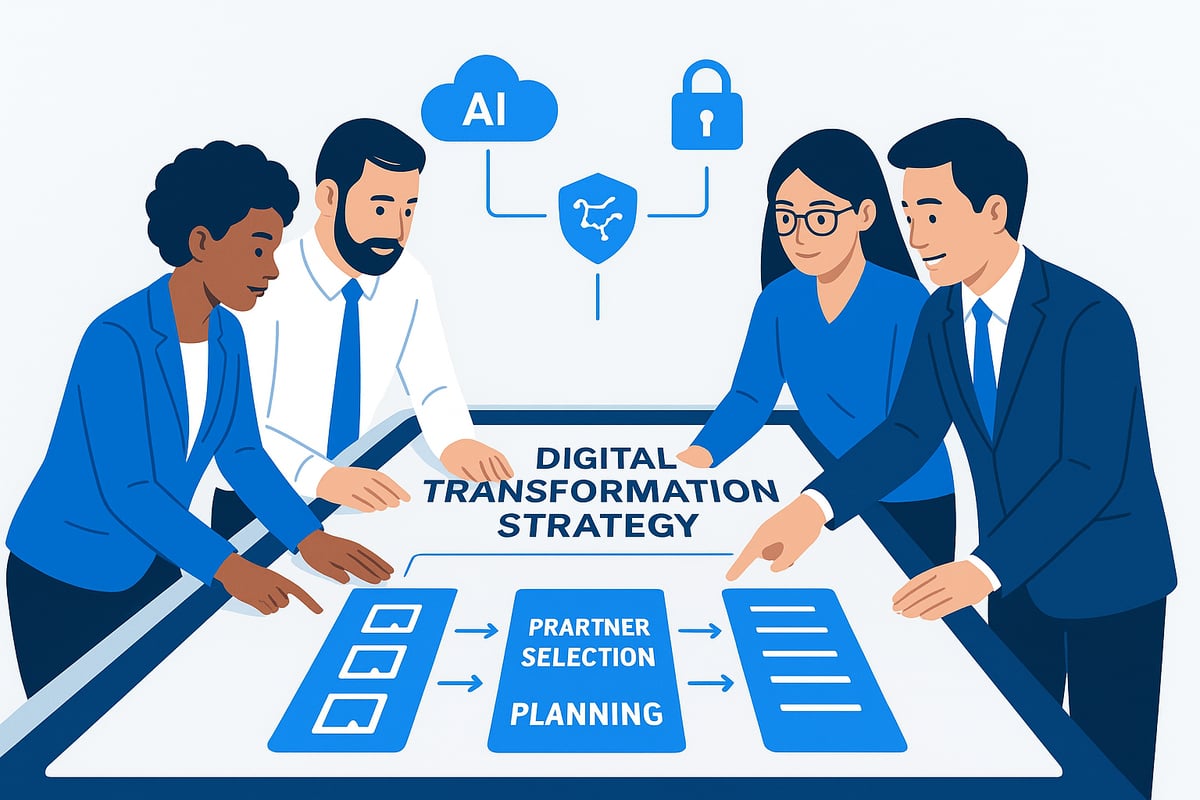
Selecting enterprise digital transformation partners is a journey that demands clarity, precision, and a strategic mindset. This step-by-step guide walks you through each phase, ensuring your organization builds a partnership that delivers measurable business impact, future-proofs operations, and aligns with evolving digital goals.
Step 1: Define Transformation Objectives and Scope
Start with a clear vision. Defining your digital transformation objectives aligns the entire initiative with enterprise strategy. Involve stakeholders from across departments to gain buy-in and uncover critical needs.
Gather inputs from business leaders, IT, and end users. What are your most pressing pain points? Is the goal to enhance customer experience, streamline operations, or drive new revenue streams? Clear objectives help prioritize initiatives and set realistic expectations for enterprise digital transformation partners.
Set measurable KPIs. For example, a retail enterprise may aim to reduce order processing time by 30% within a year. Document these goals, as they will shape every decision that follows.
Step 2: Identify and Formalize Requirements
Once objectives are set, translate them into actionable requirements. Consider technical, functional, and operational needs. This step is crucial for ensuring enterprise digital transformation partners understand your vision.
Create a detailed RFP or requirements document. Specify desired capabilities, such as cloud integration, automation, or data analytics. Involve technical teams to outline integration and scalability requirements.
For example, a financial services company might need partners experienced in integrating legacy systems and ensuring compliance. The more precise your requirements, the better the partner fit will be.
Step 3: Build a Qualified Partner Pool
With requirements in hand, begin sourcing potential enterprise digital transformation partners. Use a mix of referrals, analyst reports, and industry events to identify reputable candidates.
Develop pre-qualification criteria. Look for experience in your sector, relevant certifications, and a proven track record. Ask for client references and review case studies.
Shortlist partners who have demonstrated success with organizations similar to yours. For instance, a healthcare company may prioritize partners with HIPAA-compliant solutions and previous hospital deployments.
Step 4: Evaluate Partner Capabilities and Approach
Now, assess how well each candidate aligns with your needs. Examine their methodologies, innovation mindset, and cultural fit. Enterprise digital transformation partners should offer more than just technical skills—they should be proactive collaborators.
Review case studies and request pilot projects. Conduct interviews with delivery teams, not just sales reps. Visiting client sites or organizing reference calls can reveal a lot about reliability and execution quality.
For example, a manufacturer might visit a partner’s client factory to see digital twin technology in action before making a decision.
Step 5: Analyze Technical and Technological Fit
Compatibility is key. Evaluate how well enterprise digital transformation partners’ solutions integrate with your existing systems. Assess their expertise in security, compliance, and data governance.
Look for partners fluent in the latest technologies, such as AI, automation, and cloud platforms. Consider their ability to support innovation and future scalability. If your roadmap includes empowering non-technical teams, explore no-code solutions for enterprise innovation as part of your partner’s offering.
For example, a logistics firm may require seamless integration between IoT devices and ERP systems, with robust data privacy controls.
Step 6: Assess Commercial Terms and Risk
Finally, review commercial arrangements. Enterprise digital transformation partners should offer transparent pricing, flexible contracts, and clear service level agreements (SLAs).
Negotiate risk-sharing provisions, intellectual property rights, and exit strategies. Consider outcome-based payment models that tie partner compensation to business results.
For instance, a global retailer might structure payments around achieving specific milestones, like launching a new e-commerce platform on schedule.
Partner Selection Steps at a Glance
| Step | Key Activity | Example Outcome |
|---|---|---|
| 1. Define | Set objectives, align stakeholders | 30% faster order processing |
| 2. Specify | Document requirements, draft RFP | Integration of legacy systems |
| 3. Source | Build partner pool, pre-qualify | Shortlist HIPAA-compliant vendors |
| 4. Evaluate | Assess capabilities, cultural fit | Pilot project or site visit |
| 5. Analyze | Check technical/tech fit, innovation | No-code platform for non-technical users |
| 6. Assess | Negotiate terms, manage risk | Outcome-based milestone payments |
Following these steps will help your organization identify and engage enterprise digital transformation partners who drive value, minimize risk, and support your digital ambitions.
Key Criteria for Evaluating Digital Transformation Partners
Selecting the right enterprise digital transformation partners is crucial for driving meaningful change. Enterprises need a structured approach to evaluate potential collaborators. Let us break down the essential criteria that separate outstanding partners from the rest.

Experience and Track Record
When evaluating enterprise digital transformation partners, proven experience speaks volumes. Look for partners who have delivered successful projects in your industry and can showcase measurable outcomes.
Check for:
- Industry-specific expertise.
- Strong client references.
- Multiple successful enterprise transformations.
For example, a partner with several Fortune 500 digital transformation projects demonstrates the capability to handle scale and complexity. This track record provides confidence in their ability to navigate your unique challenges.
Technical Competence and Innovation
Technical excellence is a non-negotiable trait for enterprise digital transformation partners. Assess their proficiency in emerging technologies like AI, automation, cloud, and no-code platforms.
Investigate their investment in R&D and the presence of innovation labs. Evaluate if they have proprietary tools or frameworks that accelerate transformation. For instance, partners who guide you through choosing the right no-code platform can help modernize workflows and foster rapid digital adoption.
A partner that continuously innovates ensures your enterprise stays ahead in a competitive landscape.
Methodology and Project Management
A robust methodology is vital when partnering with enterprise digital transformation partners. Assess whether they use agile, waterfall, or hybrid approaches, and how they handle change management.
Key aspects to consider:
- Structured project management.
- User adoption support and training.
- Clear documentation and communication.
For example, partners offering comprehensive training and regular progress updates help drive user adoption and minimize disruption. Their disciplined approach can make or break your transformation journey.
Cultural Fit and Collaboration
Success with enterprise digital transformation partners requires more than technical skills. Cultural alignment ensures both parties work seamlessly together.
Look for:
- Shared values and work styles.
- Transparent communication.
- Responsiveness and flexibility.
Joint steering committees and regular progress reviews are good signs of a collaborative relationship. When your partner’s culture aligns with yours, decision-making is faster, and challenges are resolved more smoothly.
Security, Compliance, and Data Governance
Security and compliance are top priorities for enterprise digital transformation partners. Evaluate their adherence to industry standards like ISO and GDPR, as well as their data governance protocols.
Checklist for evaluation:
- Certifications and audit-ready processes.
- Strong security measures.
- Clear data handling practices.
A partner who demonstrates robust compliance and governance reduces your risk and builds trust. For example, partners with industry certifications can confidently support enterprises facing strict regulatory requirements.
Sector-Specific Considerations for Partner Selection
Selecting the right enterprise digital transformation partners means considering the distinct demands of each industry. Every sector faces unique challenges, compliance requirements, and technology priorities that shape partner selection. Understanding these differences helps organizations find partners that deliver real value and innovation.
Manufacturing and Industrial
Manufacturers need enterprise digital transformation partners with deep experience in IoT, automation, and supply chain digitization. These sectors often prioritize partners skilled in smart factory deployments and Industry 4.0 integration. For example, implementing digital twins requires partners who understand both operational technology and advanced analytics.
Look for partners with proven results in predictive maintenance, robotics, and real-time data integration. Their ability to bridge legacy systems with modern platforms is critical for success. Manufacturers benefit from partners who can help optimize production, reduce downtime, and enhance agility.
Financial Services and Banking
In financial services, regulatory compliance and cybersecurity are top priorities. Enterprise digital transformation partners must be well-versed in data security, risk management, and the integration of legacy banking systems. Choosing partners with fintech expertise and secure cloud capabilities is essential.
Collaboration with partners who follow Enterprise Architecture Best Practices can streamline complex transformation efforts and ensure compliance. For instance, deploying AI-driven fraud detection requires both advanced tech and sector knowledge. The right partner can future-proof operations and drive digital innovation.
Retail and Consumer Goods
Retailers seek enterprise digital transformation partners that excel in omnichannel experiences, supply chain agility, and personalization. Partners with strong e-commerce and customer analytics skills help retailers stand out in a competitive landscape. Real-time inventory management and seamless online-to-offline integration are must-haves.
Leveraging No-code platforms for enterprise workflows empowers retailers to adapt quickly to market changes. Partners who offer agile, scalable solutions can drive faster innovation and better customer engagement. Retailers should prioritize partners with a track record of successful digital rollouts.
Healthcare and Life Sciences
Healthcare organizations require enterprise digital transformation partners who understand data privacy, interoperability, and patient engagement. HIPAA compliance and secure data handling are non-negotiable for this sector. Partners with experience in healthcare digital projects, such as telemedicine or AI diagnostics, add significant value.
Look for partners who have implemented solutions that connect electronic health records and enable remote care. Their ability to navigate regulatory requirements and support clinical workflows makes them indispensable. The right partner accelerates transformation while protecting patient trust.
Future-Proofing Your Digital Transformation Partnerships for 2026 and Beyond
Staying ahead in the digital era demands that enterprise digital transformation partners are not just chosen for today’s needs, but also for their ability to adapt, innovate, and deliver ongoing value. As 2026 approaches, future-proofing these partnerships will be crucial for navigating new disruptions, technological shifts, and evolving market demands. Let’s explore practical strategies to ensure your enterprise digital transformation partners remain a strategic advantage.
Embracing Continuous Innovation
To remain competitive, organizations must cultivate relationships with enterprise digital transformation partners that prioritize continuous innovation. This means looking beyond one-off projects and instead seeking partners who invest in joint research, co-innovation labs, and shared development roadmaps.
For example, some leading enterprises run digital labs together with their partners, hosting hackathons or pilot programs to rapidly prototype new solutions. These collaborative spaces foster a culture where new ideas and emerging technologies can be tested in real-world scenarios.
According to the Digital Transformation Market Forecast 2025-2035, AI and cloud-based innovations are set to outpace other areas, making it vital for enterprise digital transformation partners to maintain robust R&D capabilities. By choosing partners committed to ongoing innovation, organizations can quickly capitalize on market shifts and emerging technologies.
Measuring and Optimizing Partnership Value
Securing long-term success with enterprise digital transformation partners means constantly measuring and optimizing the value they deliver. Clear KPIs, regular performance reviews, and transparent analytics are essential for tracking progress and ensuring alignment with business objectives.
A best practice is to establish quarterly business reviews where both parties evaluate project outcomes, update roadmaps, and address any challenges. Utilizing analytics tools, organizations can track ROI, adoption rates, and overall impact.
Here’s a quick table of potential partnership KPIs:
| KPI | Description | Target Example |
|---|---|---|
| Project Delivery Time | Time from kickoff to launch | < 6 months |
| ROI on Transformation | Financial return on investment | > 20% |
| User Adoption Rate | % of users actively engaged | > 80% |
With global IT spending projected to reach record highs by 2025, as noted in Global IT Spending Trends 2025, enterprises are under pressure to maximize returns from their digital transformation investments. Regularly optimizing your partnership approach ensures adaptability and continued business growth.
Anticipating Future Challenges and Opportunities
Future-proofing enterprise digital transformation partners also requires proactive planning for regulatory changes, disruptive technologies, and shifting customer expectations. Scenario planning with your partners helps identify potential risks and new opportunities before they arise.
For instance, organizations working with forward-thinking partners are already exploring areas like quantum computing, next-generation AI, and advanced cybersecurity protocols. These efforts ensure readiness, even as the technological landscape evolves.
Collaborating closely with enterprise digital transformation partners on risk mitigation and opportunity mapping keeps your strategy resilient and agile. By anticipating what’s next, you position your organization to lead, not just react, in the face of change.
Now that you’ve got a clear roadmap for finding the right digital transformation partner, why not take the next step for your own business? Whether you’re looking to streamline operations or launch innovative solutions, working with no code experts can help you move faster and smarter. If you want guidance on scoping, design, or building scalable tools—without the headaches of traditional development—we’re here to chat. Let’s talk about your goals and how no code can unlock real value for your team. Talk to a No Code Strategist

About Big House
Big House is committed to 1) developing robust internal tools for enterprises, and 2) crafting minimum viable products (MVPs) that help startups and entrepreneurs bring their visions to life.
If you'd like to explore how we can build technology for you, get in touch. We'd be excited to discuss what you have in mind.
Other Articles
Discover how no code platforms are revolutionizing innovation in 2025. Learn key features, use cases, and strategies to unlock rapid digital transformation.
Discover why enterprises choose no code in 2026 Learn seven powerful reasons driving adoption from faster innovation to cost savings and scalable secure solutions
Explore the best lovable alternatives for AI-powered no-code development. Compare features, pricing, and capabilities to find your ideal platform.