
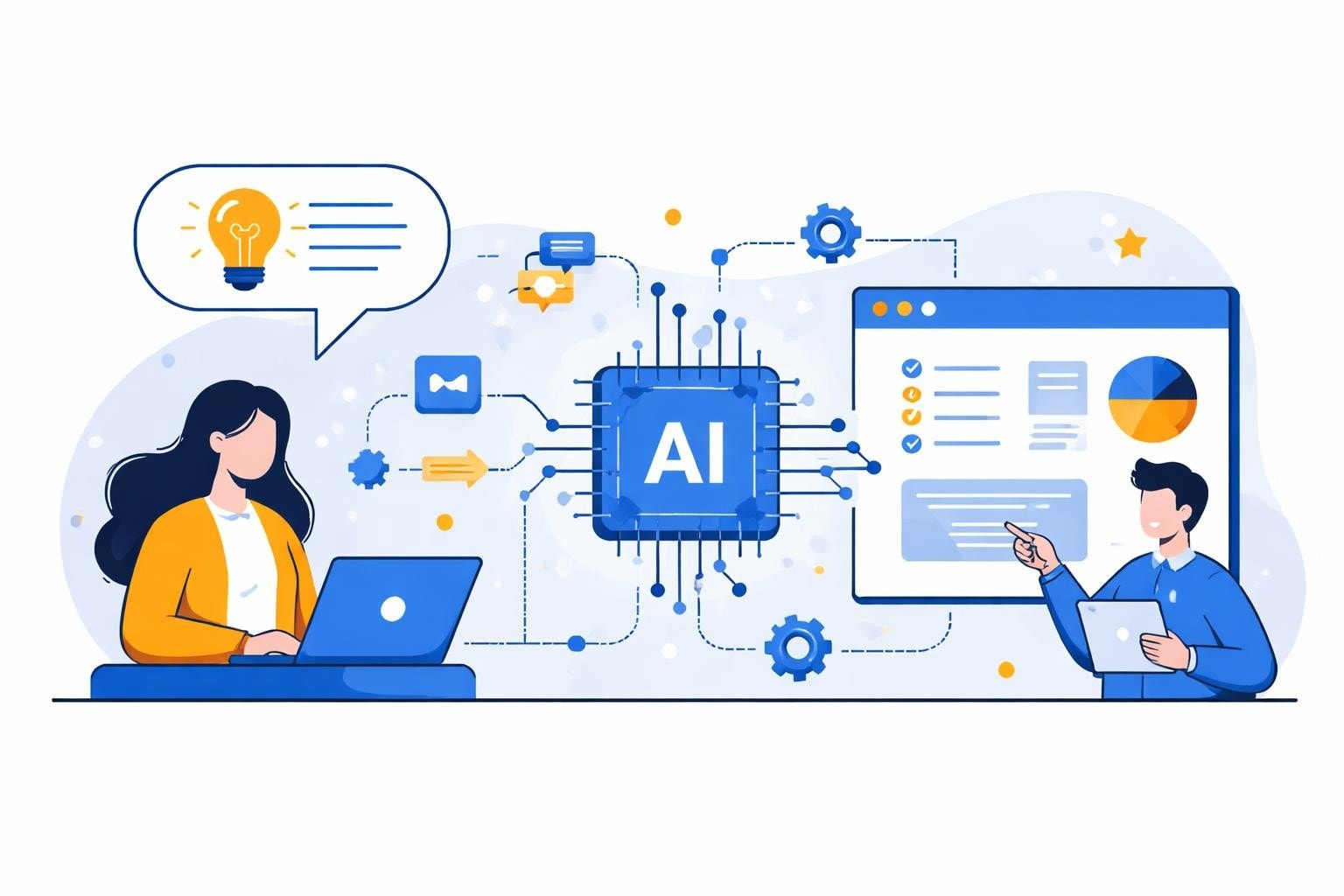
The software development landscape has experienced a seismic shift over the past two years, driven by artificial intelligence that can understand and execute natural language commands. Vibe coding tools have emerged as a revolutionary approach that enables anyone to build functional applications simply by describing what they want in plain English. This paradigm shift is democratizing software creation, allowing entrepreneurs, business analysts, and domain experts to participate directly in the development process without years of programming education. For agencies and enterprises seeking to accelerate their development cycles while maintaining quality, understanding these tools has become essential to staying competitive in 2026.
Understanding the Vibe Coding Revolution
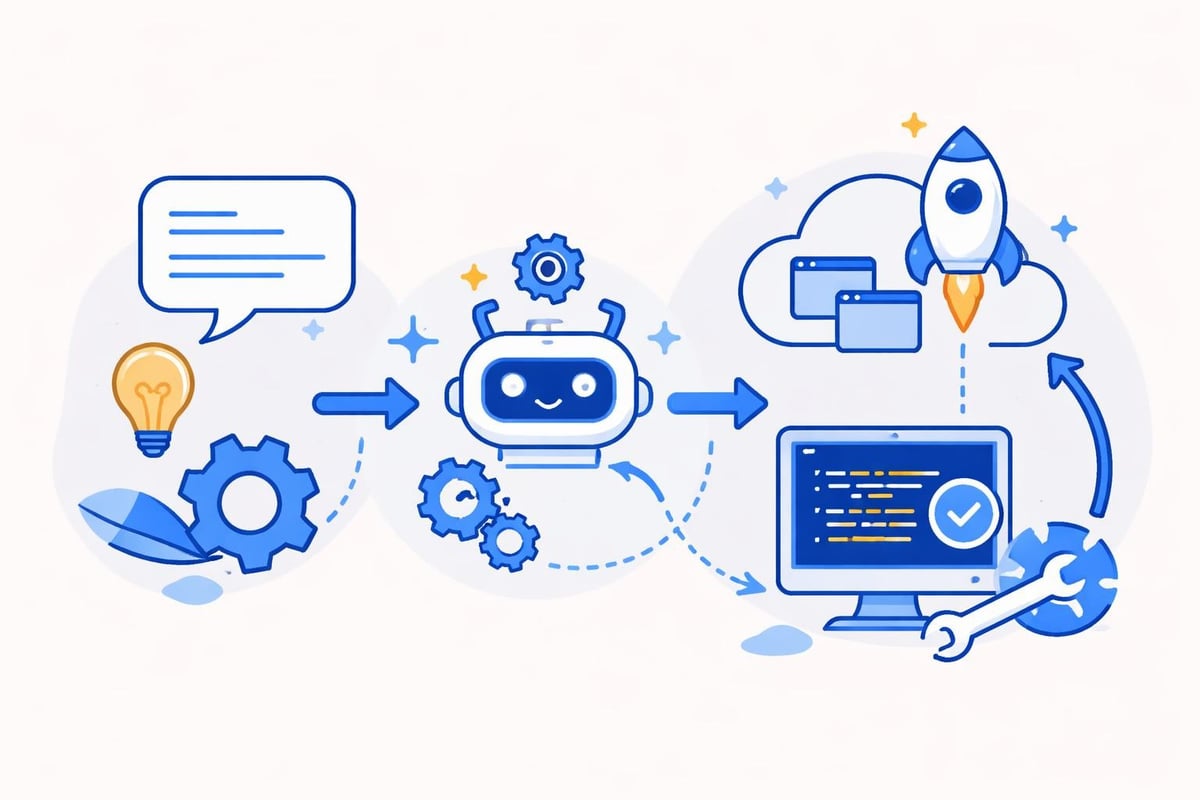
Vibe coding represents a fundamental departure from traditional programming paradigms. Instead of writing code syntax manually, developers and non-developers alike describe their desired functionality conversationally. The AI interprets these instructions, generates the underlying code, and iterates based on feedback. Google's introduction to vibe coding explains how this natural language approach removes technical barriers that previously prevented business stakeholders from participating in development.
The technology builds on large language models trained on billions of lines of code across multiple programming languages. These models understand not just syntax but also common patterns, architectural decisions, and best practices accumulated from decades of software engineering. When someone describes wanting "a dashboard that shows monthly sales by region with filtering options," the AI comprehends the data structures, UI components, and logic required to deliver that functionality.
How Vibe Coding Differs from Traditional Development
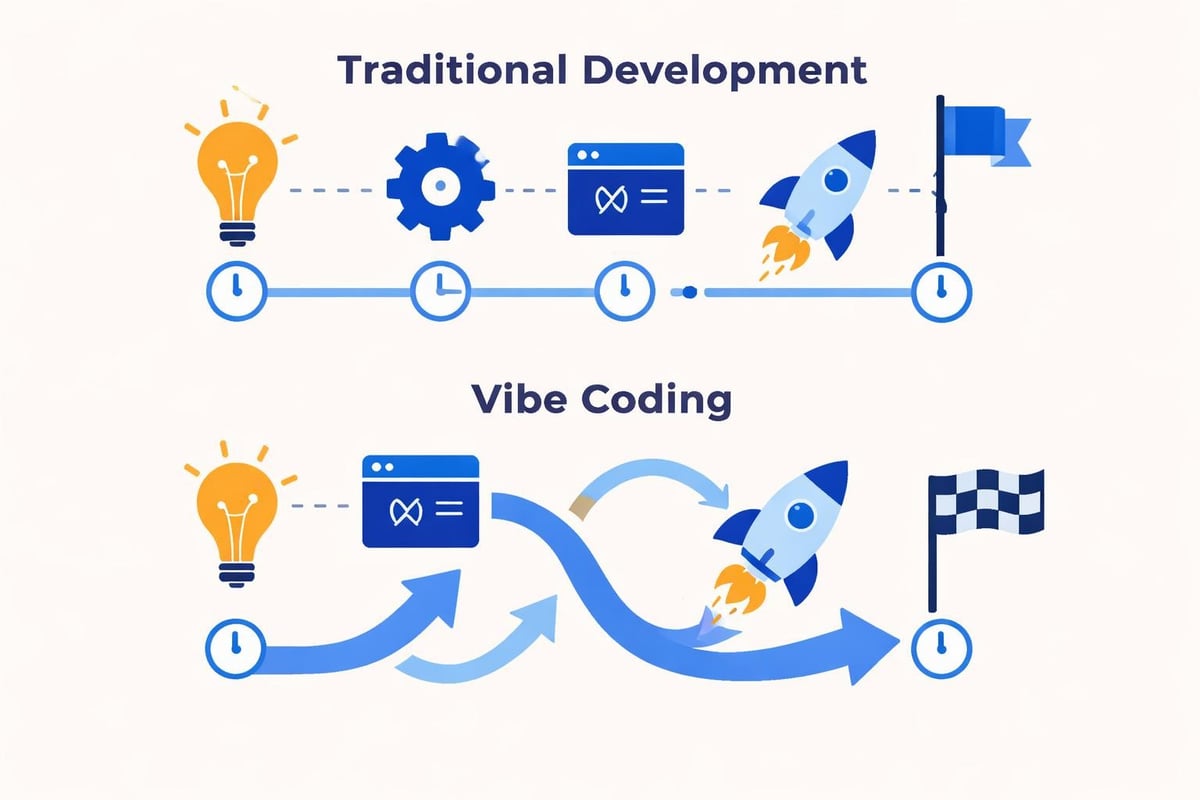
Traditional programming requires developers to translate business requirements into technical specifications, then implement those specs through precise syntax in a specific programming language. This multi-step translation process introduces opportunities for miscommunication and technical debt.
Key differences include:
- Abstraction level: Developers work at the conceptual level rather than implementation details
- Iteration speed: Changes happen through conversation rather than code refactoring
- Accessibility: Non-technical stakeholders can prototype and validate ideas independently
- Learning curve: Hours instead of months to become productive with basic applications
However, this firsthand account of using vibe coding tools reveals that creating production-ready applications still requires understanding software principles. The tools excel at generating functional prototypes quickly but sophisticated applications demand iterative refinement and architectural thinking.
Top Vibe Coding Tools Transforming Development in 2026
The vibe coding ecosystem has matured significantly, with platforms specializing in different use cases and complexity levels. DigitalOcean's comprehensive overview catalogs the leading solutions, each with distinct strengths for particular development scenarios.
Enterprise-Grade Platforms
| Platform | Best For | Key Strength | Integration Depth |
|---|---|---|---|
| Lovable | Full-stack web apps | React/TypeScript expertise | Deep framework knowledge |
| Cursor | IDE-native coding | Contextual code generation | Seamless developer workflow |
| Replit Agent | Educational projects | Collaborative features | Real-time multi-user editing |
| GitHub Copilot Workspace | Team development | Enterprise security | GitHub ecosystem integration |
Enterprise teams particularly value platforms that integrate with existing development workflows. These tools don't replace professional developers but amplify their productivity by handling boilerplate code, suggesting optimizations, and automating repetitive tasks.
Specialized Solutions
Beyond general-purpose platforms, specialized vibe coding tools target specific domains. Data analysis platforms generate Python scripts for data transformation. Mobile-focused tools create React Native or Flutter applications. Backend specialists generate API endpoints and database schemas from natural language service descriptions.
For teams already invested in no-code AI app development platforms, vibe coding tools complement existing workflows. They bridge the gap between visual builders and custom code requirements, enabling hybrid approaches that leverage both paradigms.
Selection criteria businesses should consider:
- Output quality: Does the generated code follow modern best practices?
- Customization depth: Can you refine and extend AI-generated code?
- Version control: How does the tool integrate with Git workflows?
- Team collaboration: Can multiple stakeholders contribute simultaneously?
- Cost structure: Does pricing align with your development volume?
Practical Applications for Modern Businesses
Vibe coding tools shine brightest in scenarios requiring rapid prototyping, iterative experimentation, and cross-functional collaboration. Startups use them to validate product concepts before committing to full development cycles. Enterprises deploy them for internal tools where speed matters more than architectural perfection.
Accelerating MVP Development
The traditional MVP timeline:
- Week 1-2: Requirements gathering and technical specification
- Week 3-4: Architecture design and technology selection
- Week 5-10: Core feature development
- Week 11-12: Testing and bug fixes
With vibe coding tools:
- Day 1-2: Conversational requirement definition
- Day 3-5: AI-generated prototype with core features
- Day 6-8: Iterative refinement based on stakeholder feedback
- Day 9-10: Quality assurance and deployment
This compression doesn't eliminate the need for experienced developers. Rather, it shifts their focus from writing boilerplate to architecting systems, reviewing AI-generated code, and handling complex business logic that requires human judgment.
Companies leveraging AI-assisted app builder platforms are discovering that combining vibe coding with visual development accelerates delivery even further. The visual builder handles UI layout while vibe coding tools generate custom functionality beyond the builder's native capabilities.
Internal Tool Development
Internal business applications represent the sweet spot for vibe coding tools. These applications prioritize functionality and rapid deployment over pixel-perfect design. IT teams can empower department managers to describe their workflow needs directly, with developers reviewing and refining the generated solutions.
A marketing team might describe: "We need a campaign tracker that imports data from our ad platforms, calculates ROI by channel, and sends weekly summary emails to stakeholders." A vibe coding tool translates this into a functional application within hours, not weeks.
This approach aligns perfectly with why enterprises are turning to no-code for internal tool development. The combination of speed, cost efficiency, and business user involvement delivers tangible ROI faster than traditional development approaches.
Navigating Benefits and Limitations
Like any transformative technology, vibe coding tools present both opportunities and challenges. Understanding these tradeoffs helps teams deploy them effectively while avoiding common pitfalls.
Documented Advantages
The comprehensive analysis of vibe coding pros and cons highlights several compelling benefits that resonate across different organization types.
Primary benefits include:
- Democratized development: Business stakeholders contribute directly to solution design
- Reduced time-to-market: Weeks become days for prototype delivery
- Lower initial costs: Less developer time required for early-stage projects
- Enhanced communication: Natural language reduces miscommunication between business and technical teams
- Rapid iteration: Changes happen conversationally rather than through code rewrites
Organizations report particular success when using vibe coding tools for proof-of-concept development. The ability to test ideas quickly before committing significant resources reduces wasted investment in features users don't actually need.
Critical Challenges
However, industry experts debate the wisdom of positioning vibe coding as a replacement for programming education. Several legitimate concerns temper the enthusiasm surrounding these tools.
| Challenge | Impact | Mitigation Strategy |
|---|---|---|
| Code quality variance | Inconsistent output quality | Implement code review processes |
| Security vulnerabilities | AI may introduce insecure patterns | Automated security scanning |
| Technical debt | Generated code may lack maintainability | Regular refactoring sprints |
| Over-reliance | Teams lose fundamental coding skills | Pair vibe coding with education |
| Limited context | AI doesn't understand full system architecture | Senior developer oversight |
The most successful implementations treat vibe coding tools as productivity multipliers for experienced developers rather than developer replacements. Teams maintain technical expertise while leveraging AI to handle routine coding tasks, allowing humans to focus on architecture, optimization, and complex problem-solving.
Integration Strategies for Development Teams
Successfully incorporating vibe coding tools into existing workflows requires thoughtful planning and clear boundaries. Teams that rush adoption without establishing guardrails often experience initial productivity gains followed by maintenance challenges as technical debt accumulates.
Establishing Development Guardrails
Recommended framework:
- Define appropriate use cases: Identify projects where speed matters more than architectural perfection
- Set quality standards: Establish code review requirements for AI-generated code
- Maintain human oversight: Require experienced developers to validate critical functionality
- Document decisions: Record why certain approaches were taken for future maintainers
- Plan for evolution: Build in refactoring time as applications mature
Teams working with AI coding assistant alternatives have learned that different tools excel in different scenarios. Some generate better frontend code, others handle backend logic more effectively, and still others specialize in specific frameworks or languages.
Hybrid Development Approaches
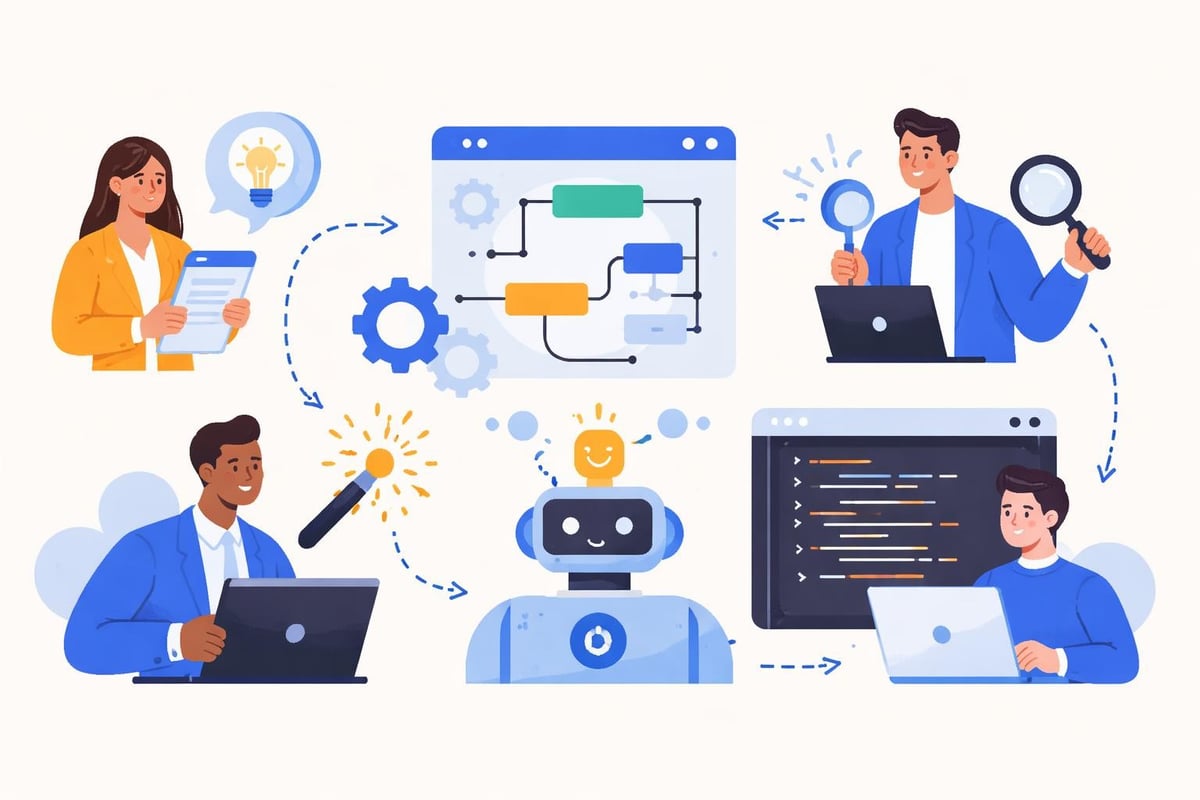
The most sophisticated teams combine multiple development paradigms based on project requirements. A single application might use:
- Visual no-code builders for standard CRUD operations and UI layouts
- Vibe coding tools for custom business logic and integrations
- Hand-written code for performance-critical components and complex algorithms
- Low-code platforms for workflow automation and process orchestration
This hybrid approach leverages each tool's strengths while compensating for weaknesses. For instance, teams might use visual builders from AI-based design to code tools to establish UI foundations, then employ vibe coding to implement custom functionality the visual builder doesn't support natively.
The Evolving Development Landscape
The rapid advancement of AI capabilities continues reshaping what's possible with vibe coding tools. Models released in late 2025 and early 2026 demonstrate significantly improved understanding of complex requirements, better architectural decisions, and more maintainable code output.
Current State of AI-Assisted Development
According to Taskade's practical guide, modern vibe coding platforms now handle sophisticated scenarios that would have required extensive manual coding just two years ago. These capabilities include multi-table database designs, authentication systems, payment integrations, and real-time collaboration features.
The tools have become particularly adept at framework-specific code generation. A platform that specializes in React generates components following current best practices, implements proper state management, and handles edge cases that early versions missed entirely.
Evolution trajectory:
- 2024: Basic prototypes with significant manual refinement needed
- 2025: Production-ready code for standard use cases
- 2026: Complex applications with minimal developer intervention
- 2027+: Anticipated architectural reasoning and system-wide optimization
Market Impact and Adoption Trends
Enterprise adoption has accelerated as tools mature and organizations recognize the competitive advantage of faster development cycles. Companies report development speed improvements of 40-60% for projects well-suited to vibe coding approaches.
However, concerns persist about potential negative impacts. Research suggesting vibe coding may harm open-source software highlights broader ecosystem effects as developers increasingly rely on AI-generated code rather than studying and contributing to open-source projects.
Selecting the Right Tool for Your Needs
With dozens of vibe coding tools available in 2026, choosing the right platform requires evaluating your specific requirements, team composition, and project characteristics. No single tool excels across all dimensions.
Evaluation Framework
Technical considerations:
- Programming languages and frameworks supported
- Integration capabilities with existing tools
- Scalability of generated applications
- Deployment options and hosting flexibility
- API access for programmatic interaction
Business considerations:
- Licensing costs and pricing models
- Support and training resources
- Community size and activity
- Vendor stability and roadmap
- Data privacy and security compliance
Teams should pilot multiple platforms on small projects before standardizing on a particular solution. What works brilliantly for web applications might prove inadequate for mobile development or data processing pipelines.
For organizations already committed to specific technology stacks, platform-aligned tools often deliver superior results. Teams building on Bubble's platform benefit from integrating vibe coding tools that understand Bubble's architecture and can generate compatible plugins or API integrations.
Future-Proofing Your Investment
The vibe coding landscape evolves rapidly, with new capabilities emerging monthly. Organizations should prioritize tools that demonstrate:
- Active development: Regular feature releases and improvements
- Standards compliance: Generated code follows industry best practices
- Export flexibility: Ability to extract and own generated code
- Migration paths: Clear upgrade routes as the platform evolves
- Community engagement: Active user base sharing knowledge and solutions
Building internal expertise across multiple platforms provides insurance against any single vendor's potential decline or acquisition. Cross-training team members ensures continuity even as the tooling landscape shifts.
Maximizing ROI from Vibe Coding Investments
Simply adopting vibe coding tools doesn't guarantee improved productivity or outcomes. Organizations achieving the highest returns follow deliberate implementation strategies that balance speed with sustainability.
Best Practices for Implementation
Successful teams establish clear processes before widespread adoption. They define which project types suit vibe coding approaches, set quality gates for AI-generated code, and maintain architectural oversight even as development accelerates.
Implementation checklist:
- Document coding standards and conventions
- Create templates for common application patterns
- Build a library of tested prompts and examples
- Establish code review procedures specific to AI-generated output
- Train team members on effective prompt engineering
- Set up automated testing to catch AI-introduced bugs
- Plan regular refactoring cycles to manage technical debt
Teams combining vibe coding with internal dashboard development tools report particularly strong results. The structured nature of dashboards aligns well with AI capabilities, while the internal focus tolerates imperfect initial implementations that can be refined over time.
Measuring Success
Key performance indicators:
| Metric | Target Improvement | Measurement Method |
|---|---|---|
| Development velocity | 40-60% faster | Sprint velocity comparison |
| Bug density | Maintained or improved | Defects per feature |
| Time to first prototype | 70-80% reduction | Project timeline analysis |
| Stakeholder satisfaction | Increased engagement | Survey feedback |
| Technical debt | Controlled growth | Code quality metrics |
Organizations should track these metrics before and after vibe coding adoption to validate that theoretical benefits translate into practical improvements for their specific context and team composition.
Vibe coding tools have matured from experimental curiosities into production-ready platforms that fundamentally change how software gets built in 2026. While they don't eliminate the need for experienced developers, they dramatically accelerate development cycles and democratize participation in the creation process. Whether you're seeking to validate a startup idea quickly or build internal tools for your enterprise, exploring how these AI-powered platforms fit your workflow can unlock significant competitive advantages. Big House Technologies specializes in helping organizations navigate the intersection of AI, no-code platforms, and traditional development, delivering scalable solutions that leverage the best of each approach to transform your ideas into fully functional products efficiently and cost-effectively.

About Big House
Big House is committed to 1) developing robust internal tools for enterprises, and 2) crafting minimum viable products (MVPs) that help startups and entrepreneurs bring their visions to life.
If you'd like to explore how we can build technology for you, get in touch. We'd be excited to discuss what you have in mind.
Other Articles
Master software design in 2025 with best practices, trends, and actionable strategies for robust, scalable, and user centric projects. Elevate your designs now.
Discover the 2025 guide to enterprise app development services, covering trends, technologies, and partner selection to drive digital transformation and growth.
Master Google Sheets AI in 2026 with expert tips on automation, integrations, and predictive analytics. Unlock smarter data management and futureproof your workflow.