
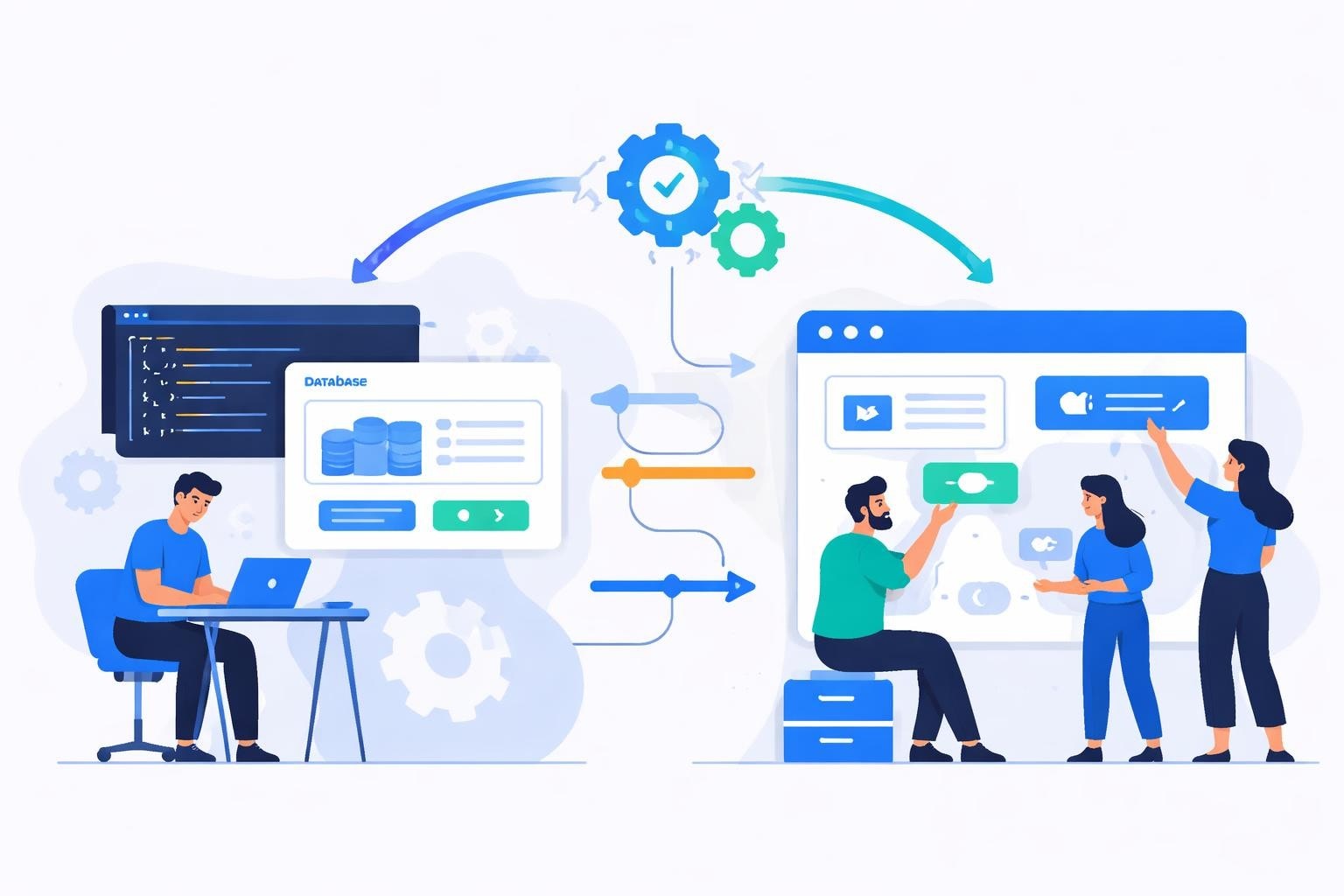
The software development landscape has undergone a remarkable transformation over the past decade, with no coding tools emerging as a powerful alternative to traditional programming. These platforms enable businesses to create sophisticated applications, automate workflows, and build digital products without writing a single line of code. For enterprises and startups alike, this shift represents not just a technological advancement, but a fundamental reimagining of who can build software and how quickly ideas can become reality.
What Are No Coding Tools and Why They Matter
No coding tools, also known as no-code development platforms, are visual software development environments that allow users to create applications through graphical user interfaces and configuration instead of traditional programming. These platforms utilize drag-and-drop components, pre-built templates, and logic-based workflows to construct everything from simple landing pages to complex enterprise applications.
The rise of these platforms addresses a critical challenge facing businesses today: the growing demand for digital solutions coupled with a persistent shortage of skilled developers. Traditional development requires specialized knowledge of programming languages, frameworks, and infrastructure, often taking months to deliver results. No coding tools democratize software creation, enabling business analysts, product managers, and entrepreneurs to build solutions themselves.
The Business Case for No-Code Development
Organizations are increasingly turning to no coding tools for several compelling reasons:
- Speed to market: Applications that traditionally took months can be built in weeks or even days
- Cost efficiency: Reduced dependency on expensive development resources
- Iterative development: Rapid prototyping and easy modifications based on user feedback
- Business user empowerment: Domain experts can build tools without technical intermediaries
- Reduced technical debt: Many platforms handle updates, security, and scaling automatically
Research shows that no-code platforms significantly impact digital product development, particularly for entrepreneurs who need to validate ideas quickly without substantial upfront investment in technical resources.
Types of No Coding Tools for Different Use Cases
The no-code ecosystem has evolved into a diverse marketplace with specialized tools for virtually every business need. Understanding these categories helps organizations select the right platform for their specific requirements.
Application Development Platforms
These comprehensive platforms enable users to build full-featured web and mobile applications. Bubble, for example, allows users to create database-driven applications with complex user authentication, payment processing, and API integrations. These tools are ideal for building MVPs for startups or creating internal enterprise tools.

Workflow Automation Tools
Automation platforms connect different services and automate repetitive tasks without coding. These tools excel at linking multiple applications together, triggering actions based on specific conditions, and moving data between systems. For instance, web UI automation leveraging large language models demonstrates how these platforms continue to evolve with AI capabilities.
Key capabilities include:
- Multi-step automation sequences
- Conditional logic and branching
- Data transformation and formatting
- Scheduled task execution
- Error handling and notifications
Database and Spreadsheet Tools
These platforms transform traditional databases and spreadsheets into powerful applications with user interfaces, automation, and collaboration features. They bridge the gap between basic data storage and full application development, perfect for teams already comfortable with spreadsheet-based workflows.
| Platform Type | Best For | Complexity Level | Typical Timeline |
|---|---|---|---|
| App Builders | Custom web/mobile apps | Medium to High | 2-12 weeks |
| Automation | Connecting services | Low to Medium | Hours to days |
| Database Tools | Data management apps | Low to Medium | Days to weeks |
| Website Builders | Marketing sites | Low | Hours to days |
| AI Prototyping | AI product development | Medium | 1-4 weeks |
Internal Tool Builders
Organizations increasingly rely on internal tool builders to create custom dashboards, admin panels, and operational interfaces. These internal tool platforms provide pre-built components specifically designed for common business operations like inventory management, customer support, and data analysis.
Selecting the Right No Coding Tools for Your Business
Choosing the appropriate platform requires careful evaluation of your specific needs, technical requirements, and long-term goals. The decision shouldn't be based solely on popularity or marketing claims.
Assessment Criteria
Start by documenting your project requirements in detail. Consider these critical factors:
- Scalability needs: Will your application need to support 100 users or 100,000?
- Integration requirements: What existing systems must connect to your new solution?
- Customization depth: How much control do you need over functionality and design?
- Data complexity: Are you managing simple lists or complex relational databases?
- Team capabilities: What's the technical sophistication of your team members?
The landscape of no-code tools continues to expand, making it essential to understand which category aligns with your use case before diving into specific platform comparisons.
Platform Evaluation Process
Research multiple platforms within your chosen category. Most no coding tools offer free trials or freemium tiers, allowing hands-on evaluation before commitment. Build a simple version of your intended application on 2-3 platforms to compare:
- Learning curve and documentation quality
- Available templates and components
- Community support and resources
- Performance and reliability
- Pricing structure as you scale
- Export options and data portability
According to research on top no-code tools, market preferences often vary significantly based on industry sector and specific use case requirements.

Building Enterprise-Grade Solutions with No Coding Tools
The misconception that no coding tools are only suitable for simple projects or prototypes has been thoroughly debunked by 2026. Enterprises across industries now rely on these platforms for mission-critical applications, with proper architecture and governance ensuring reliability and security.
Architecture Best Practices
Structure your no-code applications with the same rigor as traditional development:
- Design database schemas before building user interfaces
- Implement proper data validation and error handling
- Create reusable components and workflows
- Establish naming conventions and documentation standards
- Plan for multi-environment deployment (development, staging, production)
When enterprises build internal tools, they benefit from reduced development costs while maintaining professional-grade applications.
Security and Compliance Considerations
Enterprise adoption requires addressing security, compliance, and data governance requirements. Leading no coding tools now provide:
- SOC 2 and ISO certifications
- GDPR and CCPA compliance features
- Role-based access control (RBAC)
- Audit logging and monitoring
- Data encryption at rest and in transit
- Single sign-on (SSO) integration
Organizations must still conduct due diligence, ensuring their chosen platform meets industry-specific regulatory requirements and internal security policies.
Performance Optimization
While no coding tools abstract away technical complexity, understanding performance implications remains important. Optimize your applications by:
- Minimizing database queries through proper indexing
- Implementing pagination for large data sets
- Using conditional visibility instead of loading all elements
- Leveraging caching where available
- Optimizing image sizes and asset delivery
- Testing under realistic load conditions
The Role of AI in Modern No Coding Tools
Artificial intelligence has become deeply integrated into the no-code ecosystem, dramatically expanding what's possible without traditional programming. AI-enhanced platforms now offer capabilities that were previously available only through custom development.
AI-Powered Features
Modern no coding tools incorporate AI in several transformative ways. Natural language processing enables users to describe desired functionality in plain English, with the platform generating the necessary workflows automatically. Computer vision capabilities allow applications to analyze images, while machine learning models can be trained on custom data without data science expertise.
The emergence of AI prototyping frameworks using AutoML demonstrates how non-technical users can now build sophisticated AI-powered products through no-code interfaces.
Practical AI Applications
- Smart data processing: Automatic categorization, sentiment analysis, and entity extraction
- Predictive analytics: Forecasting trends based on historical data
- Content generation: Creating text, images, or variations automatically
- Intelligent automation: Context-aware workflows that adapt to different scenarios
- Natural language interfaces: Chat-based interactions with your applications
Organizations exploring AI software development find that no-code platforms provide an accessible entry point for integrating AI capabilities into their operations.
Common Challenges and How to Overcome Them
Despite their advantages, no coding tools present certain challenges that organizations should anticipate and address proactively. Understanding these limitations helps set realistic expectations and plan accordingly.
Platform Limitations and Workarounds
Every no-code platform has boundaries in terms of customization, performance, or specific functionality. When you encounter these limits:
- Explore the plugin ecosystem: Most platforms offer third-party extensions
- Use custom code blocks: Many tools allow embedding code snippets when needed
- Implement API integrations: Connect to external services for specialized functionality
- Consider hybrid approaches: Combine no-code with selective custom development
- Consult with specialists: Work with agencies experienced in pushing platform boundaries
| Challenge | Impact Level | Common Solutions |
|---|---|---|
| Customization limits | Medium | Custom code injection, API integration |
| Performance at scale | High | Architecture optimization, caching strategies |
| Vendor lock-in | Medium | Choose platforms with export capabilities |
| Learning curve | Low | Structured training, community resources |
| Complex logic | Medium | Break into smaller workflows, use conditions |
Team Training and Adoption
Successful implementation requires investment in team education. Effective training strategies include:
- Starting with simple projects to build confidence
- Creating internal documentation and best practices
- Designating platform champions within teams
- Scheduling regular knowledge-sharing sessions
- Leveraging official certification programs when available
The transition from traditional development thinking to visual building requires a mental shift. Teams accustomed to code-based solutions may initially resist, but hands-on experience typically converts skeptics once they experience the velocity gains.

Measuring ROI and Success Metrics
Quantifying the value delivered by no coding tools helps justify continued investment and guides platform selection decisions. Organizations should establish clear metrics before starting projects.
Key Performance Indicators
Track these metrics to demonstrate no-code value:
- Development velocity (time from concept to deployment)
- Cost per application compared to traditional development
- Number of business users empowered to build solutions
- Reduction in IT backlog and ticket volume
- Time to market for new features
- Maintenance and update efficiency
- User adoption rates for internally built tools
Many organizations find that no coding tools reduce development costs by 50-70% while decreasing time to market by similar margins. These gains compound over time as teams become more proficient.
Long-term Strategic Value
Beyond immediate project metrics, consider broader organizational impacts. No-code adoption often leads to increased innovation as more team members can experiment with solutions. It also improves business-IT alignment, with technical and non-technical colleagues collaborating more effectively using shared visual tools.
The selection of the right no-code platform significantly influences these outcomes, making initial platform choice crucial for long-term success.
Future Trends in No Coding Tools
The no-code movement continues to evolve rapidly, with several trends shaping the landscape through 2026 and beyond. Understanding these directions helps organizations make forward-looking platform decisions.
Emerging Capabilities
Expect continued advancement in:
- More sophisticated AI integration with generative capabilities
- Improved collaboration features for distributed teams
- Better mobile development experiences
- Enhanced testing and debugging tools
- Stronger enterprise governance and compliance features
- Greater interoperability between platforms
The diversity of no-code tools available continues expanding, with specialized platforms emerging for specific industries like healthcare, finance, and logistics.
The Convergence of No-Code and Traditional Development
Rather than completely replacing traditional development, no coding tools are increasingly complementing it. Hybrid approaches leverage no-code for rapid prototyping and internal tools while using custom code for performance-critical or highly specialized components.
Professional developers themselves are adopting these platforms to accelerate their work, using no-code tools for scaffolding, admin interfaces, and standard functionality while focusing their coding efforts on unique business logic and complex algorithms.
Organizations that hire Bubble developers often seek professionals who understand both no-code platforms and traditional programming, enabling them to choose the right tool for each situation.
Building a No-Code Strategy for Your Organization
Successful no-code adoption requires more than selecting a platform and building applications. It demands a thoughtful organizational strategy that addresses governance, standards, and long-term vision.
Governance Framework
Establish clear guidelines for when and how to use no coding tools:
- Define approval processes for new applications
- Set standards for naming, documentation, and architecture
- Determine data ownership and access policies
- Create security review procedures
- Establish platform evaluation criteria
- Plan for application lifecycle management
Without governance, organizations risk creating "shadow IT" sprawl, with disconnected applications that become difficult to maintain and secure.
Center of Excellence Model
Many enterprises establish a no-code center of excellence to:
- Evaluate and certify platforms for organizational use
- Provide training and support to business units
- Develop reusable components and templates
- Share best practices across teams
- Monitor application portfolio health
- Maintain relationships with platform vendors
This centralized approach balances empowerment with oversight, ensuring teams have freedom to innovate while maintaining organizational standards.
Partner Selection for Complex Projects
While no coding tools enable self-service development, complex enterprise projects often benefit from experienced partners. When evaluating no-code development agencies, look for:
- Deep platform expertise and certifications
- Portfolio demonstrating relevant industry experience
- Structured development methodology
- Clear communication and project management practices
- Post-launch support and training offerings
- Ability to scale teams based on project needs
Professional agencies bring not just technical skills but also accumulated knowledge of common pitfalls and proven patterns that accelerate delivery.
No coding tools have fundamentally changed how organizations approach software development, enabling faster, more cost-effective solutions without sacrificing quality or scalability. Whether you're building internal tools, customer-facing applications, or exploring innovative AI-powered products, these platforms provide accessible paths to digital transformation. Big House Technologies specializes in helping enterprises and startups leverage no-code and AI platforms like Bubble and Lovable to build scalable solutions quickly and efficiently, providing comprehensive support from initial scoping through deployment and beyond.

About Big House
Big House is committed to 1) developing robust internal tools for enterprises, and 2) crafting minimum viable products (MVPs) that help startups and entrepreneurs bring their visions to life.
If you'd like to explore how we can build technology for you, get in touch. We'd be excited to discuss what you have in mind.
Other Articles
Discover the 7 best AI design graphic tools for 2025 that streamline workflows, boost creativity, and deliver professional results for any project or business.
Discover the best AI tools for coding in 2026. Learn how AI-powered development platforms boost productivity, streamline workflows, and transform software creation.
Stay ahead in sw dev with this essential 2025 guide covering trends, skills, AI integration, security, and practical steps for modern software development success.