
The pace of change in the enterprise world is accelerating, pushing organizations to seek out smarter, faster ways to manage their operations. Traditional development cycles often slow teams down, making it hard to keep up with evolving demands.
That is where no-code platforms for enterprise workflows come in. These tools let anyone, regardless of technical background, build, automate, and optimize business processes with remarkable speed and flexibility.
In this article, we will dive into the seven most essential no-code platforms for enterprise workflows in 2026. You will discover their features, pricing, and unique strengths, helping you choose the right solution for your team’s needs.
Why No-Code Platforms Are Transforming Enterprise Workflows
The enterprise world is experiencing a profound shift as organizations seek agility, speed, and innovation. No-code platforms for enterprise workflows have become the backbone of this transformation, making powerful digital solutions accessible to all teams, not just IT.
A surge in adoption is clear. According to Gartner forecasts 70% adoption by 2025, over 70% of new enterprise applications will be built using no-code or low-code tools in the next few years. This rapid growth is driven by a need to innovate quickly, automate repetitive tasks, and stay ahead in competitive markets.
One of the most significant impacts of no-code platforms for enterprise workflows is the democratization of development. No longer is software creation the sole domain of technical experts. Now, business analysts, project managers, and operations staff can design and deploy apps tailored to their exact needs. This shift empowers teams to solve problems faster and fosters a culture of innovation across departments.
Cost and time savings are another major draw. Enterprises using no-code platforms for enterprise workflows often see delivery times cut by up to five times and costs reduced by three to four times compared to traditional development. With fewer resources needed for coding and testing, organizations can reallocate budgets to other strategic initiatives and see faster returns on investment.
Flexibility and scalability are essential in today's dynamic business environment. No-code platforms for enterprise workflows allow organizations to adapt processes quickly as demands change. Whether scaling operations, adding new features, or pivoting business models, these platforms provide the agility enterprises need to thrive.
Security and compliance remain top concerns for large organizations. Modern no-code platforms for enterprise workflows offer robust security controls, including data encryption, access management, and detailed audit trails. Many solutions are built to meet strict regulatory standards, ensuring that sensitive data and workflows remain protected.
Integration with existing systems is seamless with leading no-code platforms for enterprise workflows. Sophisticated API and data connector capabilities mean enterprises can connect their new tools with legacy ERP, CRM, and HRIS applications without disruption. For example, a Fortune 500 company recently automated its HR onboarding process through a no-code platform, reducing manual effort by 60% and accelerating employee ramp-up.
In summary, no-code platforms for enterprise workflows are not just a trend—they are a strategic imperative for organizations looking to innovate, optimize, and stay ahead in a rapidly changing digital landscape.
7 Essential No-Code Platforms for Enterprise Workflows in 2026
The market for no-code platforms for enterprise workflows has never been more diverse or powerful. With businesses racing to automate, innovate, and adapt, the right platform can be the difference between leading and lagging. Below, we explore the seven most essential no-code platforms for enterprise workflows in 2026. Each brings unique strengths, pricing models, and real-world impact to the table.
If you're unsure how to match these platforms to your organization's needs, you may find this Choosing the right no-code platform guide useful.
1. Bubble
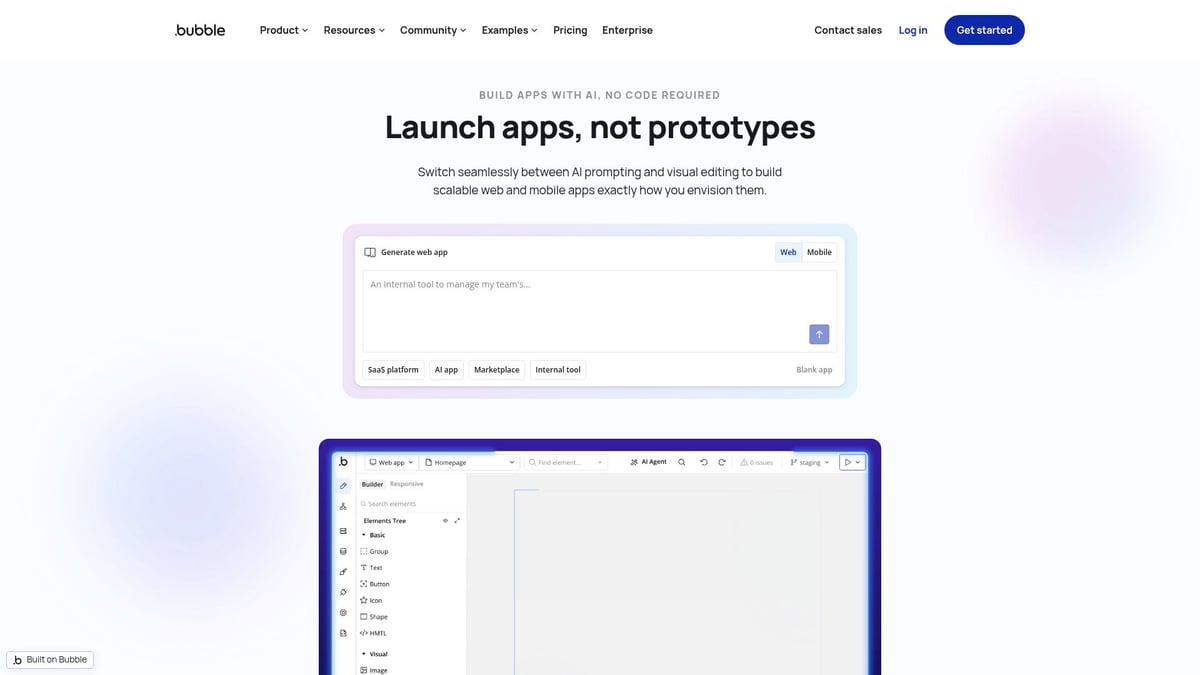
Bubble stands at the forefront of no-code platforms for enterprise workflows. Its intuitive drag-and-drop interface allows teams to build sophisticated web applications, automate workflows, and manage databases without traditional coding.
Pricing:
- Free plan available
- Paid plans from $32/month
- Custom enterprise pricing
Core Features:
- Visual app builder
- Workflow automation
- API integrations
- Responsive design
- Plugin marketplace
Key Benefits:
- Highly customizable for complex logic
- Supports scalable internal tools
- Robust community and plugin ecosystem
Ideal For:
- Enterprises needing custom web apps
- Internal tools
- Client portals
Pros:
- Powerful and flexible
- Extensive support resources
Cons:
- Learning curve for advanced features
- Mobile optimization requires attention
Example:
Major startups and enterprises leverage Bubble to develop scalable SaaS products and internal systems, reducing reliance on IT while accelerating time-to-market.
Bubble is a popular choice among no-code platforms for enterprise workflows, especially for organizations prioritizing customization and rapid iteration.
2. Big House Technologies
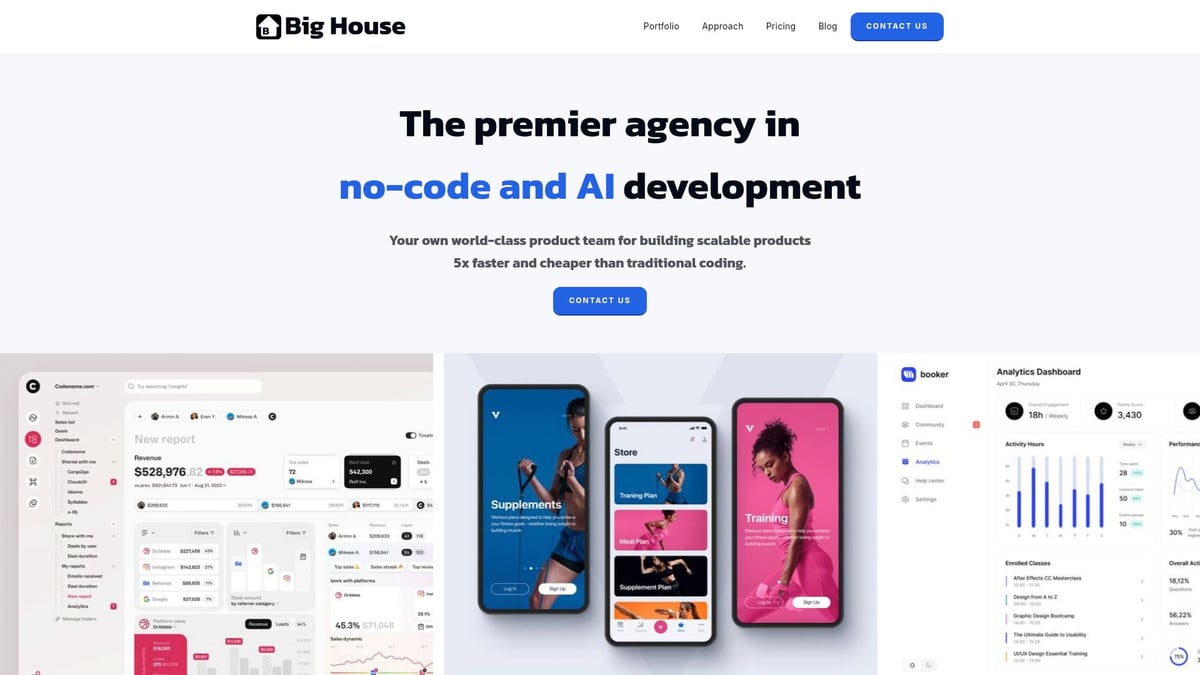
Big House Technologies is a full-service no-code development partner specializing in end-to-end delivery of enterprise-grade solutions. The platform excels in integrating AI, rapid prototyping, and rigorous QA—making it one of the most versatile no-code platforms for enterprise workflows.
Pricing:
- Basic (for MVPs)
- Growth (accelerated dev)
- Enterprise (custom solutions)
- Full details on Pricing page
Core Features:
- End-to-end no-code development
- AI/ML integration
- UI/UX design
- QA/testing
- Rapid prototyping
Key Benefits:
- 3-5x faster and more cost-effective than traditional agencies
- Deep Bubble expertise
- Collaborative, transparent approach
Ideal For:
- Enterprises and startups seeking custom, scalable software with AI capabilities
Pros:
- Full-service delivery
- Rigorous quality assurance
- Proven cross-industry success
Cons:
- Custom pricing may require consultation
- Focused mainly on Bubble and Lovable platforms
Example:
Big House Technologies helped IMSI (Oil & Gas) save €2M by reducing rework and improving operational efficiency.
As one of the most adaptable no-code platforms for enterprise workflows, Big House Technologies is a strong fit for teams seeking both speed and depth in their software initiatives.
3. Unqork
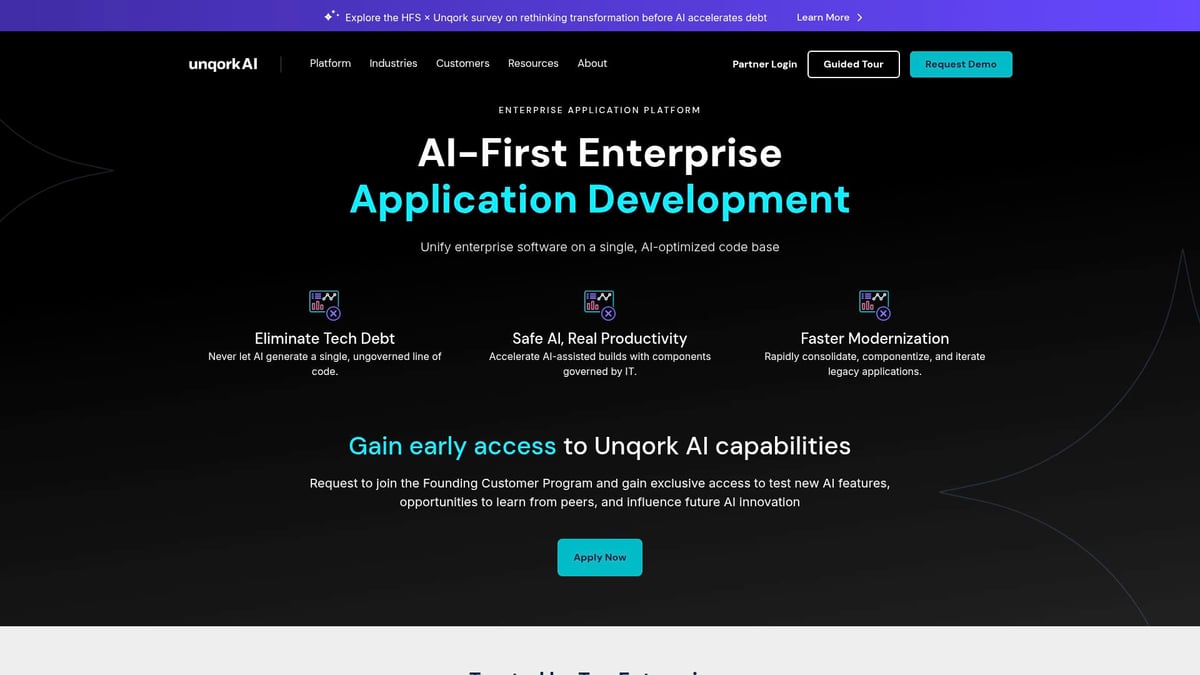
Unqork is purpose-built for regulated industries, offering one of the most secure and scalable no-code platforms for enterprise workflows. Its visual development environment and robust compliance features make it a favorite among banks, insurers, and healthcare providers.
Pricing:
- Custom enterprise pricing
Core Features:
- Visual development
- Workflow automation
- Advanced security and compliance
- Cloud-native architecture
- Enterprise integrations
Key Benefits:
- No code required
- High scalability
- Stringent compliance controls
Ideal For:
- Finance, insurance, healthcare
- Large enterprises needing secure, compliant workflow automation
Pros:
- Enterprise-grade security
- Rapid deployment
- Robust governance
Cons:
- Higher cost
- Less flexibility for smaller teams
Example:
Goldman Sachs and Liberty Mutual use Unqork to build mission-critical, compliant enterprise applications.
For organizations operating in regulated sectors, Unqork is among the leading no-code platforms for enterprise workflows, prioritizing security without sacrificing agility.
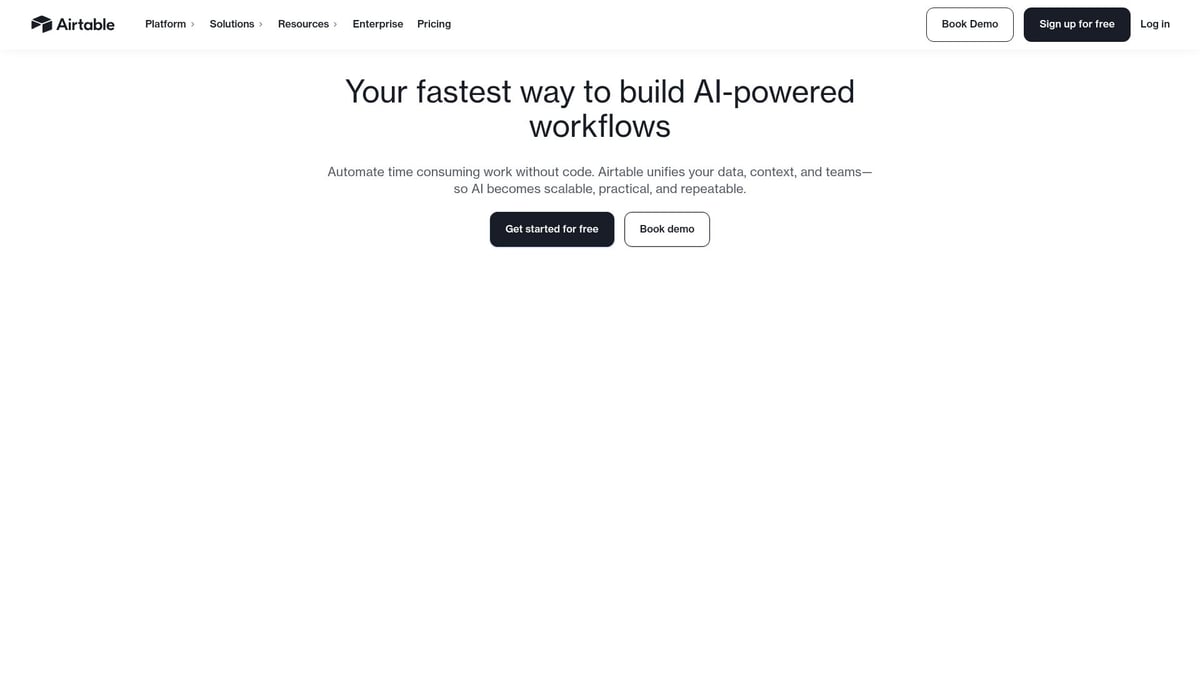
4. Airtable
Airtable reimagines the spreadsheet as a powerful database, making it one of the most approachable no-code platforms for enterprise workflows. Its blend of flexibility and automation unlocks collaboration and data-driven processes across departments.
Pricing:
- Free tier
- Paid plans from $20/user/month
- Enterprise pricing available
Core Features:
- Spreadsheet-database hybrid
- Automation tools
- Real-time collaboration
- Integrations (Slack, Salesforce, etc.)
Key Benefits:
- Intuitive, familiar interface
- Flexible data modeling
- Strong automation and integration capabilities
Ideal For:
- Project management
- Marketing operations
- CRM
- Content calendars
Pros:
- Easy to use
- Extensive templates
- Powerful API
Cons:
- Advanced features require paid plans
- May not suit highly complex workflows
Example:
Netflix leverages Airtable for content production workflows, enhancing efficiency and visibility.
Airtable stands out among no-code platforms for enterprise workflows, especially for teams looking to streamline collaboration and automate routine tasks.
5. OutSystems
OutSystems is a heavyweight in the world of no-code platforms for enterprise workflows, catering to organizations with complex, mission-critical needs. Its full-stack capabilities and built-in DevOps tools empower IT and business teams alike.
Pricing:
- Free edition
- Enterprise plans with custom pricing
Core Features:
- Full-stack visual development
- Workflow automation
- Deployment management
- Enterprise integrations
Key Benefits:
- Build complex apps quickly
- Strong mobile support
- Built-in DevOps for seamless deployment
Ideal For:
- Large organizations
- Mission-critical, high-complexity workflows
Pros:
- Robust scalability
- Strong security
- Active support and community
Cons:
- Steeper learning curve
- Premium pricing
Example:
Mercedes-Benz digitized global supply chain workflows using OutSystems, improving speed and control.
When evaluating no-code platforms for enterprise workflows, OutSystems is a top contender for enterprises needing advanced capabilities and scale.
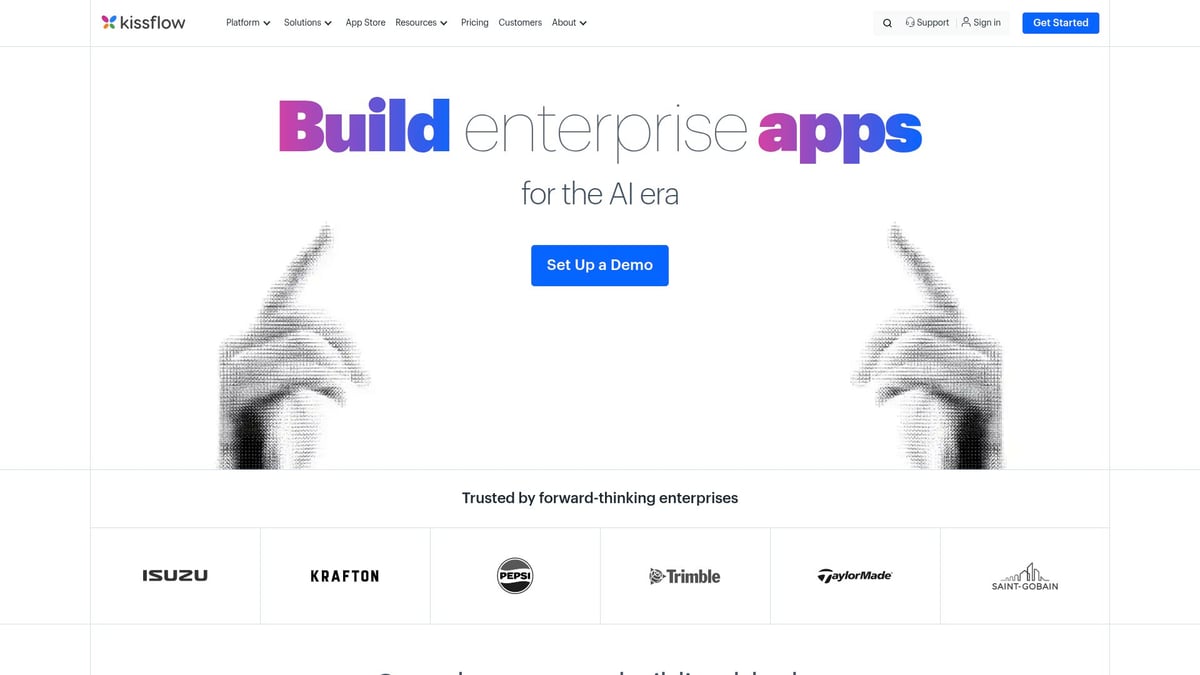
6. Kissflow
Kissflow offers a streamlined, user-friendly approach to workflow automation, making it one of the most accessible no-code platforms for enterprise workflows. Its focus on simplicity and rapid deployment appeals to business users across HR, procurement, and finance.
Pricing:
- Starts at $18/user/month
- Enterprise pricing available
Core Features:
- Workflow automation
- Process management
- Form builder
- Analytics and reporting
- Integrations
Key Benefits:
- Fast deployment
- User-friendly interface
- Strong reporting and analytics
Ideal For:
- HR
- Procurement
- Finance
- IT service management
Pros:
- Simple, intuitive UI
- Wide range of templates
- Good for non-technical users
Cons:
- Limited customization for highly complex needs
Example:
Domino’s automated franchisee onboarding with Kissflow, accelerating processes and reducing errors.
Kissflow's straightforward design ensures it remains a favorite among no-code platforms for enterprise workflows, particularly for teams seeking easy adoption.
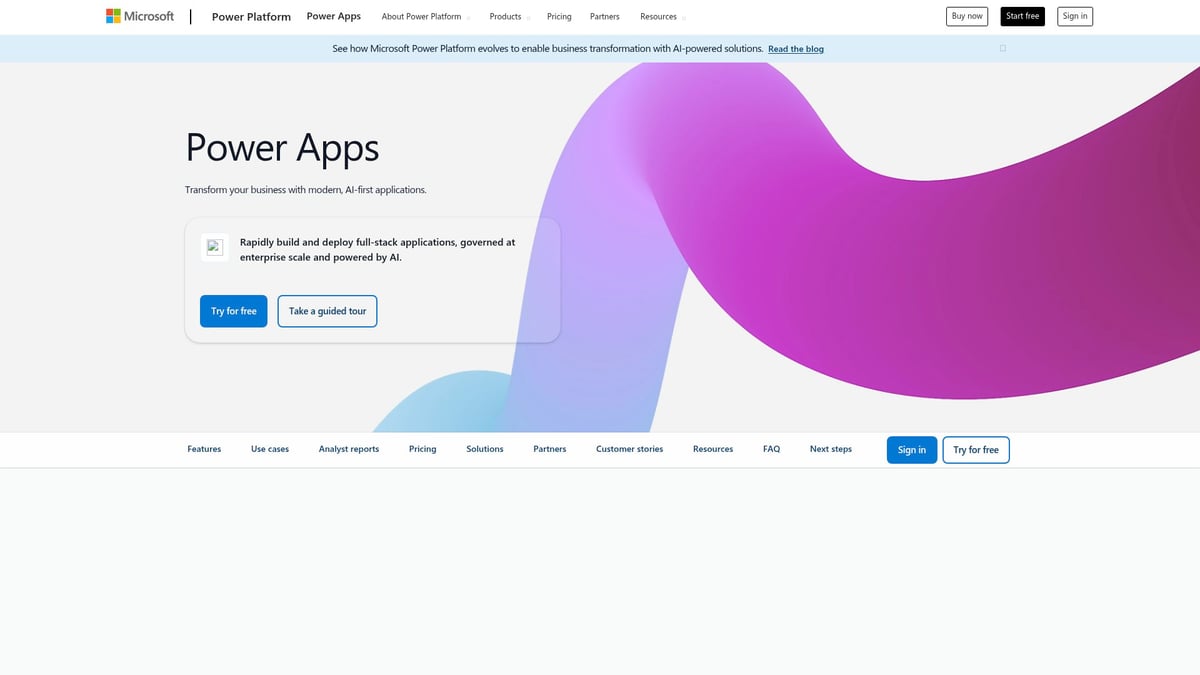
7. Microsoft Power Apps
Microsoft Power Apps is a natural extension for organizations already invested in the Microsoft ecosystem. As one of the most integrated no-code platforms for enterprise workflows, it empowers teams to automate, connect, and scale with familiar tools and robust security.
Pricing:
- From $5/user/app/month
- Premium and enterprise plans available
Core Features:
- App builder
- Workflow automation
- Deep integration with Microsoft 365
- AI builder
- Data connectors
Key Benefits:
- Seamless with Microsoft tools
- Enterprise-grade security
- Scalable for large organizations
Ideal For:
- Enterprises using Microsoft 365
- Automating internal processes
Pros:
- Deep integration with existing Microsoft stack
- Robust support and resources
Cons:
- Best suited for organizations already within Microsoft environment
Example:
Coca-Cola Bottling streamlined field operations using Power Apps, improving service and responsiveness.
Among no-code platforms for enterprise workflows, Microsoft Power Apps excels for businesses seeking deep integration and familiar interfaces.
Platform Comparison Table
| Platform | Best For | Pricing | Key Strength |
|---|---|---|---|
| Bubble | Custom web apps, SaaS | Free, from $32/month | Highly customizable, plugins |
| Big House Tech | AI-powered solutions | Custom | Full-service, rapid delivery |
| Unqork | Regulated industries | Custom | Security, compliance |
| Airtable | Collaboration, PM | Free, from $20/user/mo | Intuitive, flexible, integrations |
| OutSystems | Complex, mission-critical apps | Free, custom enterprise | Scalability, DevOps |
| Kissflow | HR, procurement, finance | From $18/user/mo | User-friendly, fast deployment |
| Power Apps | Microsoft ecosystem | From $5/user/app/mo | Deep integration, security |
Choosing from these no-code platforms for enterprise workflows can redefine how your organization builds, automates, and scales. Each solution offers a distinct mix of features, pricing, and industry alignment, ensuring that there is a perfect fit for every enterprise workflow challenge.
Key Criteria for Selecting a No-Code Platform for Enterprises
Choosing the right no-code platforms for enterprise workflows is crucial to unlocking true business agility and maximizing ROI. With so many options available, how do you ensure your platform meets both current and future organizational needs? It all comes down to a clear understanding of five essential criteria.
Security and Compliance
For enterprises, data security and regulatory compliance are non-negotiable. The best no-code platforms for enterprise workflows provide enterprise-grade security features such as SOC2, HIPAA, and GDPR compliance. Robust data encryption, granular access controls, and detailed audit trails are must-haves. For example, Unqork’s platform is trusted by financial services firms for its advanced compliance capabilities. To dive deeper into why security is a top concern, check out the benefits of no-code in enterprises. Always evaluate how each platform manages risk and protects sensitive information.
Scalability and Performance
As your organization grows, your chosen no-code platforms for enterprise workflows must handle increased users and data without performance dips. Look for platforms that offer auto-scaling, performance monitoring dashboards, and uptime SLAs. OutSystems, for instance, supports global operations with high reliability. Scalability ensures your workflows remain seamless during peak business periods, keeping productivity high and minimizing disruptions.
Integration Capabilities
Seamless integration with existing systems is vital for successful no-code platforms for enterprise workflows. Consider whether a platform offers native connectors for popular tools like Salesforce, Slack, or SAP, or if it supports custom API integrations. Airtable, for example, shines with its flexible integration options, making it easy to connect data across your tech stack. Evaluate the platform’s ability to sync with ERP, CRM, HRIS, and legacy systems for a unified digital ecosystem.
Customization and Flexibility
Every enterprise has unique processes, so customization is key. Leading no-code platforms for enterprise workflows allow you to tailor workflows, logic, and user interfaces to your exact specifications. Bubble’s plugin marketplace extends core functionality, enabling deep customization without sacrificing speed. Prioritize platforms that offer extensibility, allowing your team to innovate and adapt as business needs evolve.
Cost and ROI
Understanding the true cost structure is essential when comparing no-code platforms for enterprise workflows. Analyze subscription models, potential hidden fees, and value-added features. Many enterprises report 3–4x cost savings and rapid payback periods with no-code adoption. Review case studies and ROI calculators to ensure your investment aligns with long-term business goals. The right platform should deliver measurable efficiency gains and financial benefits.
Future Trends: The Evolution of No-Code for Enterprise Workflows
The future of no-code platforms for enterprise workflows is unfolding quickly, blending new technologies and shifting how businesses innovate. As organizations seek speed and agility, the next era of no-code will be shaped by AI, automation, industry specialization, and advanced governance. Here’s what you can expect.
AI and Automation Integration
AI is rapidly becoming a core feature within no-code platforms for enterprise workflows. Expect smarter automations, predictive analytics, and natural language processing that empower teams to automate complex decision-making. Platforms are introducing AI-driven bots and tools that learn from data, offering proactive suggestions for process improvement. For a deeper dive on how these trends are shaping the future, see Future of no-code development.
Hyperautomation
Hyperautomation is set to redefine how enterprises approach efficiency. By combining no-code, robotic process automation (RPA), and AI, companies can automate entire processes from start to finish. This trend will enable organizations to eliminate manual work, reduce errors, and create seamless, interconnected workflows across departments.
Citizen Development Movement
One of the most significant shifts is the rise of citizen developers. With no-code platforms for enterprise workflows, business users outside of IT are empowered to build and deploy their own apps. This democratization sparks innovation and accelerates digital transformation, while governance frameworks help maintain security and oversight.
Industry-Specific Solutions
No-code platforms for enterprise workflows are becoming increasingly specialized. Vendors are developing vertical solutions tailored for healthcare, finance, logistics, and more. These platforms offer industry-specific templates, compliance tools, and integrations, making it easier for enterprises to adopt no-code with confidence in regulated environments.
Enhanced Security and Governance
As adoption grows, so does the need for robust security and governance. The latest no-code platforms for enterprise workflows are investing in advanced compliance features, granular permission controls, and centralized monitoring. These enhancements ensure that organizations can scale innovation while maintaining data integrity and regulatory standards.
Real-World Case Studies: No-Code Success Stories in Enterprises
Enterprises worldwide are unlocking dramatic results by adopting no-code platforms for enterprise workflows. These success stories illustrate how organizations are transforming operations, accelerating innovation, and driving measurable value through no-code solutions.
Digital Transformation at Scale
Major enterprises are leveraging no-code platforms for enterprise workflows to achieve rapid digital transformation. For example, a leading bank reduced loan processing time by 70 percent by deploying a no-code solution, streamlining what was once a manual, paperwork-heavy process.
Media companies are also reaping the benefits. By automating content production workflows using no-code tools, one media giant improved efficiency by 50 percent, freeing teams to focus on creativity rather than repetitive tasks. These outcomes demonstrate how scalable, secure platforms can deliver real ROI and help organizations stay competitive as Gartner forecasts 70% of new apps will use low-code/no-code by 2025.
Rapid MVP Launches
No-code platforms for enterprise workflows empower both startups and large organizations to bring new products to market quickly. One startup launched a SaaS product in under eight weeks, bypassing traditional development bottlenecks and validating their idea with real users.
On the enterprise side, a global company partnered with a no-code agency to modernize internal inventory management, saving millions in operational costs. These stories prove that teams can iterate, launch, and scale solutions rapidly, often with minimal IT involvement. Learn more about why enterprises are turning to no-code for internal tool development in this in-depth article.
Workflow Automation in HR and Operations
Operational departments are transforming with no-code platforms for enterprise workflows. HR teams, for instance, have automated onboarding processes, reducing manual errors by 60 percent and ensuring a seamless experience for new hires.
Similarly, global beverage companies have streamlined field service operations using no-code apps, eliminating paperwork and providing real-time insights to field teams. These examples highlight how no-code solutions are not only boosting efficiency but also enhancing employee satisfaction and data accuracy.
After exploring how no code platforms are reshaping enterprise workflows and seeing just how quickly teams can build and optimize processes, you might be wondering how to put these insights into action for your own company. If you’re looking to modernize your internal tools and want a faster, more cost effective approach, you don’t have to figure it out alone. We’ve put together a guide that shows you exactly how no code can transform your internal operations, drawing from real world results and practical strategies.
Transform Your Internal Tools with No Code
Ready to take the next step? Dive in and see what’s possible!

About Big House
Big House is committed to 1) developing robust internal tools for enterprises, and 2) crafting minimum viable products (MVPs) that help startups and entrepreneurs bring their visions to life.
If you'd like to explore how we can build technology for you, get in touch. We'd be excited to discuss what you have in mind.
Other Articles
Explore the key differences between Freemium, Free-Trial, and Hybrid pricing models for SaaS. Learn how each strategy impacts user acquisition, retention, and conversions to optimize growth and revenue.
Discover how no code app builders empower businesses to create applications without programming. Expert insights on platforms, benefits, and trends.
Discover the ultimate guide to developing application in 2025. Learn step-by-step strategies, best tools, and key tips to launch your first app successfully.