
Building scalable software solutions without traditional coding has become a strategic priority for businesses in 2026. As organizations increasingly turn to no-code platforms like Bubble to accelerate their digital transformation, the demand for specialized talent has surged dramatically. When you decide to hire bubble product team members, you're not just filling positions-you're assembling a group of specialists who understand how to leverage visual programming, database architecture, API integrations, and user experience design within a no-code environment. This strategic approach to team building determines whether your project delivers exceptional results or falls short of expectations.
Understanding the Bubble Product Team Structure
A well-rounded Bubble product team differs significantly from traditional software development teams. While conventional development requires separate frontend and backend developers, Bubble's unified platform demands professionals who think holistically about application architecture.
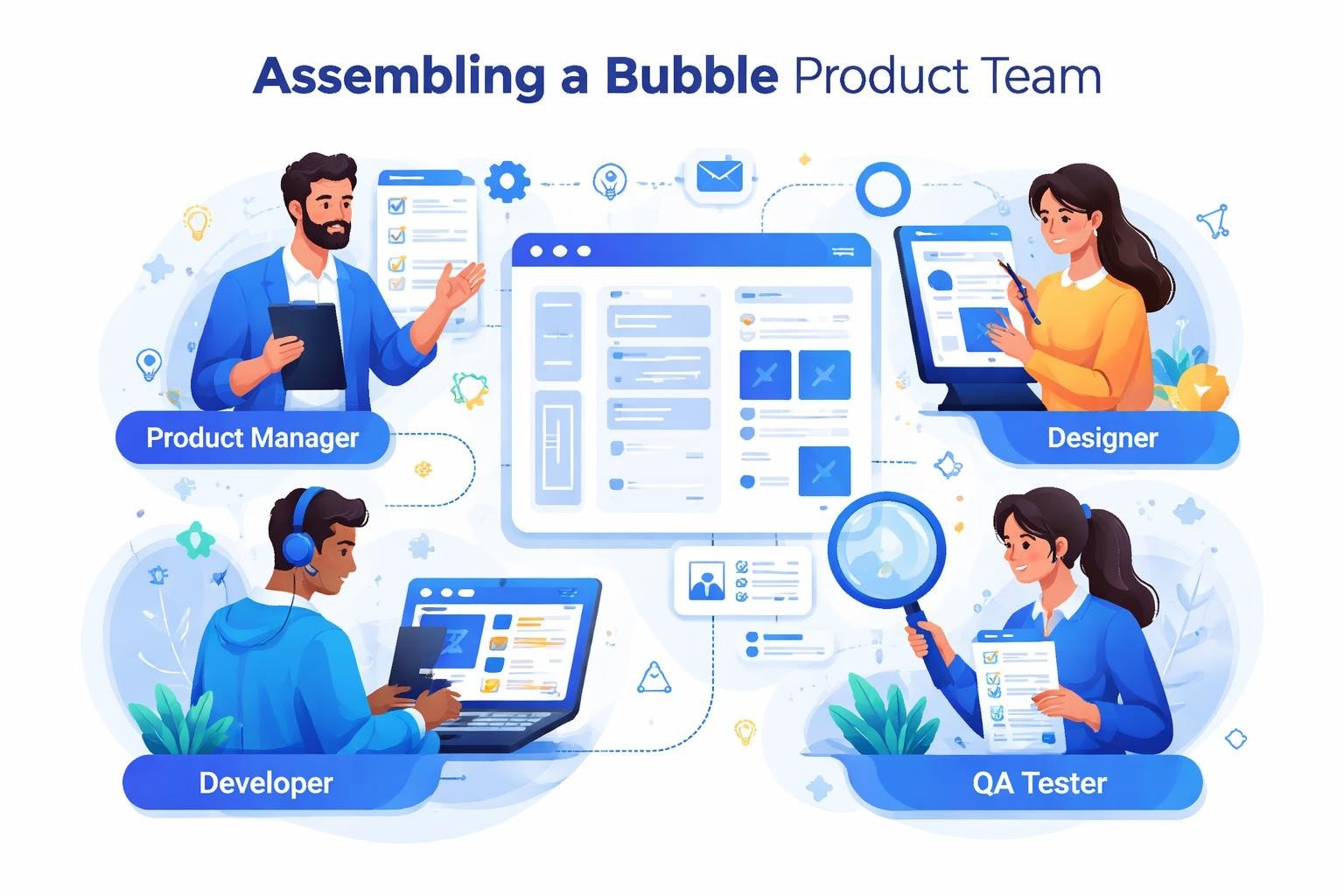
The core roles you'll need include:
- Product Manager: Defines features, manages roadmap, coordinates stakeholders
- Bubble Developer: Builds workflows, designs databases, implements logic
- UX/UI Designer: Creates responsive interfaces, ensures brand consistency
- QA Specialist: Tests functionality, identifies bugs, validates user flows
- Technical Architect: Structures data models, optimizes performance, plans scalability
Each role requires specific expertise in no-code methodologies. A Bubble developer must understand not just the platform's capabilities but also how to architect solutions that scale efficiently. This becomes especially critical when agencies building Bubble MVP solutions need to deliver production-ready applications quickly.
Product Manager Responsibilities in No-Code
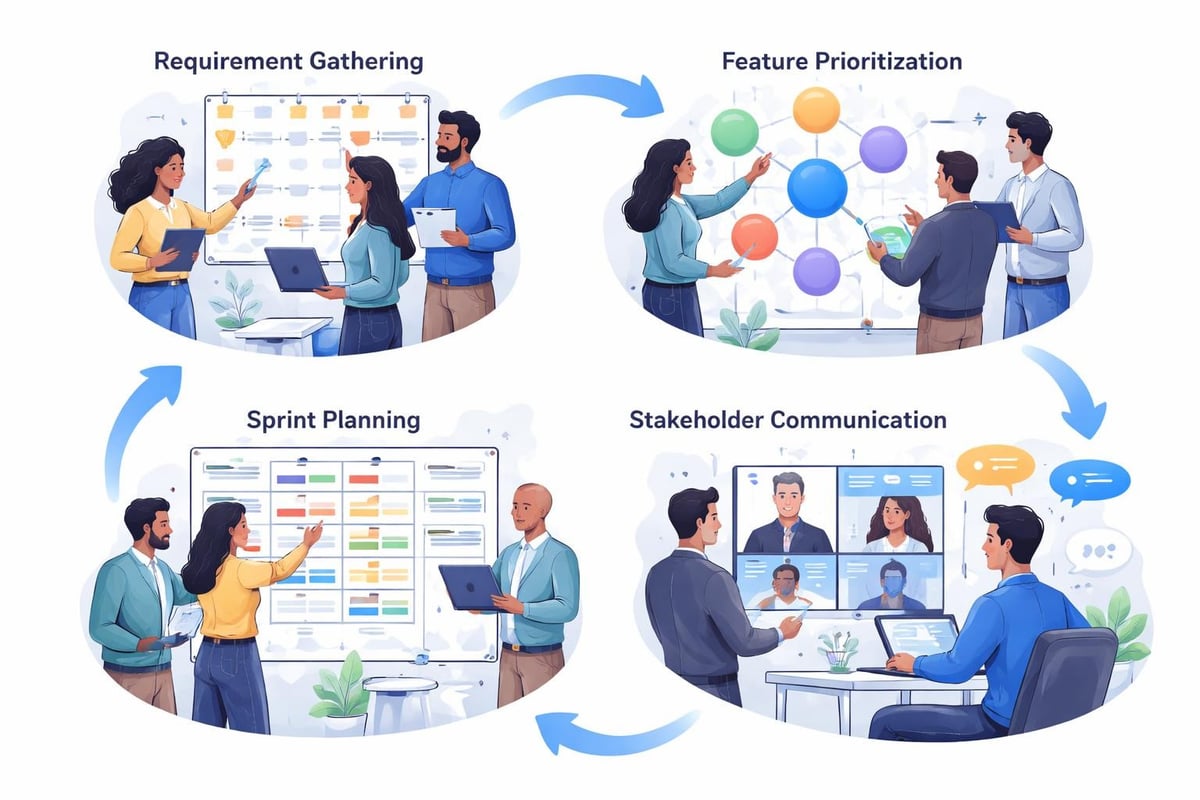
When you hire bubble product team leadership, the product manager serves as the strategic compass. This individual translates business requirements into features that Bubble can efficiently deliver. According to this Senior Product Manager role at Bubble, candidates need experience with SaaS products and technical understanding of platform capabilities.
The product manager must balance ambitious feature requests against technical constraints. They create detailed specifications that Bubble developers can implement without extensive back-and-forth clarification. This efficiency becomes crucial when working with tight timelines and fixed budgets.
Essential Skills for Bubble Development Teams
Technical proficiency in Bubble extends far beyond clicking through visual interfaces. When organizations hire bubble product team developers, they should evaluate candidates across multiple dimensions of no-code expertise.
| Skill Category | Key Competencies | Why It Matters |
|---|---|---|
| Platform Mastery | Workflows, database design, responsive layouts | Core building blocks of any application |
| API Integration | RESTful APIs, authentication, data parsing | Connects Bubble apps to external services |
| Performance Optimization | Database queries, page load speed, element hierarchy | Ensures scalable, fast applications |
| Plugin Development | JavaScript, Bubble plugin editor, custom functionality | Extends platform capabilities when needed |
| Version Control | Bubble's version management, deployment strategies | Maintains code quality and enables rollbacks |
The ability to work with Bubble's AI capabilities has become increasingly valuable in 2026. Developers who understand how to integrate machine learning APIs and implement intelligent features deliver significantly more value than those focused solely on basic CRUD operations.
Designer Requirements for No-Code Projects
Design in the Bubble ecosystem requires balancing aesthetic excellence with technical feasibility. The Director of Product Design role highlights how design leadership shapes product vision while respecting platform constraints.
Critical design skills include:
- Responsive design principles that work within Bubble's layout engine
- Component-based thinking to create reusable elements
- Performance-conscious design avoiding excessive element nesting
- Accessibility standards ensuring WCAG compliance
- User testing methodologies validating designs before development
Designers must understand how their decisions impact development complexity. A beautiful design that requires custom code defeats the purpose of choosing a no-code platform. The best designers when you hire bubble product team members know how to create stunning interfaces using native Bubble elements and minimal custom code.
Recruitment Strategies for Bubble Talent
Finding qualified Bubble professionals requires a different approach than traditional developer recruitment. The talent pool is smaller but growing rapidly as more professionals recognize the career potential in no-code development.
The Bubble Group careers page demonstrates how leading organizations position no-code roles to attract top talent. They emphasize impact, learning opportunities, and the chance to work on cutting-edge technology rather than just listing technical requirements.
Where to Find Bubble Specialists
Effective sourcing channels include:
- Bubble's official forum where developers showcase expertise
- No-code communities on Discord and Slack
- LinkedIn groups focused on visual development
- Freelance platforms with Bubble-specific filters
- Referrals from existing Bubble community members
When you hire bubble product team members through platforms like Airdev, you gain access to pre-vetted professionals who have demonstrated proficiency through completed projects. This reduces hiring risk significantly compared to evaluating candidates without a Bubble-specific portfolio.
For enterprises, working with specialized agencies offers an alternative to direct hiring. Big House Technologies provides complete teams already experienced in collaborating on complex Bubble projects, eliminating the learning curve associated with newly formed teams.
Building vs. Hiring: Strategic Considerations
Organizations face a critical decision: build internal Bubble capabilities or hire bubble product team expertise through agencies and contractors. Each approach offers distinct advantages depending on your strategic objectives.
| Approach | Best For | Key Benefits | Primary Challenges |
|---|---|---|---|
| Internal Team | Long-term product development, multiple projects | Deep product knowledge, cultural alignment | Higher upfront cost, longer ramp-up time |
| Agency Partnership | MVPs, defined projects, specialized needs | Immediate expertise, proven processes | Less product ownership, coordination overhead |
| Hybrid Model | Scaling operations, knowledge transfer | Flexibility, risk mitigation | Requires strong management, potential conflicts |
Companies pursuing enterprise integration platforms often benefit from starting with agency support while gradually building internal capabilities. This approach allows immediate project progress while developing institutional knowledge.
Training Existing Staff on Bubble
Some organizations choose to upskill current employees rather than hire bubble product team members externally. This works particularly well when you have strong product managers or designers who need to add Bubble proficiency to their existing skills.
Training considerations include:
- Bubble's official certification programs and courses
- Hands-on project work with increasing complexity
- Mentorship from experienced Bubble developers
- Community engagement for problem-solving support
- Regular skills assessments to track progress
According to research from Adalo's team building guide, the most successful no-code teams combine formal training with practical project experience. Theoretical knowledge alone doesn't prepare developers for the real-world challenges of building production applications.
Evaluating Bubble Team Candidates
Assessment processes for Bubble roles should test both platform-specific skills and broader software development principles. When you hire bubble product team members, looking beyond surface-level Bubble knowledge reveals candidates who can architect sophisticated solutions.
Technical Assessment Framework
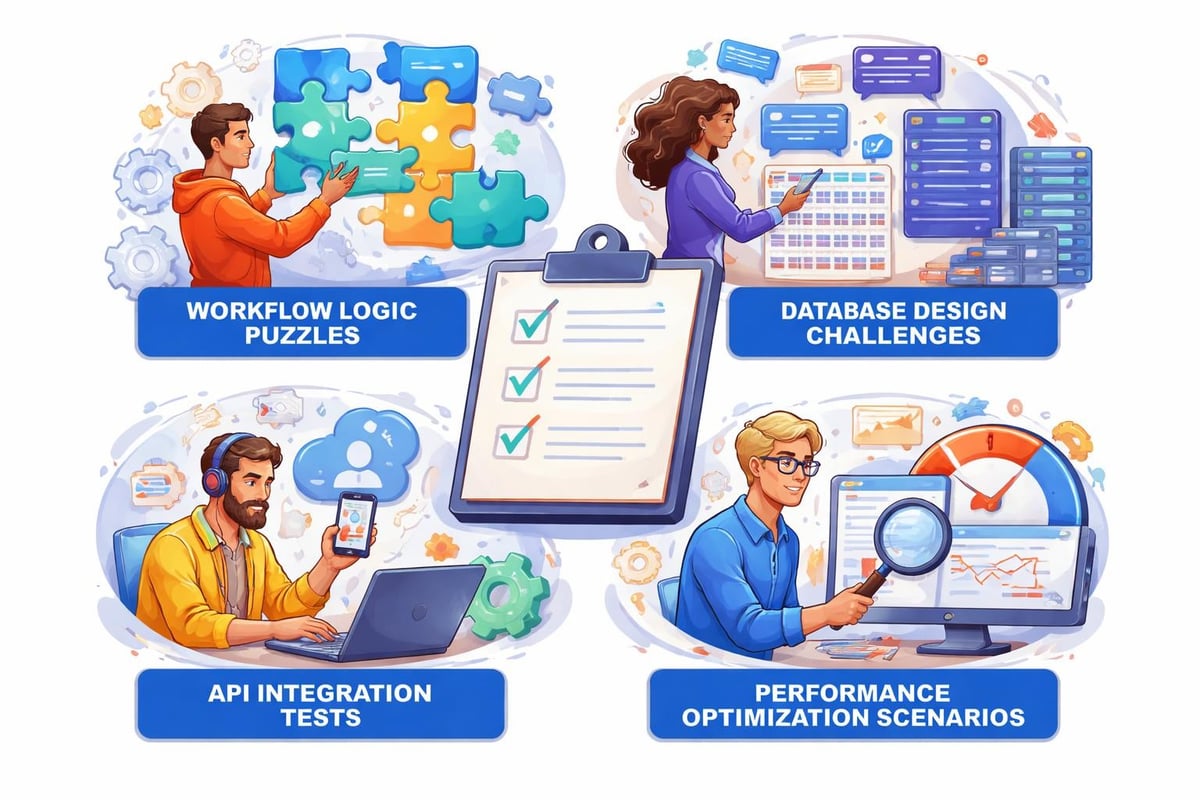
Effective evaluation methods include:
- Take-home projects: Build a specific feature within a provided Bubble app
- Live coding sessions: Solve workflow logic problems in real-time
- Architecture discussions: Explain how to structure data for complex scenarios
- Portfolio reviews: Analyze completed projects for quality and complexity
- Problem-solving exercises: Debug intentionally broken Bubble applications
The best candidates demonstrate understanding of software fundamentals-data modeling, API design, user authentication, performance optimization-implemented through Bubble's visual interface rather than traditional code. This distinction separates true experts from those who have merely clicked through tutorials.
Candidates should also show familiarity with the broader no-code ecosystem. Understanding when to use Bubble versus alternatives indicates strategic thinking beyond single-platform proficiency.
Team Composition for Different Project Types
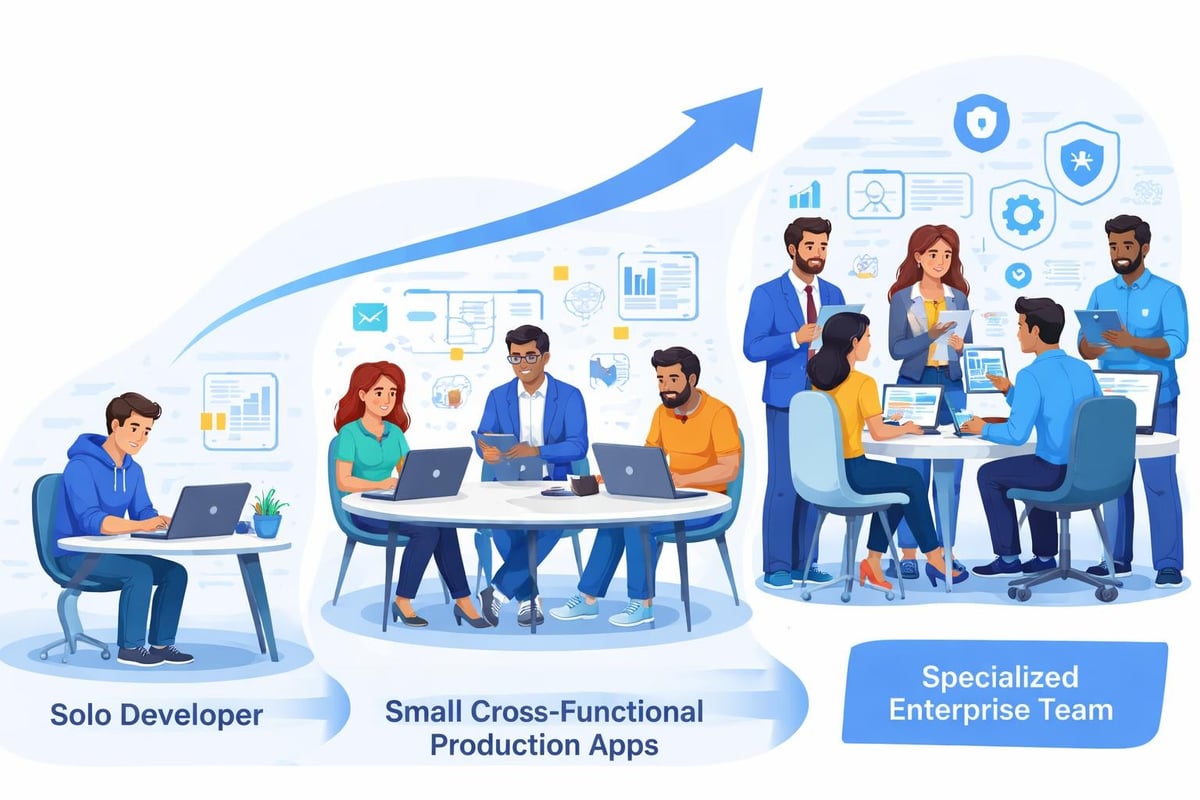
The size and structure of your Bubble team should align with project complexity and timeline. A simple MVP requires different resources than an enterprise platform serving thousands of users.
For MVP development (2-3 months):
- 1 Bubble Developer (full-stack)
- 1 Product Manager (part-time)
- 1 Designer (consulting basis)
For production applications (6-12 months):
- 2-3 Bubble Developers (specialized)
- 1 Product Manager (full-time)
- 1 UX/UI Designer (full-time)
- 1 QA Specialist (full-time)
- 1 Technical Architect (consulting)
For enterprise platforms (ongoing):
- 4-6 Bubble Developers (with specializations)
- 1-2 Product Managers (feature teams)
- 2 Designers (UX researcher + UI designer)
- 2 QA Specialists (manual + automation)
- 1 Technical Architect (full-time)
- 1 DevOps Engineer (deployment and monitoring)
When you hire bubble product team members for enterprise projects, specialization becomes crucial. One developer might focus on API integrations while another optimizes database performance. This division of labor mirrors traditional software teams but requires coordination within a single platform.
Compensation and Market Rates for 2026
Bubble talent commands competitive salaries as demand continues outpacing supply. Understanding current market rates helps organizations budget appropriately when they hire bubble product team professionals.
Average annual salaries in the United States (2026):
- Junior Bubble Developer: $65,000 - $85,000
- Mid-Level Bubble Developer: $85,000 - $120,000
- Senior Bubble Developer: $120,000 - $160,000
- Bubble Product Manager: $110,000 - $150,000
- Technical Architect (Bubble): $140,000 - $180,000
These figures reflect the premium placed on verified expertise. A developer with a strong portfolio of complex Bubble applications commands significantly higher compensation than someone with basic platform knowledge. Geographic location also influences rates, with major tech hubs commanding 20-30% premiums over secondary markets.
The forum discussion about hiring a Technical Product Manager provides real-world context about the qualifications companies seek and the compensation they offer for Bubble-focused roles.
Freelance vs. Full-Time Considerations
Many organizations hire bubble product team members on a contract basis before committing to full-time positions. Freelance Bubble developers typically charge $75-$200 per hour depending on experience and specialization.
Contract work makes sense when:
- Project duration is defined and limited
- Specialized skills are needed temporarily
- Budget constraints require variable costs
- You're testing the no-code approach before full commitment
Full-time hiring is preferable for:
- Ongoing product development and maintenance
- Building institutional knowledge
- Complex integrations requiring deep context
- Establishing a sustainable development practice
Hybrid approaches combining a core full-time team with specialized contractors offer flexibility while maintaining continuity. This structure allows you to hire bubble product team members strategically based on immediate needs without overcommitting resources.
Managing Distributed Bubble Teams
Remote work has become standard for no-code development teams. The nature of Bubble's platform facilitates distributed collaboration since all development happens in a centralized cloud environment accessible from anywhere.
Key collaboration tools for remote Bubble teams:
- Bubble's native collaboration features for simultaneous development
- Project management platforms (Jira, Asana, Linear) for task tracking
- Design tools (Figma, Sketch) with commenting capabilities
- Communication platforms (Slack, Discord) for real-time discussions
- Documentation systems (Notion, Confluence) for knowledge sharing
When managing distributed teams, establishing clear conventions becomes critical. Define naming standards for data types, workflows, and reusable elements to prevent confusion. Document architectural decisions so team members understand why specific approaches were chosen.
The best remote Bubble teams conduct regular code reviews where developers examine each other's workflows and suggest improvements. This practice maintains quality standards while facilitating knowledge transfer across the team.
Onboarding New Bubble Team Members
Effective onboarding accelerates time-to-productivity when you hire bubble product team additions. Unlike traditional development where new hires need weeks to set up environments and learn codebases, Bubble's accessibility enables faster ramp-up with proper structure.
Comprehensive onboarding program includes:
- Week 1: Platform fundamentals, development standards, project overview
- Week 2: Guided feature implementation with senior developer mentorship
- Week 3: Independent small feature development with code review
- Week 4: Full integration into sprint cycle with regular responsibilities
Providing new team members with documentation about your specific Bubble architecture proves invaluable. Explain how you structure databases, organize workflows, handle user permissions, and integrate external services. This contextual knowledge enables productive contributions far sooner than learning through trial and error.
Pair programming sessions where experienced developers work alongside new hires on complex features transfer tacit knowledge that documentation cannot capture. These sessions reveal the reasoning behind architectural choices and problem-solving approaches specific to your application.
Quality Assurance in Bubble Development
QA specialists play a crucial role when you hire bubble product team members, ensuring applications function reliably before reaching users. Testing no-code applications requires understanding both standard QA practices and Bubble-specific considerations.
| Testing Type | Focus Areas | Tools & Approaches |
|---|---|---|
| Functional Testing | Workflows execute correctly, conditional logic works | Manual testing, test data sets |
| Performance Testing | Page load times, database query efficiency | Bubble debugger, external monitoring |
| Responsive Testing | Mobile, tablet, desktop display correctly | Device emulators, real device testing |
| Integration Testing | API calls succeed, data syncs properly | API testing tools, staging environments |
| User Acceptance | Features meet requirements, UX is intuitive | Beta testing, feedback collection |
The Bubble debugger provides visibility into workflow execution that traditional code doesn't offer. QA specialists should leverage this tool to trace exactly why workflows behave unexpectedly and identify performance bottlenecks in real-time.
Automated testing in Bubble remains more limited than traditional development, making thorough manual testing essential. When you hire bubble product team QA specialists, prioritize candidates who excel at exploratory testing and creating comprehensive test scenarios that cover edge cases.
Long-Term Team Development and Retention
Retaining talented Bubble professionals requires more than competitive compensation. The most successful organizations create environments where no-code developers can grow their skills and advance their careers.
Career progression paths might include:
- Junior Developer → Mid-Level Developer → Senior Developer → Technical Architect
- Bubble Specialist → Full-Stack No-Code Developer (multiple platforms)
- Developer → Technical Product Manager → Director of Product
- Generalist Developer → Specialized Expert (APIs, performance, complex logic)
Providing opportunities to work on diverse projects prevents stagnation. A developer who has built five similar marketplace applications will seek new challenges. Rotating team members through different project types maintains engagement while cross-pollinating knowledge across your organization.
Supporting professional development through conference attendance, course reimbursement, and dedicated learning time demonstrates investment in your team's growth. The Bubble ecosystem evolves rapidly, and teams that stay current with new features and best practices deliver superior results.
Partnering with No-Code Development Agencies
For many organizations, the question isn't just how to hire bubble product team members but whether building an internal team makes strategic sense. Agencies specializing in Bubble development offer proven expertise without the overhead of building capabilities from scratch.
When evaluating agency partners, assess their portfolio for projects similar in complexity to your needs. A team experienced with Bubble app building for enterprise clients brings valuable perspective about scalability, security, and integration challenges you'll inevitably face.
Agency partnerships excel for:
- Rapid MVP development with fixed timelines
- Accessing specialized expertise temporarily
- Validating product concepts before major investment
- Supplementing internal teams during peak demand
- Learning best practices to inform internal hiring
The most sophisticated organizations combine internal product leadership with agency execution. This hybrid model lets you maintain strategic control while leveraging specialized implementation expertise. As your product matures and requirements stabilize, gradually transitioning capabilities in-house becomes feasible.
Building an effective Bubble product team requires understanding both the technical platform and the specialized skills that drive successful no-code development. Whether you choose to hire bubble product team members directly or partner with experienced agencies, the key lies in assembling professionals who combine platform expertise with software engineering fundamentals. Big House Technologies specializes in providing complete Bubble development teams with proven track records delivering scalable solutions for enterprises and startups, offering a comprehensive approach from initial scoping through final deployment that eliminates the complexity of building these capabilities independently.

About Big House
Big House is committed to 1) developing robust internal tools for enterprises, and 2) crafting minimum viable products (MVPs) that help startups and entrepreneurs bring their visions to life.
If you'd like to explore how we can build technology for you, get in touch. We'd be excited to discuss what you have in mind.
Other Articles
Unlock enterprise backend systems modernization for 2026 with key trends, step by step frameworks, technology choices, and proven strategies to future proof your business.
Discover the best chat gpt app picks for 2025 Compare top features pricing and real world use cases to find the perfect AI chatbot for your needs
Learn how to turn Figma designs into software with no-code tools, AI platforms, and modern development workflows. Expert guide for 2026.