
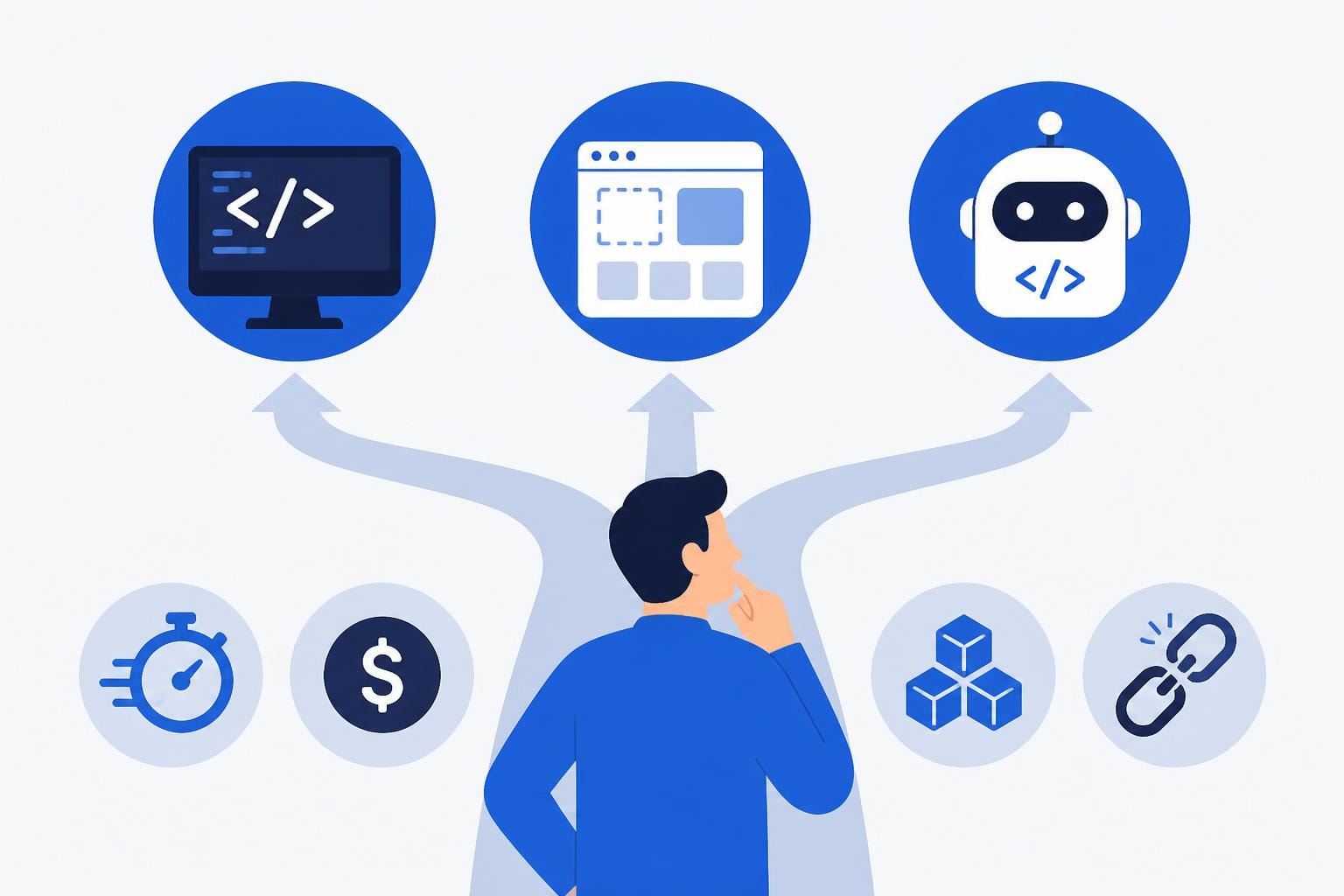
The software development landscape has transformed dramatically, presenting business leaders with more options than ever when building digital products. Whether you're launching a startup MVP or scaling an enterprise solution, the decision to hire a software programmer requires careful consideration of technical requirements, budget constraints, and timeline pressures. Today's market offers alternatives ranging from traditional full-stack developers to no-code specialists and AI-assisted development teams, each bringing distinct advantages to different project types.
Understanding Modern Software Development Options
The traditional approach to software development isn't the only path forward in 2026. While conventional programming remains essential for certain projects, no-code and AI-powered platforms have matured into legitimate enterprise solutions.
When you hire a software programmer, you're choosing between several development paradigms:
- Traditional code-based development with languages like Python, JavaScript, or Java
- No-code platforms such as Bubble for rapid application development
- AI-assisted development tools like Lovable for automated code generation
- Hybrid approaches combining no-code foundations with custom code extensions
Each approach carries different cost structures, development speeds, and scalability considerations. A traditional programmer might charge $75-200 per hour depending on experience and location, while no-code development can reduce costs by 60-80% for many application types.
Evaluating Technical Requirements First
Before posting job descriptions or contacting agencies, map your technical landscape comprehensively. This foundational work determines whether you actually need to hire a software programmer or if alternative solutions better serve your objectives.
Start by documenting your application's core functions:
- User authentication and data security requirements
- Database complexity and relational data structures
- Third-party integrations (payment processors, CRM systems, APIs)
- Expected user volume and performance benchmarks
- Mobile responsiveness or native app requirements
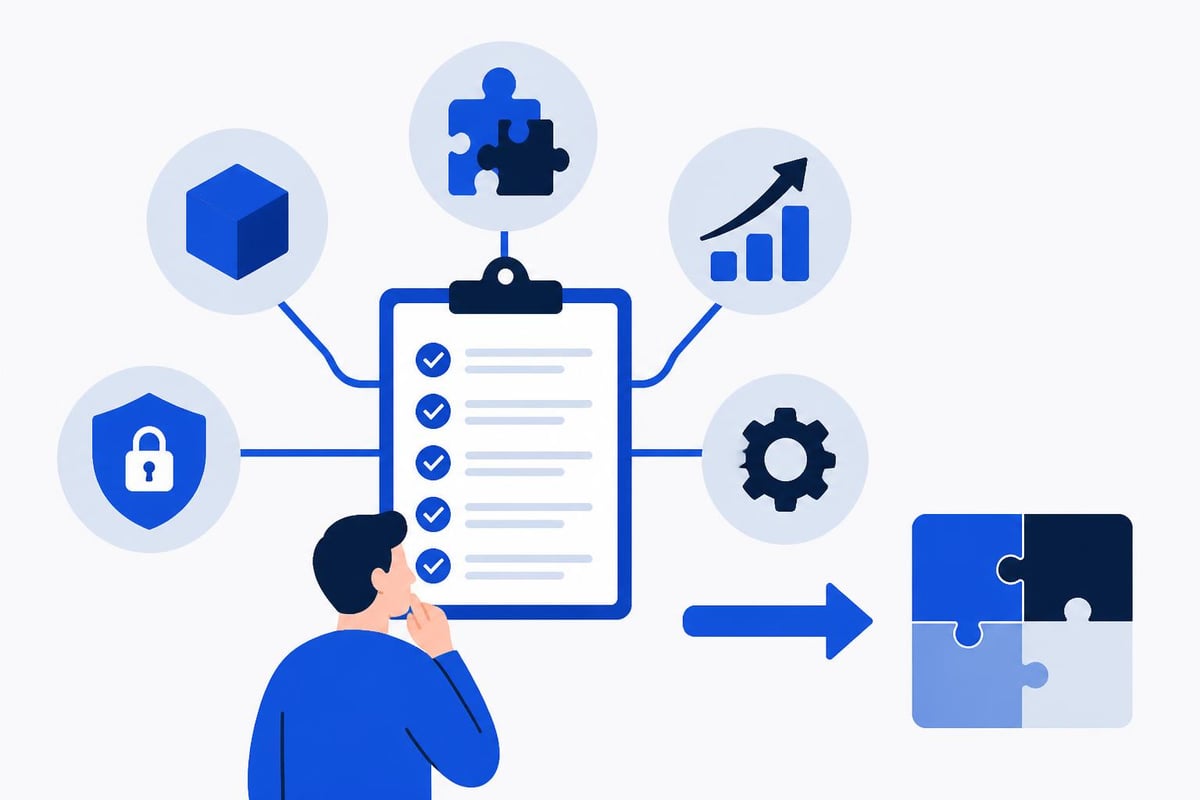
Modern best practices for hiring software developers emphasize alignment between technical needs and candidate capabilities. A mismatch here creates technical debt that compounds over time.
Defining Your Ideal Developer Profile
The software development field encompasses dozens of specializations. When you hire a software programmer, clarity about required expertise prevents costly mismatches.
| Developer Type | Primary Skills | Best For | Typical Rate Range |
|---|---|---|---|
| Frontend Developer | React, Vue, Angular, CSS | User interfaces, web apps | $60-150/hr |
| Backend Developer | Node.js, Python, databases | APIs, server logic, data | $70-160/hr |
| Full-Stack Developer | Frontend + Backend | Complete applications | $80-180/hr |
| Mobile Developer | Swift, Kotlin, React Native | iOS/Android apps | $75-170/hr |
| No-Code Developer | Bubble, Webflow, Airtable | Rapid MVP development | $50-120/hr |
Key competencies extend beyond technical skills:
- Problem-solving methodology and debugging approaches
- Communication clarity for technical and non-technical stakeholders
- Version control proficiency (Git workflows)
- Testing practices and quality assurance mindset
- Adaptability to evolving project requirements
Consultadd's hiring guide identifies adaptability as increasingly critical as development tools evolve. Programmers who resist learning new platforms create bottlenecks as technology advances.
Experience Level Considerations
Junior developers (0-2 years) cost less but require mentorship and produce slower initial output. Mid-level developers (3-5 years) balance cost and capability effectively for most projects. Senior developers (6+ years) command premium rates but solve complex problems faster and architect more maintainable systems.
For startups and MVPs, the calculus differs. Spending $150/hour for a senior developer might seem excessive until you realize they complete in two weeks what takes a junior developer eight weeks at $70/hour. The senior developer saves both time and money.
Sourcing Quality Programming Talent
Where you look determines who you find. Traditional job boards attract different candidates than specialized platforms, and each channel requires tailored messaging.
Effective sourcing channels include:
- LinkedIn: Professional network with advanced search filters for technical skills
- GitHub: Evaluate candidates through actual code contributions and project history
- Stack Overflow: Active community participation indicates problem-solving engagement
- Specialized platforms: AngelList for startups, Toptal for vetted freelancers
- Developer communities: Conference attendees, meetup participants, online forums
HackerRank's comprehensive hiring playbook emphasizes multi-channel sourcing strategies. Relying on a single channel creates blind spots, missing qualified candidates who simply don't frequent that particular platform.
Referrals from existing developers often yield the highest-quality hires. Developers understand technical requirements better than recruiters and have reputational incentives to recommend competent peers.
Writing Effective Job Descriptions
Generic job posts attract generic applicants. When you hire a software programmer, specificity in job descriptions filters for relevant candidates and sets accurate expectations.
Essential elements for compelling job descriptions:
- Project context: What you're building and why it matters
- Technical stack: Specific languages, frameworks, and tools
- Team structure: Who they'll work with and reporting relationships
- Growth opportunities: Learning paths and skill development support
- Concrete deliverables: What success looks like in 30/60/90 days
Transparency about compensation ranges increases application quality. MultiRecruit's recruiting best practices show that salary transparency attracts candidates confident in their worth while filtering out those with unrealistic expectations.
Conducting Technical Assessments That Matter
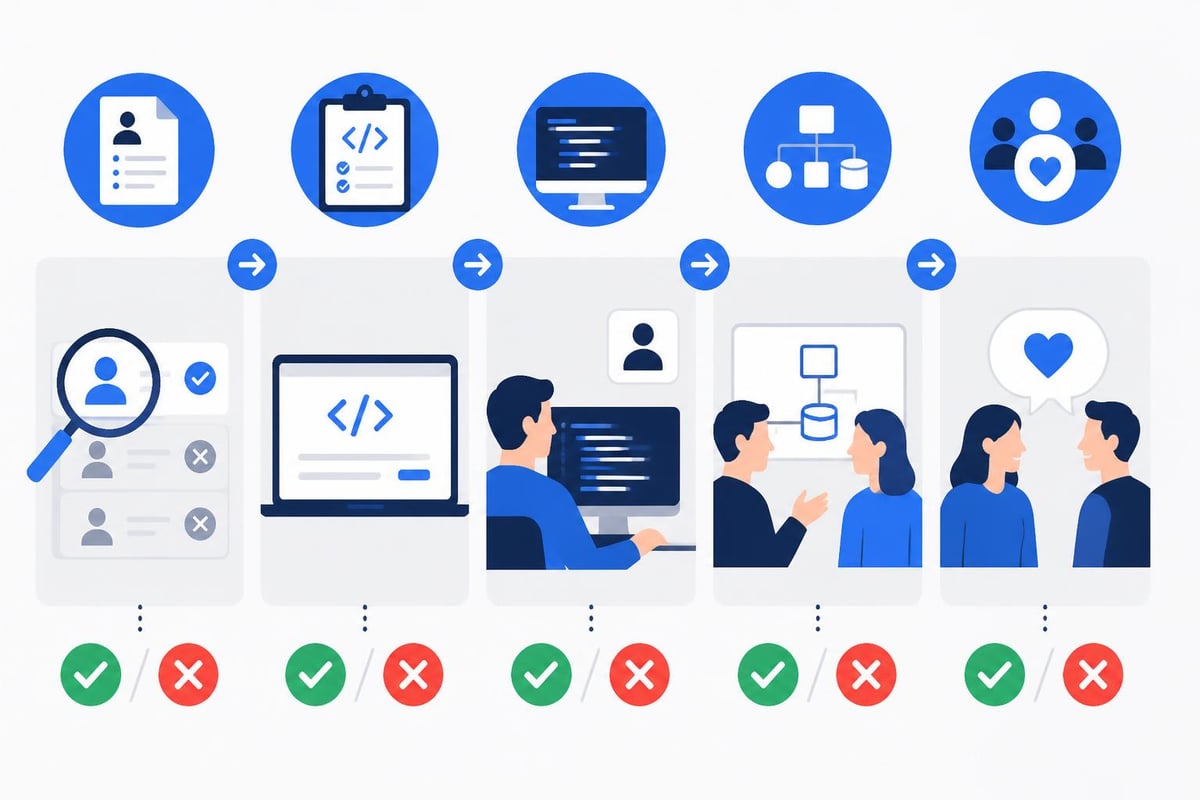
Resume reviews identify candidates worth interviewing. Technical assessments reveal who can actually do the work. When you hire a software programmer, the assessment process makes or breaks hiring quality.
Avoid generic coding challenges that test computer science theory over practical ability. A developer might solve algorithm puzzles brilliantly while struggling with real-world application architecture.
Multi-Stage Assessment Framework
Stage 1: Take-Home Projects (2-4 hours)
Provide a realistic project slice mirroring actual work. For a marketplace app, request a simple product listing feature with search functionality. Evaluate code organization, naming conventions, and problem-solving approaches as much as functional correctness.
Stage 2: Code Review Discussion (45-60 minutes)
Review the take-home project together. Ask candidates to explain architectural decisions, identify potential improvements, and discuss trade-offs. This conversation reveals thought processes and communication skills.
Stage 3: Pair Programming Session (60-90 minutes)
Collaborate on a feature addition or bug fix in real-time. This simulates actual working relationships and shows how candidates handle feedback, think through problems, and communicate while coding.
| Assessment Type | Pros | Cons | Best For |
|---|---|---|---|
| Take-Home Projects | Shows real work quality | Time-consuming for candidates | Evaluating coding standards |
| Live Coding | Observes problem-solving process | Creates artificial pressure | Assessing thinking approach |
| System Design | Tests architecture knowledge | Requires senior candidates | Backend/infrastructure roles |
| Portfolio Review | Demonstrates completed work | May not reflect solo work | Frontend/design-focused roles |
Turing's programmer hiring guide recommends matching assessment complexity to role seniority. Junior developers shouldn't face system design challenges requiring years of distributed systems experience.
Evaluating Cultural Fit and Soft Skills
Technical competence is necessary but insufficient. A brilliant programmer who can't collaborate tanks team productivity. When you hire a software programmer, interpersonal dynamics matter as much as coding ability.
Critical soft skills for development teams:
- Proactive communication: Flagging blockers early rather than letting deadlines slip
- Constructive feedback reception: Incorporating code review suggestions without defensiveness
- Documentation discipline: Writing clear comments and maintaining updated technical docs
- Deadline realism: Providing honest estimates rather than optimistic guesses
- Stakeholder translation: Explaining technical concepts to non-technical colleagues
Reference checks validate soft skills claims. Ask previous managers and colleagues specific behavioral questions: "Describe a time when this developer disagreed with a technical decision. How did they handle it?"
For e-commerce projects where development intersects with merchant operations, communities like Talk Shop provide valuable resources for understanding how developers collaborate with business stakeholders in fast-moving retail environments.
Remote Work Considerations for 2026
Most software development teams now operate partially or fully remote. When you hire a software programmer in 2026, assume remote capabilities are essential regardless of office location.
Evaluate remote-specific competencies during interviews:
- Self-directed task management without constant oversight
- Asynchronous communication clarity in written formats
- Time zone coordination for distributed teams
- Home office setup and reliable internet connectivity
- Comfort with collaboration tools (Slack, Zoom, Notion, GitHub)
Research on human-centered tech hiring emphasizes transparency and respectful interactions throughout remote hiring processes. Candidates judge companies by communication responsiveness and interview logistics as much as by salary offers.
Deciding Between In-House, Freelance, and Agency Options
Employment structures carry different cost profiles, commitment levels, and management overhead. When you hire a software programmer, the engagement model shapes project outcomes significantly.
In-House Full-Time Developers
- Advantages: Deep product knowledge, long-term investment, team culture alignment
- Disadvantages: Higher total compensation costs, recruitment time, benefits overhead
- Best for: Core product development, ongoing maintenance, complex domain knowledge
Freelance Contractors
- Advantages: Flexible engagement, specialized skills for specific projects, no benefits costs
- Disadvantages: Limited availability, knowledge transfer challenges, potential reliability issues
- Best for: Defined projects, supplementing existing teams, specialized technical needs
Development Agencies
- Advantages: Complete teams, proven processes, guaranteed delivery timelines
- Disadvantages: Higher hourly rates, less direct control, potential communication layers
- Best for: Rapid MVP development, projects requiring diverse skill sets, companies without technical leadership
For many businesses, no-code development agencies offer a compelling middle ground. They provide complete team capabilities at costs below traditional development while delivering production-ready applications in weeks rather than months.
Understanding Cost Structures and Budget Planning
Hourly rates tell only part of the cost story. When you hire a software programmer, total project costs include development time, project management, testing, deployment, and ongoing maintenance.
Total Cost of Ownership Analysis
Development Phase Costs:
- Requirements gathering and technical planning: 10-15% of total budget
- Design and user experience work: 15-20% of total budget
- Core development and feature implementation: 40-50% of total budget
- Testing, QA, and bug fixes: 15-20% of total budget
- Deployment and launch preparation: 5-10% of total budget
Ongoing Maintenance Costs:
Budget 15-20% of initial development costs annually for maintenance, updates, security patches, and minor enhancements. This percentage increases for complex applications with extensive third-party integrations.
Hidden costs accumulate quickly. A $50,000 initial development budget realistically requires $7,500-10,000 annually for proper maintenance. Companies that skip maintenance accumulate technical debt that eventually requires expensive rebuilds.
Dice's programmer hiring insights stress defining clear business requirements before discussing budgets. Vague requirements lead to scope creep that doubles or triples initial estimates.
Alternative Approaches: No-Code and AI-Assisted Development
Traditional programming isn't always the optimal solution. When you hire a software programmer, consider whether emerging development approaches better serve your timeline, budget, and scalability needs.
No-code platforms like Bubble enable:
- Visual application building without writing code
- Rapid prototyping and iteration cycles
- Lower development costs (60-80% savings for suitable projects)
- Faster time-to-market (weeks vs. months)
- Easier modifications by non-technical team members
Building MVPs with no-code approaches allows businesses to validate market demand before investing in custom development. Many successful startups launch entirely on no-code platforms, only transitioning to custom code when specific limitations emerge.
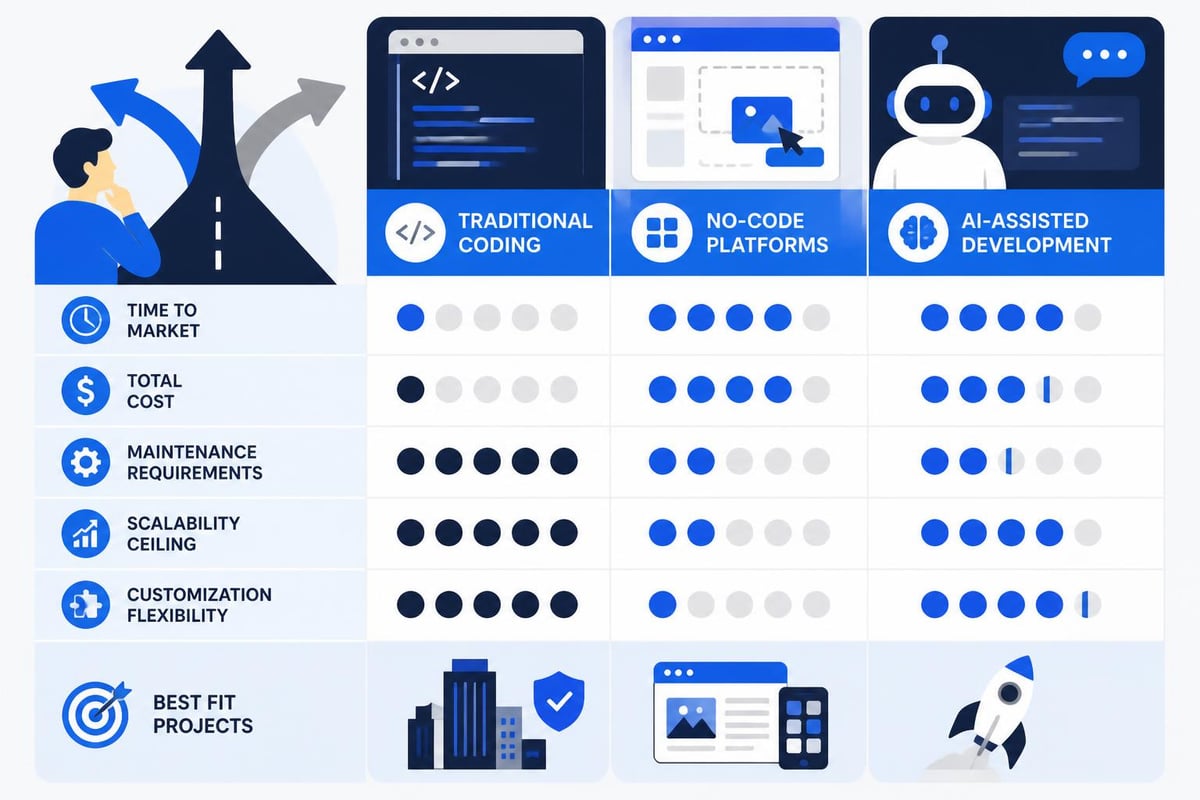
AI-assisted development tools in 2026:
- Generate boilerplate code and standard functions automatically
- Suggest optimizations and identify potential bugs
- Accelerate development by 30-40% for experienced programmers
- Lower barriers for junior developers with intelligent assistance
- Require human oversight for architecture and business logic
The choice between traditional and modern approaches depends on project requirements. A complex fintech platform with regulatory compliance needs probably requires traditional development. An internal dashboard or customer portal might work perfectly on no-code platforms.
Onboarding and Setting Up for Success
The hiring process doesn't end with signed contracts. When you hire a software programmer, effective onboarding determines whether they reach productivity quickly or struggle for months.
Week 1: Environment Setup and Context
- Development environment configuration and tool access
- Codebase walkthrough with architecture explanations
- Introduction to team members and communication protocols
- Review of existing documentation and coding standards
- Small, well-defined first task to build confidence
Week 2-4: Gradual Responsibility Increase
- Progressively complex tasks building on previous work
- Regular check-ins to address questions and blockers
- Pairing sessions with senior developers
- Introduction to deployment processes and testing procedures
- Feedback loops on code quality and approach
Companies often under-invest in onboarding, assuming skilled developers immediately contribute. Academic research on tech hiring challenges identifies poor onboarding as a major factor in early-tenure departures and reduced productivity.
Building Effective Developer Documentation
Quality documentation accelerates onboarding and reduces repetitive questions. Create and maintain:
- Technical architecture overview: System diagrams, data flow, integration points
- Development environment setup: Step-by-step configuration with troubleshooting
- Coding standards and conventions: Naming, formatting, commenting practices
- Common tasks guide: How to add features, run tests, deploy changes
- Troubleshooting playbook: Known issues and resolution approaches
For teams building on visual platforms, tools for building internal dashboards often include built-in documentation features that make knowledge sharing easier than traditional code repositories.
Managing Developer Productivity and Performance
Measuring software developer productivity differs fundamentally from other roles. Lines of code written proves meaningless; a ten-line elegant solution often outperforms a hundred-line complex implementation.
Meaningful productivity metrics:
- Feature completion rate: Delivering committed work within sprint timelines
- Code quality indicators: Bug rates, code review feedback, technical debt creation
- Collaboration effectiveness: Pull request response times, knowledge sharing, documentation
- Problem-solving impact: Unblocking teammates, architectural improvements, innovation
Avoid micromanagement through activity monitoring or time tracking. Developers need focused work blocks; interrupting them with status requests reduces output. Trust combined with outcome accountability works better than surveillance.
Supporting Continuous Learning
Technology evolves rapidly. Developers who don't continuously learn become obsolete. Budget for:
- Conference attendance and workshop participation
- Online course subscriptions (Udemy, Pluralsight, Frontend Masters)
- Technical book purchases and reading time
- Experimentation time with new technologies
- Internal knowledge sharing sessions
When you hire a software programmer committed to growth, that investment compounds as they apply new knowledge to your projects. The $2,000 annual learning budget becomes $20,000+ in value through improved efficiency and better technical decisions.
Retaining Top Development Talent
Hiring great developers is expensive and time-consuming. Retaining them costs far less than constant replacement cycles. Developer turnover creates knowledge loss, delays projects, and demoralizes remaining team members.
| Retention Factor | Impact Level | Implementation Complexity | Cost |
|---|---|---|---|
| Competitive Compensation | High | Low | High |
| Interesting Technical Challenges | High | Medium | Low |
| Learning Opportunities | Medium | Low | Medium |
| Work-Life Balance | High | Low | Low |
| Recognition and Growth Path | Medium | Medium | Low |
Non-monetary retention strategies:
- Autonomy: Trust developers with architectural decisions and implementation approaches
- Impact visibility: Connect technical work to business outcomes and user benefits
- Technical debt management: Allow time to refactor and improve existing code
- Tool choice: Involve developers in selecting frameworks, libraries, and development tools
- Flexible scheduling: Results matter more than specific working hours
Developers increasingly prioritize working with modern technology stacks. Projects stuck on legacy systems struggle to attract and retain talent. Even when you hire a software programmer initially excited about legacy work, they often seek newer technology exposure within 12-18 months.
For businesses building on cutting-edge platforms, agencies like Empixa demonstrate how modern development approaches support both business goals and developer satisfaction through contemporary tools and methodologies.
Scaling Your Development Team Strategically
Initial hiring represents just the start. As products grow, development needs expand. When you hire a software programmer as your first technical team member, plan for eventual team growth.
Common scaling patterns:
- Solo developer → Developer + designer (enhance UX quality)
- Small team (2-3) → Specialized roles (frontend, backend, DevOps)
- Functional team → Cross-functional squads (organized by product area)
- Single team → Multiple teams (requires coordination and architecture alignment)
Each transition point requires different management approaches. A five-person team operates fundamentally differently than a three-person team. Communication overhead increases exponentially; a ten-person team faces 45 possible communication pairs versus 3 in a three-person team.
Technical leadership becomes critical around 4-5 developers. Someone must ensure architectural consistency, establish coding standards, review critical decisions, and mentor junior developers.
When to Build vs. Partner
Not every business needs in-house development teams. Enterprises are increasingly turning to no-code solutions and agency partnerships for specific project types.
Consider agency partnerships when:
- Projects have defined scopes and timelines
- In-house expertise gaps exist for specific technologies
- Speed to market outweighs long-term control
- Temporary capacity increases are needed
- Uncertainty exists about ongoing development needs
Build in-house teams when:
- Core product differentiation depends on technology
- Continuous development cycles are planned
- Proprietary algorithms or processes exist
- Deep domain knowledge integration is required
- Long-term maintenance and evolution are certain
Many businesses adopt hybrid models: in-house teams manage core products while agencies handle specialized projects, rapid prototypes, or capacity overflow during peak periods.
Successfully hiring development talent in 2026 requires balancing technical requirements, budget realities, and timeline pressures while considering both traditional programming and modern alternatives like no-code platforms. Whether you choose to hire a software programmer directly, engage freelancers, or partner with specialized agencies depends on your specific project needs, internal capabilities, and growth trajectory. Big House Technologies specializes in helping businesses navigate these decisions through our no-code and AI development expertise, delivering scalable solutions that match your timeline and budget constraints without sacrificing quality or functionality.

About Big House
Big House is committed to 1) developing robust internal tools for enterprises, and 2) crafting minimum viable products (MVPs) that help startups and entrepreneurs bring their visions to life.
If you'd like to explore how we can build technology for you, get in touch. We'd be excited to discuss what you have in mind.
Other Articles
Discover the top 7 Bubble development agency for startups in 2026 Compare services pricing and strengths to choose the best partner for rapid MVP launches and growth
Master scalable bubble app development with this 2026 guide covering architecture, performance, security, and growth strategies to future proof your Bubble app.
Explore the latest website development technologies for 2025. Discover top tools, frameworks, and trends to build scalable, secure, and future-ready websites.