
The way enterprises collaborate has changed rapidly as digital-first and hybrid work become the new normal. Teams now depend on advanced solutions to communicate, manage projects, and work together seamlessly, no matter where they are located.
Choosing the right enterprise team collaboration tools can drive productivity, spark innovation, and raise employee satisfaction. In this article, you will discover 9 essential enterprise team collaboration tools for 2026, including their standout features, pricing, and best-fit use cases for modern businesses.
The Evolution of Enterprise Collaboration Tools
Enterprise team collaboration tools have rapidly evolved to meet the demands of a changing workforce. As businesses adapt to new realities, these tools are becoming more intelligent, integrated, and secure, shaping the way teams connect and work together.
Shifting Workforce Dynamics and Hybrid Models
Remote and hybrid work have transformed collaboration needs for enterprises. With 80% of organizations adopting hybrid models by 2024, global teams must overcome distance and time zones. Enterprise team collaboration tools are now essential for cross-border projects, ensuring seamless communication and teamwork regardless of location.
Integration and Automation as Key Drivers
Unified platforms are in high demand. Enterprises want chat, video, file sharing, and workflow automation in one place. Automation reduces manual tasks, streamlining operations and boosting consistency. Tools like Microsoft Teams integrate with Power Automate, showing the power of connected workflows. For more insights, explore Enterprise workflow automation tools.
AI and Machine Learning in Collaboration
AI is reshaping enterprise team collaboration tools with features such as smart scheduling, instant meeting summaries, and real-time translation. Machine learning optimizes task prioritization and workflow efficiency. By 2026, 65% of enterprises plan to increase AI adoption, making these intelligent features a standard expectation for modern collaboration.
Security and Compliance Concerns
Security is a top priority. End-to-end encryption, data residency, and regulatory compliance like GDPR and HIPAA are critical for enterprise team collaboration tools. Admin controls and audit logs add extra layers of protection. For example, Slack Enterprise Grid’s compliance certifications make it a trusted choice for regulated industries.
User Experience and Customization
Intuitive interfaces and customizable workspaces are now non-negotiable. Enterprise team collaboration tools offer no-code integrations and modular app ecosystems, allowing users to tailor their environment. Monday.com, for instance, lets teams create customizable dashboards, adapting the platform to unique business needs with ease.
Analytics and Performance Tracking
Analytics are built into modern tools, providing insights into usage, engagement, and productivity. These metrics help managers make informed decisions and optimize team performance. Data-driven insights from enterprise team collaboration tools are becoming a vital part of ongoing business improvement strategies.
Market Growth and Future Outlook
The market for enterprise team collaboration tools is booming. Statista projects it will exceed $50B by 2026. Trends include vertical-specific solutions, mobile-first platforms, and the introduction of VR and AR for immersive collaboration. The future points toward even more tailored, innovative tools for every industry.
9 Essential Enterprise Team Collaboration Tools for 2026
The landscape of enterprise team collaboration tools is more competitive and innovative than ever. As businesses adapt to hybrid work and global teams, the right platform can make or break productivity and cohesion. Below, we break down the nine most essential enterprise team collaboration tools for 2026, highlighting what sets each apart and how they fit into the modern enterprise toolkit.
Microsoft Teams
Microsoft Teams continues to be a cornerstone among enterprise team collaboration tools. Its robust integration with Office 365 makes it a go-to for organizations already using Microsoft’s productivity suite. Teams offers chat, video meetings, file sharing, and workflow automation, all in one unified platform.
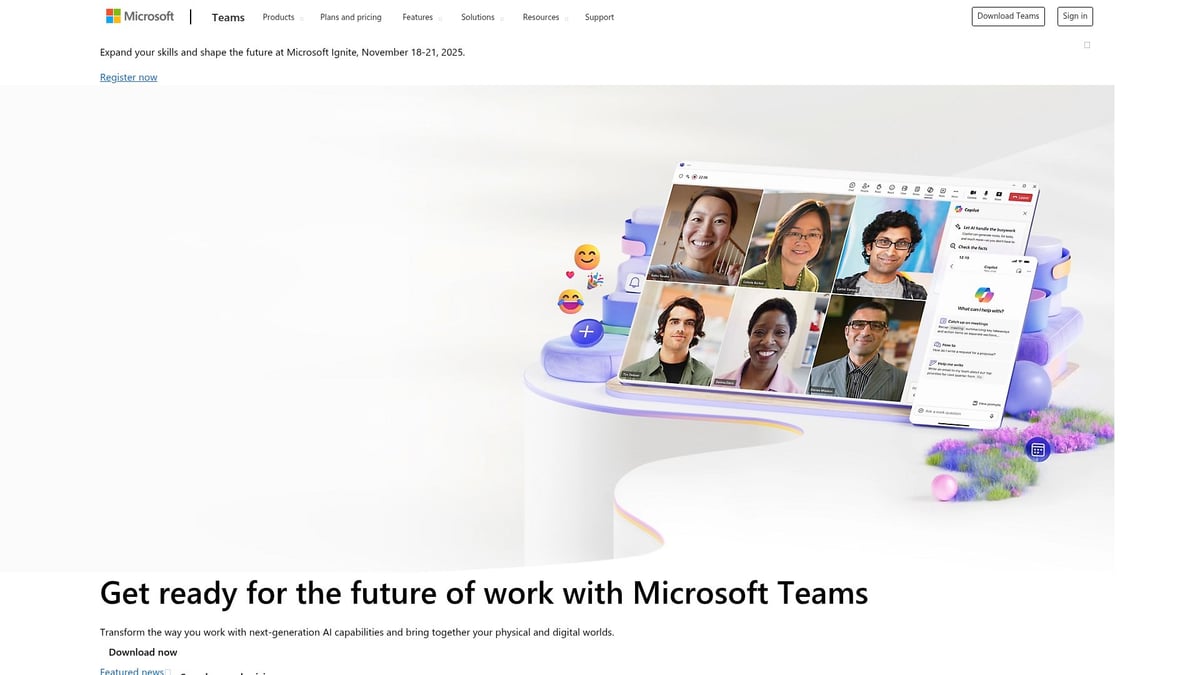
Security is top-tier, with advanced compliance controls suitable for highly regulated industries. Teams scales effortlessly, supporting organizations from hundreds to hundreds of thousands of users. Admins appreciate granular controls, audit logs, and data residency options.
Teams’ extensibility is another plus, with a rich app ecosystem and built-in connectors to SharePoint, Power Automate, and more. However, some users find the interface resource-intensive, and mastering advanced features may require training.
Example: 91 percent of Fortune 100 companies rely on Teams for enterprise collaboration.
For enterprises seeking a familiar, secure, and unified solution, Microsoft Teams is hard to beat among enterprise team collaboration tools.
Slack
Slack has become synonymous with agile, flexible enterprise team collaboration tools, especially in tech-forward companies. Its channel-based messaging, direct messaging, and workflow builder streamline communications across projects and departments.
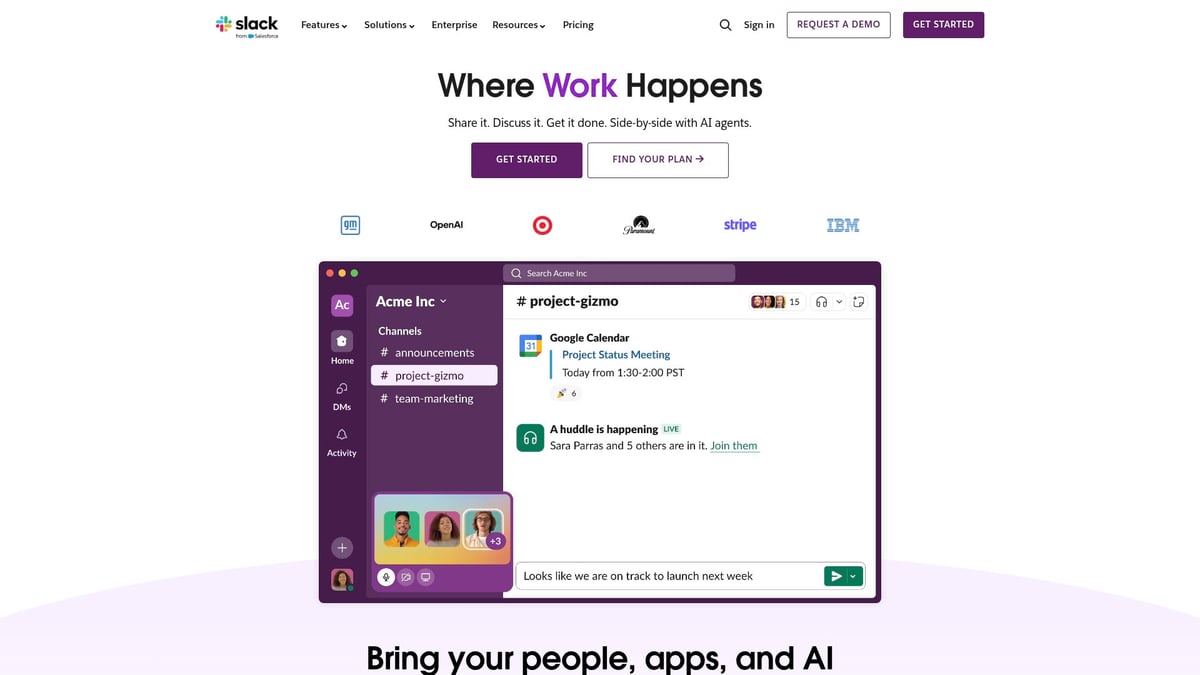
Slack’s API and 2,400+ app integrations allow teams to connect their favorite tools, from project management to CRM platforms. The customizable bot ecosystem and powerful search make knowledge retrieval quick and easy.
Slack’s intuitive UX is a standout, helping teams onboard quickly. However, notification overload can be a challenge, particularly for larger organizations. Costs may scale up for enterprises needing advanced features and compliance.
Example: 77 percent of Fortune 100 companies use Slack.
For distributed teams and organizations prioritizing flexible, real-time communication, Slack stands out among enterprise team collaboration tools.
Google Workspace
Google Workspace is a cloud-native suite that redefines what’s possible with enterprise team collaboration tools. It brings together Gmail, Drive, Docs, Meet, Chat, and shared calendars, enabling seamless, real-time collaboration across devices.
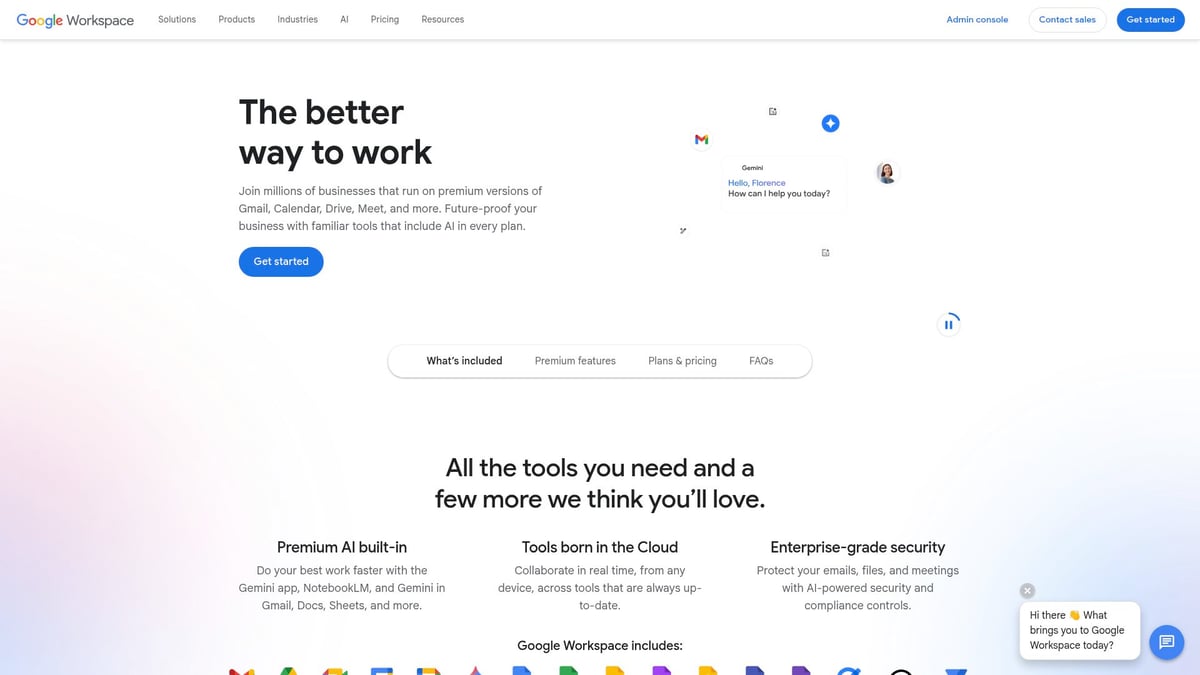
AI-powered productivity features, like smart compose and real-time translation, help teams work smarter. Google Workspace’s accessibility and onboarding are industry-leading, making it a favorite among organizations with diverse, global workforces.
While offline functionality is limited, and admin controls can be complex for large companies, the benefits of easy sharing, live editing, and cross-device access are immense.
Example: Over 3 billion users globally trust Google Workspace for their collaboration needs.
Enterprises seeking a cloud-first, intuitive, and scalable platform will find Google Workspace an ideal fit among enterprise team collaboration tools.
Asana
Asana is a powerhouse in project and task management, and it’s a top pick for enterprise team collaboration tools focused on productivity and transparency. Visual project tracking, timelines, and workflow automation help teams coordinate complex projects effortlessly.
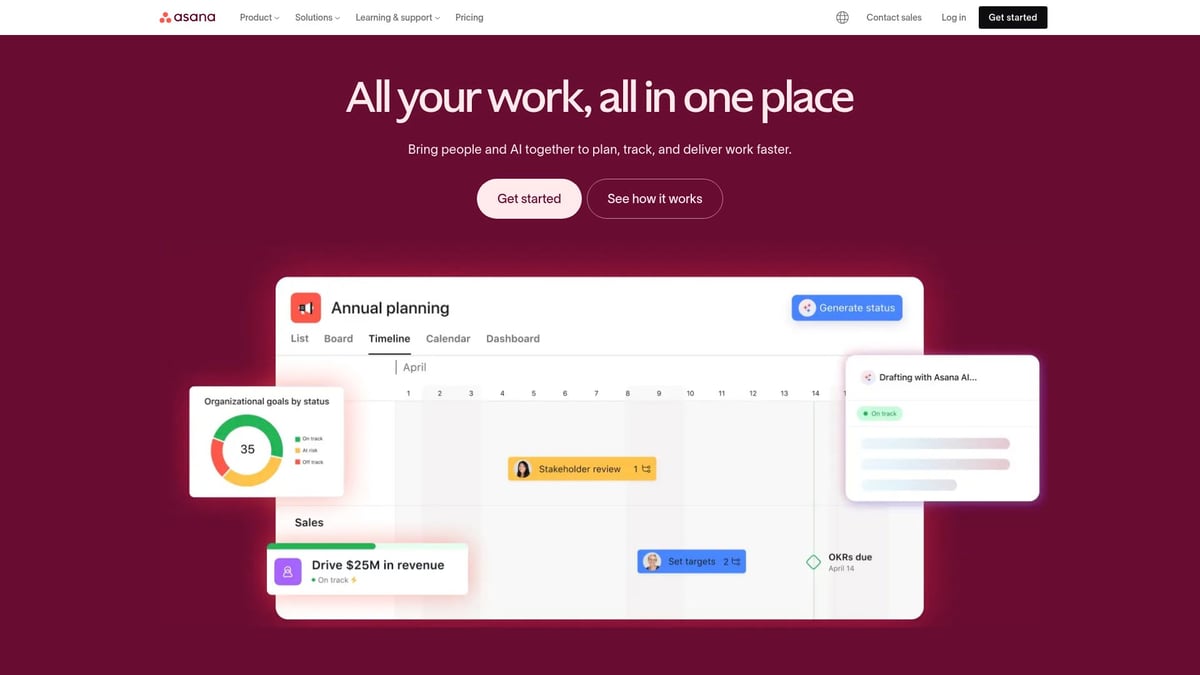
The platform offers advanced reporting and integrates with a wide range of third-party apps. Asana’s visual interface is user-friendly, but new users may feel overwhelmed by the breadth of features.
Premium and enterprise plans unlock richer automation and analytics, making Asana scalable for growing organizations. Its strong focus on accountability and progress tracking is ideal for PMOs and project-driven teams.
Example: NASA, Spotify, and Uber use Asana to coordinate large-scale projects.
If your enterprise values visual project management and streamlined task coordination, Asana deserves a place among your enterprise team collaboration tools.
Monday.com
Monday.com is a flexible work operating system that excels at customization. As one of the most adaptable enterprise team collaboration tools, it lets organizations design workflows with no-code boards, automations, dashboards, and time tracking.
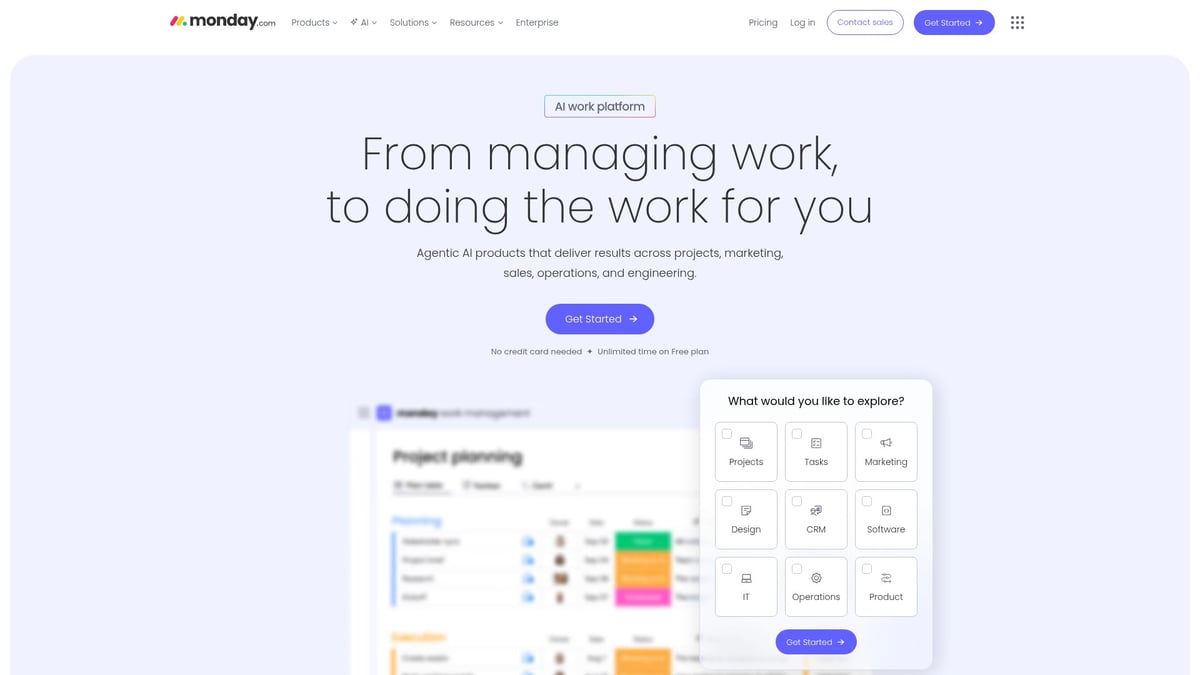
Monday.com’s intuitive interface and visual workflow builder make it easy to tailor solutions to any need. Integration with third-party apps and a modular approach support scale and flexibility.
While add-ons can increase costs and deep customization has a learning curve, the platform’s strengths lie in its versatility and ease of use.
Example: Over 180,000 businesses worldwide leverage Monday.com.
Enterprises seeking customizable, scalable enterprise team collaboration tools will appreciate Monday.com’s blend of power and simplicity.
Zoom One
Zoom One is the evolution of video-first enterprise team collaboration tools. Famous for reliable video conferencing, Zoom now offers chat, whiteboarding, webinars, and phone solutions in a unified platform.
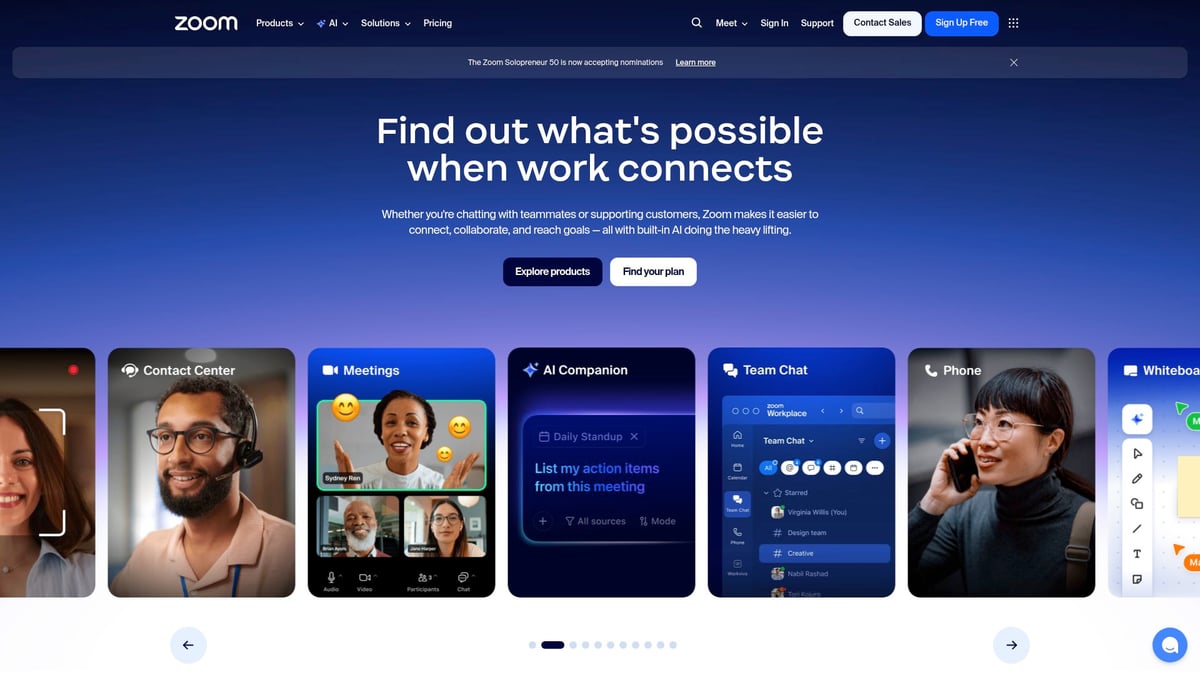
Zoom’s high-quality video, large meeting capacity, and frequent updates keep it at the forefront of virtual collaboration. Security improvements and global reliability make it a top choice for enterprises with distributed teams.
While Zoom shines in video and communications, it lacks deep project management features. Costs can rise for larger organizations needing advanced webinars or phone options.
Example: Zoom hosts 3.3 trillion meeting minutes annually.
For enterprises prioritizing seamless video communication, Zoom One is a leader among enterprise team collaboration tools.
ClickUp
ClickUp is rapidly gaining ground as an all-in-one productivity hub among enterprise team collaboration tools. It combines task management, docs, goals, time tracking, automations, and dashboards in a single platform.
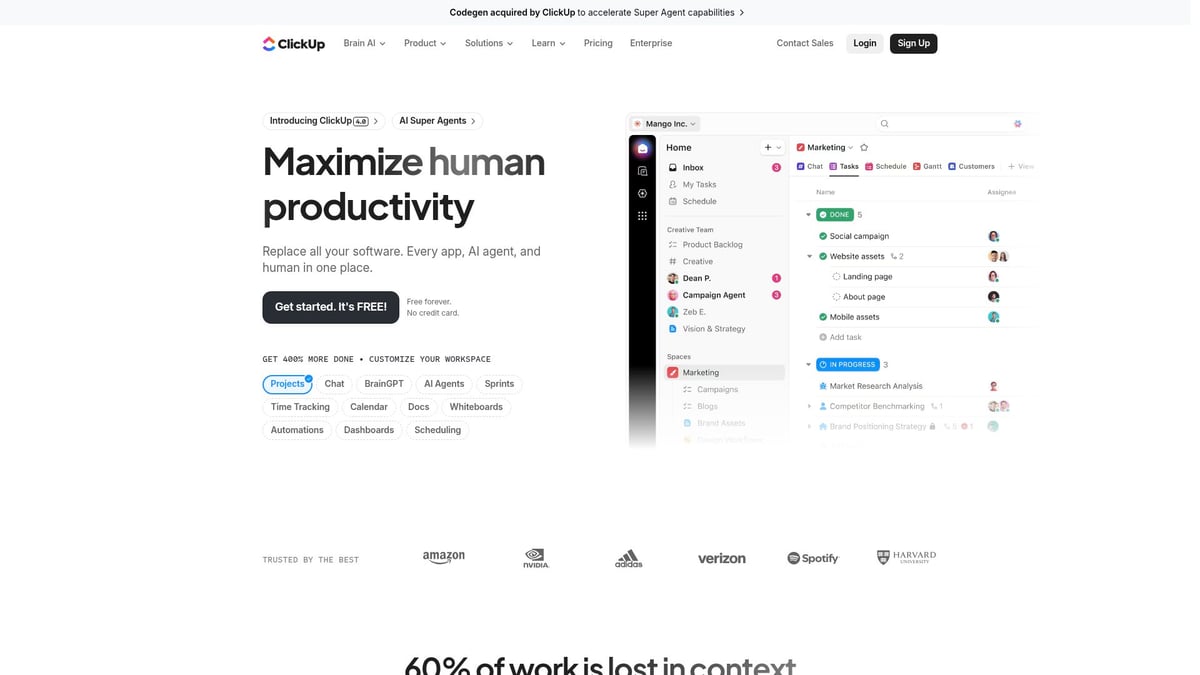
ClickUp’s customization options are nearly limitless. Teams can automate workflows with no code, create custom dashboards, and integrate with hundreds of tools. The platform is affordable and receives continuous feature updates.
Some users report feature overload and occasional lags, especially as teams scale. Still, the value proposition is strong for organizations seeking unified management of projects, documents, and workflows.
Example: Google, Booking.com, and McDonald’s are among ClickUp’s enterprise clients.
If your enterprise values versatility and deep customization, ClickUp should top your list of enterprise team collaboration tools.
Big House Technologies
Big House Technologies stands out for organizations needing custom or specialized enterprise team collaboration tools. Unlike standard SaaS platforms, it offers custom no-code software development, AI-driven integrations, rapid MVP creation, and scalable internal tools tailored precisely to your business needs.
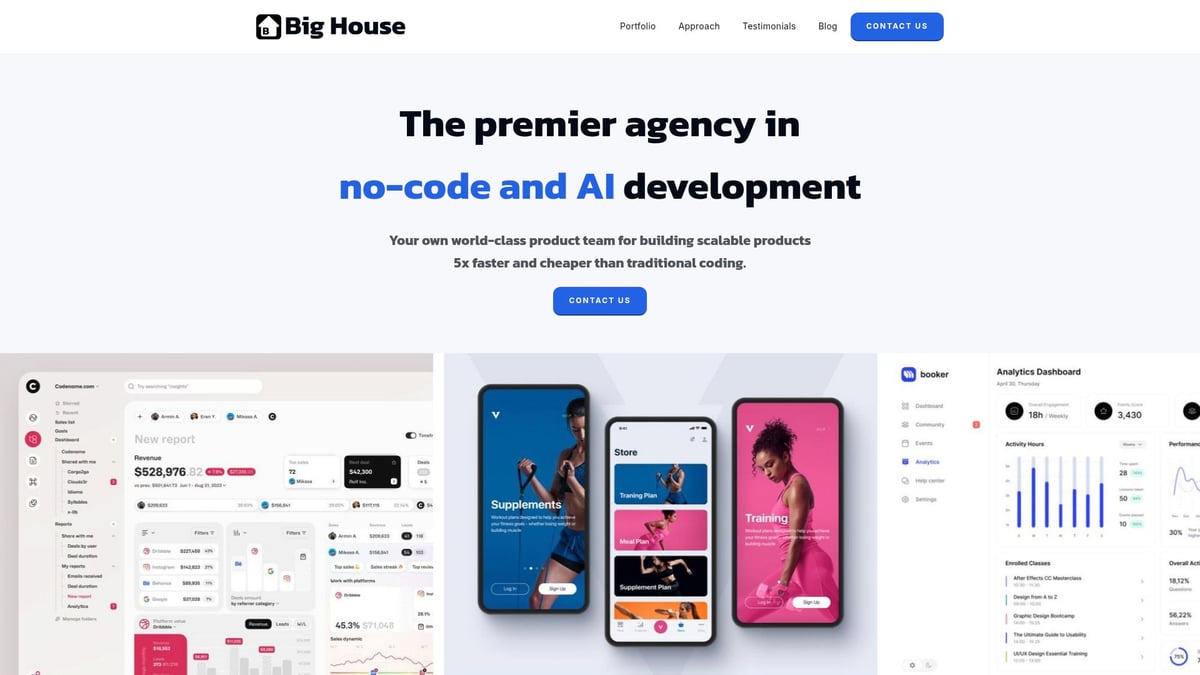
Clients benefit from building solutions up to five times faster and three to four times more cost-effective than traditional development. The end-to-end service and client-centric approach set Big House apart, especially for enterprises seeking unique workflows or internal platforms.
Best suited for organizations requiring solutions beyond off-the-shelf products, Big House Technologies has a proven track record, with clients saving over €2M in development costs.
For a deeper dive, explore Enterprise-grade internal tool builders to understand how custom platforms can transform your collaboration strategy within enterprise team collaboration tools.
Miro
Miro is the visual powerhouse among enterprise team collaboration tools, specializing in online whiteboarding, brainstorming, and workshop facilitation. Its real-time collaboration features, templates, and integrations with Slack, Teams, and Jira make it a favorite for distributed and creative teams.
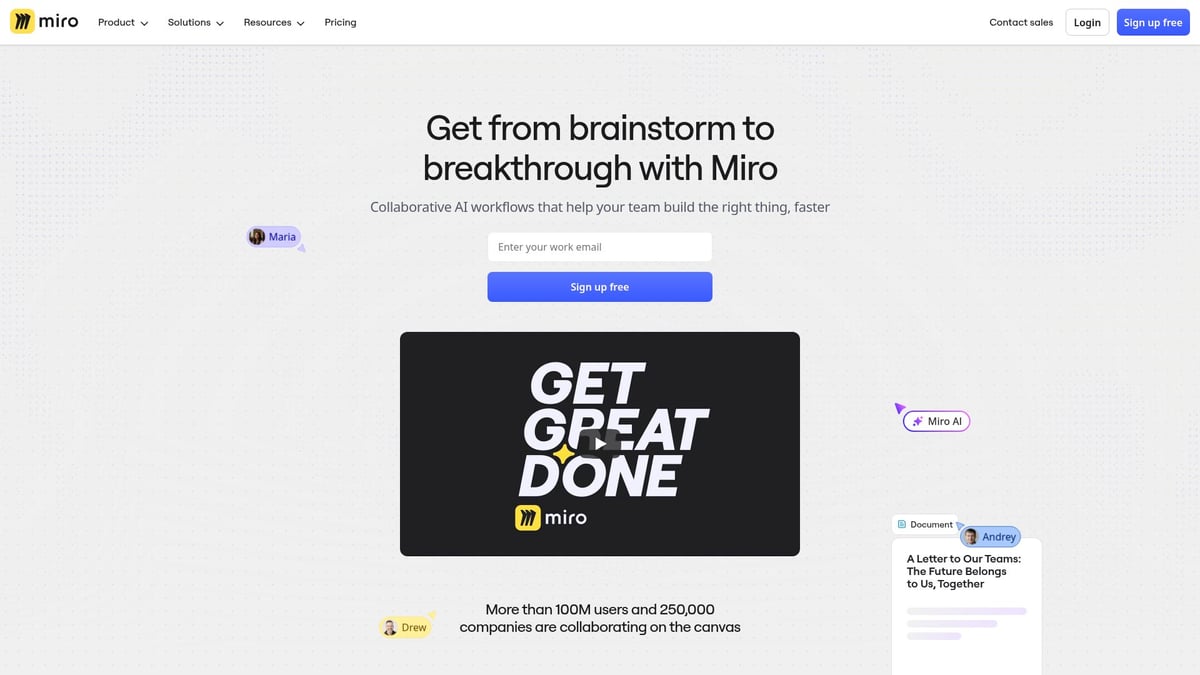
The intuitive interface and versatile templates enable everything from product roadmaps to innovation sprints. Miro’s asynchronous collaboration features empower teams to contribute regardless of time zone.
While the platform can be costly for larger enterprises and the feature set may overwhelm some users, its ability to drive creative, visual collaboration is unmatched.
Example: Over 50 million users worldwide leverage Miro for visual teamwork.
For design, product, and innovation teams, Miro is a must-have addition to the enterprise team collaboration tools stack.
How to Choose the Right Collaboration Tool for Your Enterprise
Selecting the best enterprise team collaboration tools can feel overwhelming, given the expanding market and fast-changing workplace needs. A strategic approach ensures you invest in solutions that truly empower your teams and align with your organization's vision.
Assessing Organizational Needs and Workflows
Start by auditing your existing processes and pain points. What challenges slow your teams down? List the top features you need, such as secure messaging, video calls, or project management. For example, a manufacturing company may prioritize compliance and workflow automation above all.
Mapping these needs against potential enterprise team collaboration tools will help you quickly filter out options that don't fit. Involving stakeholders from different departments ensures all critical requirements are captured.
Scalability and Customization
Can your chosen tool grow with your organization? Look for platforms that offer modular add-ons, robust APIs, and support for custom workflows. No-code and low-code solutions are especially valuable, as they enable teams to adapt the platform without heavy IT involvement.
If your enterprise values innovation and flexibility, exploring no-code empowering enterprise teams can lead to faster customization and greater adoption of enterprise team collaboration tools.
Integration with Existing Ecosystem
Compatibility is crucial. Your enterprise team collaboration tools should integrate seamlessly with your current CRM, ERP, HRIS, and other essential software. This reduces manual work, eliminates silos, and streamlines information flow.
For instance, Slack’s integration with Salesforce and Jira can unify communication and project tracking, preventing data loss and duplication. Always check for pre-built connectors and open APIs.
Security, Compliance, and Data Governance
Enterprise team collaboration tools must meet strict security and compliance standards, especially in regulated industries. Prioritize solutions with end-to-end encryption, detailed admin controls, audit logs, and support for regulations like GDPR or HIPAA.
Assess where data is stored and how it is protected. Involve your IT and compliance teams early to avoid costly surprises later.
User Experience and Adoption
Even the most powerful enterprise team collaboration tools will fail if users find them confusing. Choose platforms with intuitive interfaces, strong mobile support, and accessible training resources.
Smooth onboarding is key—Google Workspace, for example, is praised for its easy learning curve. Consider platforms that offer in-app tutorials, help centers, and active user communities.
Support, Training, and Community
Reliable support is essential for troubleshooting and maximizing tool value. Evaluate the vendor’s customer service, training programs, and online resources. A strong user community can often provide peer-to-peer solutions and best practices.
Look for platforms with 24/7 support or dedicated account managers, especially if your operations are global or mission-critical.
Cost-Benefit Analysis
Finally, compare the total cost of ownership for each solution. Factor in licensing, add-ons, training, and potential migration expenses. Don’t forget to weigh these against the productivity gains and ROI the tool promises.
Reviewing Enterprise Collaboration Market Growth Projections can help you understand market trends, ensuring your investment in enterprise team collaboration tools is future-proof.
Future Trends in Enterprise Collaboration
Enterprise team collaboration tools are rapidly evolving, reshaping how organizations connect, innovate, and operate. As we look to 2026, several transformative trends are set to redefine the landscape, making it essential for enterprises to stay ahead and adapt to these advancements.
AI-Driven Collaboration and Automation
Artificial intelligence is at the forefront, powering predictive task assignment, smart scheduling, and automatic meeting summaries. By 2026, most enterprise team collaboration tools will deeply integrate AI, enabling teams to automate repetitive tasks and gain actionable insights. According to AI Adoption Statistics in 2026, the majority of enterprises will increase AI investment, making collaboration smarter and more efficient.
Increasing Personalization and Custom Workflows
No-code and low-code platforms will empower teams to build custom workflows tailored to their unique needs. Personalization will extend from dashboards to automated processes, allowing organizations to adapt quickly as projects and priorities shift. This flexibility will be a key differentiator in collaboration platforms.
Enhanced Security and Privacy Features
Enterprises will demand stronger security in their collaboration environments. Expect advanced encryption, biometric authentication, and zero-trust security models to become standard. Compliance with global regulations will be easier to maintain, and robust admin controls will give IT teams peace of mind.
Cross-Platform and Device Flexibility
Seamless experiences across web, desktop, mobile, and even wearables will be the norm. Teams will expect to switch devices without losing context or productivity. Enterprise team collaboration tools will focus on mobile-first and cross-device compatibility to support a truly hybrid workforce.
Immersive Collaboration: AR/VR and Spatial Computing
Virtual meeting rooms and 3D whiteboarding will bring remote teams closer together. AR and VR will enable immersive workshops, interactive training, and spatial brainstorming. As these technologies mature, expect enterprise team collaboration tools to blur the line between physical and digital workspaces.
Data-Driven Decision Making
Built-in analytics will help leaders monitor engagement, productivity, and project health in real time. Actionable dashboards will empower managers to make informed decisions quickly, optimizing team performance and resource allocation with data at their fingertips.
Ecosystem Expansion and Vertical Solutions
Industry-specific solutions will emerge, offering tailored features for sectors like healthcare, legal, and education. Collaboration tools will expand their app ecosystems, enabling deeper integrations with core business systems and creating specialized environments for different verticals.
In summary, the future of enterprise team collaboration tools will be shaped by AI, security, immersive technologies, and vertical-specific innovation. Staying agile and embracing these trends will help organizations unlock new levels of productivity and engagement.
Now that you’ve seen just how much the right collaboration tools can shape your team’s productivity and culture, maybe you’re wondering what’s possible for your own organization. You don’t have to stick with off-the-shelf solutions—today’s no code platforms and smart integrations make it easier than ever to build custom tools that actually fit the way your teams work. If you’re curious about how you can streamline your internal processes and boost collaboration with tools designed for your needs, let’s dive deeper together. Transform Your Internal Tools with No Code

About Big House
Big House is committed to 1) developing robust internal tools for enterprises, and 2) crafting minimum viable products (MVPs) that help startups and entrepreneurs bring their visions to life.
If you'd like to explore how we can build technology for you, get in touch. We'd be excited to discuss what you have in mind.
Other Articles
Discover how low code no code platforms are transforming software development in 2026. Learn benefits, use cases, and choosing the right platform.
Discover the best Bubble agencies for your no-code project in 2026. Compare expertise, pricing, and services to find the perfect development partner.
Discover the 7 best agencies building Bubble MVP in 2026 Compare pricing features and strengths to find your ideal partner for fast scalable MVP success