
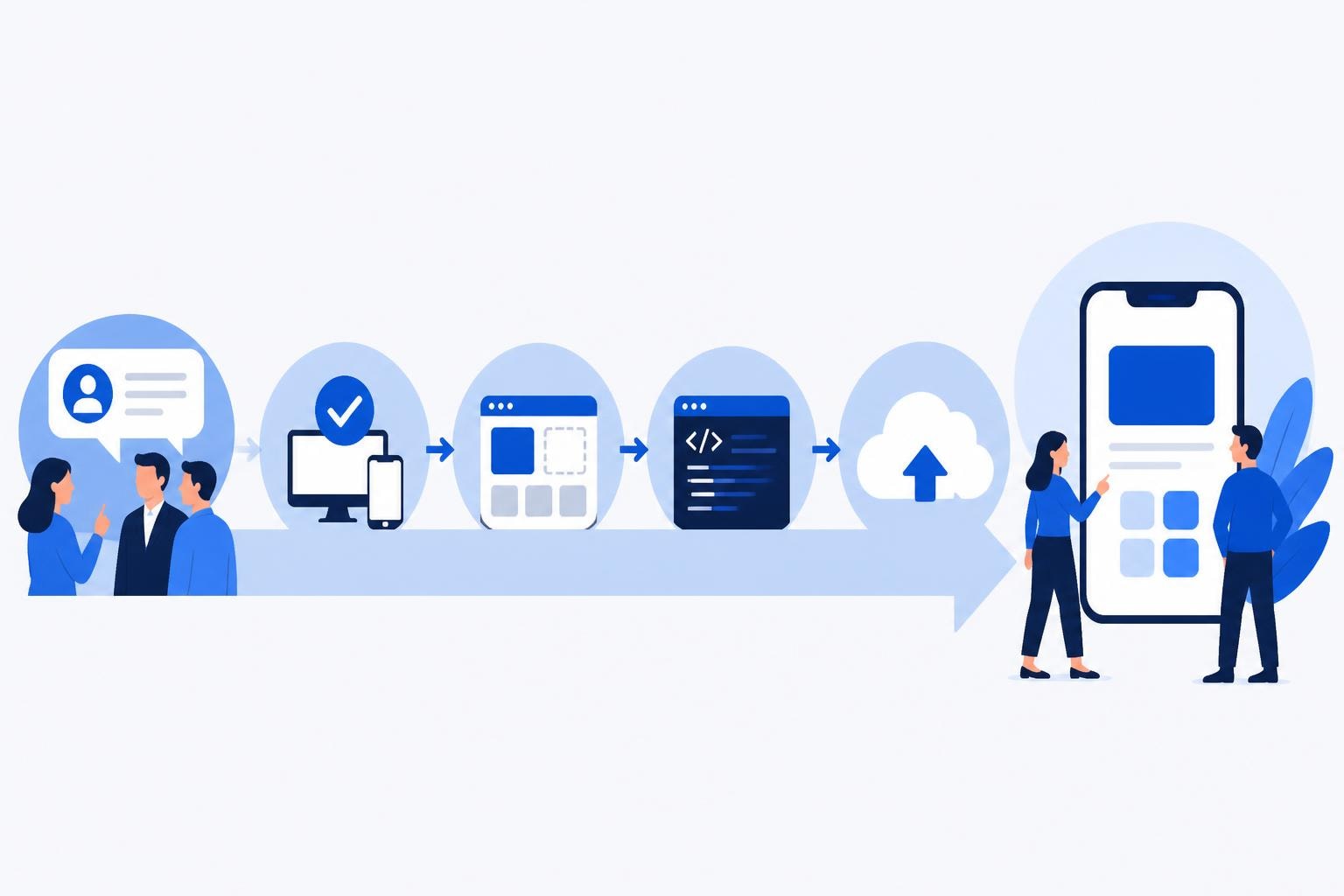
Company app development has evolved dramatically in 2026, transforming from a luxury investment into a strategic necessity for businesses across all sectors. Organizations now face the dual challenge of meeting heightened user expectations while controlling development costs and timelines. Whether building internal tools to streamline operations or customer-facing applications to drive revenue, the approach to company app development requires careful planning, platform selection, and execution strategies that balance speed with quality.
Understanding Modern Company App Development Needs
The landscape of company app development has shifted significantly over the past few years. Enterprises no longer have the luxury of 18-month development cycles or unlimited budgets for custom software projects. Market dynamics demand faster time-to-market, and technological advances have made rapid development achievable without sacrificing quality.
Key drivers shaping 2026 company app development include:
- Remote workforce requirements demanding mobile-first solutions
- Integration complexity across existing enterprise systems
- Security and compliance regulations becoming more stringent
- User experience expectations matching consumer-grade applications
- Budget pressures requiring cost-effective development approaches
Organizations must balance these competing demands while ensuring their applications remain scalable and maintainable. The traditional waterfall development approach has given way to agile methodologies and, increasingly, to no-code and low-code platforms that accelerate delivery timelines.
The Rise of No-Code in Enterprise Development
No-code platforms have matured significantly, becoming viable options for serious company app development projects. These platforms enable businesses to build MVPs with no-code tools that previously required months of traditional coding. The speed advantage is compelling, but the real value lies in the ability to iterate quickly based on user feedback.
Companies leveraging no-code solutions report development time reductions of 60-80% compared to traditional approaches. This acceleration doesn't come at the expense of functionality. Modern no-code platforms support complex workflows, API integrations, database management, and sophisticated user interfaces that meet enterprise standards.
Strategic Planning for Company App Development
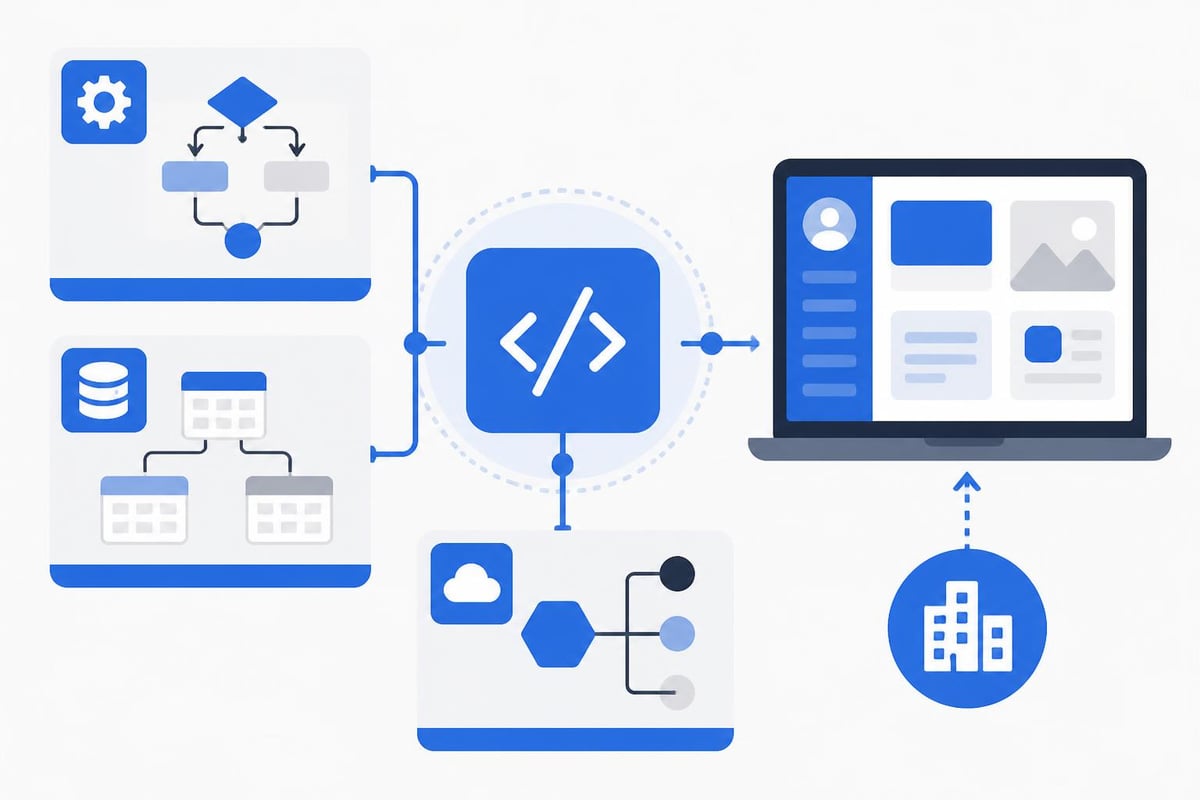
Successful company app development begins long before any code is written or any platform is selected. The planning phase determines whether your application will solve real business problems or become another abandoned digital project.
Defining Clear Objectives and Success Metrics
Start by articulating exactly what business problem your application solves. Vague objectives like "improve efficiency" or "enhance customer experience" lack the specificity needed to guide development decisions. Instead, define measurable outcomes such as "reduce order processing time by 40%" or "increase customer self-service resolution rate to 75%."
| Planning Element | Traditional Approach | Modern Approach |
|---|---|---|
| Requirements Gathering | 6-8 weeks | 2-3 weeks with iterative refinement |
| Stakeholder Alignment | Single approval gate | Continuous feedback loops |
| Success Definition | Feature completion | Business outcome achievement |
| Timeline | Fixed 12-18 months | Phased 3-6 month releases |
These metrics guide everything from feature prioritization to platform selection. They also provide the foundation for measuring ROI after deployment, ensuring your company app development investment delivers tangible business value.
Choosing the Right Development Approach
The choice between traditional development, low-code, no-code, or hybrid approaches significantly impacts project outcomes. Each approach offers distinct advantages depending on your specific requirements, timeline, and budget constraints.
Traditional custom development remains appropriate for applications with extremely complex logic, specialized performance requirements, or unique functionality that existing platforms cannot support. However, this approach typically requires 6-12 months minimum and significant ongoing maintenance resources.
No-code platforms excel for internal tools, MVPs, and business applications where speed and cost-efficiency are paramount. AI-powered no-code development tools have expanded capabilities to include sophisticated automation and integrations. These platforms reduce development costs by 50-70% while delivering production-ready applications in weeks rather than months.
Hybrid approaches combine no-code foundations with custom code extensions for specific functionality. This strategy provides the speed benefits of no-code while maintaining flexibility for unique requirements.
Best Practices for Mobile and Enterprise App Development
Following established best practices for enterprise app development ensures your project avoids common pitfalls that derail company app development initiatives. These practices span technical architecture, user experience, security, and operational considerations.
Architecture and Technical Foundation
Building on a solid technical foundation prevents costly refactoring as your application scales. Choose architectures that support growth from day one, even if initial usage is limited.
- Implement cloud-native architecture for scalability and resilience
- Design modular components that can be updated independently
- Establish clear data models that support current and anticipated needs
- Build API-first to enable future integrations and expansions
- Plan for offline functionality in mobile applications
The enterprise mobile app development guide emphasizes security-first architecture, particularly critical in 2026's heightened threat environment. Every company app development project must incorporate security from initial design rather than bolting it on later.
User Experience and Interface Design
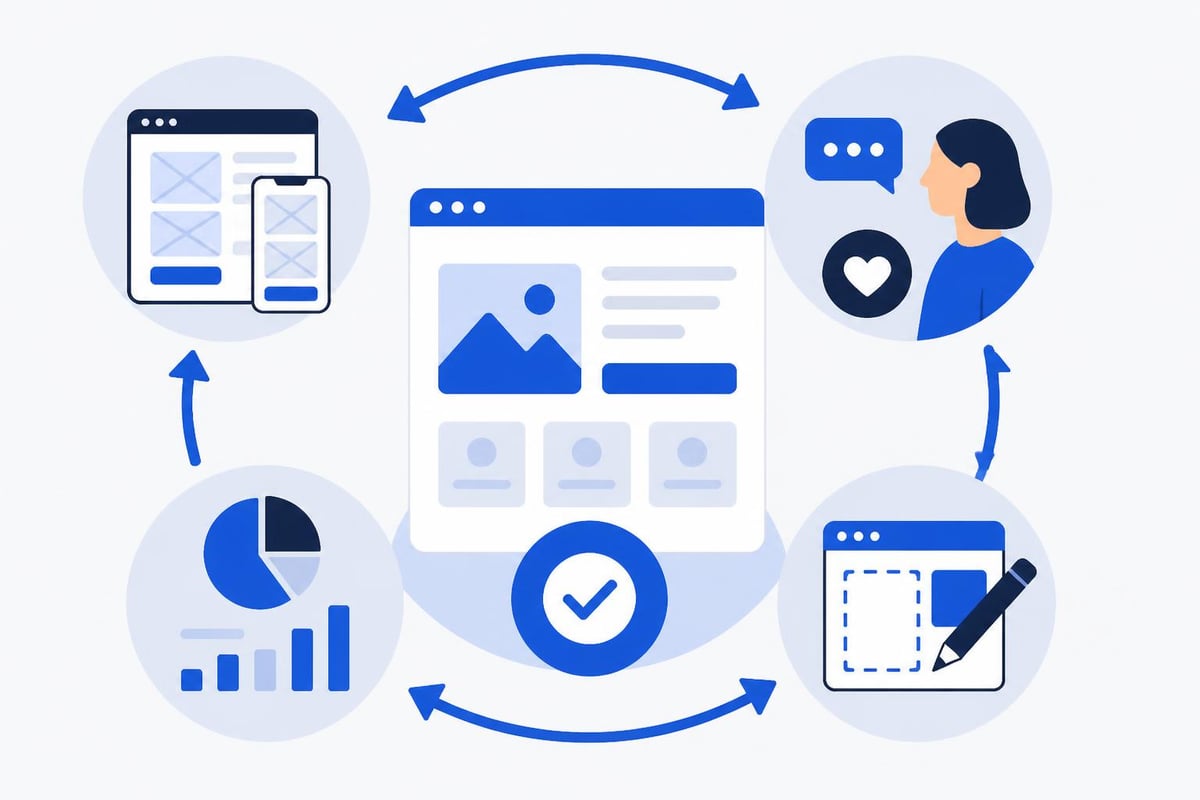
Even the most technically sophisticated application fails if users find it confusing or frustrating. Company app development must prioritize user experience alongside functionality. Consider that tools like best mobile app development software now include built-in UX testing and optimization features.
Critical UX considerations include:
- Intuitive navigation that requires minimal training
- Responsive design that works across devices and screen sizes
- Performance optimization ensuring sub-3-second load times
- Accessibility compliance meeting WCAG 2.1 standards
- Consistent design language aligned with brand guidelines
Testing UX with actual users early and often prevents expensive redesigns after launch. Prototype testing tools allow you to validate interface decisions before committing development resources.
Platform Selection and Technology Stack
Choosing the right technology foundation is one of the most consequential decisions in company app development. This choice impacts development speed, long-term maintenance costs, scalability potential, and your ability to attract development talent.
Evaluating No-Code Platforms for Enterprise Use
No-code platforms have matured significantly, with enterprise-grade options now supporting complex business applications. When evaluating platforms for company app development, assess capabilities across multiple dimensions.
| Evaluation Criteria | Why It Matters | Key Questions |
|---|---|---|
| Scalability | Supports growth | Can it handle 10x current user load? |
| Integration Capabilities | Connects to existing systems | Does it support your critical APIs? |
| Customization Flexibility | Adapts to unique needs | Can you extend beyond standard features? |
| Security and Compliance | Protects sensitive data | Does it meet your industry requirements? |
| Vendor Stability | Long-term viability | Is the platform financially stable? |
| Total Cost of Ownership | Budget predictability | What are hidden costs beyond licenses? |
Platforms like Bubble enable sophisticated app development while maintaining the speed advantages that make no-code attractive. Similarly, AI-driven platforms like Lovable accelerate development through intelligent code generation and suggestions.
Integration and Data Management Strategies
Modern company app development rarely involves building isolated systems. Your application must connect to existing databases, CRMs, ERPs, and third-party services. Planning integration architecture early prevents data silos and manual workarounds that undermine efficiency gains.
Effective integration strategies include:
- Mapping all required data flows before development begins
- Establishing single sources of truth for critical business data
- Implementing proper error handling and data validation
- Planning for data migration from legacy systems
- Building monitoring and logging for integration health
For businesses managing HR processes, platforms like Verlof.io demonstrate how specialized tools can integrate into broader application ecosystems, handling specific functions while connecting to central employee databases and planning systems.
Development Process and Team Structure
The actual execution of company app development requires careful orchestration of people, processes, and tools. Whether working with an internal team or partnering with an external agency, clear processes ensure projects stay on track.
Agile Methodologies for App Development
Agile approaches have become standard in company app development for good reason. They provide the flexibility to adjust course based on user feedback and changing business needs while maintaining forward momentum.
Sprint-based development typically follows this pattern:
- Sprint Planning: Define specific deliverables for 2-3 week periods
- Daily Standups: Identify blockers and maintain team alignment
- Development and Testing: Build and validate features incrementally
- Sprint Review: Demonstrate working functionality to stakeholders
- Retrospective: Continuously improve processes and collaboration
This iterative approach allows MVP design to development agencies to deliver functional software faster while incorporating real-world feedback that improves the final product.
Quality Assurance and Testing Protocols
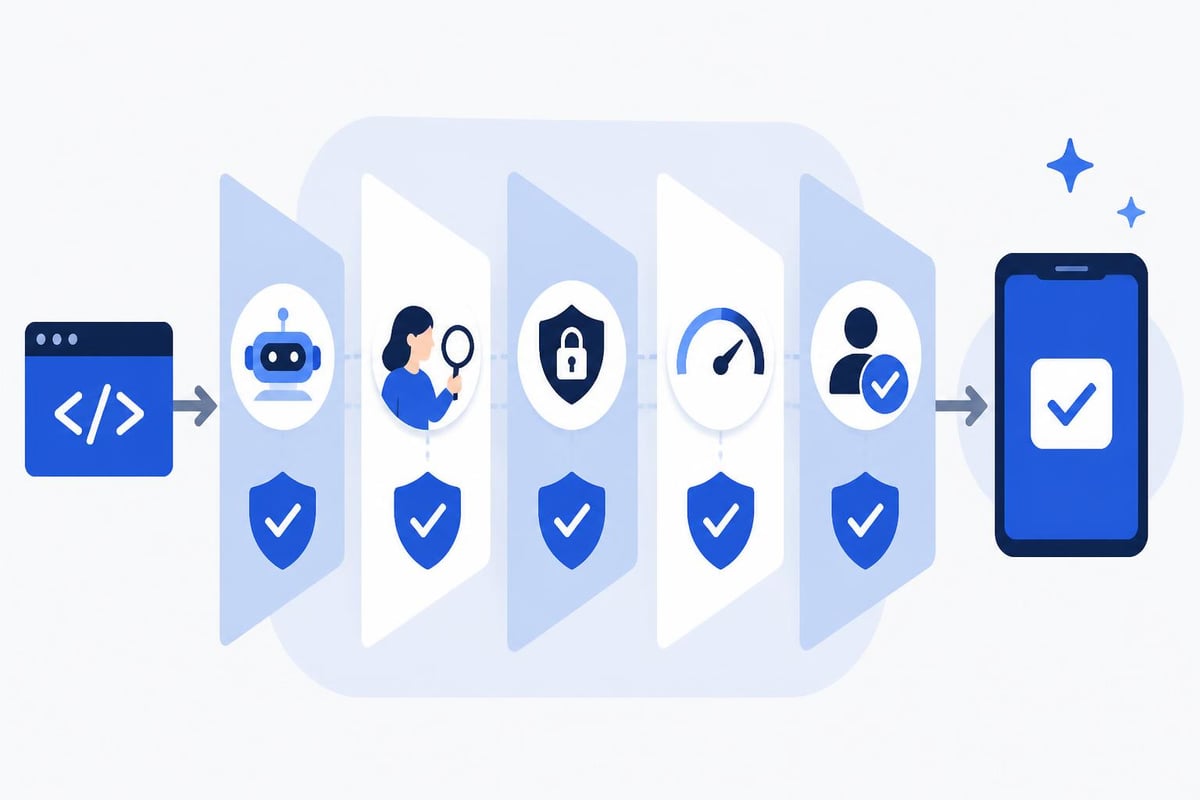
Quality assurance cannot be an afterthought in company app development. Comprehensive testing strategies catch issues before they impact users and prevent expensive post-launch fixes.
- Automated testing for regression prevention
- Manual testing for user experience validation
- Security testing to identify vulnerabilities
- Performance testing under expected load conditions
- Accessibility testing for compliance and inclusivity
Research on mobile app security practices highlights common developer challenges in securing applications. Building security testing into your development workflow addresses these challenges systematically rather than reactively.
Cost Management and Budget Optimization
Company app development costs can spiral quickly without disciplined budget management. Understanding cost drivers and optimization strategies helps organizations maximize their development investment.
Understanding Total Cost of Ownership
The sticker price for development represents only part of the total cost of ownership. Comprehensive budgeting accounts for all expenses across the application lifecycle.
Direct development costs include:
- Platform licenses and subscriptions
- Developer time and resources
- Design and UX research
- Testing and quality assurance
- Project management overhead
Ongoing operational costs include:
- Hosting and infrastructure
- Maintenance and updates
- User support and training
- Security monitoring and patches
- Feature enhancements and improvements
Organizations exploring low-cost MVP development tools can significantly reduce initial investment while maintaining quality. The key is balancing upfront savings with long-term sustainability and avoiding technical debt that becomes expensive to resolve.
ROI Measurement and Value Tracking
Demonstrating return on investment justifies company app development spending and secures budget for future enhancements. Establish measurement frameworks before launch to track actual impact against projected benefits.
Financial planning tools like Taxt help businesses optimize their overall financial picture, including technology investments. Their systematic approach to planning applies equally well to measuring app development ROI through structured tracking of costs and benefits.
Deployment, Launch, and Post-Launch Management
Successful deployment requires as much planning as development itself. The transition from development to production involves technical preparation, user readiness, and support infrastructure.
Preparing for Launch
A comprehensive launch plan addresses technical, operational, and communication requirements simultaneously.
- Technical Readiness: Verify infrastructure can handle expected load
- Data Migration: Transfer and validate data from legacy systems
- User Training: Prepare documentation and training materials
- Support Infrastructure: Establish helpdesk processes and resources
- Communication Plan: Inform stakeholders about launch timeline and changes
Phased rollouts reduce risk by limiting initial exposure. Start with a pilot group, gather feedback, address issues, then expand to broader audiences. This approach is particularly valuable for internal company app development projects where you can control the rollout pace.
Continuous Improvement and Iteration
Launch is the beginning, not the end, of your company app development journey. The most successful applications evolve continuously based on usage data and user feedback.
Post-launch priorities include:
- Monitoring performance metrics and user behavior
- Collecting and prioritizing feature requests
- Addressing bugs and usability issues quickly
- Optimizing performance based on real-world usage
- Planning enhancement roadmap aligned with business goals
For organizations focused on growth, services like RankPill demonstrate the value of systematic, data-driven optimization. Their approach to continuous SEO improvement parallels the iterative enhancement model that keeps applications relevant and valuable over time.
Security, Compliance, and Data Protection
Security considerations permeate every aspect of modern company app development. With data breaches making headlines regularly and regulatory requirements expanding, security cannot be an afterthought.
Implementing Security-First Architecture
Building security into your application from the ground up is far more effective than adding it later. Security-first architecture considers threats and protections at every layer.
| Security Layer | Key Protections | Implementation Approach |
|---|---|---|
| Authentication | Identity verification | Multi-factor authentication, SSO integration |
| Authorization | Access control | Role-based permissions, principle of least privilege |
| Data Protection | Encryption | At-rest and in-transit encryption, secure key management |
| Application Security | Vulnerability prevention | Input validation, secure coding practices, regular scans |
| Network Security | Communication protection | HTTPS enforcement, API security, DDoS protection |
Research on developing secure mobile health apps provides insights applicable across industries. The challenges developers face in healthcare, particularly around data protection and compliance, mirror those in finance, legal, and other regulated sectors.
Compliance and Regulatory Requirements
Company app development must account for industry-specific regulations and general data protection laws. Compliance requirements vary by industry, geography, and data types, but certain principles apply universally.
Core compliance considerations:
- Understanding which regulations apply to your application
- Implementing required data protection measures
- Establishing audit trails and logging
- Creating data retention and deletion policies
- Preparing for compliance audits and certifications
Working with experienced app development agencies familiar with compliance requirements helps navigate complex regulatory landscapes. Their expertise prevents costly mistakes and accelerates certification processes.
Scaling and Future-Proofing Your Application
Planning for scale from day one costs little extra but saves enormous effort later. Company app development should anticipate growth even if initial usage is modest.
Technical Scalability Strategies
Applications must scale both vertically (handling more load per user) and horizontally (supporting more users). Your architecture should accommodate both dimensions without complete rebuilds.
Scalability best practices include:
- Designing stateless application layers that scale horizontally
- Implementing caching strategically to reduce database load
- Using content delivery networks for static assets
- Optimizing database queries and indexing
- Planning for database sharding if needed at scale
- Monitoring performance metrics to anticipate capacity needs
The study on CI adoption in mobile app success demonstrates how development practices impact scalability. Continuous integration enables faster iteration while maintaining code quality as teams and applications grow.
Organizational Scalability and Knowledge Transfer
Technical scalability means nothing if your organization cannot manage and maintain the application as it grows. Company app development must consider human factors alongside technical architecture.
Documenting architecture decisions, maintaining updated technical documentation, and establishing knowledge-sharing practices ensures your application doesn't become dependent on individual team members. This is particularly important when using internal dashboard tools that multiple teams need to understand and maintain.
Company app development in 2026 requires balancing speed, cost, security, and scalability while meeting heightened user expectations. The strategies outlined above provide a framework for navigating these competing demands successfully. Whether you're building internal tools or customer-facing applications, partnering with experienced specialists accelerates your path to production-ready software. Big House Technologies combines no-code efficiency with enterprise-grade quality, delivering scalable applications that transform business operations while staying within budget and timeline constraints.

About Big House
Big House is committed to 1) developing robust internal tools for enterprises, and 2) crafting minimum viable products (MVPs) that help startups and entrepreneurs bring their visions to life.
If you'd like to explore how we can build technology for you, get in touch. We'd be excited to discuss what you have in mind.
Other Articles
Learn how to connect SendGrid to your Bubble app with this step-by-step guide, fix sender verification issues, and unlock email automation for MVPs, AI tools, and enterprise apps.
Discover how to find and hire the right programmer for your project. Learn about platforms, costs, no-code alternatives, and best practices.
Discover the 9 leading MVP design to development agencies in 2026 Compare features pricing and trends to find the best partner for rapid product success