
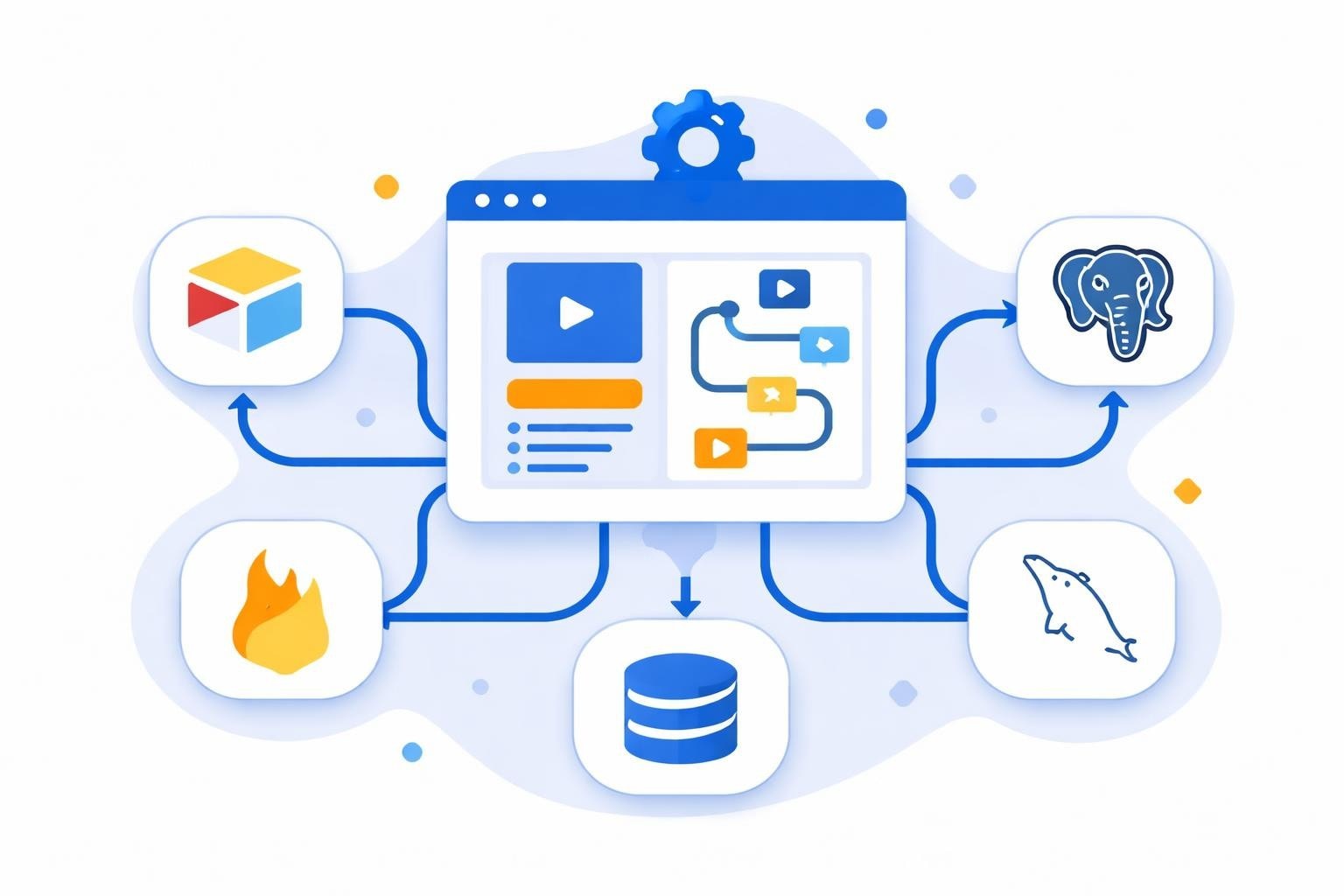
Choosing the best database for no-code platforms fundamentally shapes how your application performs, scales, and evolves. As enterprises and startups increasingly embrace no-code development to accelerate their digital transformation, the database layer becomes critical infrastructure that determines everything from development speed to long-term scalability. The right database choice empowers teams to build sophisticated applications without wrestling with complex backend configuration, while the wrong choice creates bottlenecks that compound over time.
Understanding Database Requirements for No-Code Development
No-code platforms democratize software development, but they still require robust data infrastructure. The best database for no-code platforms must balance accessibility with power, offering intuitive interfaces for citizen developers while providing the reliability enterprise applications demand.
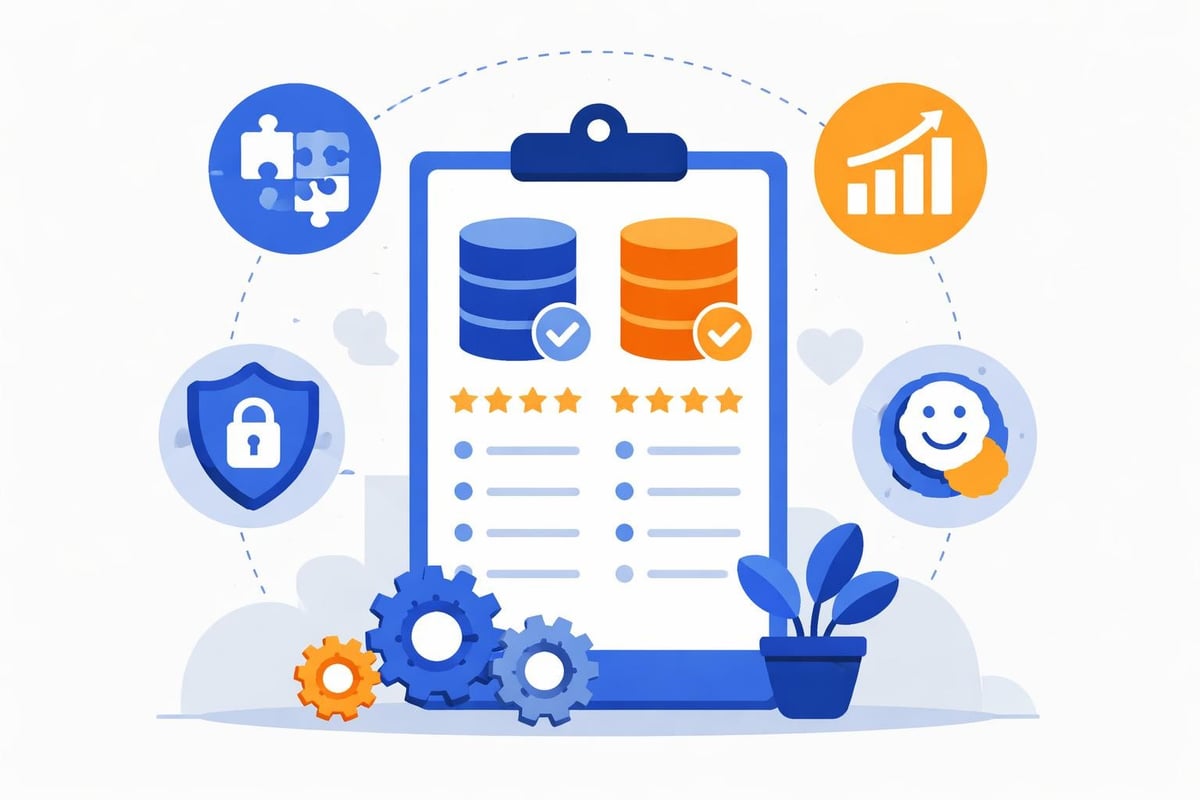
Key Criteria for Database Selection
When evaluating databases for no-code environments, several factors distinguish excellent options from merely adequate ones:
- Native integration capabilities with popular no-code platforms like Bubble, Softr, and Adalo
- Visual data modeling tools that reduce the learning curve for non-technical users
- Scalability metrics that accommodate growth from MVP to enterprise scale
- Real-time synchronization for collaborative workflows and live updates
- API accessibility for extending functionality beyond platform limitations
- Security and compliance certifications meeting enterprise standards
The complexity lies in finding databases that excel across these dimensions simultaneously. TechRadar's recent analysis of cloud databases evaluates leading options based on pricing, performance, and ease of use, providing valuable benchmarks for decision-makers.
Top Database Options for No-Code Platforms
Different databases serve different use cases within the no-code ecosystem. Understanding these distinctions helps teams select tools aligned with their specific requirements.
Airtable: The Spreadsheet-Database Hybrid
Airtable revolutionized how non-technical teams think about databases by presenting relational data through a familiar spreadsheet interface. This accessibility makes it an excellent choice for teams transitioning from Excel or Google Sheets.
Strengths:
- Intuitive visual interface requiring minimal training
- Rich field types including attachments, checkboxes, and lookup fields
- Built-in views (grid, calendar, kanban, gallery) for different perspectives
- Robust API for connecting to virtually any no-code platform
- Collaboration features with comments and real-time updates
Limitations:
- Performance degradation with tables exceeding 50,000 records
- Limited querying capabilities compared to traditional SQL databases
- Pricing scales quickly for teams with extensive data needs
- Lacks advanced features like stored procedures or triggers
Airtable particularly shines for project management applications, content calendars, and CRM systems where data relationships matter but volume remains moderate. Many no-code tools for SaaS founders integrate seamlessly with Airtable's flexible schema.
PostgreSQL: Enterprise-Grade Relational Power
PostgreSQL represents the opposite end of the spectrum, offering industrial-strength capabilities for applications demanding reliability and complex data operations. While traditionally requiring SQL expertise, modern no-code platforms abstract much of this complexity.
| Feature | Capability | No-Code Benefit |
|---|---|---|
| ACID Compliance | Full transaction support | Data integrity for financial applications |
| JSON Support | Native JSON field types | Flexible schema for evolving requirements |
| Scalability | Handles billions of rows | Future-proof architecture |
| Extensions | PostGIS, full-text search | Advanced features without custom code |
| Open Source | No licensing fees | Reduced operational costs |
Adalo's guide on integrating SQL databases demonstrates how no-code platforms bridge the gap between PostgreSQL's power and user-friendly interfaces. This combination proves invaluable for applications requiring complex reporting, multi-tenant architectures, or regulatory compliance.
Firebase: Real-Time Data for Dynamic Applications
Google's Firebase emerged as the best database for no-code platforms focused on real-time interactions. Its NoSQL structure and live synchronization capabilities make it ideal for collaborative tools, chat applications, and dashboards requiring instant updates.
Firebase excels in scenarios where:
- Multiple users interact with shared data simultaneously
- Offline functionality must sync when connectivity returns
- Authentication integration simplifies user management
- Serverless architecture eliminates infrastructure management
- Mobile-first development prioritizes responsive experiences
The platform's generous free tier attracts startups building MVPs, while its scalability supports applications growing to millions of users. However, the NoSQL document model requires different thinking than traditional relational databases, particularly for complex queries spanning multiple collections.
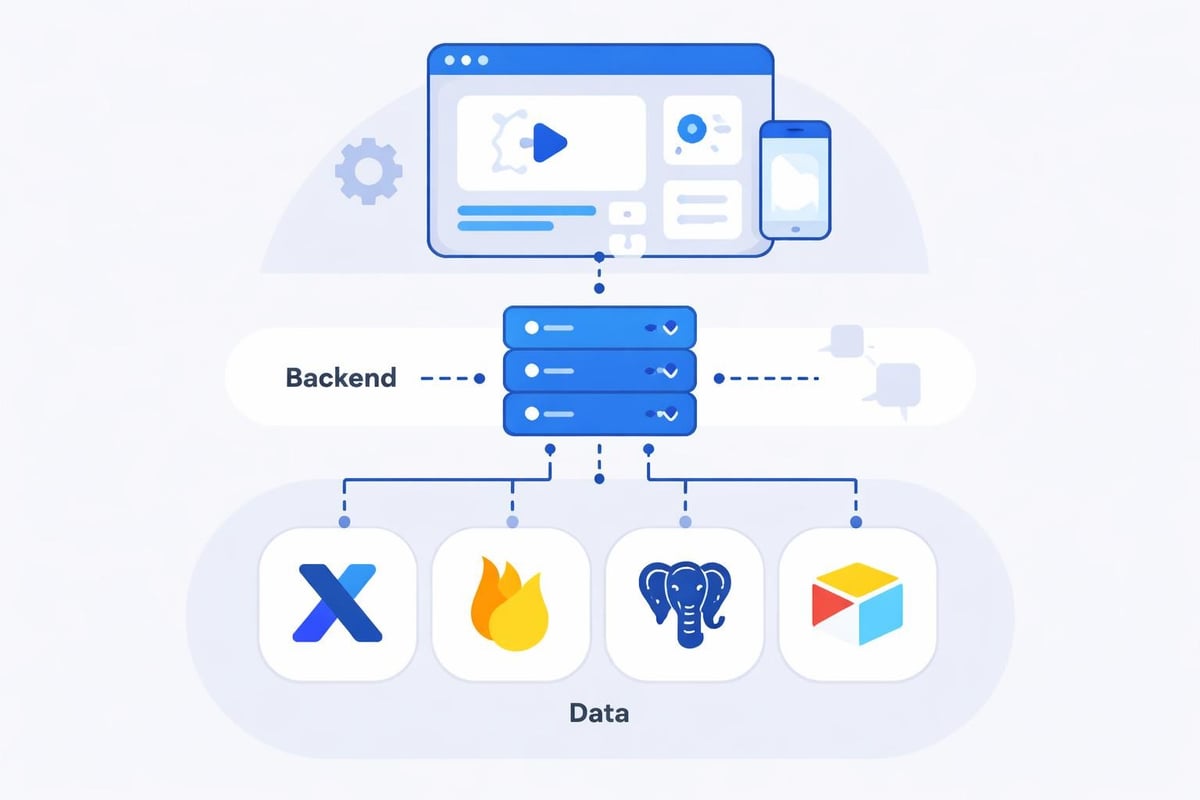
Xano: Purpose-Built for No-Code Backends
Xano deserves special mention as a database specifically designed for no-code development. It combines PostgreSQL's power with visual tools for building APIs, business logic, and authentication flows.
This purpose-built approach offers distinct advantages:
- Visual query builder eliminating SQL syntax requirements
- Built-in API generation from database schemas
- Function stack for implementing complex business logic
- Marketplace of pre-built templates and functions
- Scalable infrastructure handling production workloads
For teams building with Bubble or similar platforms, Xano provides the backend flexibility often missing from all-in-one solutions. This separation of concerns enables better architecture and easier platform migrations if requirements change.
Matching Databases to Use Cases
Selecting the best database for no-code platforms requires understanding your specific application context. Different scenarios demand different optimizations.
Internal Tools and Workflows
Organizations building internal tools prioritize rapid development and ease of maintenance over extreme scalability. For these use cases:
Airtable or NocoDB typically provide the sweet spot between functionality and simplicity. NocoDB transforms existing databases into no-code interfaces, making it excellent for teams with established data infrastructure who want improved accessibility.
Employee directories, approval workflows, and resource booking systems benefit from quick setup and intuitive interfaces. Enterprise workflow automation tools increasingly leverage these database options to reduce IT dependency.
Customer-Facing Applications
External applications serving customers demand reliability, security, and performance. The stakes justify additional complexity in exchange for robustness.
PostgreSQL or Firebase emerge as preferred choices depending on whether the application emphasizes complex transactions or real-time interactions. E-commerce platforms, patient portals, and financial dashboards typically require PostgreSQL's transactional guarantees. Collaborative platforms, social features, and live dashboards benefit from Firebase's real-time capabilities.
Security considerations intensify for customer-facing scenarios. Both platforms offer enterprise-grade security features, but implementation details matter significantly. Teams should evaluate compliance requirements (HIPAA, SOC 2, GDPR) against database certifications before committing.
MVP Development and Validation
Startups validating business models need databases that accelerate time-to-market without creating technical debt that hampers future growth.
This tension between speed and sustainability makes database selection particularly challenging. Firebase or Airtable minimize initial complexity, enabling founders to launch quickly and iterate based on user feedback. However, low-cost MVP development tools should still consider migration paths if the product finds market fit.
Many successful products began with simpler databases and migrated to more robust solutions as requirements evolved. Planning for this transition from the start reduces pain later.
Advanced Considerations for Database Selection
Beyond basic functionality, several sophisticated factors influence which database proves best for specific no-code implementations.
Data Modeling and Relationships
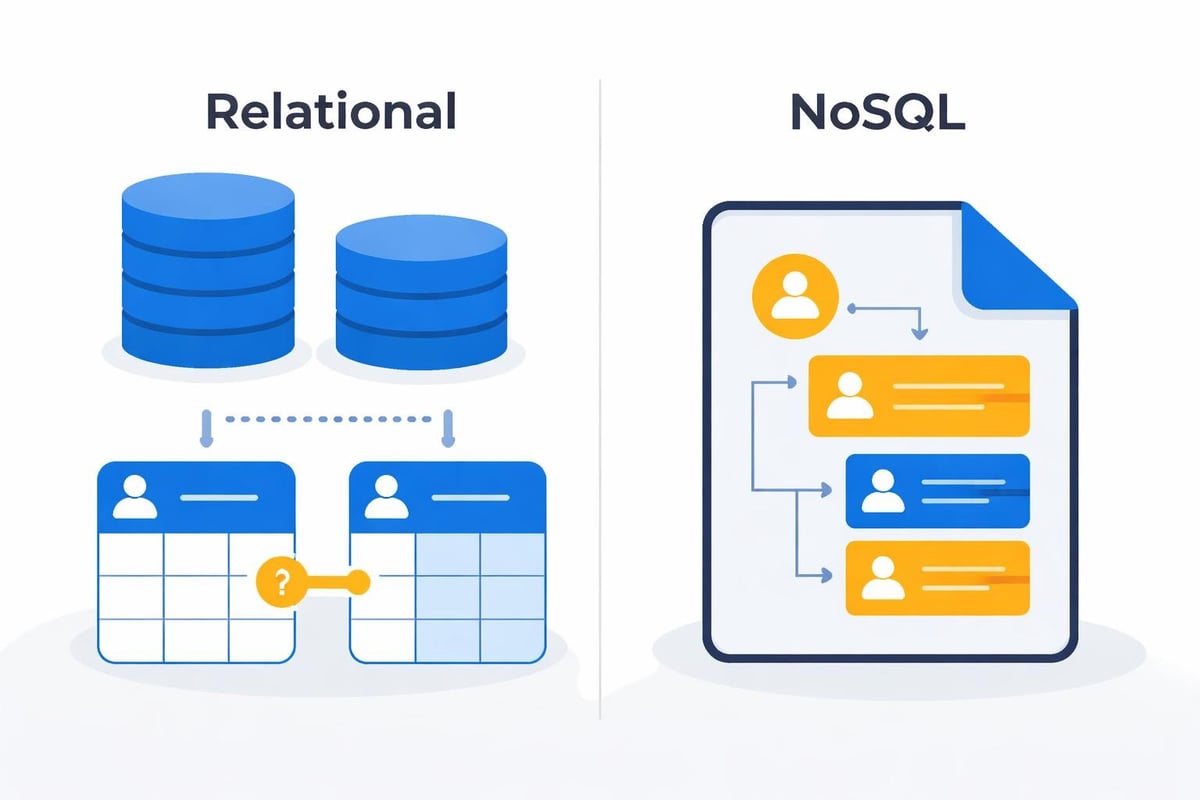
The best database for no-code platforms must align with your data structure complexity. Applications with straightforward entities and limited relationships thrive with simpler databases. Those requiring intricate connections, inheritance, or polymorphic relationships benefit from more sophisticated options.
Relational databases (PostgreSQL, MySQL) excel when:
- Many-to-many relationships connect data across tables
- Data normalization prevents redundancy and inconsistencies
- Complex joins aggregate information from multiple sources
- Referential integrity constraints protect data quality
NoSQL databases (Firebase, MongoDB) shine when:
- Schema flexibility accommodates evolving requirements
- Denormalized data structures optimize read performance
- Hierarchical data naturally fits document models
- Horizontal scaling distributes load across servers
Performance and Optimization
Performance requirements vary dramatically across applications. Internal tools serving dozens of users tolerate response times unacceptable for consumer applications serving thousands concurrently.
| Database Type | Read Performance | Write Performance | Query Complexity | Best For |
|---|---|---|---|---|
| Airtable | Good (< 50K records) | Good | Limited | Simple queries, small datasets |
| PostgreSQL | Excellent | Excellent | Very High | Complex analytics, large datasets |
| Firebase | Excellent | Excellent | Moderate | Real-time updates, simple queries |
| MySQL | Excellent | Very Good | High | Read-heavy applications |
No-code platforms often abstract performance optimization, but understanding database capabilities prevents architectural decisions that create bottlenecks. Building APIs for no-code databases requires balancing ease of implementation against performance requirements.
Cost Structures and Scaling Economics
Database pricing models significantly impact total cost of ownership, particularly as applications scale. The best database for no-code platforms at 100 users may become prohibitively expensive at 10,000 users.
Airtable charges per user and record limits, creating predictable costs that scale linearly. This transparency helps budgeting but can become expensive for data-intensive applications.
Firebase employs usage-based pricing tied to reads, writes, and storage. Costs remain minimal during early growth but can spike unexpectedly with viral features or inefficient queries.
PostgreSQL (self-hosted or managed) typically charges for infrastructure rather than usage. Fixed costs provide predictability but require capacity planning to avoid over-provisioning.
When evaluating options, project costs across three growth stages: initial launch, moderate success (10x initial users), and major success (100x initial users). This exercise reveals hidden cost curves that influence long-term viability.
Integration Ecosystems and Extensibility
The best database for no-code platforms operates within a broader ecosystem of tools and services. Integration capabilities determine how easily you can connect authentication, payment processing, analytics, and other essential services.
Native No-Code Platform Support
Leading no-code platforms offer first-class support for specific databases through native connectors. Platforms like Softr provide database creation tools with built-in integrations for Airtable and Google Sheets, simplifying the development workflow.
Bubble offers native PostgreSQL support alongside external database connections, giving developers flexibility in architecture decisions. This versatility proves valuable for applications requiring multiple data sources or hybrid architectures combining internal and external databases.
API Accessibility and Custom Logic
Even with visual development tools, complex applications eventually require custom logic or integrations beyond platform capabilities. Database API quality determines how easily you can extend functionality.
RESTful APIs remain the standard, with most databases offering comprehensive endpoints for CRUD operations. Modern platforms increasingly support GraphQL, enabling more efficient data fetching with nested queries and precise field selection.
For teams building sophisticated applications, exploring various no-code database tools reveals options optimized for different integration patterns and extension mechanisms.
Data Portability and Lock-In
Vendor lock-in represents a significant risk in the no-code ecosystem. The best database for no-code platforms should enable data export in standard formats, supporting migration if requirements change or platforms discontinue.
Open standards like PostgreSQL's SQL compatibility or Firebase's JSON exports provide escape hatches. Proprietary formats with limited export options increase long-term risk, particularly for business-critical applications.
Enterprise product development teams increasingly evaluate data portability during vendor selection, recognizing that today's optimal platform may not serve tomorrow's needs.
Security, Compliance, and Governance
Enterprise applications demand robust security controls and compliance certifications. The best database for no-code platforms must satisfy both technical security requirements and regulatory obligations.
Access Control and Authentication
Granular permissions determine who can view, edit, or delete specific data. Applications serving multiple customer organizations require row-level security to isolate data between tenants.
PostgreSQL offers sophisticated role-based access control with row-level security policies. Firebase provides security rules defining access based on authentication state and data attributes. Airtable supports workspace and base-level permissions but lacks row-level controls.
For applications handling sensitive data, evaluate whether database permissions can enforce business rules or whether application logic must handle all security decisions.
Compliance Certifications
Regulated industries require databases with appropriate certifications:
- HIPAA for healthcare applications handling protected health information
- SOC 2 for SaaS products storing customer data
- GDPR compliance for applications serving European users
- PCI DSS for systems processing payment information
Major database providers maintain these certifications for managed services, but implementation details determine actual compliance. Understanding no-code database concepts helps teams navigate these requirements without extensive technical expertise.
Emerging Trends in No-Code Databases
The landscape continues evolving rapidly as new technologies and approaches emerge. Staying informed about trends helps future-proof database decisions.
Edge databases bring data closer to users, reducing latency for globally distributed applications. Platforms like Cloudflare Workers KV and Durable Objects enable no-code applications to leverage edge computing benefits.
Vector databases support AI-powered features like semantic search and recommendation engines. As no-code platforms incorporate more AI capabilities, databases supporting vector embeddings become increasingly relevant.
Blockchain-based databases offer immutability and decentralization for applications requiring transparent audit trails or trustless data sharing. While still nascent in the no-code space, these databases may serve specialized use cases.
The best database for no-code platforms in 2026 may look different from 2027's leader as these technologies mature and integrate into mainstream platforms.
Selecting the best database for no-code platforms requires balancing immediate accessibility against long-term scalability, weighing cost against capability, and matching technical features to specific use case requirements. Whether you're building internal workflows with Airtable, customer-facing applications with PostgreSQL, or real-time collaboration tools with Firebase, the right database choice accelerates development while supporting sustainable growth. Big House Technologies specializes in architecting scalable no-code solutions on Bubble and AI platforms, helping enterprises and startups navigate these database decisions to build robust applications delivered on time and within budget.

About Big House
Big House is committed to 1) developing robust internal tools for enterprises, and 2) crafting minimum viable products (MVPs) that help startups and entrepreneurs bring their visions to life.
If you'd like to explore how we can build technology for you, get in touch. We'd be excited to discuss what you have in mind.
Other Articles
Discover how to build a software in 2025 with this step by step guide covering ideation, planning, design, development, testing, deployment, and optimization for success
Discover everything about MVP software in 2026 with trends, step by step guides, essential tools, and real world examples to accelerate your product launch.
Discover everything beginners need to know about software designers in 2025. Learn roles, skills, tools, and career tips to start your design journey today.