
Artificial intelligence is reshaping how we build software, and no-code platforms are at the heart of this transformation. The pace of change is rapid, giving rise to smarter, faster, and more accessible solutions for everyone.
The demand for quicker app and software creation is higher than ever. Many people want to sidestep traditional coding barriers, and that’s where ai-powered no-code development tools come in. These platforms are making it possible for anyone, regardless of technical background, to turn ideas into reality.
In this guide, you’ll discover 9 essential ai-powered no-code development tools that are set to shape 2026. You’ll learn how each tool can streamline your workflow and empower you or your team to innovate at scale.
The Rise of AI-Powered No-Code Development
The world of software development is undergoing a dramatic transformation. Traditional coding, once the exclusive domain of professional developers, is being reshaped by ai-powered no-code development tools. These platforms are changing who can build apps, how quickly they launch, and what businesses can achieve—even without deep technical expertise.
Historical Context and Market Growth
The journey from manual coding to no-code and low-code platforms began as a response to the growing demand for faster, more accessible software solutions. Early no-code tools focused on simplifying website and basic app creation. Over time, they evolved to support complex workflows and integrations.
Today, ai-powered no-code development tools are driving a new wave of innovation. Enterprises and startups alike are adopting these solutions at record rates. According to Gartner's 2026 Low-Code Forecast, nearly 70% of new business applications will be built using low-code or no-code technologies by 2026. This surge is fueled by the integration of AI, which brings smarter automation and decision-making to the forefront.
Key Drivers and Trends
Several trends are powering the adoption of ai-powered no-code development tools. First, businesses face an urgent need for digital transformation, with tight deadlines and evolving customer expectations. The shortage of skilled developers makes it challenging to keep up, while rising costs put pressure on IT budgets.
AI is stepping in to fill these gaps. By adding intelligence to automation, ai-powered no-code development tools can handle tasks like data extraction, predictive analytics, and natural language processing. This lets teams build smarter, more responsive apps and streamline operations. As a result, companies can stay competitive and innovate at scale.
Benefits for Businesses and Developers
The benefits of ai-powered no-code development tools are significant for both organizations and individual creators. These platforms enable rapid prototyping and reduce the time needed to launch new products or internal tools.
Key advantages include:
- Faster time-to-market for apps and solutions
- Lower development and maintenance costs
- Empowerment of non-technical users to create powerful applications
- Flexible scaling as business needs evolve
By making advanced technology accessible to a wider audience, ai-powered no-code development tools drive innovation and productivity across industries.
Current Challenges and Limitations
Despite their promise, ai-powered no-code development tools come with some challenges. Data security and privacy remain top concerns, especially for larger organizations handling sensitive information. Scalability can be limited by platform constraints, and integrating with legacy systems is not always seamless.
Non-technical users may still face learning curves, particularly when building more complex solutions. It is crucial to carefully evaluate each tool’s capabilities and support resources. Choosing the right platform depends on aligning features, costs, and business requirements with project goals.
9 Essential AI-Powered No-Code Development Tools for 2026
The landscape of ai-powered no-code development tools is rapidly evolving. In 2026, a diverse range of platforms is empowering everyone from startups to global enterprises to build smarter, faster, and more cost-effective solutions. Below, we spotlight nine standout tools shaping the future of app creation, automation, and digital transformation.
Big House Technologies
Big House Technologies stands out among ai-powered no-code development tools for its comprehensive, end-to-end approach. With flexible plans tailored for MVPs, growth, and enterprise needs, this platform delivers rapid prototyping, UI/UX design, AI integration, and robust QA.
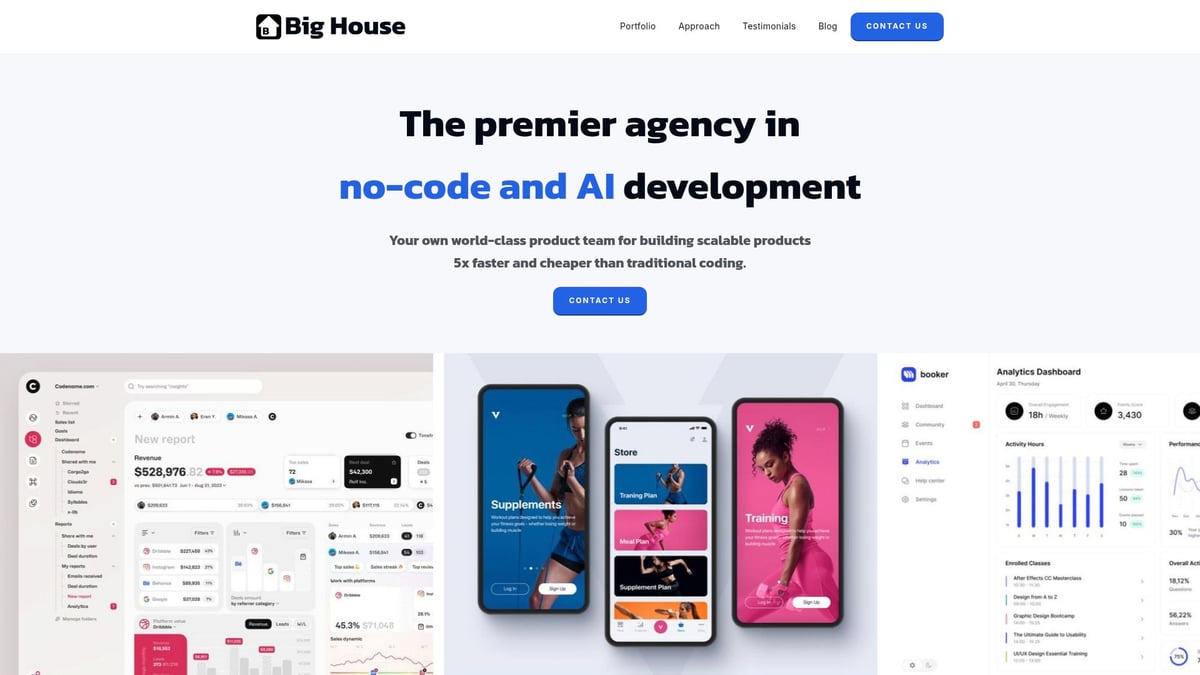
What sets Big House Technologies apart is its documented ability to deliver solutions up to 5x faster and at 3-4x lower costs, without compromising quality. The collaborative process ensures clients remain at the center of each project, while the focus on scalability means your app can grow as your business does.
Key Features:
- End-to-end no-code and AI-driven development
- Rapid prototyping and iterative design
- Seamless AI integration and internal tool creation
Pros:
- Speedy delivery and cost efficiency
- Deep expertise in ai-powered no-code development tools
- Transparent, client-centric workflow
Cons:
- Custom pricing may require consultation
- Focused primarily on Bubble and Lovable platforms
Best For: Startups, enterprises, and founders seeking custom software or internal solutions.
Unique selling points include strong testimonials and proven savings for clients, making it a top contender for those embracing ai-powered no-code development tools.
Bubble
Bubble has become one of the most recognized ai-powered no-code development tools, helping users build powerful web applications visually. The platform offers a free plan, with paid options starting at $29/month, making it accessible for individuals and teams.
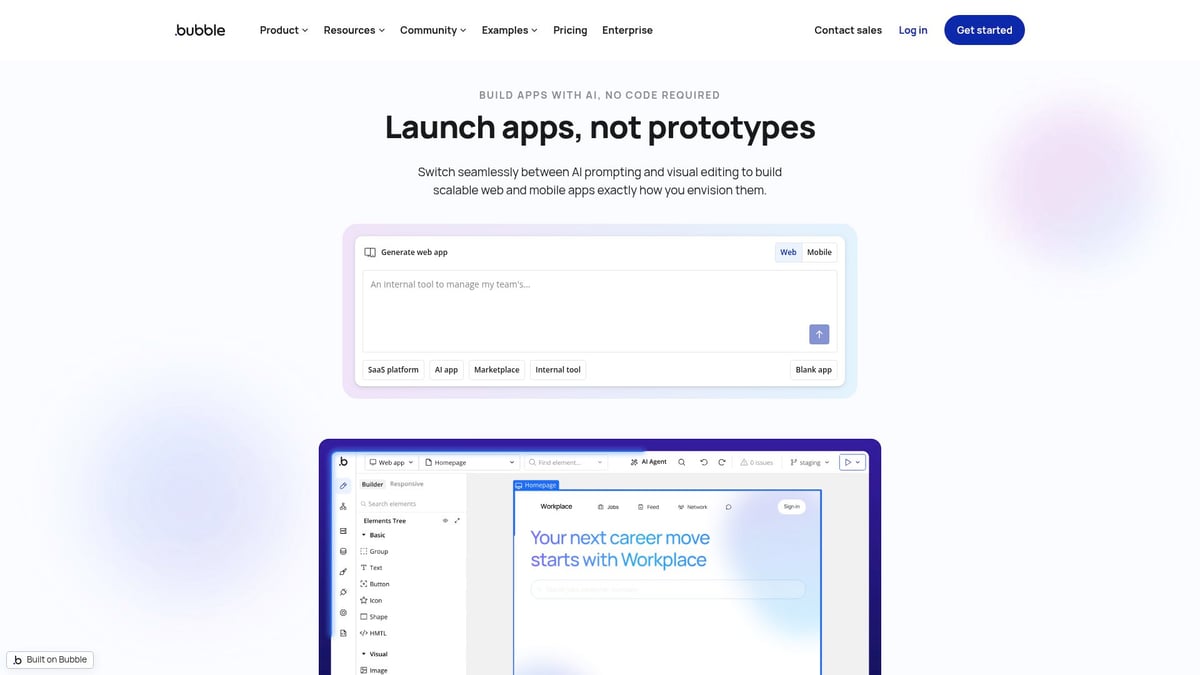
With its visual builder, Bubble enables robust customization, database integration, and workflow automation. The ecosystem boasts a vast marketplace of plugins, including AI-powered extensions, allowing users to add advanced capabilities with ease.
Core Features:
- Visual web app builder
- AI plugins and workflow automation
- Comprehensive database support
Pros:
- Highly customizable applications
- Strong, supportive community
- Scalable for growing businesses
Cons:
- Steeper learning curve for complex projects
- Performance may vary with very large databases
Best For: Entrepreneurs, startups, SMBs, and product managers.
Bubble’s mature platform, frequent AI updates, and active ecosystem make it a leader among ai-powered no-code development tools, especially for web-focused innovators.
Airtable AI
Airtable AI merges the simplicity of spreadsheets with the intelligence of modern ai-powered no-code development tools. With free and paid plans (AI features on Pro/Enterprise tiers), Airtable enables teams to automate workflows, generate content, and derive insights effortlessly.
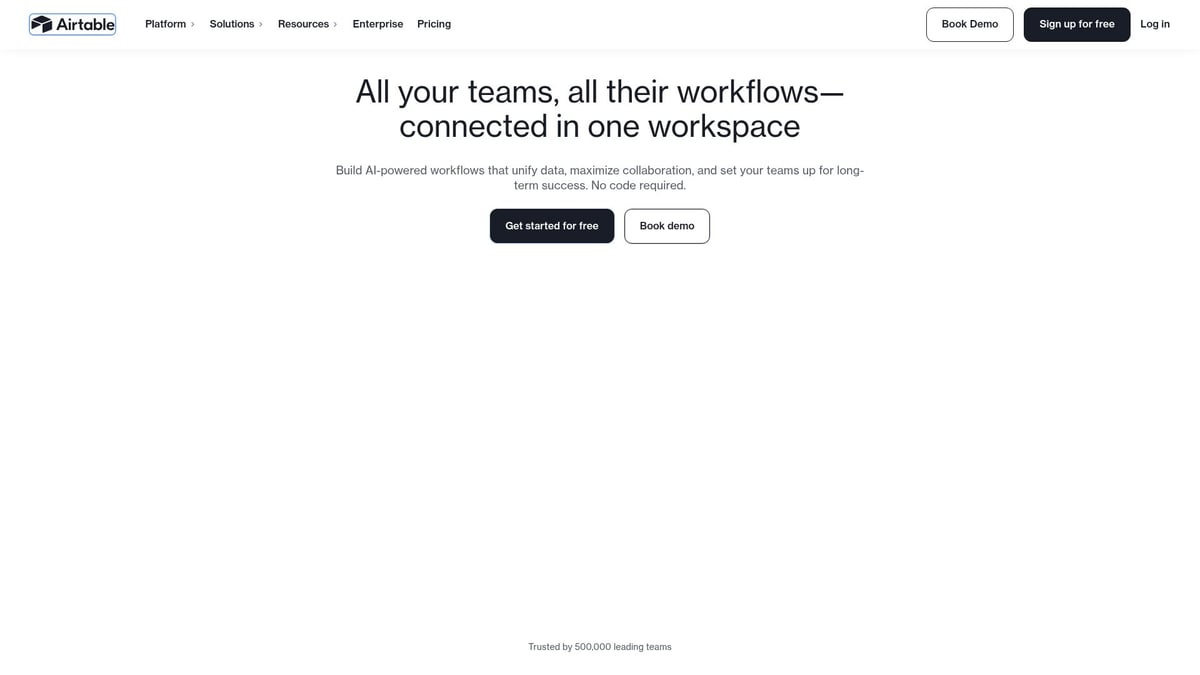
The interface feels familiar to anyone who’s used a spreadsheet, yet under the hood, powerful AI capabilities drive smart automations, text generation, and integrations with tools like Slack and Zapier.
Notable Features:
- Relational database structure with AI text generation
- Smart automations and workflow triggers
- Extensive integration options
Pros:
- User-friendly, flexible platform
- Seamless collaboration for teams
- Rich automation features
Cons:
- Advanced AI requires higher-tier plans
- Limited for highly complex logic
Best For: Project managers, marketing teams, and operations professionals.
Airtable AI stands out in the world of ai-powered no-code development tools for its blend of accessibility and intelligence, making it ideal for teams aiming to scale productivity.
Microsoft Power Platform
Microsoft Power Platform is a suite of ai-powered no-code development tools designed for enterprise-grade solutions. With Power Apps starting at $5/user/month and AI Builder available as an add-on, organizations can build, automate, and analyze apps within the robust Microsoft ecosystem.
This platform includes Power Apps, Power Automate, Power Virtual Agents, and AI Builder, each offering deep integration with Microsoft 365 and enterprise security features.
Core Features:
- AI model deployment without coding
- Workflow automation and virtual agents
- Enterprise-grade security and compliance
Pros:
- Robust, scalable infrastructure
- Deep integration with existing Microsoft tools
- Powerful AI capabilities
Cons:
- Complexity for beginners
- Best suited for those already invested in Microsoft products
Best For: Enterprises, IT departments, and business analysts.
Microsoft Power Platform’s unique value lies in its AI Builder and seamless workflow automation, making it a leading choice among ai-powered no-code development tools for large organizations.
Zapier AI
Zapier AI redefines workflow automation with its suite of ai-powered no-code development tools. The platform offers a free plan, with paid tiers starting at $19.99/month, and AI features included in higher-tier plans.
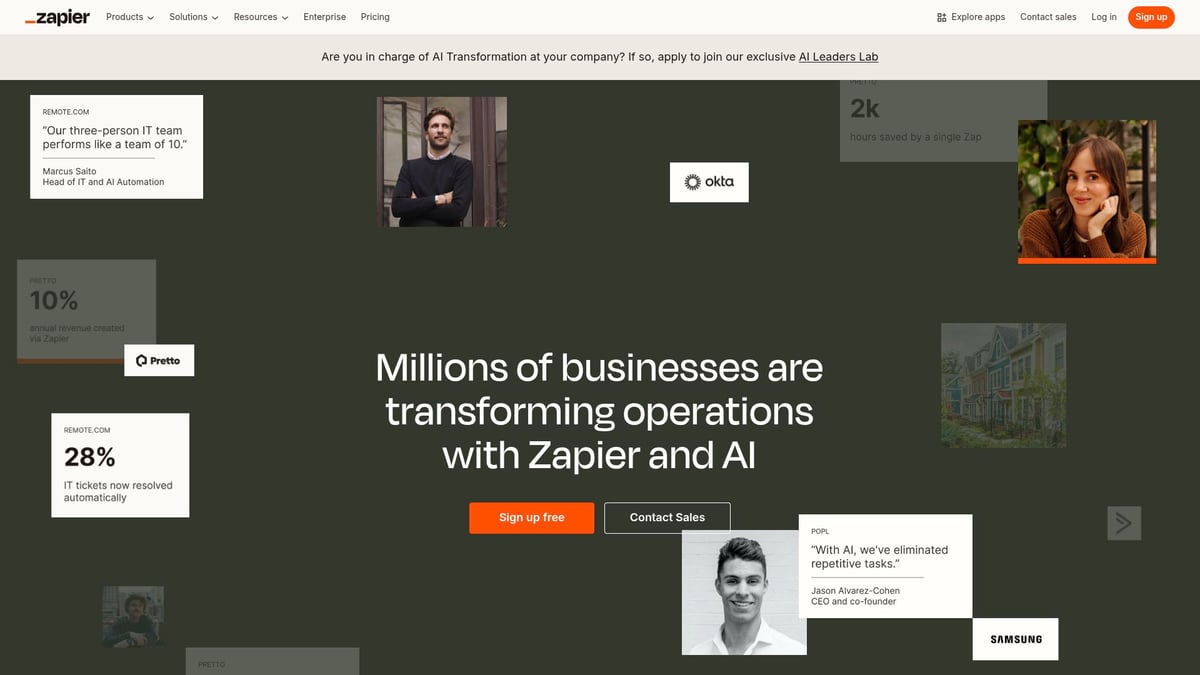
Zapier connects over 6,000 apps, automating repetitive tasks using Zaps. With AI-powered data transformation and natural language workflow creation, users can build sophisticated automations without technical skills.
Features:
- Automated workflows (Zaps) across thousands of apps
- AI-assisted workflow building and suggestions
- Natural language workflow creation
Pros:
- Extensive app ecosystem
- User-friendly interface
- Powerful AI-driven automations
Cons:
- Advanced features require paid plans
- Limited customization for complex scenarios
Best For: Marketers, SMBs, solopreneurs, and operations teams.
Zapier AI is a top pick for those seeking ai-powered no-code development tools that automate processes quickly and efficiently, boosting productivity across the board.
Parabola
Parabola is an ai-powered no-code development tool specializing in data workflows and automation. With a free plan and paid options from $80/month, Parabola empowers users to automate data processing, cleaning, and enrichment through a visual, drag-and-drop interface.
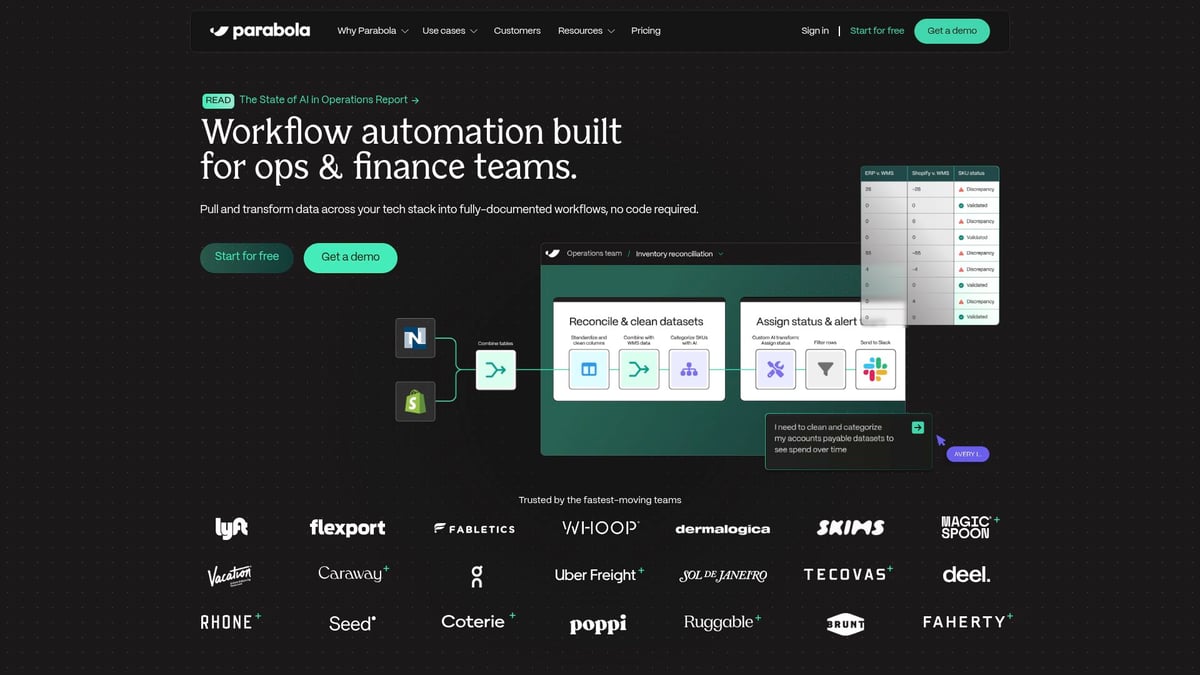
AI modules handle tasks like deduplication and categorization, streamlining data operations for ecommerce, analytics, and operations teams.
Key Features:
- Visual data flow builder
- AI-powered data cleaning and transformation
- Robust ecommerce integrations
Pros:
- Powerful for handling large datasets
- Visual, intuitive interface
- Strong integration capabilities
Cons:
- Pricing may be high for small teams
- Focused on data workflows rather than general app development
Best For: Ecommerce businesses, data analysts, and operations teams.
Parabola’s focus on AI-driven data automation makes it a standout among ai-powered no-code development tools for organizations prioritizing data integrity and efficiency.
Retool AI
Retool AI is engineered for building internal tools with the power of AI. With a free plan and paid tiers from $10/user/month, plus AI add-ons, Retool AI enables rapid creation of dashboards, admin panels, and custom workflows.
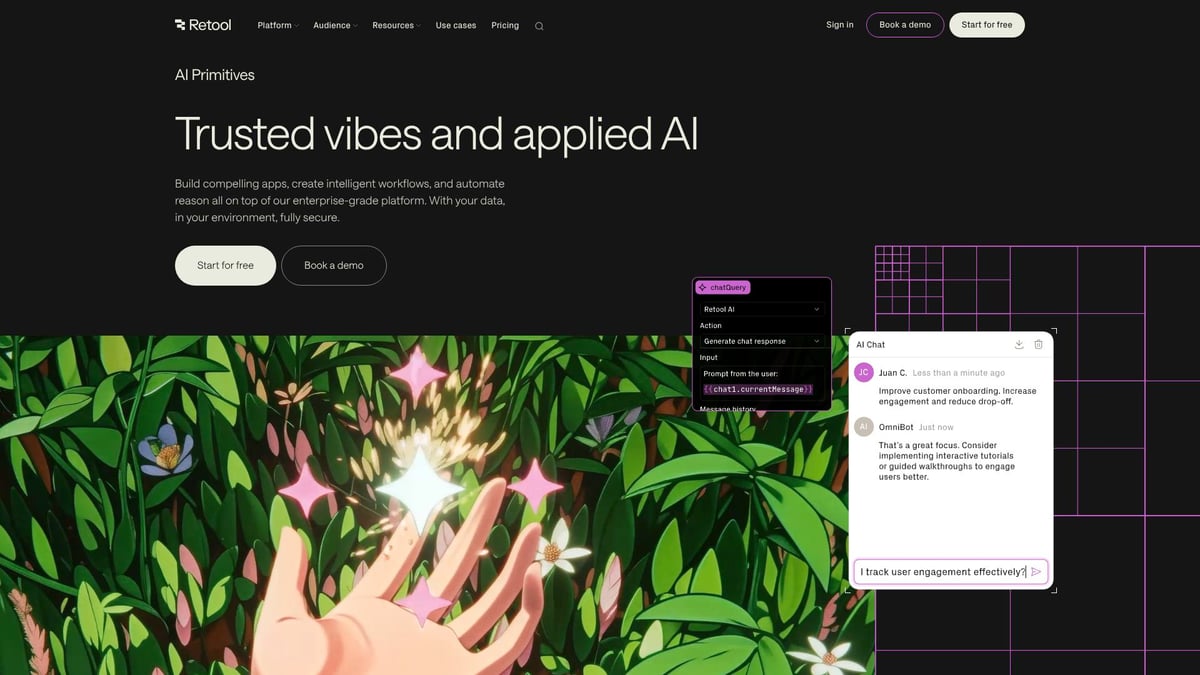
Its AI-powered queries translate natural language into SQL, simplifying database interactions. Users can also generate forms and automate tasks, all within a highly flexible environment.
Core Features:
- Internal tool builder with drag-and-drop UI
- AI-powered SQL queries and form generation
- Rapid prototyping capabilities
Pros:
- Accelerates internal app development
- Flexible for various use cases
- Deep AI integration for data querying
Cons:
- Some technical knowledge beneficial
- AI features may incur additional costs
Best For: Developers, operations, product teams, and enterprises.
Retool AI is a strong contender in the ai-powered no-code development tools space, especially for those seeking to supercharge internal operations with intelligent automation.
AppSheet by Google
AppSheet by Google offers a mobile-first approach to ai-powered no-code development tools. Starting at $5/user/month, with advanced AI features on premium tiers, AppSheet allows users to build mobile and web apps that integrate tightly with Google Workspace.
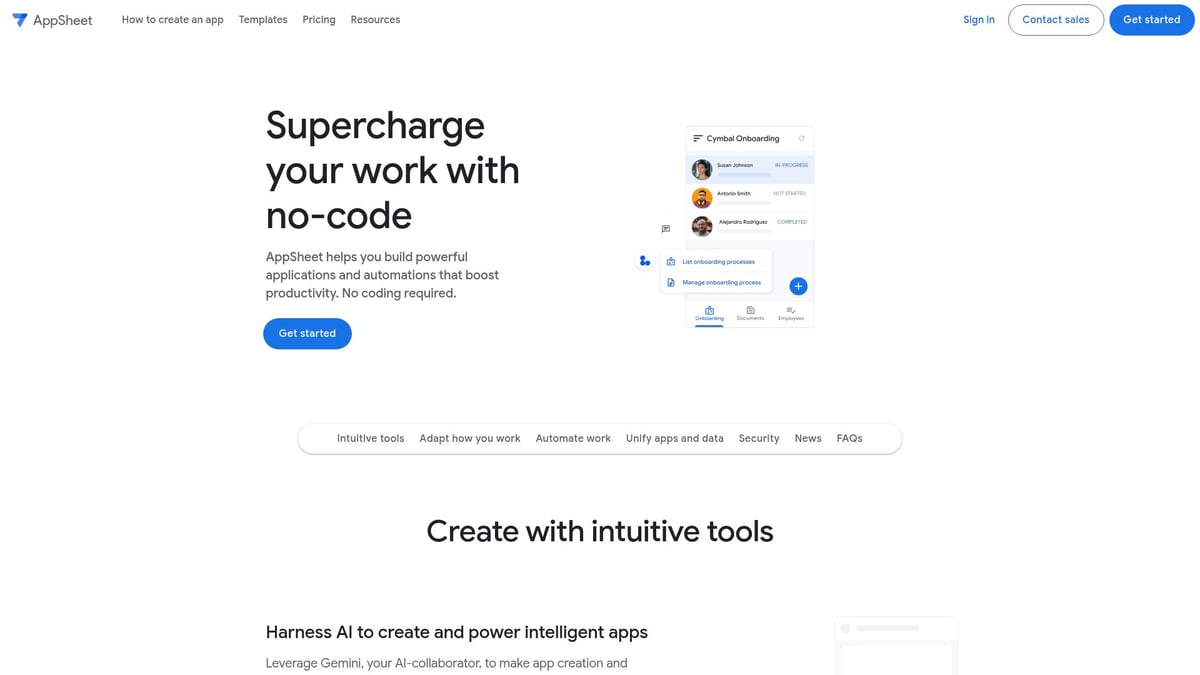
AI-driven data extraction and predictive modeling let users automate workflows and gain actionable insights without writing a single line of code.
Key Features:
- No-code app builder for mobile and web
- AI-powered data extraction and prediction
- Seamless Google integration
Pros:
- Easy onboarding for Google users
- Strong mobile capabilities
- Robust workflow automation
Cons:
- Limited customization for advanced use cases
- Premium AI features require higher-tier plans
Best For: Business users, field teams, and SMBs.
AppSheet’s integration with Google and its AI toolkit position it as a leading ai-powered no-code development tool for mobile-centric organizations.
OutSystems AI
OutSystems AI delivers enterprise-grade ai-powered no-code development tools with a focus on scalability and advanced AI productivity. The platform offers a free edition and paid plans starting at $1510/month, targeting large organizations and digital transformation leaders.
AI-assisted development accelerates code generation and app optimization, while robust security and monitoring features ensure enterprise readiness.
Core Features:
- Low-code platform with AI-assisted coding
- Performance monitoring and optimization
- Enterprise-grade security and compliance
Pros:
- Handles complex, large-scale apps
- AI-driven productivity enhancements
- Excellent support and training resources
Cons:
- Higher price point for entry
- Steeper learning curve for new users
Best For: Large enterprises, IT teams, and digital transformation leaders.
OutSystems AI excels in enabling organizations to scale rapidly, making it one of the most advanced ai-powered no-code development tools available.
Comparison Table: 9 Essential AI-Powered No-Code Development Tools
| Tool | Best For | AI Features | Starting Price |
|---|---|---|---|
| Big House Technologies | Custom apps, internal tools | End-to-end AI, prototyping | Custom |
| Bubble | Web apps, startups | AI plugins, automation | Free/$29 per month |
| Airtable AI | Teams, PMs, marketing | AI text, automations | Free/$20 per user |
| Microsoft Power Platform | Enterprises, IT | AI Builder, workflow AI | $5 per user/month |
| Zapier AI | Marketers, SMBs, ops | AI workflow automation | Free/$19.99 per month |
| Parabola | Data, ecommerce, ops | AI data clean/enrich | Free/$80 per month |
| Retool AI | Internal tools, devs | AI SQL, AI forms | Free/$10 per user |
| AppSheet by Google | Mobile, SMBs, field teams | AI extraction, prediction | $5 per user/month |
| OutSystems AI | Enterprises, IT | AI dev, monitoring | Free/$1510 per month |
For a deeper dive into how AI is transforming the software development process, check out this AI software development insights resource.
How to Choose the Right AI-Powered No-Code Tool for Your Project
Selecting the best ai-powered no-code development tools can feel overwhelming, but a structured approach makes the process manageable. By breaking down your project’s needs, comparing features, and factoring in budget and support, you’ll find a solution that truly empowers your workflow.
Assessing Project Requirements and Goals
Begin by clearly defining your business objectives and technical needs. Are you building a customer-facing app, internal tool, or automating workflows? Outline your must-have features and consider future scalability.
List out any integration requirements, such as connecting with CRMs, databases, or cloud services. This ensures the ai-powered no-code development tools you evaluate can grow with your business and adapt to changing demands. Taking time at this stage prevents costly pivots later.
Evaluating Key Features and AI Capabilities
Not all platforms offer the same AI capabilities. Compare tools based on automation, predictive analytics, and natural language processing features. Look for platforms that make it easy to integrate AI models or use prebuilt solutions.
A user-friendly interface and strong customization options are crucial. Also, check for available support and documentation. For enterprises, No-code platforms for enterprise workflows can help you understand how large organizations leverage these platforms for complex needs.
Budget, Pricing, and Total Cost of Ownership
Budget plays a big role in decision-making. Review both upfront and ongoing costs of ai-powered no-code development tools, including any AI feature add-ons or usage-based pricing.
Factor in potential savings from faster development, reduced maintenance, and lower reliance on specialized developers. Create a table to compare pricing tiers, features, and hidden costs to avoid surprises:
| Tool | Base Price | AI Add-ons | Free Plan | Key Benefit |
|---|---|---|---|---|
| Bubble | $29/month | Yes | Yes | Customization |
| Airtable AI | $20/user/mo | Pro/Ent. | Yes | Automation |
| Retool AI | $10/user/mo | Yes | Yes | Rapid Prototyping |
User Experience, Community, and Support
A vibrant user community and comprehensive documentation can significantly ease adoption. Look for platforms with active forums, tutorials, and responsive support teams.
Training resources and onboarding guides are especially valuable for non-technical users. If you anticipate frequent questions or custom requirements, prioritize ai-powered no-code development tools known for excellent customer support and regular updates.
Case Studies and Real-World Examples
Reviewing successful deployments in your industry can provide insight into what’s possible. Seek out case studies that highlight measurable outcomes, such as faster time-to-market, improved ROI, or productivity gains.
As the No-Code AI Platforms Market Growth report shows, the demand for these tools is surging, making careful evaluation more important than ever. Real-world examples can validate your choice and inspire new ideas for your own projects.
Future Trends in AI-Powered No-Code Development
The landscape of ai-powered no-code development tools is changing rapidly as new trends and innovations emerge. Understanding these shifts can help businesses and creators stay ahead of the curve and leverage the latest capabilities for their projects.
Emerging Technologies and Innovations
Generative AI is taking center stage within ai-powered no-code development tools. These platforms are integrating advanced AI to automate app design, generate code from prompts, and even create user interfaces on the fly. Users can now build more complex solutions with less effort, thanks to features like natural language processing and AI-driven prototyping.
Expect to see even more seamless integration between AI and no-code platforms. For example, some tools are already offering real-time suggestions for workflows and automations based on user intent. This trend is making software creation faster, smarter, and more accessible than ever before.
Democratization and Expansion of Use Cases
One of the most exciting shifts is the growing accessibility of ai-powered no-code development tools. With intuitive interfaces and AI assistance, non-technical users across various industries can now create applications and automate workflows. This democratization is fueling the rise of "citizen developers," a trend highlighted in the Rise of Citizen Developers article, where business technologists are increasingly driving innovation.
Industries beyond tech, such as healthcare, finance, and education, are now adopting these tools. As a result, solutions are expanding into fields like IoT, process automation, and real-time data analysis.
Security, Ethics, and Governance
With the widespread adoption of ai-powered no-code development tools, security and ethical considerations are becoming more critical. Organizations are focusing on data privacy, compliance, and responsible AI use. New standards and best practices are emerging to address these challenges, ensuring AI-driven solutions remain trustworthy and transparent.
Governance frameworks are also being developed to help teams manage risk and ensure ethical AI deployment. Clear documentation and robust user controls are now essential features within leading no-code platforms.
Predictions for 2026 and Beyond
Looking ahead, the market for ai-powered no-code development tools is set for explosive growth. According to the AI Code Tools Market Expansion report, global demand for automation will drive the sector to an estimated $37.34 billion by 2032.
By 2026, expect these tools to be central to digital transformation efforts across all business sizes. The future will likely bring smarter, more autonomous platforms that minimize manual tasks and empower innovation at scale. Keeping pace with these advances will be key for any organization looking to stay competitive.
We’ve just explored the top AI powered no code tools set to shape software development in 2026 and it’s clear how quickly you can turn ideas into real products without the usual headaches. Whether you’re dreaming up your first MVP or looking to scale fast without getting bogged down by traditional coding, these platforms give you a serious edge. If you’re ready to move from research to results and want to see just how quickly you can go from concept to launch, check out how you can Launch Your MVP in Weeks, Not Months.

About Big House
Big House is committed to 1) developing robust internal tools for enterprises, and 2) crafting minimum viable products (MVPs) that help startups and entrepreneurs bring their visions to life.
If you'd like to explore how we can build technology for you, get in touch. We'd be excited to discuss what you have in mind.
Other Articles
Learn how company app development transforms businesses in 2026. Expert strategies for building scalable enterprise and mobile apps efficiently.
Discover 7 essential AI software price insights for 2025 Learn key trends models and strategies to optimize costs and make informed AI investment decisions
Discover the best countries to hire Bubble developers in 2026 Compare top destinations for skill, cost, and reliability to power your next no code project