
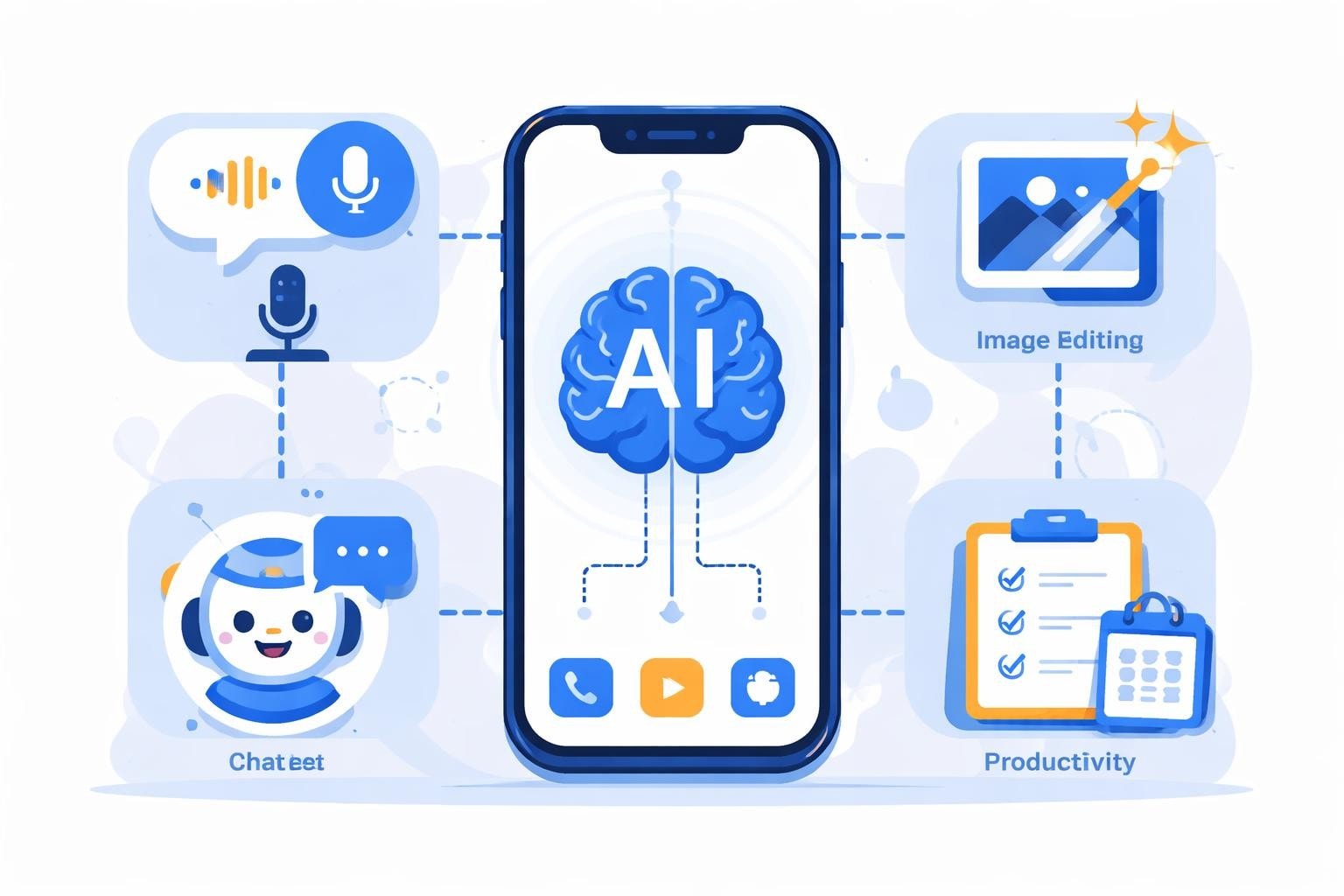
The iPhone has evolved into a powerful AI platform, hosting applications that leverage machine learning, natural language processing, and computer vision to solve real-world problems. As we navigate through 2026, the ecosystem of ai apps for iphone has matured significantly, offering solutions that range from creative design tools to enterprise productivity platforms. Whether you're building custom applications or selecting tools for your team, understanding the current landscape of AI-powered iOS applications is essential for staying competitive in today's digital economy.
The Evolution of Mobile AI on iOS
Apple's approach to artificial intelligence has always emphasized privacy and on-device processing. Unlike cloud-dependent solutions, many ai apps for iphone now perform sophisticated computations directly on the device's neural engine. This architectural choice delivers several advantages:
- Enhanced privacy through local data processing
- Faster response times without network latency
- Offline functionality for uninterrupted workflows
- Reduced data costs by minimizing cloud dependencies
The introduction of Apple Intelligence has set new standards for what mobile AI can accomplish. Features like Writing Tools and Image Playground demonstrate how integrated AI capabilities can enhance productivity without compromising user privacy. For businesses developing custom applications, these native capabilities provide a foundation that third-party apps can build upon.
Understanding On-Device vs. Cloud-Based Processing
The distinction between local and cloud processing matters more than ever in 2026. Running AI chatbots locally on iPhone has become increasingly practical thanks to quantized language models. This approach appeals particularly to enterprises handling sensitive information.
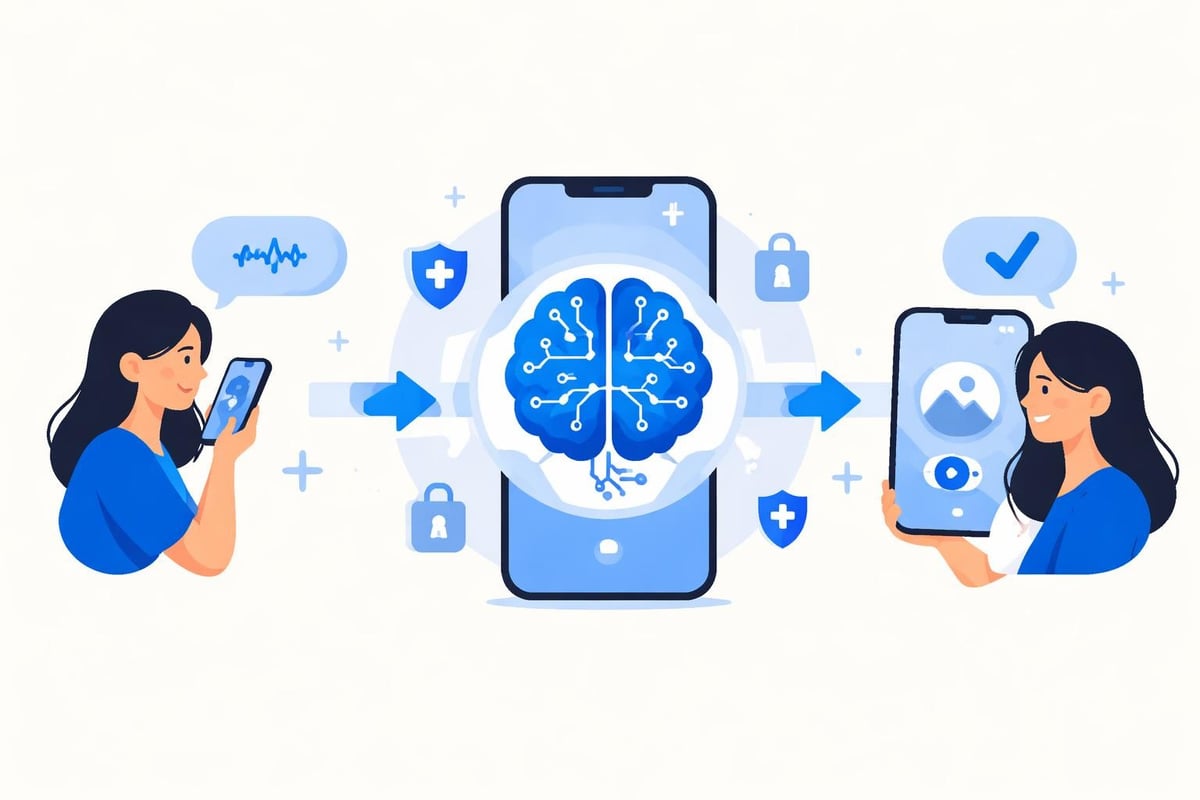
Cloud-based solutions still dominate when handling complex tasks requiring vast computational resources. The key is selecting the right architecture for your specific use case. When developing with no-code platforms, understanding these trade-offs helps optimize performance and user experience.
Essential Categories of AI Apps for iPhone
Conversational AI and Chatbots
ChatGPT remains the benchmark for conversational AI on mobile platforms. The official iPhone app provides seamless access to GPT-4 capabilities, enabling natural language interactions for research, writing assistance, and problem-solving. Claude offers a compelling alternative with its extended context windows, particularly valuable for analyzing lengthy documents.
Perplexity AI has carved out a unique position by combining search functionality with conversational interfaces. Rather than simply answering questions, it provides sourced information with citations, making it invaluable for research-intensive workflows.
| App | Strengths | Best For |
|---|---|---|
| ChatGPT | Versatile, widely supported | General purpose AI assistance |
| Claude | Extended context, nuanced responses | Document analysis, complex reasoning |
| Perplexity | Source citations, real-time information | Research and fact-checking |
Visual Creation and Enhancement
The creative capabilities of ai apps for iphone have expanded dramatically. Canva's mobile application now incorporates generative AI features that enable users to create professional graphics through text prompts. This democratization of design aligns perfectly with the no-code philosophy of making sophisticated capabilities accessible without specialized expertise.
Adobe Lightroom leverages AI for intelligent photo enhancement, automatically adjusting exposure, color balance, and composition. For businesses creating marketing materials or product documentation, these tools compress timelines that traditionally required dedicated design resources.
Image editing features powered by AI:
- Background removal with single-tap precision
- Sky replacement maintaining natural lighting
- Object removal preserving context
- Style transfer applying artistic effects
- Resolution enhancement upscaling details
Productivity and Workflow Optimization
Voice dictation has reached new levels of sophistication. Google's AI Edge Eloquent dictation app represents a breakthrough in offline speech processing, refining spoken words in real-time without cloud connectivity. This capability matters significantly for professionals who create content on the go.
Notion AI transforms knowledge management by embedding intelligence directly into databases and documents. Teams building internal dashboards can leverage these capabilities to surface insights automatically, reducing manual data analysis.
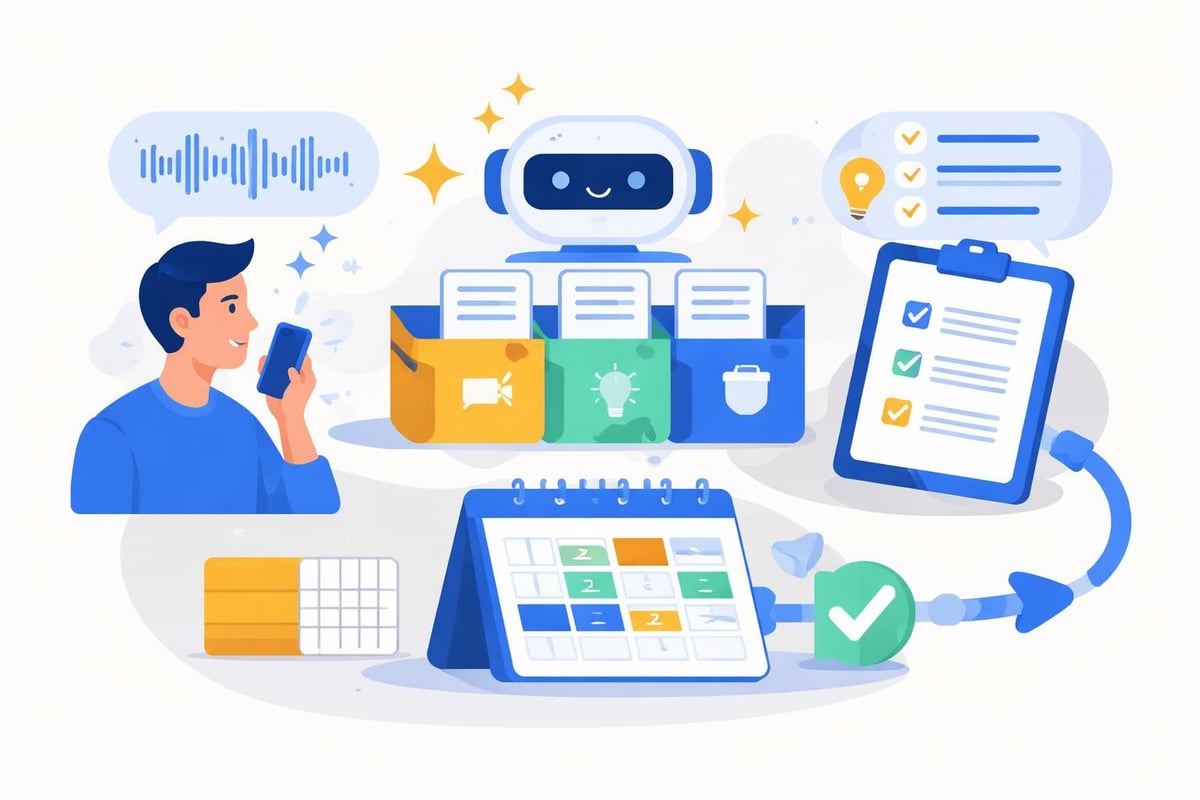
The integration between AI capabilities and traditional productivity tools creates compound benefits. Calendar apps suggest optimal meeting times, email clients draft responses, and note-taking applications automatically structure information. For enterprises, these incremental efficiency gains accumulate into substantial productivity improvements.
Evaluating AI Apps for Enterprise Use
When selecting ai apps for iphone for business deployment, evaluation criteria extend beyond consumer-focused features. Security, compliance, integration capabilities, and total cost of ownership require careful consideration.
Security and Compliance Requirements
Key security considerations:
- Data residency - Where is information stored and processed?
- Encryption standards - Both in transit and at rest
- Access controls - User authentication and authorization mechanisms
- Audit capabilities - Tracking usage and changes
- Compliance certifications - SOC 2, GDPR, HIPAA as applicable
The comparison between Android and iPhone AI capabilities reveals meaningful differences in privacy architecture. iOS's sandboxing and permission model provides inherent advantages for enterprise security, though implementation quality varies across applications.
Integration and Scalability
No AI application exists in isolation. The ability to connect with existing systems determines real-world utility. Look for apps offering:
- API access for custom integrations
- Webhook support for event-driven workflows
- Export capabilities in standard formats
- SSO integration with enterprise identity providers
- Admin dashboards for centralized management
Organizations building custom solutions with AI-powered development tools should evaluate whether off-the-shelf apps can integrate into their broader technology stack. Sometimes a specialized custom application delivers better outcomes than attempting to force-fit consumer tools into enterprise contexts.
Specialized AI Applications for Niche Use Cases
Language Learning and Communication
Duolingo has transformed language education through adaptive AI that personalizes lesson difficulty and content. The gamification elements, powered by machine learning algorithms, maintain engagement while optimizing learning outcomes. For global teams, these tools accelerate onboarding and cross-cultural communication.
Translation apps have transcended simple word-by-word conversion. Real-time conversation translation with context awareness enables seamless international collaboration. Camera-based text translation solves real-world challenges when traveling or reviewing foreign-language documents.
Health and Wellness Monitoring
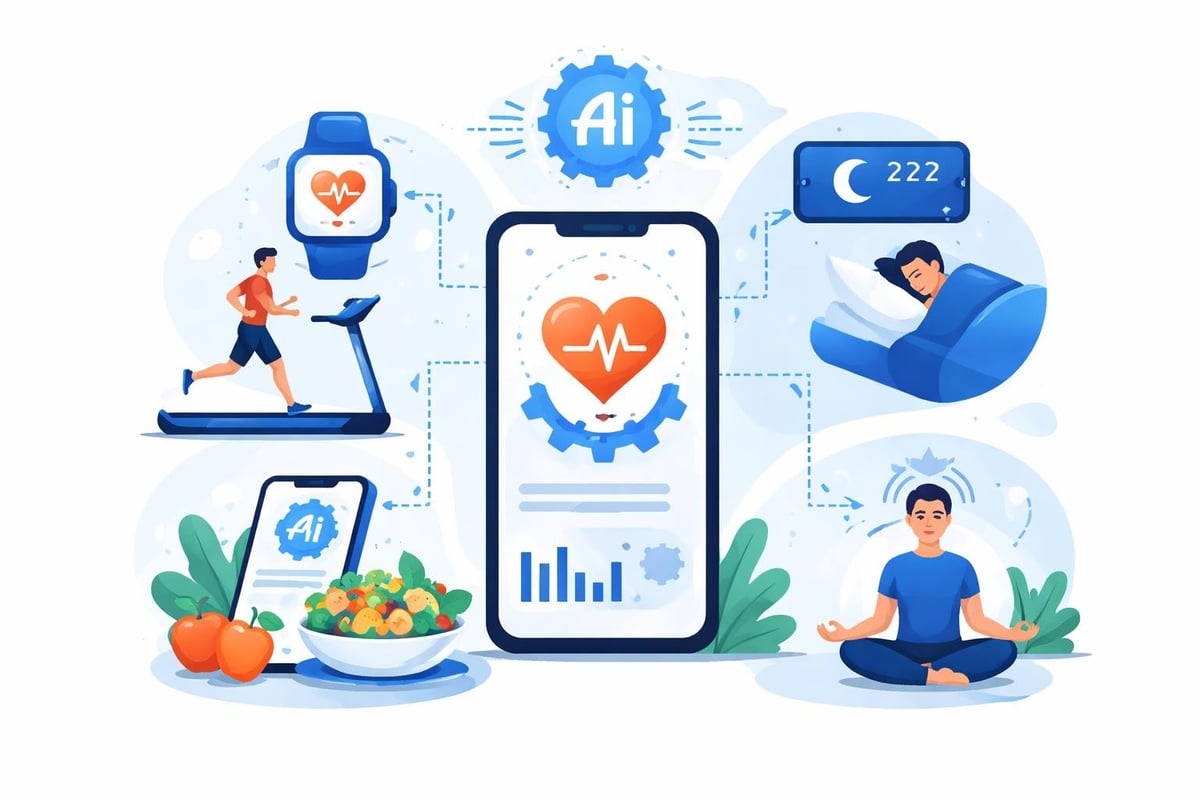
AI-powered health apps analyze patterns in biometric data, identifying trends that might escape casual observation. Sleep tracking applications provide actionable insights based on movement patterns, heart rate variability, and environmental factors. Meditation apps adapt sessions based on stress indicators and user preferences.
| Category | Example Apps | AI Capabilities |
|---|---|---|
| Fitness | MyFitnessPal, Fitbod | Personalized workout recommendations |
| Mental Health | Calm, Headspace | Adaptive meditation sessions |
| Sleep | Sleep Cycle, Pillow | Pattern recognition and optimization |
| Nutrition | Yuka, MyPlate | Food recognition and analysis |
Financial Management and Analysis
AI transforms personal finance through intelligent categorization, spending predictions, and investment recommendations. Apps analyze transaction patterns to identify subscription creep, unusual charges, and optimization opportunities. For businesses, expense management platforms use AI to enforce policy compliance and detect anomalies.
Building Custom AI Applications for iPhone
While consumer ai apps for iphone serve general needs, many organizations require tailored solutions addressing specific workflows. The barrier to entry for custom AI app development has decreased substantially through no-code and low-code platforms.
No-Code Development for AI Features
Modern development platforms enable teams to incorporate AI capabilities without traditional coding. Integration with APIs from OpenAI, Anthropic, and other providers allows MVP development teams to prototype AI features rapidly.
Development approach considerations:
- Define specific use cases before selecting tools
- Start with existing APIs rather than custom models
- Prioritize user experience over technical complexity
- Plan for scalability from initial architecture
- Test extensively with real-world data
The combination of Bubble's no-code platform with AI APIs exemplifies how modern development workflows compress traditional timelines. Teams can validate concepts in weeks rather than months, gathering user feedback before committing to extensive custom development.
Evaluating Build vs. Buy Decisions
Not every business needs a custom AI application. The decision matrix should weigh:
| Factor | Build Custom | Buy Off-Shelf |
|---|---|---|
| Unique workflows | Strong fit | Poor fit |
| Time to market | Slower | Faster |
| Initial cost | Higher | Lower |
| Long-term control | Maximum | Limited |
| Ongoing maintenance | Required | Vendor-managed |
Organizations with standardized processes often find commercial apps sufficient. Those with differentiated workflows or competitive advantages tied to proprietary processes benefit from custom development. The rise of AI-based design-to-code tools has blurred this distinction, enabling rapid custom development at costs approaching off-the-shelf solutions.
Privacy and Ethical Considerations
The proliferation of ai apps for iphone raises important questions about data usage, algorithmic bias, and user autonomy. Apple's privacy-first approach provides guardrails, but application developers maintain significant discretion in implementation details.
Understanding Data Collection Practices
iOS privacy labels reveal what data apps collect, but interpreting these disclosures requires diligence. Consider:
- Data types collected (identifiers, usage patterns, content)
- Linkage to user identity (tracked across apps vs. anonymous)
- Purpose of collection (functionality vs. monetization)
- Third-party sharing (partners and data brokers)
- Retention policies (how long data persists)
Enterprise deployments should audit privacy practices against organizational policies. Some industries face regulatory requirements that restrict permissible data handling, making thorough evaluation non-negotiable.
Algorithmic Transparency and Bias
AI systems reflect the data they're trained on, potentially perpetuating existing biases. While individual users have limited visibility into model training, awareness of potential limitations informs appropriate use. Critical decisions affecting employment, credit, or health should incorporate human oversight rather than relying solely on AI recommendations.
Future Trends in iPhone AI Applications
The trajectory of mobile AI points toward increasingly sophisticated on-device capabilities. Apple's silicon roadmap emphasizes neural processing performance, enabling larger models to run locally. This technical evolution will unlock new application categories impossible with current hardware constraints.
Multimodal AI Integration
Future ai apps for iphone will seamlessly blend text, image, audio, and video understanding. Imagine applications that watch your screen, listen to your voice, and understand your context to provide proactive assistance. Early examples exist today, but 2026 represents an inflection point where these capabilities become mainstream rather than experimental.
Agent-Based Architectures
Rather than responding to explicit commands, next-generation AI applications will act as autonomous agents completing multi-step tasks. Booking travel, scheduling meetings, or researching products will shift from manual processes to high-level directives executed by AI systems.
Emerging agent capabilities:
- Complex task decomposition and planning
- Environment perception and adaptation
- Tool usage and API orchestration
- Multi-turn reasoning and error recovery
- Goal-oriented autonomous operation
Organizations exploring AI coding assistant alternatives see previews of how agent architectures will transform knowledge work beyond software development. The same principles apply across domains, from customer service to financial analysis.
Platform Ecosystem and Developer Support
The health of any application ecosystem depends on robust developer support and platform stability. Apple's commitment to CoreML and CreateML frameworks signals continued investment in on-device AI capabilities. Third-party developers benefit from standardized APIs that simplify implementation while maintaining performance.
The App Store review process ensures baseline quality standards, though it occasionally creates friction for innovative AI applications. Understanding review guidelines before development prevents costly delays during launch.
Monetization Models for AI Applications
AI apps employ diverse business models reflecting different value propositions:
- Freemium - Basic features free, advanced capabilities paid
- Subscription - Recurring revenue for ongoing access
- Usage-based - Pay per API call or compute resource
- One-time purchase - Upfront payment for lifetime access
- Enterprise licensing - Custom pricing for organizational deployment
The computational costs of AI inference push many developers toward subscription models. For businesses, understanding these economics informs budget planning and vendor negotiations.
Implementation Best Practices
Successfully deploying ai apps for iphone across an organization requires more than technical evaluation. Change management, training, and ongoing optimization determine whether investments deliver promised returns.
User Adoption Strategies
Driving adoption requires:
- Clear communication of benefits and use cases
- Hands-on training demonstrating practical workflows
- Champions program leveraging early adopters
- Success metrics tracking quantifiable improvements
- Feedback loops continuously refining implementation
Teams familiar with software design principles recognize that even the most sophisticated AI capabilities fail without user acceptance. Investing in adoption from project inception rather than as an afterthought dramatically improves outcomes.
Performance Monitoring and Optimization
AI applications require ongoing attention to maintain effectiveness. Model drift, changing user needs, and evolving competitive landscapes necessitate regular evaluation. Establish baseline metrics during initial deployment, then track:
- Usage patterns (frequency, features utilized, abandonment points)
- Accuracy metrics (where applicable to predictions/recommendations)
- User satisfaction (surveys, ratings, support tickets)
- Technical performance (response times, error rates)
- Business outcomes (efficiency gains, cost savings, revenue impact)
Organizations that treat AI deployment as iterative rather than one-time events extract substantially greater value over time.
The explosion of ai apps for iphone in 2026 offers unprecedented opportunities for individuals and businesses to leverage artificial intelligence in daily workflows. From conversational assistants to specialized creative tools, the iOS ecosystem provides solutions addressing nearly every use case imaginable. If you're ready to build custom AI-powered applications tailored to your unique business requirements, Big House Technologies combines no-code development expertise with AI integration capabilities to deliver scalable solutions efficiently and cost-effectively.

About Big House
Big House is committed to 1) developing robust internal tools for enterprises, and 2) crafting minimum viable products (MVPs) that help startups and entrepreneurs bring their visions to life.
If you'd like to explore how we can build technology for you, get in touch. We'd be excited to discuss what you have in mind.
Other Articles
Discover the ultimate tool build guide for beginners in 2025. Learn step-by-step strategies, avoid pitfalls, and start creating your own powerful tools today.
Discover the essentials of software managers for beginners in 2025. Learn features, setup steps, best practices, and future trends to streamline your workflow.
Discover 7 fresh alternatives to lovable for 2026. Compare top platforms, features, and pricing to find the best app development solution for your needs.